

How Britain Built The Largest Empire In History And Lost It In A Single Lifetime
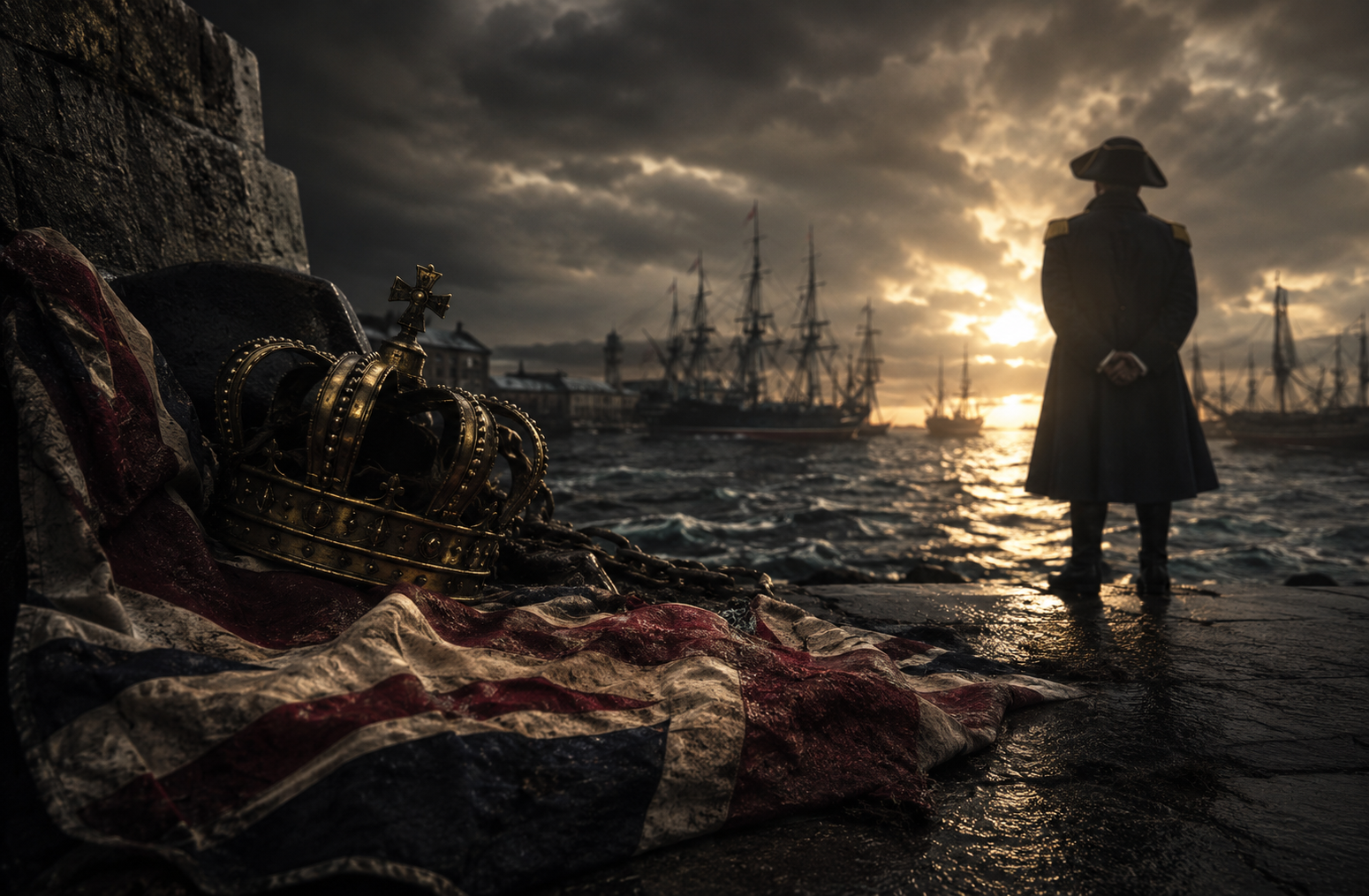
The Rise And Fall Of The British Empire Explained
The Small Island That Built The Biggest System Of Power In History. And Then Vanished In Plain Sight
The Empire That Ruled The WorldAt its height, the British Empire was the largest empire in human history. By the early twentieth century, it covered around 13.7 million square miles and ruled, influenced, or administered roughly a quarter of the world’s land surface and population. It stretched from Canada to India, from Australia to Africa, from the Caribbean to the Pacific, and from naval bases in the Mediterranean to strategic chokepoints in the Middle East.
That scale still feels unreal because Britain itself was not a continental giant. It was not China, Russia, Rome, or the Mongol steppe. It was a wet, crowded island off the coast of Europe, with limited land, no vast internal empire, and no obvious demographic destiny. Yet for a long period, decisions made in London affected taxation in India, trade in Canton, migration in Australia, security in the Persian Gulf, and law in large parts of Africa.
The empire was not one single thing. It was a web of colonies, protectorates, chartered companies, dominions, naval bases, commercial treaties, settler societies, plantation economies, financial dependencies, and military arrangements. Some territories were governed directly. Others were ruled through local elites. Some became self-governing white settler dominions. Others were held by force, bureaucracy, or economic pressure.
That flexibility was one of Britain’s greatest strengths. The empire did not operate like a single machine with one control panel. It operated more like a global operating system. Where direct rule was expensive, Britain used indirect rule. Where conquest was unnecessary, it used trade. Where trade was insecure, it used naval power. Where naval power needed support, it built bases. Where bases needed financing, it relied on the City of London.
The result was an empire that looked, from the outside, almost inevitable. But it was never inevitable. It was built through a sequence of turning points, accidents, gambles, victories, financial innovations, industrial breakthroughs, and brutal decisions. Britain did not conquer the world by simply being stronger than everyone else. It learned how to convert limited national resources into global leverage.
How Britain Became Unstoppable
Britain’s rise began with geography, but geography alone does not explain it. Being an island helped protect Britain from large-scale invasion, especially after the union of England and Scotland in 1707 created a more consolidated British state. But an island can become isolated as easily as it becomes secure. Britain’s genius was turning the sea from a barrier into a highway.
The first major engine of expansion was maritime trade. England entered the age of overseas empires later than Spain and Portugal, but it learned quickly. The Navigation Acts of the seventeenth century were designed to keep overseas trade profits in English hands by restricting colonial trade to English ships and merchants. Parliament’s own historical account describes these acts as an effort to ensure that the gains from international trade flowed back to England.
This was not romantic exploration. It was strategic commercial capture. Britain understood that ships could do more than carry goods. They could move troops, transmit information, protect markets, threaten rivals, and connect distant territories to a single financial centre. The empire began as a trading project before it became a territorial one.
The East India Company became the most astonishing example of that model. Founded as a commercial enterprise, it built trading posts on the Indian coast at Surat, Bombay, Madras, and Calcutta before expanding into military and political power. Parliament’s history of the company makes clear that the origins of British power in India lay not in a normal state conquest but in a company that became powerful enough to govern territory.
That was one of the strange secrets of empire: Britain often outsourced imperial expansion before formalising it. Merchants, settlers, private companies, missionaries, investors, sailors, and soldiers frequently pushed outward first. The state followed later, turning commercial footholds into strategic assets and private ventures into imperial responsibilities.
By the eighteenth century, Britain had become a state built for war finance. It could borrow more effectively than many rivals, tax more efficiently, insure commerce more confidently, and sustain long conflicts across oceans. The Bank of England, government debt markets, marine insurance, and the City of London turned money into geopolitical endurance.
This mattered because empire was not won in one decisive campaign. It was won through repeated rounds of conflict. Britain fought the Dutch, the French, the Spanish, Indian powers, American colonists, African polities, Qing China, and many others. It lost some battles and one of its most important colonies in America. But across the long arc, it kept turning war into advantage.
The Secret Weapons Of Empire
The British Empire’s most important weapon was not the red coat. It was the Royal Navy. Naval supremacy allowed Britain to choose where to fight, where to blockade, where to reinforce, and where to avoid large continental commitments. A superior navy did not make Britain invincible, but it made Britain unusually difficult to defeat decisively.
From the late seventeenth century onward, Parliament invested heavily in naval forces to protect commerce and confront rival powers. Britain’s commercial and military systems reinforced one another: trade created wealth, wealth funded ships, ships protected trade, and protected trade created more wealth.
This loop was devastatingly powerful. France had armies. Russia had land depth. Spain had silver. The Dutch had finance and shipping. Britain gradually fused naval reach, financial credibility, industrial production, and imperial ambition into one strategic system. That combination gave it options other powers lacked.
The second secret weapon was finance. London became the clearing house of global power. British banks, insurers, investors, shipping firms, and commodity markets allowed the empire to project influence even where the Union Jack did not fly. British power was not only territorial. It was embedded in contracts, credit, currency, shipping lanes, insurance premiums, and debt.
The third secret weapon was industrialisation. Britain was the first country to industrialise at scale, and that changed the meaning of power. Coal, steam, iron, textiles, railways, mechanised production, and later steel and telegraph cables allowed Britain to move beyond older models of empire. A pre-industrial empire could occupy land. An industrial empire could reorganise time, distance, production, and information.
Industrial Britain did not simply make more goods. It changed the global economy around itself. Raw materials flowed inward. Manufactured goods flowed outward. Ports, railways, canals, telegraph lines, and coaling stations created imperial infrastructure. The empire became both market and supply chain.
The fourth secret weapon was institutional adaptability. Britain was often ruthless, but it was also pragmatic. It could govern through chartered companies, settler assemblies, colonial offices, military administrators, local princes, commercial treaties, missionary networks, and naval stations. It did not need every territory to look the same.
That adaptability explains why the empire survived shocks that might have destroyed a more rigid system. The American Revolution was a catastrophe, but Britain pivoted toward India, the Caribbean, Africa, and the Pacific. The loss of one empire accelerated the construction of another.
The Beginning Of Decline
The warning signs began long before the empire collapsed. The first was the loss of America. Britain lost thirteen colonies in the late eighteenth century, but the deeper lesson was more important than the territorial loss: settler societies with enough wealth, distance, and confidence would eventually resist rule from London.
The second warning sign was India. India was the jewel of the empire, but also its great contradiction. Britain could claim to be a liberal constitutional power at home while governing hundreds of millions abroad without democratic equality. The more Britain spoke the language of liberty, law, and progress, the harder it became to justify imperial hierarchy indefinitely.
The Indian Rebellion of 1857 exposed the fragility behind imperial confidence. It led to the end of East India Company rule and the transfer of India to the British Crown. Britain tightened control, but the event revealed something permanent: imperial rule required consent, collaboration, fear, or force. If enough of those pillars weakened at once, the system could shake violently.
The third warning sign was the rise of rival powers. In the nineteenth century, Britain was the workshop of the world. But by the late nineteenth and early twentieth centuries, Germany and the United States were industrialising at enormous scale. Britain had pioneered the industrial age, but pioneers do not automatically remain dominant once others copy and surpass the model.
The fourth warning sign was strategic overextension. A global empire requires constant maintenance. Every naval base, treaty, garrison, colony, coaling station, and frontier generates obligations. At the peak, Britain did not just hold an empire. It had to police sea lanes, deter rivals, suppress rebellions, defend settler colonies, manage India, and preserve access to trade routes.
That is the hidden cost of superpower status. The map looks like power. The budget sees liabilities.
By the early twentieth century, Britain was still magnificent, but the structure beneath it was changing. Its empire had reached maximum size at almost exactly the moment when the economic and ideological foundations of empire were becoming less stable. The empire looked largest when its future was already narrowing.
The Two World Wars
The First World War did not immediately destroy the British Empire. In some ways, it enlarged it. Britain emerged from the conflict with new mandates and wider responsibilities. But that was misleading. The war had weakened Britain financially, socially, and psychologically. Victory had been purchased at a scale no empire could absorb without consequence.
The empire helped Britain survive the war. Soldiers, labourers, supplies, and resources came from across the imperial world. The war was not merely European. It drew in India, Africa, the Caribbean, Canada, Australia, New Zealand, and other imperial territories. The National Archives’ work on the global Second World War makes the same broader point for the next conflict: Britain’s wars were imperial wars, fought and sustained by people far beyond Britain itself.
But war changed the political imagination of the empire’s subjects. Men who fought for Britain could ask why they were not treated as equal citizens of the system they had defended. Colonies that sacrificed for imperial victory could ask why victory did not bring sovereignty. The battlefield created new claims on dignity, rights, and self-government.
The Second World War was the decisive rupture. Britain again stood on the winning side, but victory masked exhaustion. The country had been bombed, indebted, economically strained, and strategically dependent on the United States. Its industrial base had been redirected toward survival. Its old confidence had been damaged.
The war also shattered the myth of European invincibility. Japan’s early victories in Asia, including the fall of Singapore in 1942, were psychologically devastating. For decades, imperial authority had relied partly on the assumption that European power was permanent and superior. Once Asian populations saw British forces defeated by another Asian power, the imperial spell weakened.
After 1945, Britain still possessed empire on paper. But paper power is fragile when money, legitimacy, and coercive capacity decline together. The empire had helped Britain win the war. The war helped make the empire impossible to keep.
Why The Empire Collapsed
The British Empire collapsed because three pressures converged: economics, nationalism, and geopolitics. Britain could perhaps have survived one of them. It could not survive all three at once.
Economically, Britain no longer had the surplus power required to maintain global empire. It faced reconstruction at home, debt abroad, industrial competition, and the cost of modern welfare-state politics. The British public wanted housing, healthcare, jobs, and recovery. Empire now competed with domestic renewal.
Nationalism was the second force. Across Asia, Africa, and the Middle East, anti-colonial movements became more organised, more legitimate, and harder to suppress. The language of self-determination had become global. The old imperial claim — that Britain ruled for the benefit of others until they were ready — no longer persuaded the people being ruled.
India was the turning point. Its independence in 1947 removed the central pillar of the empire. Without India, Britain lost not just territory, population, and prestige, but the strategic centre of its eastern empire. The empire could continue as a network of territories, but it could no longer pretend to be the same world system.
Geopolitics was the third force. The United States and the Soviet Union emerged from the Second World War as the two dominant superpowers. Neither was interested in preserving the old European imperial order on British terms. America was often anti-colonial in principle, though pragmatic in practice. The Soviet Union exploited anti-imperial language as a weapon in the Cold War.
The Suez Crisis of 1956 revealed the new reality with brutal clarity. When Egyptian President Gamal Abdel Nasser nationalised the Suez Canal Company on July 26, 1956, Britain and France saw a strategic artery slipping from their control. The canal had connected the Mediterranean and Red Sea and had long mattered to Britain’s route to the East.
The military operation that followed was less important than the political humiliation. Britain discovered that it could no longer act as a great imperial power without American support. The empire had not ended in a single day, but Suez made the new hierarchy visible. Britain still had history, prestige, intelligence networks, nuclear weapons, and global relationships. It no longer had independent imperial freedom.
The final collapse came through acceleration. Ghana became independent in 1957. Much of Africa followed through the 1960s. Imperial withdrawal became policy, process, and inevitability. The Union Jack came down not because every colony defeated Britain militarily, but because Britain no longer had the money, moral authority, domestic will, or international room to hold the system together.
The Mistakes That Broke The Imperial Machine
The empire’s first great mistake was confusing control with loyalty. Britain often governed through elites, bargains, and administrative systems that produced order without affection. That could work for decades. But when crisis came, populations that had been managed rather than genuinely integrated had little reason to preserve the imperial structure.
The second mistake was racial hierarchy. The empire could not become a durable federation while large parts of its population were treated as unequal subjects. Britain built institutions, railways, courts, ports, schools, and civil services, but it did not build a genuinely equal imperial citizenship. That failure mattered.
The third mistake was extracting legitimacy faster than it replenished it. Empires can survive exploitation for a time if they provide security, opportunity, identity, or shared status in return. But where imperial rule was experienced as humiliation, economic extraction, racial subordination, or political exclusion, the long-term balance turned negative.
The fourth mistake was failing to decide whether the empire was a possession or a political community. Canada, Australia, and New Zealand moved toward self-governing dominion status because they were settler societies seen as extensions of Britain. India, African colonies, Caribbean territories, and many others were not offered the same path at the same speed or on the same terms.
That double standard made imperial federation almost impossible. A true federation would have required Britain to accept that London was no longer the unquestioned centre and that hundreds of millions of non-white imperial citizens might demand equal representation. That would have transformed Britain itself.
Could the empire have survived? Only in a radically different form. A looser Commonwealth-style federation might have emerged if Britain had moved earlier toward equal citizenship, shared institutions, genuine representation, and economic partnership. But that would not have preserved the empire as most imperial leaders understood it. It would have meant surrendering supremacy to preserve association.
That is the paradox. The empire might have survived only if it stopped being an empire.
The World Britain Left Behind
The British Empire left behind a world still shaped by its language, law, borders, institutions, trade patterns, and conflicts. English became the closest thing to a global language. Common law systems spread across continents. Parliamentary models, civil services, universities, railways, ports, and administrative structures remained embedded in many former colonies.
But the legacy was never simple. The empire also left partition, border disputes, racial hierarchies, resource extraction patterns, economic dependency, and political wounds. India and Pakistan emerged from partition with trauma that still shapes South Asian geopolitics. The Middle East inherited borders and arrangements that became sources of future crisis. African states often inherited boundaries drawn around imperial convenience rather than organic national cohesion.
Britain left behind both infrastructure and instability. It left courts and conflicts. It left railways and resentments. It left parliamentary language and emergency laws. It left global connections and local fractures.
The Commonwealth became the softer afterlife of empire. It preserved relationships, ceremonies, educational networks, legal traditions, diplomatic familiarity, and cultural links. But it was not a superpower structure. It was memory turned into association.
The deeper legacy is that Britain helped create the modern global system while losing the ability to dominate it. The empire spread capitalism, maritime law, financial networks, English-language commerce, parliamentary ideas, and global communications. Then those same forces empowered new states, new rivals, and new centres of power.
That is one of history’s sharper ironies. Britain built a world in which empire became harder to justify.
Lessons For Modern America, China And Europe
The first lesson is that naval and commercial power can create global dominance, but only if supported by finance, technology, and political legitimacy. Britain did not rule simply because it had ships. It ruled because ships connected to banks, merchants, industry, law, insurance, ports, and strategy.
Modern America should understand that lesson clearly. Its power is not only military. It is financial, technological, institutional, cultural, and alliance-based. The dollar, Silicon Valley, Wall Street, aircraft carriers, universities, intelligence networks, legal systems, and alliances are not separate assets. They are one power system.
But America should also study Britain’s warning signs. Superpowers decline when obligations expand faster than national confidence, when domestic unity weakens, when rivals industrialise faster, when debt limits freedom of action, and when the ruling class cannot explain why global leadership still matters to ordinary citizens.
China should draw a different lesson. Industrial rise can change the world quickly, but global dominance requires more than production capacity. Britain combined manufacturing with trust, maritime reach, financial sophistication, legal predictability, and strategic flexibility. China has scale, infrastructure, manufacturing depth, and state capacity. But it still faces questions over demographics, alliances, capital trust, political legitimacy abroad, and whether fear can substitute for attraction.
Europe should draw the hardest lesson. Britain once dominated because it acted as a coherent strategic power. Modern Europe has wealth, population, technology, and regulatory reach, but often struggles to convert them into unified geopolitical force. Power is not merely having assets. Power is the ability to decide, move, risk, and sustain pressure.
The empire also offers a darker lesson: moral contradiction becomes a strategic liability. Britain could not forever claim liberty at home while denying equal political rights abroad. Modern powers face their own contradictions. America speaks of democracy while working with autocracies. China speaks of development while demanding political obedience. Europe speaks of values while depending on external security and imported energy.
Every superpower tells a story about itself. Decline begins when the story stops persuading others. Collapse begins when it stops persuading its own people.
Final Verdict
The British Empire rose because Britain mastered the technologies of its age: ships, credit, industry, bureaucracy, trade, and communication. It turned geography into strategy, commerce into influence, finance into endurance, and naval power into global reach. It was not the largest empire in history by accident. It was the product of ruthless adaptation.
It fell because the world changed faster than the imperial system could reform. Industrial rivals rose. Colonised peoples organised. Wars drained British wealth. America replaced Britain as the central Western power. Anti-colonial nationalism became unstoppable. The moral logic of empire became impossible to defend in an age of self-determination.
Could it have survived? Not as the empire that ruled the nineteenth century. A transformed federation might have lasted longer, but only by giving up racial hierarchy, central supremacy, and the assumption that London had a natural right to command. That would have required Britain to sacrifice imperial control in order to preserve global community.
The final lesson is not that empires always fall. It is that power systems die when they fail to renew the bargain that made them powerful. Britain once believed it could organise the world. Then, after war, debt, resistance, and exhaustion, it gradually stopped believing it had the right, the money, or the will to continue. What happens when a superpower stops believing in itself?
