Israel–Hezbollah Escalation History: The Ceasefires That Quietly Store the Next Crisis
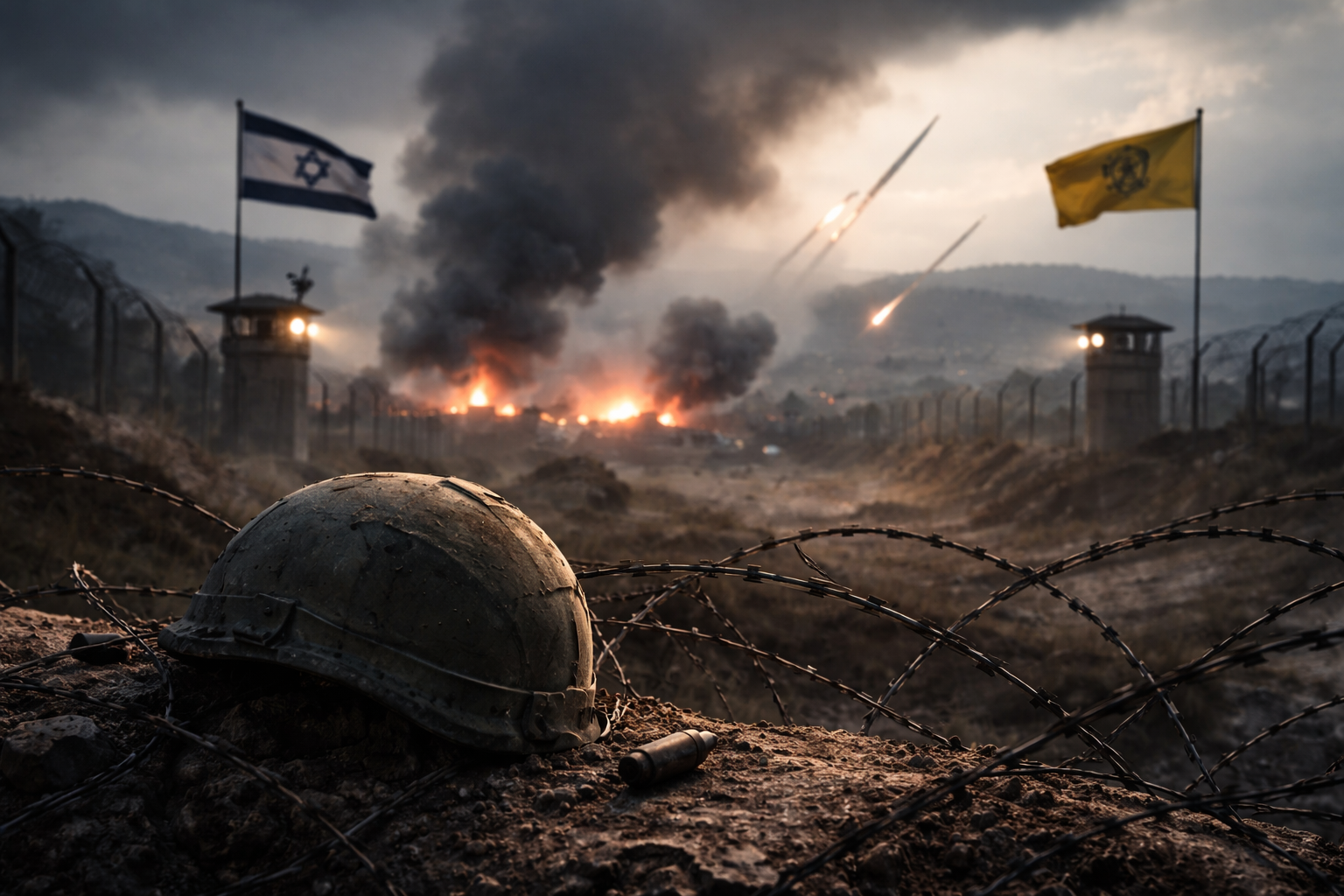
Israel–Hezbollah Escalation History: How a “Limited” Conflict Keeps Flirting With War
Israel–Hezbollah Escalation Dynamics History: The Shrinking Buffer and the Next Threshold
A single launch from southern Lebanon can empty neighborhoods in northern Israel, shut schools, and trigger airstrikes within minutes. That speed makes the Israel–Hezbollah conflict feel like it is always one misread signal away from something bigger.
The tension is often described as deterrence or a frozen front. It has never been frozen. It is managed through warning shots, calibrated retaliation, diplomatic messaging, and temporary resets.
One underappreciated lever is the border’s stabilizing architecture: peacekeepers, liaison systems, and enforcement capacity. When that machinery weakens, escalation becomes easier even if neither side is actively seeking war.
The story turns on whether the border’s shrinking buffer can still prevent a local incident from cascading into a regional confrontation.
Key Points
The Israel–Hezbollah escalation follows a recurring cycle: confrontation, ceasefire, rearmament, and renewed friction.
The Blue Line is a withdrawal marker, not a final border—leaving disputes structurally unresolved.
UN Security Council Resolution 1701 reduced violence after 2006 but did not fully resolve enforcement gaps.
Cross-border exchanges resumed after October 2023, displacing civilians and raising regional stakes.
The 2024 ceasefire lowered intensity but left structural constraints intact.
The planned end of UNIFIL’s mandate at the end of 2026 could reduce friction in the system—and increase escalation risk.
A Conflict Built on Unfinished Withdrawal
Hezbollah emerged in the early 1980s during Lebanon’s civil war and Israel’s 1982 invasion. It evolved into both a political force inside Lebanon and an armed actor with independent military capacity.
In 2000, Israel withdrew from southern Lebanon. The United Nations confirmed the withdrawal and delineated the Blue Line. It was not a peace treaty. It was an administrative line to verify withdrawal.
Shebaa Farms remained disputed. Lebanon asserted sovereignty. The UN treated it as Syrian-linked territory tied to the Golan Heights. Hezbollah used this ambiguity to argue that armed resistance remained legitimate.
The 2006 war transformed the escalation template. Resolution 1701 aimed to limit armed presence south of the Litani River and expand UN monitoring. Violence dropped sharply—but enforcement became the long-term challenge.
After October 2023, cross-border fire resumed as part of broader regional tensions. A ceasefire framework in 2024 reduced hostilities, but violations and strikes have continued into 2026.
The Blue Line as an Escalation Threshold Mechanism
The Blue Line functions less as a border and more as a trigger system. It is concrete enough to log violations, yet politically ambiguous enough to invite contestation.
Israel frames cross-border fire as a direct threat to sovereignty and civilian life. Hezbollah frames its actions as resistance within an unfinished conflict. The same event produces different legal and strategic interpretations.
Each interpretation matters because deterrence depends on perception. When each side believes it is responding rather than escalating, retaliation becomes normalized.
A key signpost: when exchanges remain geographically narrow and short in duration, both sides still accept tacit limits. When strikes expand deeper or target leadership routinely, a new escalation threshold has been crossed.
Competing Escalation Models: Deterrence Accounting vs Regional Alignment
Two internal logics drive behavior.
First, deterrence accounting. Each side maintains an informal ledger of losses, red lines, and reputational costs. Under this model, escalation involves calibrated messaging.
Secondly, the model considers ideological and regional alignment. Hezbollah operates within Iran’s regional strategic network. Israel views Hezbollah as a forward Iranian deterrent presence on its northern border.
These models collide when local incidents become proxies for regional credibility. In that moment, restraint may appear strategically costly.
Watch diplomatic movement elsewhere. When broader regional negotiations stall, cross-border signaling tends to intensify.
The Civilian Constraint: Rocket Geography and Airpower Risk
The most stabilizing force in the conflict is mutual civilian vulnerability.
Hezbollah’s rocket capability threatens northern Israel quickly. Israeli airpower and intelligence threaten Lebanese infrastructure rapidly.
This dynamic creates a paradox. Both sides prefer limited exchanges because escalation carries obvious humanitarian and political costs. Yet both sides also prepare for a larger confrontation because deterrence depends on credible capability.
When civilian displacement rises sharply, political tolerance for continued exchanges drops. After October 2023, displacement on both sides underscored how quickly tactical fire becomes strategic pressure.
Ceasefires as Strategic Intervals: Why Quiet Periods Store Future Risk
Resolution 1701 reduced immediate violence but left enforcement contested.
The 2024 ceasefire created additional mechanisms and monitoring frameworks. It lowered intensity. It did not eliminate incentives to reposition.
Here is the structural feedback loop: ceasefires reduce violence, but if compliance is partial, they become rearmament intervals. Capabilities improve. Expectations harden. The next confrontation becomes sharper.
The signal to watch is enforcement south of the Litani River. If unauthorized infrastructure persists or reappears, deterrence calculations shift.
The Buffer Problem: Peacekeeping Authority as a Hidden Stabilizer
Peacekeeping is often treated as background. It is not.
UNIFIL’s monitoring, liaison, and reporting create friction in the escalation chain. Friction buys time. Time reduces miscalculation.
If the UNIFIL mandate ends as scheduled at the end of 2026 without replacement, the system loses a stabilizer. Fewer verified facts. Fewer mediated channels. Faster unilateral decisions.
That does not guarantee war. It lowers the threshold for misinterpretation.
Measurable Signals of Escalation Pressure
Three observable indicators matter most.
First, enforcement credibility in southern Lebanon. If the Lebanese state cannot impose restrictions agreed upon under ceasefire frameworks, escalation pressure rises.
Second, physical infrastructure disputes along the Blue Line—walls, outposts, fortifications. These micro-territorial conflicts can trigger macro-political consequences.
Third, strike depth and casualty patterns. When violence moves beyond border zones or produces higher-profile casualties, the deterrence ladder shifts upward.
What Most Coverage Misses
The mechanism is straightforward: a weakening of the border's stabilizing architecture increases the risk of escalation, as the absence of buffers results in fewer opportunities to pause and clarify intent.
Mechanism: Peacekeeping, liaison routines, and enforcement monitoring slow down decisions and verify facts. Remove or weaken those systems, and retaliation becomes faster, more unilateral, and more prone to miscalculation.
Two near-term signposts confirm this dynamic. First, we need to determine whether the UNIFIL end date remains fixed or is renegotiated. Secondly, the decline in incident reporting and enforcement transparency as the drawdown approaches is a crucial consideration.
The conflict’s volatility depends less on rhetoric than on whether stabilizing friction remains intact.
What Happens Next
In the short term, risk lives in retaliation cycles. A single high-profile strike can force public commitments that narrow leaders’ options.
In the medium term, the question is enforcement credibility. If southern Lebanon enforcement mechanisms gain strength, escalation thresholds rise. If enforcement erodes, deterrence hardens.
Long term, the expiration of UNIFIL’s mandate represents a structural fork. Without a credible replacement, the border becomes more brittle because it relies entirely on raw deterrence rather than monitored restraint.
Deterrence without friction inherently leads to instability.
Real-World Impact
Northern Israeli communities experience conflict as disruption cycles: evacuation alerts, school closures, and business pauses.
Southern Lebanese communities experience persistent unpredictability: aerial surveillance, damaged infrastructure, and restricted agriculture.
Shipping insurers price risk when headlines spike, even if major trade routes remain open.
Lebanon’s political fragmentation intersects with security enforcement, shaping economic recovery prospects.
A Managed Conflict Approaching a Structural Cliff
Israel–Hezbollah escalation dynamics have always operated on thresholds, not absolutes. Quiet does not mean resolution. It means temporary equilibrium.
The fork ahead is institutional: we must either strengthen enforcement and monitoring or allow the buffer to thin and rely solely on deterrence.
Watch the durability of the 2024 ceasefire mechanisms, enforcement south of the Litani, and decisions surrounding UNIFIL’s future.
Historically, this phase will be remembered as the period when the conflict either gained new stabilizers or lost its last structural brakes.
