Hitler’s Biggest Mistakes in World War Two, Ranked
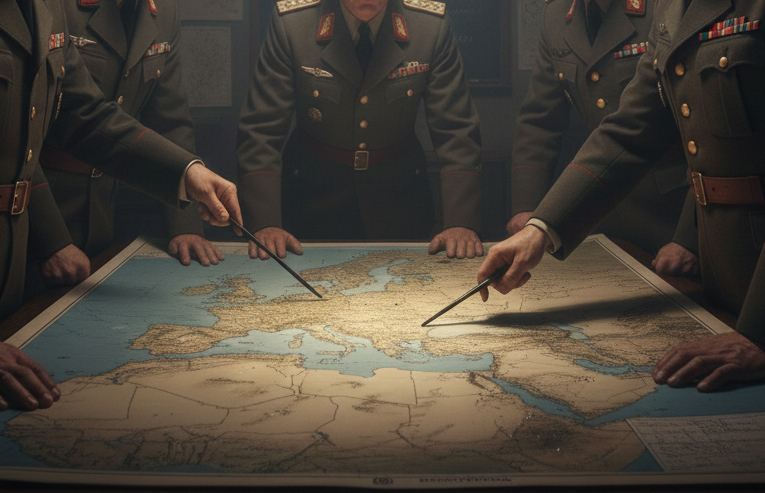
World War Two did not turn against Nazi Germany because of a single bad move. It was a chain of strategic misjudgments, gambles that went wrong, and ideological obsessions that overruled military logic. At the center of almost all of them stood Adolf Hitler, making decisions that his own generals often warned against.
Looking back, historians have argued for decades over which of Hitler’s mistakes mattered most. Was it the decision to invade the Soviet Union? The declaration of war on the United States? The failure to crush Britain when he had the chance? Or the way he turned a modern industrial state into a machine for genocide rather than victory?
This piece walks through Hitler’s biggest blunders, ranks them by how much they changed the course of the war, and explains why each one mattered. It also looks at the political, economic, and human fallout of those decisions and how they shaped the modern world.
The story turns on whether Hitler’s own choices made German defeat inevitable long before 1945.
Key Points
Hitler’s invasion of the Soviet Union in 1941 opened a vast second front that Germany could not sustain and became the decisive military error.
Declaring war on the United States after Pearl Harbor turned a regional European conflict into a truly global war Germany could not win.
Failing to defeat Britain in 1940–41, especially the shift from attacking RAF airfields to bombing cities, kept a powerful enemy in the fight.
Ideological war crimes in the East drove the Soviet Union and occupied peoples to fight to the end, making compromise impossible.
Hitler’s constant interference with his generals and his refusal to allow retreats turned setbacks into catastrophic defeats like Stalingrad.
Misallocation of resources, including late and confused priorities around jets, submarines, and tanks, weakened Germany’s long-term position.
Together, these mistakes ensured that even early German victories only set up a larger, unwinnable war of attrition.
Background
When Hitler came to power in 1933, Germany was still traumatized by defeat in World War One and the Treaty of Versailles. He promised to restore national pride, rebuild the armed forces, and overturn the postwar order. Rearmament, conscription, and reoccupation of the Rhineland all took place before the war, often against the advice of cautious military officers.
By September 1939, Germany had a modern, fast-moving army and an air force built for short campaigns. The early victories in Poland, Norway, the Low Countries, and France created an aura of invincibility around Hitler. Many in Germany and abroad began to believe he had an instinct for strategy that outperformed his generals.
But those early campaigns had two key features: they were short, and they were fought against enemies that were either unprepared, misled, or divided. Germany had not yet faced a long war against multiple industrial powers at once. By 1941, Hitler’s ambitions had grown far beyond what his economy and military could realistically sustain.
The biggest mistakes of the war came from that gap between his ambitions and Germany’s resources, combined with his ideological hatred and refusal to back down once committed.
Analysis
The Big Mistakes, Ranked
1. Invading the Soviet Union (Operation Barbarossa, 1941)
This is widely seen as Hitler’s single greatest strategic error. Germany launched a massive invasion of the Soviet Union in June 1941, expecting a quick collapse. Instead, the campaign bogged down across thousands of miles. Germany underestimated Soviet manpower, industrial capacity, and willingness to absorb horrific losses. Barbarossa turned the war into a colossal struggle of attrition that Germany was not equipped to win. It also exposed German troops to brutal winters, long supply lines, and endless partisan warfare.
2. Declaring war on the United States (December 1941)
After Japan attacked Pearl Harbor, Hitler chose to declare war on the United States, even though he was not obligated to do so. This brought the full weight of American industry, manpower, and technology formally into the fight against Germany. The United States could build ships, planes, and tanks on a scale that dwarfed German production. Once American factories were fully mobilized, Germany faced a three-front struggle: the Soviet Union in the East, Britain and the air war over Europe, and the growing American presence in North Africa, Italy, and France.
3. Failing to defeat Britain and mishandling the Battle of Britain (1940–41)
After France fell in 1940, Britain stood alone. Hitler hoped Britain would sue for peace, but when that did not happen, he tried to gain air superiority for a possible invasion. The Luftwaffe initially targeted RAF airfields and radar, but then shifted to bombing cities during the Blitz. This gave the RAF breathing room to recover. Britain stayed in the war, providing a base for future Allied operations, controlling key sea routes, and keeping German forces tied down in Western Europe and North Africa.
4. Turning the war in the East into a war of extermination
Hitler’s ideological hatred of Jews, Slavs, and political opponents meant that the campaign in the Soviet Union was not just a military operation. It became a war of annihilation. Mass killings, starvation policies, and destruction of villages turned potential collaborators into enemies. Instead of encouraging anti-Soviet movements, German occupation often pushed local populations into the arms of Moscow. There was no room for political compromise, only total victory or total defeat. That hardened Soviet resistance and helped transform the conflict into a fight to the death.
5. Refusing to allow retreats and overriding his generals
Again and again, Hitler refused to permit tactical withdrawals that might have saved German armies. At Stalingrad, he insisted that the Sixth Army hold its position until it was encircled and destroyed. In North Africa, in the Soviet Union, and later in France, similar patterns played out. Hitler increasingly took direct control of operations from his generals, issuing orders based on wishful thinking rather than realistic assessments. This turned manageable setbacks into irretrievable disasters.
6. Mismanaging resources and technological priorities
Germany developed advanced weapons, including jet fighters, long-range rockets, and improved submarines. But Hitler’s choices about where to invest were often confused or late. He pushed for “wonder weapons” that could not be produced at scale, interfered with the design and use of jets, and switched tank production between models instead of standardizing. Meanwhile, Allied bombing and superior industrial capacity meant that, over time, Germany could not replace its losses as quickly as its enemies.
7. Starting a war on too many fronts, too soon
Even before invading the Soviet Union, Germany was engaged in the West, in the air over Britain, and at sea against Allied shipping. By 1942–43, German units were fighting in North Africa, the Mediterranean, the Atlantic, the Soviet Union, and defending the skies over Germany. This overstretch was not an accident; it was built into Hitler’s vision of overturning the entire European order at once. The result was that Germany was outproduced, outnumbered, and slowly ground down.
Political and Geopolitical Dimensions
Hitler’s biggest mistakes reshaped the global map. By attacking the Soviet Union and then bringing the United States into the war, he created the conditions for a postwar world dominated by two superpowers: Washington and Moscow.
The decision to wage an ideological war in the East ensured that the Soviet Union would claim moral and political justification for pushing deep into Central Europe after the war. At the same time, the need to defeat Germany forced the United States and Britain into uneasy partnership with Stalin, even as they worried about the future spread of communism.
Politically, Hitler’s miscalculations destroyed any chance of Germany negotiating a limited peace. The scale of the atrocities and the scale of the war meant that the Allies demanded unconditional surrender. That, in turn, guaranteed that Germany would be occupied, divided, and rebuilt under foreign influence.
Economic and Military Strain
Germany entered the war with a strong industrial base but limited access to raw materials. Hitler’s aim was to seize resources in Eastern Europe and the Soviet Union, including grain, oil, and minerals. Instead, the invasion turned those regions into vast battlefields that had to be supplied, garrisoned, and rebuilt repeatedly.
Declaring war on the United States meant competing with an economy that could build aircraft carriers, bombers, and tanks at a scale Germany could not match. Allied bombing further strained German industry, destroying factories, transport networks, and fuel plants.
By opening multiple fronts and refusing to adapt strategy, Hitler forced Germany into a permanent state of emergency production. There was never enough fuel, never enough replacements, never enough time to train new crews properly. The economic war was lost long before the last battles in 1945.
Social and Cultural Fallout
Hitler’s ideological war resulted in mass death not only on battlefields but also in cities, villages, and camps across Europe. Millions of Jews, Roma, political prisoners, and civilians were murdered. Entire communities were wiped out.
Inside Germany, the early victories created a culture of belief in Hitler’s “genius.” That made it harder for opposition to form until it was too late. When defeats came, many Germans were psychologically unprepared for the scale of the collapse. The eventual defeat brought occupation, trials, and a long process of reckoning with guilt and responsibility.
For occupied nations, the war left deep scars. Collaboration, resistance, and civil conflict all left marks on national memory. Hitler’s mistakes did not just change borders; they shaped identities, myths, and debates that still echo today.
Technological and Security Implications
Germany made major advances in rocketry, jets, and submarine design, but Hitler’s decisions kept these breakthroughs from delivering strategic victory. Jets were delayed and diverted into bomber roles instead of being used early as pure fighters to defend German airspace. Submarine warfare was intensified but not supported with enough long-range reconnaissance and secure bases.
Security-wise, Hitler’s overconfidence helped the Allies exploit codebreaking and deception. The German leadership often ignored signs that their communications were compromised or that Allied operations were not what they seemed. Strategic surprise, once a German strength, shifted to the Allies as the war went on.
What Most Coverage Misses
A lot of commentary treats Hitler’s mistakes as isolated blunders: this battle lost, that campaign mishandled. What often gets less attention is how these choices were all linked by the same core problem: an unwillingness to accept limits.
Hitler did not just misjudge other countries. He misunderstood what Germany itself could realistically achieve in a long war. He believed that willpower, terror, and surprise could permanently overcome shortages of manpower, fuel, and time. That mindset led him to roll the dice again and again, each time on a bigger scale.
Another overlooked point is how early some of the decisive mistakes were made. By the end of 1941, with the Soviet Union still fighting and the United States now in the war, the basic shape of German defeat was already in place. What followed was not a single turning point, but a long, brutal confirmation of the consequences of those earlier decisions.
Why This Matters
Hitler’s biggest mistakes in World War Two are not just academic questions. They help explain why the war lasted as long as it did, why it was so destructive, and why the postwar world looked the way it did.
In the short term, his decisions shaped who occupied which countries, where borders were drawn, and which governments emerged from the ruins. In the long term, they helped create the Cold War, NATO, the division of Germany, and the global role of the United States and the Soviet Union.
Understanding this ranking also clarifies how leaders today might repeat similar errors: overconfidence, ideology over realism, and the belief that early victories guarantee long-term success.
Real-World Impact
A German factory worker in the Ruhr might have cheered early victories in 1940, only to see his city bombed repeatedly a few years later. Hitler’s decision to fight multiple enemies at once brought the war home to him in the form of air raids, shortages, and eventually invasion.
A Ukrainian farmer under German occupation might have hoped that the collapse of Soviet rule would bring more freedom. Instead, brutal occupation policies, forced labor, and mass killings showed that Hitler’s war was not about liberation, but exploitation and extermination.
A British pilot in 1940 fought to keep the RAF alive during the Battle of Britain. Hitler’s shift to bombing cities gave him crucial breathing space, allowing Britain to stay in the war and eventually join the liberation of Europe.
An American soldier who entered the war after 1941 did so because Hitler chose to declare war on the United States. That decision dragged the full weight of American industry and manpower into the conflict, shaping not just the war’s outcome but America’s role as a postwar superpower.
Legacy
Hitler’s biggest mistakes in World War Two were not accidents. They were the product of his worldview: a mix of racial hatred, contempt for opponents, and faith in his own intuition over expert advice. Invading the Soviet Union, declaring war on the United States, failing to defeat Britain, turning the East into a war of annihilation, and refusing to adapt strategy all flowed from that same mindset.
The key fork in the road came when early victories convinced Hitler that there were no real limits to what he could achieve. Once he ignored those limits, Germany slid into a war it could not possibly win, against enemies it could not possibly overpower, and on terms that allowed no negotiated way out.
The signs of which way the story would break were already visible by the end of 1941: a vast Eastern front, an enraged and mobilizing United States, a resilient Britain, and an overstretched German war machine. From that point on, Hitler’s biggest mistakes did not just shape the war—they made its outcome more and more certain.
