The Collapse of the Soviet Union: The Forces That Brought It Down, Ranked
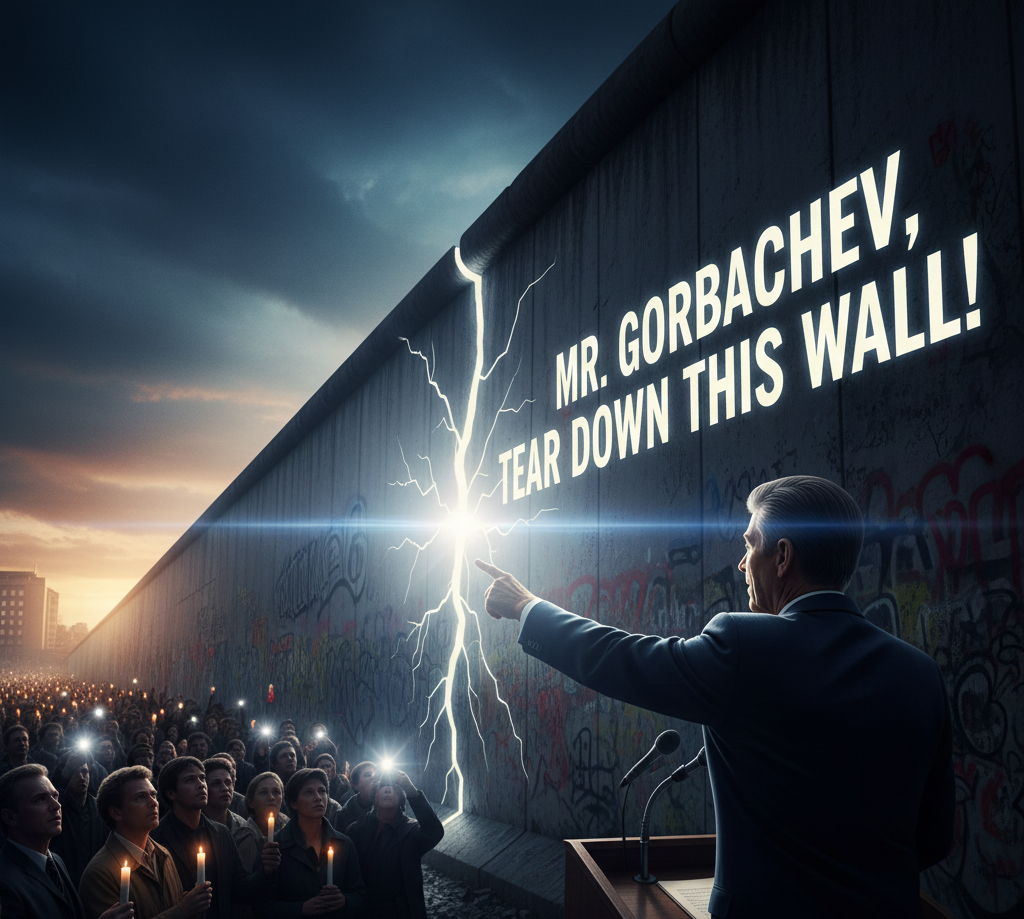
The collapse of the Soviet Union did not come from a single shock. It was the final stage of a long, grinding crisis that touched every part of the system: the economy, the political elite, the military, and ordinary people from the Baltics to Central Asia.
Even now, more than three decades later, the question of why the Soviet Union fell still matters. It shapes debates about today’s Russia, NATO’s borders, energy security, and the wars and revolutions that followed in its wake.
This piece ranks the main forces behind the collapse of the Soviet Union from the deepest, structural causes to the short-term triggers that finally brought the system down in 1991. It looks at how economic stagnation, political reform, nationalism, and elite power struggles interacted to turn a superpower into 15 separate states in a few short years.
By the end, the aim is simple: to understand not just how the Soviet Union died, but why it became fragile enough to fracture so fast.
The story turns on whether a rigid superpower could reform itself faster than it was falling apart.
Key Points
Rank 1 – Structural economic failure: Decades of central planning, low productivity, and a bloated military budget left the Soviet economy stagnant and unable to compete with more flexible market systems.
Rank 2 – Nationalism and the “prison of peoples”: Rising nationalist movements in the Baltics, Caucasus, and other republics turned long-suppressed tensions into open bids for independence.
Rank 3 – Gorbachev’s reforms backfiring: Perestroika and glasnost were meant to save the system but instead exposed its failures, weakened central control, and unleashed forces the leadership could not manage.
Rank 4 – Arms race, Afghanistan, and the cost of empire: The burden of competing with the United States, fighting in Afghanistan, and maintaining client states drained resources and public patience.
Rank 5 – Crisis of legitimacy and belief: Faith in Marxism-Leninism faded, corruption was visible, and ordinary people no longer believed the promises made by the ruling party.
Rank 6 – The failed August 1991 coup: The attempt by hardliners to reverse reforms shattered what remained of central authority and elevated republican leaders, especially in Russia.
Rank 7 – Elite power struggles and the Belavezha deal: Once key leaders in Russia, Ukraine, and Belarus decided they were better off without the Union, the Soviet state was finished on paper as well as in practice.
Background
The Soviet Union emerged from the Second World War as a victorious but devastated superpower. It controlled a vast territory from Eastern Europe to Central Asia and claimed to offer an alternative model to Western capitalism. Under Joseph Stalin, and later his successors, the state managed heavy industry, controlled prices and wages, and directed investment through rigid central plans.
For a time, this model delivered visible results. The country rebuilt, sent the first satellite into space, and developed nuclear weapons. But by the late 1960s and 1970s, the Soviet economy was slowing. Growth depended on more raw materials and more labour rather than better technology or efficiency. Shortages, queues, and poor-quality consumer goods became a normal part of daily life.
In the 1970s and early 1980s, the pressures mounted: the cost of the arms race with the United States, the war in Afghanistan, and the need to subsidise allies and client states all strained a system that could not grow fast enough to pay the bill. At the same time, underground dissident networks, human rights activists, and national movements quietly gained strength.
When Mikhail Gorbachev took power in 1985, he tried to modernise the system from within. Perestroika (restructuring) aimed to make the economy more flexible. Glasnost (openness) loosened censorship and allowed more public debate. Instead of stabilising the Union, these reforms exposed corruption, revealed the scale of past crimes, and encouraged republics to demand more autonomy.
By 1990–1991, strikes, nationalist protests, ethnic clashes, and economic breakdown were converging. The failed hardline coup in August 1991 accelerated the process. By December, the leaders of Russia, Ukraine, and Belarus signed an agreement dissolving the Union. The Soviet flag came down over the Kremlin on 25 December 1991.
Analysis
Political and Geopolitical Dimensions
At the political level, the collapse of the Soviet Union was driven above all by the weakening of central authority in Moscow. For decades, the Communist Party had maintained tight control over the republics through a mix of ideology, security forces, and economic dependency.
Gorbachev’s reforms removed key pillars of that control. Competitive elections for regional and national bodies gave local leaders their own power base. Glasnost allowed nationalist and opposition figures to speak openly. When protests broke out in the Baltics, the Caucasus, and elsewhere, the central government hesitated between compromise and force, often choosing halfway measures that pleased no one.
Geopolitically, the leadership also started to pull back from the “outer empire” in Eastern Europe. The decision not to use force to stop changes in Poland, Hungary, East Germany, and other states signaled that Moscow’s grip was loosening. Once communist regimes in Eastern Europe fell, the Soviet Union lost both prestige and a protective buffer. The message to many inside the Union was clear: the old order was no longer permanent.
This is why political and geopolitical factors sit near the top of the ranking. They turned a long-running economic and social crisis into a visible loss of control.
Economic and Market Impact
The economy, though, is ranked first because it set the limits of what was possible. A superpower can survive ideological doubt or regional unrest for a long time if it can still deliver rising living standards or at least basic security. The Soviet system struggled to do either by the 1980s.
Chronic shortages meant people spent hours in queues. Factories often met plan targets in quantity but not quality. Agriculture underperformed despite vast land and resources. The state poured money into the military-industrial complex while ordinary consumers faced empty shelves and crumbling housing.
Perestroika tried to introduce limited market-type mechanisms and more autonomy for enterprises. In practice, it often disrupted supply chains without creating a functioning market. Prices were distorted, corruption worsened as managers exploited loopholes, and inflation started to bite. By 1990–1991, many regions faced serious disruptions in food and fuel supplies.
This economic failure undercut the social contract. When the state can no longer promise basic stability, people become more willing to support radical change, whether that means independence, democracy, or simply a different set of leaders.
Social and Cultural Fallout
Socially, the Soviet Union had long described itself as a “brotherhood of nations.” In reality, many non-Russian republics experienced discrimination, forced Russification, or memories of earlier repression. Mass deportations of entire peoples during Stalin’s time, and brutal crackdowns on dissent, left scars that never fully healed.
As censorship eased, suppressed histories and local identities resurfaced. In the Baltics, many saw Soviet rule as occupation and wanted full independence. In the Caucasus and Central Asia, religious and ethnic identities grew more visible. Even within the Russian republic, people grew more cynical about official slogans as they compared reality with what they had been taught in school.
Religion and local culture, once squeezed to the margins, gained new space. The official ideology no longer inspired the same loyalty. A society that once feared to speak openly started to criticise the system in public. That shift in mood did not cause the collapse on its own, but it made it much easier for nationalist and reformist leaders to mobilise support when the crisis deepened.
Technological and Security Implications
On the technological and security front, the Soviet Union remained a nuclear superpower but lagged in key civilian technologies. The information revolution that was transforming parts of the West in the 1980s did not take root in the same way behind the Iron Curtain. Outdated equipment and poor access to modern computers and telecommunications limited productivity and kept citizens more isolated from global trends.
At the same time, security failures—from the handling of the Chernobyl disaster to the long, draining war in Afghanistan—shook trust in the state’s competence. The nuclear arsenal remained intact during the collapse, but the breakup created new security dilemmas: who controlled which weapons, how to manage borders, and how to prevent local conflicts from spiraling.
The technological gap did not topple the Union directly, but it made the economic problems harder to solve and contributed to a sense that the system was falling behind the rest of the world.
What Most Coverage Misses
One often overlooked factor is how much the collapse was driven by elite calculus rather than only by street protests or abstract forces. By 1990–1991, many regional party bosses and emerging political figures had concluded that they would be more powerful as leaders of sovereign states than as minor players in a fading Union.
For them, independence was not just a national dream. It was also a path to control over local resources, state assets, and new political systems. This helps explain why, once the August 1991 coup failed, events moved so quickly. Key leaders in Russia, Ukraine, and Belarus moved from negotiating looser ties inside a reformed Union to signing the agreement that dissolved it.
Another underplayed element is timing. The same structural weaknesses had existed for years. What changed in the late 1980s and early 1990s was that the central leadership tried to reform without a clear roadmap, while the international environment was relatively permissive. There was no external invasion, no sudden financial crash imposed from outside. The system cracked under the weight of its own contradictions once its rulers loosened the bolts holding it together.
Why This Matters
The collapse of the Soviet Union reshaped borders across Eurasia, created new states overnight, and shifted the balance of power in global politics. It influenced everything from NATO expansion and energy markets to conflicts in places like the Caucasus and Eastern Europe.
In the short term, it brought economic “shock therapy” to many former Soviet republics, wiping out savings, disrupting trade, and plunging millions into poverty. In the longer term, it opened space for new political systems, some more democratic, others dominated by new strongmen.
Many of today’s flashpoints—over NATO’s eastern border, over gas pipelines, over the status of regions that were once internal Soviet borders—trace back directly to how and why the Union ended. Elections, security doctrines, and alliances in both Europe and Asia still carry the imprint of that moment.
Events to watch in the present day often involve how current leaders reinterpret the Soviet collapse: whether they frame it as a tragedy to be corrected, a warning about over-centralised power, or a necessary stage in their nation’s history. Those narratives shape foreign policy, military planning, and domestic controls now.
Real-World Impact
A factory worker in eastern Ukraine saw the familiar Soviet structures vanish in a few years. Wages became uncertain, state orders disappeared, and new private owners arrived with different rules. What had seemed like a stable, if limited, life turned into a scramble to adapt to a volatile market economy.
A teacher in a Baltic capital watched the curriculum flip. Portraits on classroom walls came down, new flags went up, and history lessons were rewritten to emphasise independence and earlier periods of occupation. For students, the map on the wall changed; for the teacher, so did the meaning of a lifetime of work.
An oil engineer in western Siberia suddenly found that the same oil fields now supplied revenue to a newly assertive Russian state rather than a Union-wide budget. The shift opened space for new wealth and new inequality, as control over energy flows became central to the politics of the new Russia.
A small trader in Central Asia, once confined to state-run supply routes, found new opportunities and risks in open markets. Borders that had once been internal lines within the Union turned into international frontiers, with customs posts, new currencies, and fresh layers of bureaucracy.
Legacy
The collapse of the Soviet Union was not a single event but the climax of a long crisis. At the top of the ranking sit deep economic failures and an overextended empire, followed by rising nationalism, fading belief in the system, and reforms that loosened control faster than the state could adjust. The final triggers—a failed coup and a handful of signatures on a treaty—only worked because the structure they rested on was already hollowed out.
The core tension is still with us: can large, centralised powers reform without breaking apart, or does serious change always risk fragmentation once local identities and interests reawaken? The answer will depend on how current leaders handle economic strain, political dissent, and demands for autonomy.
The signs to watch are familiar: widening gaps between official slogans and lived reality, leaders who question the value of existing unions or alliances, and societies where old promises no longer match what people see in their daily lives. Those were the warning lights in the final years of the Soviet Union—and they remain important signals wherever power is highly concentrated today.
