

Orwell’s 1984 in 2025: Which Predictions Already Came True?
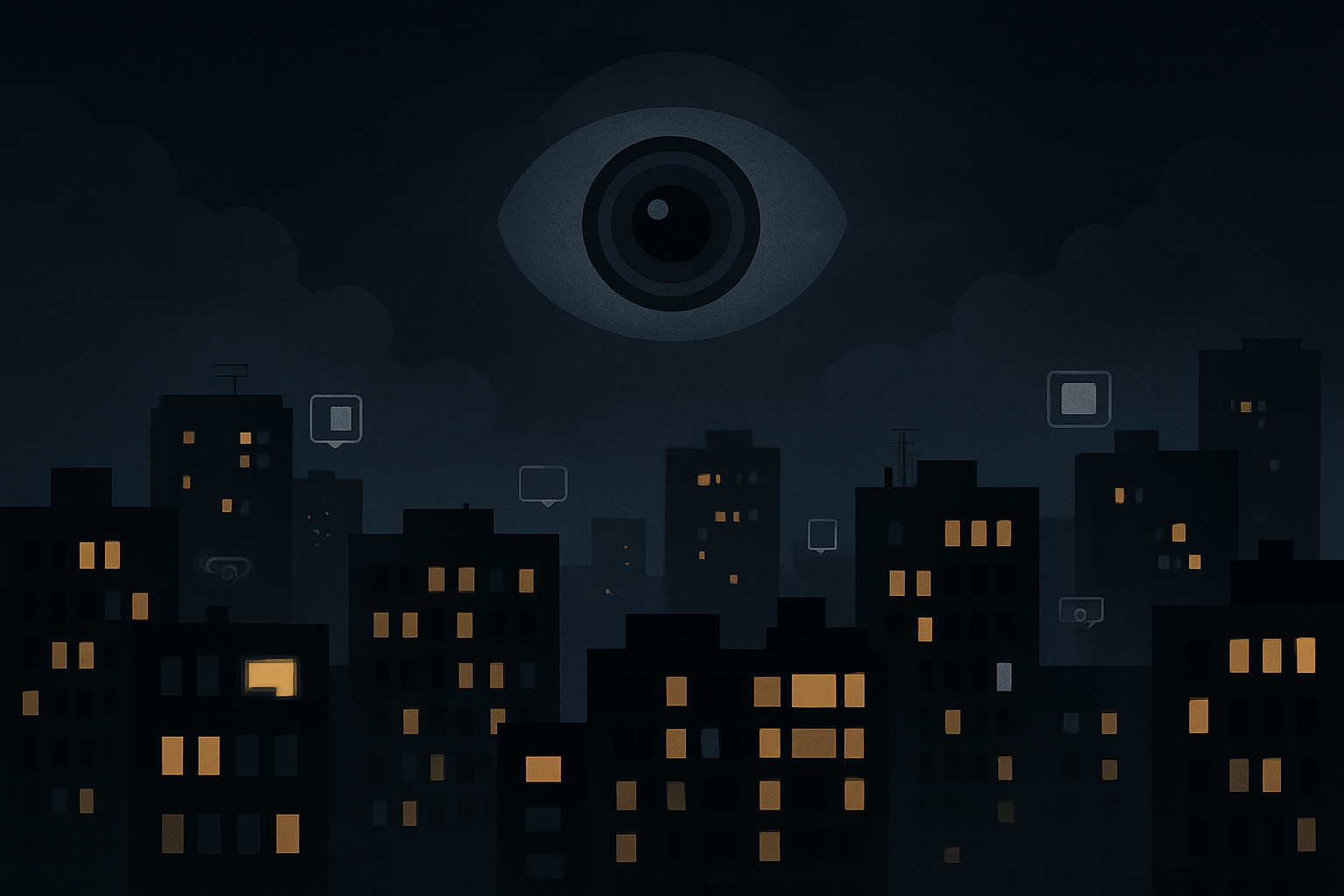
In 2025, it has become almost routine to say the world looks like George Orwell’s Nineteen Eighty-Four. The language of the book—Big Brother, thoughtcrime, Newspeak—has moved from the page into headlines, social media arguments, and everyday talk. The fear behind the cliché is simple: did Orwell, writing in 1949, actually see the future?
The novel follows Winston Smith in a future superstate, Oceania, where a single Party controls history, language, and even private emotions. Telescreens watch citizens constantly. Children inform on parents. Officials rewrite yesterday’s news to match today’s line. The book was meant as a warning about totalitarianism, not as a literal forecast. Yet many readers today see echoes of its world in mass surveillance, online censorship, disinformation, and a permanent sense of crisis.
This article looks at what 1984 actually describes, how close parts of that vision come to life in 2025, and where the parallels are overstated. It sets Orwell’s fears in their original Cold War context, then traces how modern surveillance technology, information control, and “post-truth” politics resemble—and differ from—the world of Big Brother.
By the end, the reader will have a clearer sense of which elements of 1984 already feel real, which remain warnings rather than realities, and why the novel still shapes debates about privacy, free speech, and power in the digital age.
Key Points
Nineteen Eighty-Four was written in 1949 as a warning about totalitarian rule, shaped by experiences of fascism, Stalinism, and war propaganda.
Several themes—mass surveillance, information control, and manipulated language—have clear parallels in the digital technologies and politics of 2025, though usually in softer, more fragmented forms.
Modern surveillance combines state powers with corporate data collection, biometric tools, and widespread CCTV, echoing the telescreens of 1984 while operating under different legal and political constraints in democracies.
Battles over disinformation, “fake news,” and “post-truth” politics resemble Orwell’s concern with truth manipulation, but today’s conflicts are multi-sided rather than controlled by a single Party.
Online outrage cycles and “rage bait” content recall the emotional conditioning of the Two Minutes Hate, yet they are driven by platform incentives and user behavior as much as by governments.
Parts of Orwell’s nightmare—one monolithic Party, total censorship, complete erasure of private life—have become reality in some authoritarian systems, while many open societies still maintain pluralism, independent courts, and civil liberties.
Background
George Orwell wrote Nineteen Eighty-Four in the late 1940s, as Europe struggled to rebuild after World War II. He had witnessed fascism, fought in the Spanish Civil War, and watched the rise of Stalin’s Soviet Union with alarm. For him, the danger was not only brute force but also a new kind of system that would reach into language, memory, and private thought.
Published in 1949, the novel imagines Great Britain transformed into “Airstrip One,” a province of the superstate Oceania. The Party, headed by the figure of Big Brother, rules through omnipresent surveillance, propaganda, and terror. Telescreens in homes and workplaces both broadcast and listen. Thought Police arrest even subtle signs of dissent. Children are trained to denounce their parents. Perpetual war keeps the population anxious, poor, and loyal.
Central to this control is language. The Party develops “Newspeak,” a stripped-down vocabulary designed to make rebellious thought literally unthinkable. At the Ministry of Truth, Winston rewrites past newspapers so that the Party is always right and its predictions always accurate. In this world, the slogan “Who controls the past controls the future: who controls the present controls the past” is not just rhetoric but operating procedure.
At the time, readers saw direct parallels with Nazi Germany’s propaganda and the Soviet Union’s show trials and historical erasures. The book did not claim every country would become Oceania. It warned that any society that let a single party monopolize information, technology, and fear could drift toward something like it. That warning has framed arguments about censorship, surveillance, and security ever since.
Analysis
Big Brother, Telescreens, and Today’s Surveillance
The most obvious link between 1984 and 2025 is surveillance. In Oceania, telescreens sit in every room, watching and listening. There is no true private space.
Modern societies do not use telescreens in the same crude, state-run form, but the combined effect of smartphones, smart TVs, public CCTV, license-plate readers, and internet tracking can feel similar in scope. Many cities are covered by dense camera networks. Law enforcement and security agencies in a range of countries use facial recognition, location data, and bulk communications interception in the name of crime prevention and counterterrorism.
In some democracies, laws define when authorities can access communications data, including interception and retention powers, and set out oversight mechanisms. These legal frameworks differ from the lawless power of the Thought Police, but they show how deeply digital monitoring is woven into modern security policy.
Elsewhere, especially in more authoritarian systems, the parallels become sharper. Large-scale monitoring of online behavior, mandatory data retention, automated license-plate tracking, and biometric databases are used to shape social behavior and suppress dissent. Experiments that link data to social or economic penalties create forms of behavioral scoring built on pervasive data collection.
The crucial difference from 1984 lies in plurality and contestation. In many democracies, surveillance powers are challenged by courts, civil society groups, and privacy regulators. People can still vote out governments and criticize laws. Yet the technical capacity to watch, record, and cross-link lives on a scale Orwell could scarcely imagine is now real. That capacity is what gives his vision of Big Brother renewed force in 2025.
Newspeak, Truth, and “Post-Truth” Politics
Newspeak is not just a small joke about jargon; it is the core of the Party’s power. By narrowing vocabulary and twisting meaning, the Party tries to make rebellion linguistically impossible. At the Ministry of Truth, history is constantly rewritten so that the official record always matches the current line.
The modern world does not have a single Ministry of Truth, but it has intense battles over what counts as truth. The idea of “post-truth” politics describes a climate where emotional appeals often matter more than shared facts. Disputes about election integrity, public health, climate change, and armed conflicts frequently revolve less around evidence and more around identity, loyalty, and online narratives.
Governments across many regions have passed laws against “fake news,” disinformation, or “harmful” speech online. On paper, these measures aim to protect democratic debate and public safety. In practice, some regimes use them to silence critics, block websites, and pressure platforms into removing sensitive content. At the same time, global reports describe growing “digital authoritarianism,” where states seek to control online information space through legal rules, technical systems, and pressure on companies.
Private platforms act as informal gatekeepers. Recommendation algorithms downrank or amplify content. Moderation policies draw lines around permissible speech. Users themselves report, block, and mass-flag posts. Instead of a single Party doctoring every newspaper, millions of actors compete to frame reality in their favor. The result can feel chaotic rather than monolithic, but the basic concern Orwell raised—about power over language and memory—remains central.
Two Minutes Hate and the Age of Rage Bait
In 1984, citizens gather for the “Two Minutes Hate,” a daily ritual where they scream at the Party’s enemies on a giant screen, then shift to adoration of Big Brother. It is emotional conditioning in pure form: anger, fear, and love channeled to reinforce loyalty.
Social media has created its own version of scheduled outrage. Platforms reward content that provokes strong reactions. Entire genres of posts exist to trigger anger and drive engagement. The term “rage bait” captures material crafted to inflame and go viral.
Online pile-ons, cancel campaigns, and partisan echo chambers do not require a Ministry of Love to coordinate them. They emerge from a mix of human psychology, platform design, and political incentives. Yet from the outside, the effect can resemble a constant, rolling Two Minutes Hate: daily cycles of denunciation directed at shifting targets, captured in short clips, memes, and threads.
Unlike in 1984, these storms do not all point in the same direction. Different factions target each other. Still, the shared environment—short clips, emotional triggers, and simplified enemies—makes it harder to sustain nuanced public debate, one of the very conditions Orwell feared losing.
Perpetual War and Permanent Emergency
Oceania is always at war—with Eurasia, or Eastasia, or both. The enemy changes, but the state of emergency never ends. War justifies rationing, censorship, and repression. It also absorbs anger that might otherwise turn inward.
The twenty-first century has not seen a single, world-encompassing war of Oceania’s type, but it has seen long campaigns framed as open-ended struggles: the “war on terror,” ongoing conflicts in various regions, great-power competition in the Pacific, and the rise of cyber operations and proxy wars. States present many of these conflicts as part of a wider, enduring contest over security, values, or technological supremacy.
This sense of permanent emergency extends beyond battlefields. Cybersecurity incidents, pandemics, and climate shocks are often described in warlike language. Emergency powers—expanded surveillance, border controls, or restrictions on assembly—have sometimes lingered long after their original trigger faded. The line between legitimate security measures and opportunistic power grabs is often contested, which is exactly the tension 1984 pushes readers to examine.
What 1984 Missed About 2025
For all these parallels, it is important to note what has not come true. In most countries, there is no single Party controlling all media, all property, and all private life. Elections still change governments. Independent courts strike down laws. Journalists, activists, and non-governmental organizations continue to investigate and criticize those in power, even if they face pressure or harassment.
Technology has also not been a one-way tool of repression. The same smartphones that can track location also record abuses. The same internet that hosts disinformation campaigns also allows whistleblowers, dissidents, and citizen journalists to reach global audiences. Encrypted messaging, privacy laws, and data-protection campaigns push back against surveillance, even if unevenly.
Orwell’s world also misses the scale of consumer capitalism and entertainment in 2025. Oceania keeps people obedient partly by keeping them hungry and deprived. Today, distraction is often a more subtle tool of control than fear alone: endless content feeds, targeted ads, and gamified platforms. Some critics see this as a softer version of control; others view it as a source of empowerment and choice. Either way, it is not the gray, uniform society of 1984.
Why This Matters
Revisiting 1984 in 2025 is not just an exercise in literary nostalgia. The book offers a framework for thinking about how power operates when information and technology are concentrated in few hands. That framework remains relevant in debates about data rights, platform regulation, national security, and digital authoritarianism.
In the short term, the comparison sharpens questions about new laws on surveillance and online speech. When governments expand interception powers or tighten rules on “harmful” content, Orwell’s vocabulary often surfaces in parliamentary debates, court challenges, and commentary. In more repressive systems, activists use 1984 to highlight the costs of closed internets, surveillance cities, and social scoring experiments.
In the longer term, the novel helps frame recurring tensions: between security and liberty, innovation and privacy, free expression and protection from harm. It reminds readers that language itself—what words are allowed, what stories are told, which archives are preserved—can become a battleground that shapes future possibilities.
Real-World Impact
Imagine a commuter in a major city. Their journey to work takes them past dozens of cameras. Their phone tracks their movements; their transit card logs each tap; their workplace uses access badges and sometimes biometric scanners. Most of this is mundane and lawful. But it raises exactly the question 1984 posed: how much unnoticed recording is too much, and who decides?
Consider an online user reading about a contentious election or conflict. Their feed is filled with clashing narratives, doctored images, and heated commentary. Platform rules, state regulations, and coordinated campaigns all shape what they see. The experience of trying to work out what actually happened can feel like Winston’s struggle to remember an earlier version of the news.
Think of a small business owner whose reputation rises or falls based on algorithmic ratings and opaque moderation decisions, or a student learning about 1984 while also learning how to navigate online identity, privacy settings, and digital footprints. In each case, the themes of the novel—control, memory, fear, and resistance—are not abstract. They shape everyday choices about what to share, what to believe, and how much trust to place in institutions.
Finally, picture citizens in an authoritarian state where criticism of leaders brings real risk. For them, 1984 can feel less like metaphor and more like documentary: blocked websites, mandatory apps, and censors who punish “doom-mongering” about the economy or political system. Their experience underlines the fact that while many societies hover on the edges of Orwell’s world, some have already stepped far inside it.
Conclusion
Orwell did not predict smartphones, the internet, or social media. Yet the core tension of Nineteen Eighty-Four—between human freedom and systems that seek to watch, shape, and rewrite reality—speaks directly to the politics of 2025. Large-scale surveillance, information manipulation, and emotional conditioning are no longer science fiction; they are live policy questions.
At the same time, the world of 2025 is not Oceania. Power is diffuse as well as concentrated. States, corporations, networks, and communities all compete to define truth and set the limits of acceptable speech. Courts, elections, investigative journalism, and civil society still block the path to a single, permanent Big Brother in many countries, even as others move closer to that model.
The value of 1984 today lies less in one-to-one predictions and more in the questions it forces readers to ask. Who controls the infrastructure of information? How transparent are decisions about surveillance and censorship? What safeguards exist when emergencies become the norm? And how can societies protect both security and the messy, uncomfortable freedom that real truth-seeking requires?
As technologies like artificial intelligence, biometric monitoring, and ubiquitous sensors continue to spread, those questions will only grow sharper. The line between using data to improve safety and using it to enforce conformity will be drawn and redrawn in courtrooms, parliaments, boardrooms, and streets. Watching where that line moves—and who gets to move it—may be the most Orwellian task of all.
These reflections are interpretive and speculative, offering a modern lens on historical ideas rather than asserting definitive claims
