Ranked: The Epstein Island Conspiracies—Spy, Blackmail, Rituals, and the Death That Shook Power
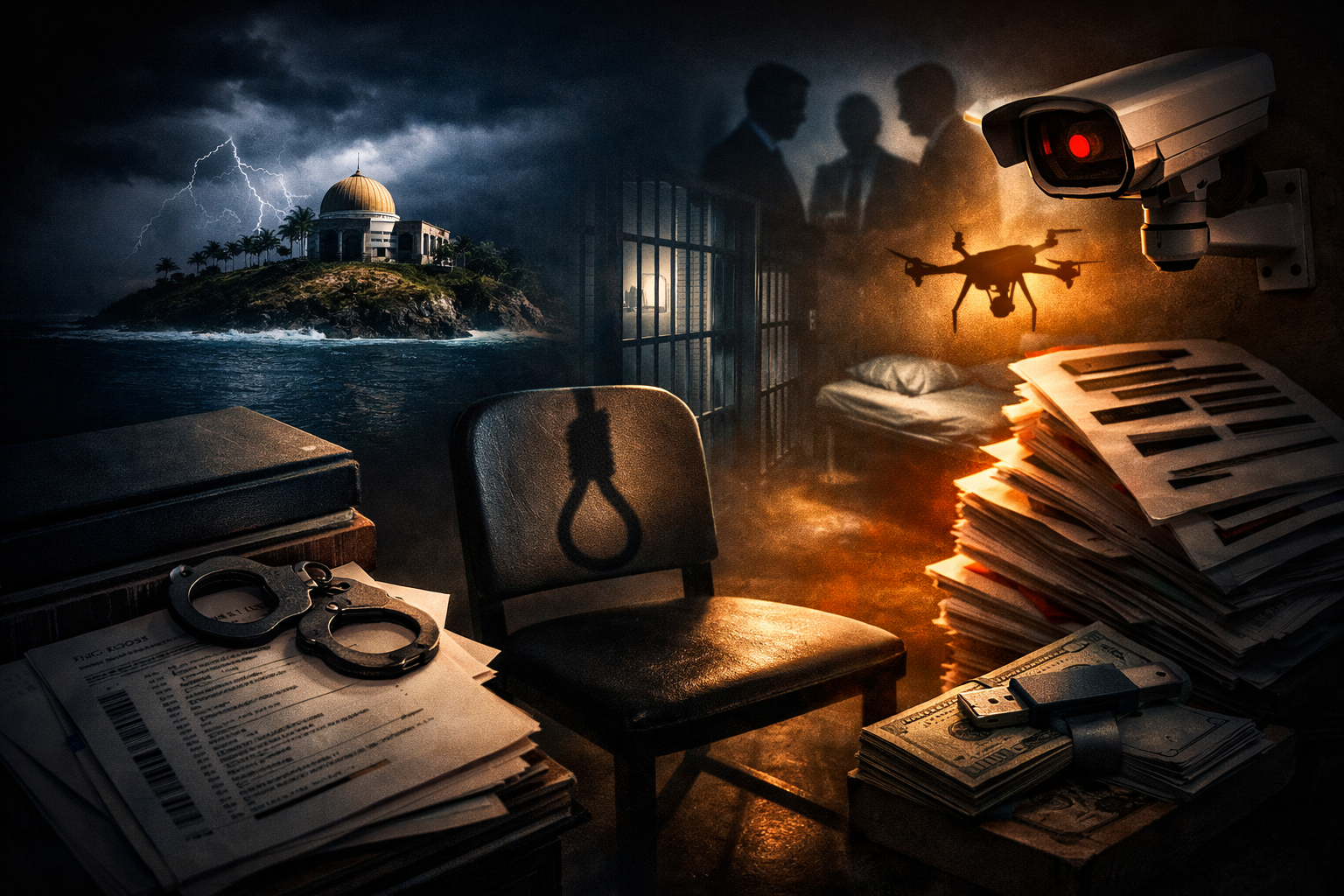
Epstein Island Conspiracies Ranked: Spy Claims, Death, Files
The Epstein Conspiracies That Won’t Die
Three million pages don’t end a scandal—they feed it. The latest wave of “Epstein files” has reignited the same questions that refuse to stay buried: what really happened on the island, why was he so plugged into power, and whether his jail death was the moment someone hit the emergency stop.
Two developments are driving the new surge: a huge federal release of records on a rolling basis and Ghislaine Maxwell’s continued refusal to answer questions publicly even as political pressure intensifies.
One overlooked hinge matters more than any single rumor: the public keeps getting fragments—redacted, partial, and context-free—which is exactly the environment where conspiracies thrive.
The story turns on whether transparency can beat mythology.
Key Points
A major new release of Epstein-related materials has landed, including millions of pages plus a large volume of images and video, but redactions and rolling batches are still shaping what the public can actually verify.
Maxwell has declined to answer questions in a congressional setting, deepening suspicion that she knows more than she’s saying—while also giving her a legal reason to stay silent.
The biggest conspiracies cluster around five themes: a hidden “client list,” blackmail, intelligence ties, alleged “ritual” activity, and the circumstances of Epstein’s jail death.
Official findings on Epstein’s death still point to suicide, but documented institutional failures and fresh disputes over the timeline leave room for doubt.
The island itself is both real and mythologized: it’s tied to abuse allegations but also overloaded with speculative claims that outrun what can be proved.
What happens next depends on whether more primary material becomes usable to the public (not just released) and whether any witness with firsthand knowledge actually testifies under oath.
Background
Jeffrey Epstein’s story is not one scandal—it’s a chain of institutional failures spanning policing, prosecution, wealth management, and custody.
The core timeline is well known: serious allegations in the mid-2000s, a widely criticized plea deal in 2008, a renewed federal case in 2019, and then Epstein’s death in custody before trial. After that, the prosecution shifted toward his associates, culminating in Maxwell’s conviction and a lengthy prison sentence.
Now, the case has entered a different phase: not courtroom drama, but document warfare. A transparency law has pushed an enormous volume of material into public view in batches, with privacy redactions intended to protect victims—and political actors treating each tranche like ammunition.
Analysis
The Island: What’s Documented, What’s Disputed, What’s Fantasized
“Epstein Island” is shorthand for Little Saint James—a private property that became a symbol because it compresses the entire scandal into one location: jets arriving, guests visiting, and a sense of physical isolation that feels like impunity.
What can be said without turning speculation into “fact” is that the island was a setting repeatedly mentioned in the broader Epstein narrative, including by accusers and in public reporting around his properties and travel network. It also contains highly photographed structures that the internet has turned into story engines—especially the domed building often labeled a “temple.”
The transition from a "strange building" to "rituals" marks a significant shift in the evidentiary landscape. The public record supports that the building exists and drew attention because it looked unusual. What’s missing is verifiable proof that it was used for occult activity—and the claims that circulate most widely tend to be untethered from testimony, filings, or documented investigative findings.
A useful rule here: the more cinematic the claim, the more it tends to rely on vibes rather than verifiable detail.
Ranked: The Biggest Epstein Conspiracy Theories (Most Believed → Most Unprovable)
1) “There’s a hidden client list.”
This is the flagship theory because it promises a clean ending: one document that converts suspicion into certainty and forces consequences. It also maps neatly onto how people imagine elite scandal works—a roster, a network, a hierarchy. The problem is that big investigative archives rarely produce one tidy “master list.” What tends to exist instead is a messy ecosystem: contact books, flight logs, calendars, emails, financial records, and third-party mentions—all of which can show proximity, not necessarily participation.
Why it persists now is structural. Massive, rolling releases (millions of pages, plus images and video) mean the public keeps encountering name fragments without full context. That encourages a common leap: if a famous person appears anywhere, the appearance must imply guilt. But “named” can mean anything from an address entry to an email chain to a scheduling note—and the distinction is everything. Recent disclosures and controlled reviews have also produced a second accelerant: redactions. When names are blacked out, many readers interpret that as protection rather than victim privacy or legal caution, which hardens the “secret list” assumption.
What proof would look like: a document (or database) that is authenticated, context-rich, and shows criminal conduct or procurement, not just contact. The strongest version would be corroborated by independent evidence: payments, logistics, communications describing illegal arrangements, or sworn testimony that ties entries to actions. Without that chain, the “list” stays emotionally powerful but evidentially slippery.
2) “He was running a blackmail operation.”
This one survives because it has a plausible mechanism people recognize instantly: access + secrecy + compromising situations = leverage. It also explains two mysteries at once: why Epstein could move among the powerful and why people might have been reluctant to confront him. The public imagination adds a third piece—surveillance—because it’s the obvious tool that turns undesirable behavior into a control system.
But the evidentiary bar is high. “Blackmail was possible” is straightforward (anyone in that position could attempt it). “Blackmail happened at scale” requires documentation: explicit messages about leverage, preserved recordings with a clear chain of custody, or testimony describing coercion and outcomes (favors granted, investigations stalled, money moved) tied to threats.
Why this theory stays near the top is that it doesn’t require a grand cabal. It only requires that Epstein was systematically collecting leverage—and that at least some targets responded. It also feeds on how scandal ecosystems work in real life: reputational fear can shape behavior even when no explicit threat is ever written down.
What would confirm it includes verified evidence of recording or collection, intent to use, and actual leverage events such as requests, pressure, and outcomes? What would weaken it: a clearer picture that what existed was chaotic exploitation rather than a managed coercion program—ugly, criminal, but not a disciplined blackmail machine.
3) “The system protected him on purpose.”
This is the most durable “conspiracy” because it often doesn’t feel like one. It feels like a diagnosis of institutions: when outcomes look irrational—light consequences, long delays, procedural weirdness—people infer intent. Sometimes that intent is real. More often, it’s a cocktail of incentives that produces protection without anyone needing to meet in a room.
There are several credible pathways for “protection” that don’t require covert coordination:
Reputational risk management: institutions avoid scandal contagion because it threatens careers, donors, and public trust.
Legal bargaining incentives: prosecutors may trade broader truth for a guaranteed conviction, especially when victims are vulnerable and cases are challenging.
Resource constraints and case complexity: large investigations get narrowed; peripheral lines are deprioritized; powerful targets come with litigation risk.
Bureaucratic self-protection: when agencies make mistakes, they often become defensive rather than transparent.
This theory is fueled again by the modern document-dump dynamic: when millions of pages are released but the public experiences them as redacted, delayed, or “curated,” it looks like managed disclosure—even if the reality is just legal compliance and privacy triage.
What proof would look like: internal communications explicitly describing a decision to shield Epstein or specific others because of who they were, not just standard prosecutorial discretion. Short of that, “system protection” remains a persuasive interpretation—and also a reminder that institutional incentives can mimic conspiracy outcomes.
4) “Epstein was an intelligence asset (a spy).”
This is the most geopolitically seductive claim because it converts chaos into strategy. It offers a single master explanation for his access to elites, his ability to fund influence, and the sense that he moved through spaces where ordinary criminals get stopped. It also exploits a real historical truth: intelligence services have used compromise and sexual entrapment in different contexts over time.
The main evidentiary problem is that “intelligence-adjacent” is not the same as “intelligence-directed.” Elite circles contain former officials, donors, fixers, and people with security links; proximity can be misread as control. The strongest form of this theory would require documentation of tasking, handling, payments, or a declassified record that ties Epstein’s operations to an intelligence objective. The public does not currently have that kind of material.
Why it persists now: because redactions and partial releases create the feeling of an unseen hand. And because “spy” is a psychologically satisfying label—it suggests competence, coordination, and state-level purpose, rather than the more disturbing possibility: a predator exploiting human vanity and institutional reluctance.
What would confirm it: credible insider testimony under oath or documentary proof of formal asset relationships. What would weaken it: a fuller map of Epstein’s finances, networks, and enablers that shows opportunism and social engineering without state direction.
5) “He didn’t kill himself—he was silenced.”
This is the most viral theory because it matches the scale of public outrage: if the scandal was enormous, the ending should be enormous too. The motive story is straightforward: the absence of Epstein's testimony would benefit numerous powerful individuals. But “motive exists” is the weakest form of evidence; in high-profile cases, motive exists everywhere.
What keeps this theory alive is not just emotion—it’s documented institutional failure. The DOJ Inspector General review concluded the official medical finding was suicide, and it describes serious failures in custody, supervision, and staff conduct that make the circumstances feel unreal: breakdowns in required monitoring, staffing issues, and misconduct that undercuts confidence in the system.
Those failures create an interpretive fork:
In one reading, they’re proof of a cover-up.
In another, they’re proof that high-risk detention can be disastrously negligent—which still leaves the public feeling like “something doesn’t add up.”
What proof would look like: verified evidence of third-party intervention—communications, forensics, credible witnesses, or a documented chain of events incompatible with the official finding. What would weaken it: transparent, consistent, corroborated custody records that close timeline gaps in a way the public can actually understand.
6) “The island hosted ‘rituals.’”
This is the theory most driven by imagery. It attaches to real horror (abuse allegations) and then adds occult theater because it’s memorable, cinematic, and algorithm-friendly. The domed building on Little Saint James became a perfect internet object: unusual architecture that looks like a set piece, inviting the mind to fill in the narrative.
But the evidentiary floor here is thin. In cases where ritualistic or organized occult activity is real, you’d expect one of three things to surface: corroborated firsthand testimony, documented investigative findings, or physical evidence with a clear chain of custody. What circulates publicly is mostly inference stacked on aesthetics, plus recycled claims that become “true” through repetition.
Why it spreads: it offers moral clarity (pure evil) and simplifies a complex system of enablers into a single villain myth. The risk is that it distracts from the provable, prosecutable reality—recruitment, coercion, facilitation, and institutional failures—by turning the story into folklore.
What would confirm it: verified firsthand accounts backed by independent evidence. What would weaken it: a clearer, documented explanation for the structure’s purpose and use that removes the blank space people project into.
7) “He escaped / was swapped / is alive.”
This is the evergreen endgame theory in every mega-scandal: it preserves the villain for the next act. It’s also the most unfalsifiable to believers, because any counterevidence can be reframed as “part of the cover-up.”
Practically, it collapses under logistics. To pull off a swap in a high-profile federal detention context would require coordination across multiple layers—records, transport, staff silence, medical processes—while leaving no credible trail. The more people required, the less stable the secret becomes.
Why it persists anyway: it’s emotionally protective. If Epstein is alive, the story hasn’t ended in anticlimax; justice is still possible; the audience isn’t left with the reality that the main defendant died before trial.
What would confirm it: extraordinary proof—verifiable sightings with identity confirmation or documented chain-of-custody contradictions so severe they can’t be explained by incompetence? What would weaken it: consistent, audited custody and medical documentation that closes off the “swap” narrative space.
Was Epstein a spy? The Intelligence Narrative Under the Microscope
The “spy” question persists because it solves three mysteries at once: money, access, and survival. If Epstein was a tool, then the impossible parts of his life become legible.
There are three realistic buckets:
In the first, he was not an intelligence asset—just a skilled social operator who exploited elite vanity, philanthropy signaling, and the reluctance of institutions to confront the ugly thing in front of them.
In the second, he had informal entanglements: people around him (or adjacent to him) had intelligence links, and he benefited from the aura without being formally “run” by anyone.
In the third, he was operational: a controlled asset used to compromise targets. That is the cleanest story—and the hardest to prove. It would require credible documentation, sworn testimony from insiders, or declassified material with chain-of-custody integrity. Absent that, “spy” remains an inference built on pattern recognition.
A key tell: whenever the argument becomes “you can’t prove he wasn’t,” it has already left the realm of evidence and entered faith.
The Death: Suicide, Negligence, or Silencing?
The official position remains that Epstein died by suicide in custody—and multiple institutional reviews focus heavily on failures by jail staff and process.
However, the death remains unresolved as it lies at the nexus of motive and incompetence. If you start with, “many people feared his testimony,” then any irregularity becomes sinister. If you start with the premise that "federal detention is structurally broken," then the same irregularities appear to be a predictable collapse.
The newest accelerant is not a new conclusion—it’s a renewed argument over the granular timeline and who was where, when. Even if the final answer doesn’t change, disputed details keep the public in a state of permanent suspicion.
Who would want him silenced? In conspiracy logic: anyone who feared exposure, blackmail, prosecution, or reputational ruin. In evidentiary logic, wanting him silenced is not the same as having the capability, access, and coordination to do it inside a secured unit without leaving a trail that survives inspection.
What Most Coverage Misses
The key point is that secrecy is not merely a result of the case; it is the driving force behind the conspiracy economy.
The mechanism is legal and procedural. Vast releases arrive with redactions to protect victims, mixed with duplicates, hearsay, and context-thin artifacts. That creates an information environment where the public sees names and images but cannot reliably reconstruct meaning. Into that vacuum step political entrepreneurs, content farms, and genuine believers.
Two signposts will determine whether the next phase clarifies or inflames: first, whether more material becomes publicly interpretable without compromising victims’ privacy; second, whether any firsthand witness provides sworn, testable testimony that connects the dots people keep drawing freehand.
What Happens Next
In the short term, the fight is about visibility versus usability. More documents can be released, but if the public can't contextualize what it sees, it escalates.
Over weeks and months, the pressure concentrates on three choke points: how much unredacted review lawmakers are permitted to conduct; whether any legal pathway forces additional disclosure; and whether Maxwell’s posture changes in a way that produces verifiable new facts.
The main consequence is predictable: the more the public experiences “drip-fed fragments,” the more people will assume the missing pieces are missing on purpose—because secrecy and delay look indistinguishable from protection when trust is already gone.
Real-World Impact
A survivor watches old allegations recirculate with new screenshots and fresh speculation, and the “story” becomes louder than the harm that started it.
A journalist gets flooded with tips that are impossible to verify, while the public punishes any cautious phrasing as a “cover-up.”
A policymaker treats each batch release as a political weapon, and accountability becomes theater rather than reform.
A regular reader gets stuck in the same loop: famous name, redaction, insinuation, no closure—and the suspicion hardens into identity.
The Epstein case will not close until the evidence is presented.
The enduring power of the Epstein story is not just what happened—it’s what never got tested in court. A trial didn’t happen. Full cross-examination didn’t happen. And the public is left with a mountain of material that can be read in ten different directions.
If the next releases produce one thing with real gravitational force, it won’t be another sensational claim. It will be a clean, verifiable chain: document → context → testimony → accountability. Until then, the mythology will keep evolving faster than the facts—and this scandal will remain a template for how modern power survives the internet.
References to individuals reflect public records and allegations only. Inclusion in documents does not imply wrongdoing, and unless established by a court of law, all claims remain unproven or disputed.
