

The Cold War’s 8 Inflection Points: The Decisions That Nearly Ended the World
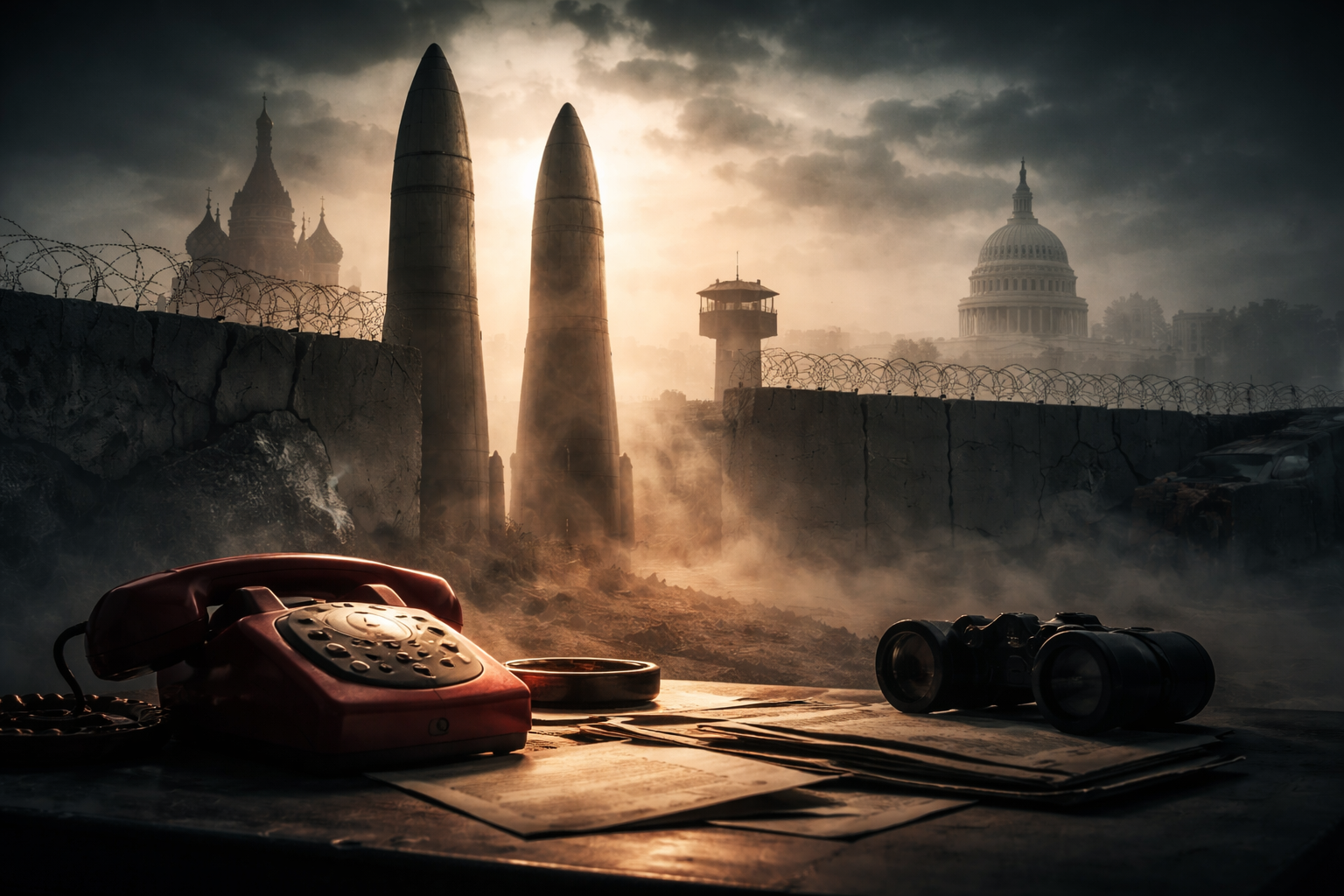
Eight turning points explain how the Cold War shifted—and why Berlin, Cuba, Vietnam, and Afghanistan still shape rivalry.
Eight Moments That Decided the Cold War—From Berlin to Collapse
The Cold War is no longer just a 20th-century story—it is a live template for how great powers behave when they fear each other’s intent, misread signals, and still have to avoid nuclear catastrophe.
The usual retelling makes it sound inevitable: ideology clashes, arms race spirals, and the Soviet system collapses. However, the Cold War did not unfold linearly. It lurched. And each lurch came from moments when a decision under pressure changed what both sides believed was possible.
The hinge is that the Cold War was won and lost less by “who believed harder” and more by who could sustain credibility, logistics, and internal legitimacy under permanent nuclear constraint.
The story turns on whether deterrence is a weapon—or a trap.
Key Points
The Cold War’s big turns came when risk became concrete: blockades, walls, missiles, and invasions forced irreversible choices, not speeches.
Berlin mattered twice: first as a test of logistics and resolve, then as a test of legitimacy and control over populations.
Cuba showed how close a nuclear crisis could get—and how much both sides depended on controlled exits, not maximal wins.
Vietnam reshaped US credibility: it expanded American power on paper but exposed limits in practice and battered domestic consent.
Détente was not “peace”; it was risk management—arms limits and rules of the road meant to keep rivalry from igniting.
Afghanistan did to the USSR what Vietnam did to the US: drained resources, hardened cynicism, and made the system look brittle.
The collapse phase was not one event but a chain: legitimacy broke first, then borders, then institutions.
The deeper lesson is capacity: the side that keeps its economy, alliances, and public belief intact can outlast the side that cannot.
Background
The Cold War was a global rivalry between the United States and the Soviet Union after World War II. It was “cold” because the superpowers avoided direct war, but it was violent through proxies, coups, arms buildups, espionage, and political coercion.
Two forces shaped everything. First, nuclear weapons made total war suicidal, so competition shifted into credibility games: each side had to look strong without triggering catastrophe. Second, alliances mattered. The US and USSR were not alone; they were managers of blocs, constantly balancing partners, budgets, and domestic politics.
Inflection points are the moments that changed the perceived rules—what each side thought the other would do, what the world would tolerate, and what the system could sustain.
Analysis
1) Berlin Blockade and Airlift (1948–49): Logistics Becomes Strategy
Berlin was the first hard test of postwar resolve. A blockade transformed a political dispute into a supply issue: could one sustain a city without resorting to violence?
The airlift’s significance was not only that it worked; it rewired expectations. It indicated that the West would absorb high costs and operational risk rather than retreat. It also hardened the division of Europe into something physical and durable.
Plausible scenarios (then and now): escalation into open conflict, negotiated withdrawal, or a costly but stabilizing workaround. The airlift normalized the workaround—competition without immediate war.
2) The Berlin Wall (1961): The Cold War’s Most Honest Structure
The Wall was a confession in concrete: a system that needs barriers to keep people in is a system with a legitimacy problem.
It changed the rivalry by stabilizing the border while exposing a political weakness. After 1961, Berlin became less a trigger for invasion and more a permanent moral and propaganda front. The West did not tear the Wall down by force; it waited it out—and broadcasted the contrast.
The Wall’s deeper function was administrative: it turned an open wound (mass emigration) into a controlled scar. That trade—stability bought with repression—became a recurring Soviet-bloc pattern.
3) Cuba (October 1962): The Nuclear Ceiling Gets Real
The Cuban Missile Crisis forced both sides to confront the “nuclear ceiling”—the point where winning the argument risks ending the world.
Its enduring impact was procedural. After Cuba, crisis management mattered as much as military power: hotlines, signaling discipline, and the idea that you sometimes need to offer the opponent a face-saving path out.
The inflection is psychological: leaders learned that the worst outcomes can arrive through momentum, misunderstanding, and pride. Nuclear weapons didn’t end rivalry; they made exits more valuable than victories.
4) Vietnam I (1964): The Moment the US Chose Full Commitment
Vietnam became a credibility test framed as containment. The Gulf of Tonkin Resolution formalized a widening commitment and gave US presidents broad authority to escalate.
This inflection mattered because it shifted the Cold War from Europe’s clear lines to Asia’s ambiguous terrain: civil war, insurgency, nationalism, and weak state capacity. It was harder to define “winning,” harder to exit without humiliation, and easier for costs to compound quietly.
Once the commitment became political identity, de-escalation looked like defeat. That logic—war as reputation—would haunt US strategy for decades.
5) Vietnam II (1968): Tet and the Collapse of the “Narrative Advantage”
The Tet Offensive did not win the war militarily for North Vietnam, but it shattered the credibility frame. It made progress claims feel untrustworthy and exposed a gap between official optimism and visible reality.
This was a Cold War inflection because domestic consent is a strategic resource. A superpower can afford battlefield setbacks; it struggles when the public stops believing the story that justifies sacrifice.
Tet helped shift Vietnam from a winnable campaign to a grinding liability—one that absorbed attention, money, and political capital while the broader rivalry continued.
6) Détente (1969–75): Rules of the Road for a Rivalry That Won’t End
Détente is often misread as friendship. It was closer to risk engineering.
Strategic arms limits and political agreements were attempts to cap danger, manage escalation, and reduce surprise. They reflected a shared recognition: even enemies can benefit from predictability when the downside is existential.
But détente carried a built-in instability. It depended on restraint and trust in verification, while both sides still competed in the shadows. It bought time. It did not erase the rivalry.
7) Afghanistan (1979): The Soviet Vietnam, and the Return of Bleeding Wars
The Soviet intervention in Afghanistan turned the Cold War’s proxy logic into a direct drain on Soviet power. Like Vietnam for the US, Afghanistan blended difficult terrain, motivated local resistance, regional meddling, and an open-ended mission.
It mattered because it hit the USSR where it was most vulnerable: economic strain, political cynicism, and the credibility of the system’s competence. A state can survive being feared; it struggles when it looks stuck.
Afghanistan also intensified distrust just as détente’s promise was fading. The rivalry hardened again, and the costs became harder to hide.
8) Collapse (1989–91): When Legitimacy Breaks, Borders Follow
The endgame arrived in phases: popular pressure, elite fragmentation, and institutional unraveling. The fall of the Berlin Wall became the visible symbol, but the deeper story was that control mechanisms stopped working.
Once people sensed the fear barrier had cracked, the system’s coercive advantage declined fast. Reform attempts could not satisfy competing demands: freedom, prosperity, national autonomy, and security guarantees.
The Cold War ended not with a decisive battle, but with a credibility failure inside the Soviet model—economic underperformance, political exhaustion, and a loss of belief that the future belonged to it.
What Most Coverage Misses
The hinge is that the Cold War’s decisive arena was not ideology in the abstract—it was endurance: the capacity to keep alliances aligned, budgets funded, and publics believing the mission while avoiding nuclear disaster.
That mechanism mattered because nuclear weapons removed the “clean finish.” Without a final war, systems competed through stress tests. Berlin tested logistics. Vietnam and Afghanistan tested consent and sustainability. Détente tested whether rules could limit catastrophe. Collapse tested whether a state could reform without dissolving.
Two signposts confirm this dynamic in any era: first, when leaders start prioritizing narrative control over measurable performance; second, when allies begin hedging—quietly diversifying security and economic ties because they doubt the core guarantor will hold.
Why This Matters
The Cold War’s eight inflection points are not just history; they are warnings about how great powers behave under fear.
In the short term, the lesson is crisis discipline: escalation control matters because nuclear and cyber risks compress decision time and magnify error. In the long term, the lesson is legitimacy: states that cannot deliver credible competence—security, growth, governance—lose the ability to sustain rivalry.
The main consequence is structural: competition becomes a test of systems, because direct war is too costly, and because time punishes inefficiency.
Real-World Impact
A NATO planner in the 1960s learns that the most dangerous day is not the day of a battle, but the day of a misunderstanding—when a radar blip meets political pride.
A family in East Berlin in 1961 watches the border close and realizes history can change overnight, not through elections but through concrete and wire.
A US voter in 1968 sees images from Vietnam that contradict official confidence and decides trust, not territory, is what is collapsing.
A Soviet conscript in the 1980s returns from Afghanistan to a country that feels poorer, older, and less sure of itself than the propaganda promised.
The Cold War’s New Use: A Map of Traps
The Cold War was not one long standoff; it was a series of traps triggered by credibility, misperception, and sunk costs.
Berlin showed how logistics can substitute for force. Cuba showed how exits can be more valuable than wins. Vietnam and Afghanistan showed how wars can hollow out power without conquering it. Détente showed that rivals can build guardrails even while competing. Collapse showed that the strongest-looking systems can fail when belief drains away.
Watch the signposts: escalating rhetoric paired with shrinking capacity, allies quietly hedging, and leaders choosing “can’t back down” over “can we sustain this.” The historical significance is simple: the Cold War ended when one system could no longer carry the weight of its own strategy.
