

The Real-Life Dystopias That Inspired Fiction Ranked
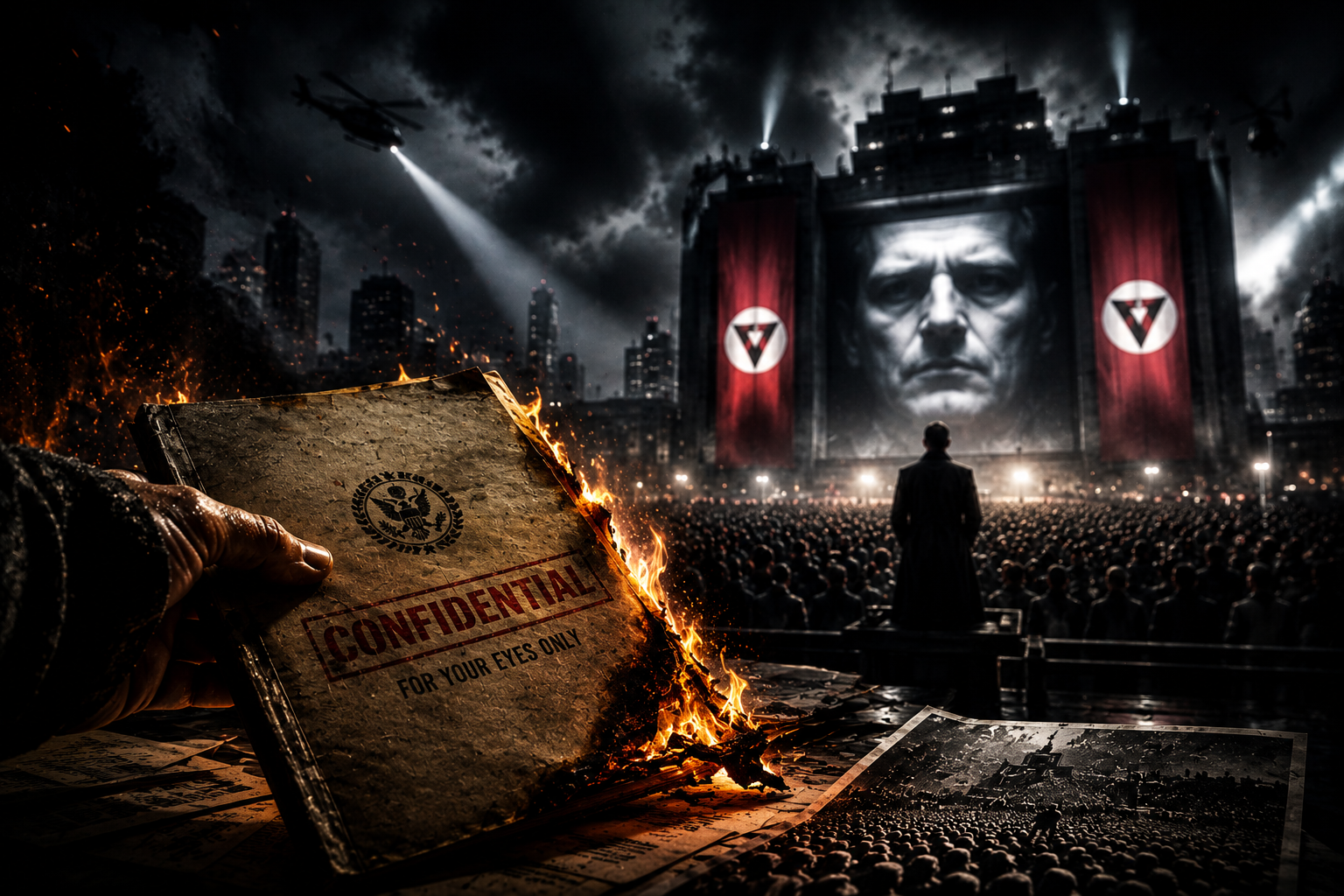
The Terrifying Real Histories Behind The World’s Most Famous Dystopias
The Darkest Fiction Often Began As A Warning From History
Why Dystopian Fiction Feels So RealDystopian fiction works because it rarely feels completely invented. The most powerful examples do not simply imagine cruel dictators, ruined cities or terrifying future technologies. They take recognizable pieces of human history and push them slightly further until the reader sees something disturbingly familiar.
That is why stories like 1984, Animal Farm, Brave New World, Fahrenheit 451, The Handmaid’s Tale, V For Vendetta and The Hunger Games continue to endure. They are not just predictions about the future. They are warnings drawn from the past.
The deeper shock is that many famous dystopian worlds were inspired by real systems of control. Surveillance states existed. Personality cults existed. Book burnings happened. Governments rewrote truth, censored language, punished dissent, controlled movement, forced loyalty and turned ordinary people into informers.
The question is not whether one fictional nightmare will arrive exactly as written. The better question is why the same mechanisms keep returning under different flags, slogans and technologies.
Number Twelve: Colonial Authoritarian Systems
Colonial authoritarian systems rank twelfth because they helped create many of the administrative habits later associated with modern dystopia. Identity papers, emergency laws, controlled movement, racial hierarchy, censorship, surveillance and distant bureaucracy were all used to manage populations without genuine democratic consent.
The conditions people lived under varied widely across empires and territories, but the pattern was clear. People could be classified, watched, restricted, taxed, moved, punished or excluded by systems they had little power to challenge. The state did not always need constant violence. Sometimes control arrived through forms, passes, police orders and administrative decisions.
This matters because dystopia is not always dramatic at first. It can begin as paperwork. It can begin when human beings are reduced to categories. It can begin when one group gains the power to decide where another group can live, work, travel or speak.
The fictional connection is especially important in George Orwell’s work. Orwell’s experience as an imperial policeman in Burma helped shape his suspicion of domination, official language and moral hypocrisy. That suspicion later flowed into Animal Farm and 1984.
Number Eleven: McCarthyism And The Fear Of Dangerous Ideas
McCarthyism ranks eleventh because it shows how democratic societies can still behave in dystopian ways when fear becomes politically useful. The United States in the 1940s and 1950s was not a totalitarian state, but the Red Scare created a culture where accusation could ruin careers, suspected beliefs could become evidence, and silence often became safer than honesty.
The mechanisms of control were not the same as those used by dictatorships. They were subtler: investigations, blacklists, loyalty tests, social suspicion and professional punishment. People were pressured to prove loyalty, avoid controversial associations and sometimes name others to protect themselves.
This atmosphere sits behind the emotional world of Fahrenheit 451. Ray Bradbury’s novel is often described as a story about book burning, but its deeper fear is more subtle. It is about a society that stops wanting difficult thought.
The lesson remains relevant because censorship is not always imposed from above. Sometimes a culture begins censoring itself. People learn which opinions are dangerous, which questions are risky and which silences are rewarded.
Number Ten: Fascist Italy And The Theater Of Obedience
Fascist Italy ranks tenth because it understood that authoritarianism is not only a system of laws. It is also a performance. Mussolini’s regime turned politics into spectacle through uniforms, rallies, symbols, slogans, youth movements and the constant projection of national strength.
The regime suppressed opposition, controlled the press and used secret policing to intimidate critics. But its power also came from atmosphere. It made obedience feel patriotic. It made dissent feel shameful. It turned the leader into a symbol of national destiny.
This is one reason V For Vendetta feels historically recognizable. Its fictional authoritarian Britain is not a direct copy of Fascist Italy, but it draws from the same visual and psychological grammar: leader worship, public fear, controlled media, national mythology and the criminalization of dissent.
The lesson is that authoritarian politics rarely presents itself as cruelty at first. It often presents itself as order, unity, restoration and strength. The danger comes when spectacle begins replacing accountability.
Number Nine: Wartime Propaganda States
Wartime propaganda states rank ninth because they reveal how quickly truth can become a strategic resource. During war, governments face real security pressures. They must protect secrets, maintain morale and counter enemy messaging. But those same pressures can create powerful tools for emotional control.
The twentieth century made this machinery visible at scale. Radio, film, posters, newspapers and mass rallies allowed governments to create shared emotional worlds. Enemies could be simplified. Leaders could be mythologized. Doubt could be framed as betrayal.
This is central to 1984. Oceania’s permanent war is not only foreign policy. It is social management. The enemy may change, but the emotion must remain. Fear keeps the population obedient. Propaganda keeps reality unstable.
The Hunger Games updates this idea for a media-saturated age. Panem does not simply punish the districts. It broadcasts punishment as entertainment. The Capitol turns suffering into spectacle and forces the powerless to perform for the powerful.
Number Eight: Mass Surveillance Programmes
Mass surveillance programmes rank eighth because they made one of dystopian fiction’s oldest fears technically plausible at a scale earlier writers could barely imagine. 1984 imagined telescreens and informers. East Germany built a human surveillance state. The digital age introduced something more abstract: a world where communication, location, search history, metadata and social behaviour can all become visible.
Modern surveillance is not automatically totalitarian. Democratic states have laws, courts, oversight systems and legitimate security concerns. That distinction matters. But the deeper dystopian anxiety remains: the more life moves through networks, the more power belongs to whoever can see those networks.
This is why 1984 still dominates the language of surveillance. The novel’s true terror is not only that people are watched. It is that they alter themselves because they might be watched. The possibility of observation becomes a form of control.
The lesson is not that every camera, database or intelligence programme is dystopian. The lesson is that surveillance power tends to expand when fear, technology and bureaucracy align. If visibility flows upward but accountability does not flow downward, freedom becomes fragile.
Number Seven: Brave New World And The Dystopia Of Comfort
Brave New World ranks seventh because it shows that dystopia does not always need terror. Some systems do not crush people with fear. They soften them with pleasure, convenience, distraction, conditioning and consumption.
Aldous Huxley’s nightmare is not a prison camp. It is a stable and efficient society where people are engineered to accept their place. The World State does not only control behaviour. It controls desire.
The real-world influences behind Brave New World include industrial mass production, Fordism, consumer culture, scientific management and early twentieth-century anxieties about eugenics. Huxley imagined a society where human beings are sorted, conditioned and pacified before rebellion can even form.
That is what makes the book so unsettling today. Orwell feared pain and repression. Huxley feared comfort and sedation. One dystopia controls people by hurting them. The other controls people by making freedom feel unnecessary.
Number Six: North Korea And The Personality Cult
North Korea ranks sixth because it shows the endurance of one of dystopian fiction’s most recognizable structures: the personality cult fused with surveillance, isolation, fear and forced loyalty.
Unlike many historical regimes, North Korea is not a fallen system. It still exists. That makes it more than a metaphor. It is a living political order affecting real people under extreme restriction.
The mechanisms are familiar to readers of dystopian fiction: controlled information, state ideology, public loyalty rituals, punishment for dissent, restricted movement and a leader figure placed beyond ordinary criticism. The private self and public self become dangerously separated.
This is one of the deepest psychological wounds of authoritarian rule. People are not only forced to obey. They are forced to perform belief. Survival depends not just on what they do, but on what they appear to feel.
Number Five: Mao’s Cultural Revolution
Mao’s Cultural Revolution ranks fifth because it shows how a society can be destabilized when ideological purity becomes a weapon against ordinary trust. Beginning in 1966, Mao mobilized young people, especially Red Guards, to attack perceived enemies of the revolution.
Teachers, intellectuals, officials, traditionalists and people accused of bourgeois attitudes became targets. Public humiliation, denunciation, violence and attacks on cultural heritage became part of the revolutionary atmosphere.
This connects strongly to dystopian fiction’s obsession with betrayal and denunciation. In 1984, children are encouraged to betray parents. In The Handmaid’s Tale, public rituals enforce obedience. In Animal Farm, revolutionary ideals gradually harden into hierarchy, fear and selective memory.
The lesson is that dystopia can be decentralized. It does not always need a perfectly controlled bureaucracy. Sometimes power unleashes social violence, blesses it with ideology, and lets citizens police each other.
Number Four: The Khmer Rouge And Year Zero
The Khmer Rouge ranks fourth because it represents one of the most extreme attempts to erase society and rebuild human life by force. From 1975 to 1979, Cambodia was subjected to a radical revolutionary project that aimed to create a classless agrarian society.
Cities were emptied. Money and markets were abolished. Families were disrupted. Religion was attacked. Millions were forced into brutal labour conditions. Intellectuals, professionals and suspected enemies were persecuted.
This is where dystopian fiction’s fear of social redesign becomes horrifyingly real. Brave New World imagines human beings manufactured into roles. 1984 imagines memory remade by the state. The Handmaid’s Tale imagines identity reduced to function. The Khmer Rouge attempted its own radical version of human remaking.
The phrase “Year Zero” captures the terrifying fantasy beneath many dystopias: the idea that history can be wiped clean and society can begin again. The problem is that real human beings come with memories, skills, loyalties and attachments. To erase the past, the regime had to attack the people who carried it.
Number Three: East Germany And The Stasi
East Germany and the Stasi rank third because they created one of the clearest real-world examples of surveillance becoming part of ordinary life. The German Democratic Republic did not simply watch enemies from a distance. It built a system where suspicion could pass through workplaces, friendships, churches, universities, families and neighbourhoods.
The Stasi was not terrifying only because it collected information. It was terrifying because people did not always know who was collecting it. A colleague, neighbour, friend or relative could become an informant. Uncertainty itself became part of the control.
This is perhaps the closest real-life emotional cousin to 1984. Orwell’s telescreen is iconic, but the deeper horror is the destruction of privacy. When private life becomes politically visible, the citizen starts editing himself before the state even intervenes.
The lesson is that surveillance does not merely gather facts. It changes relationships. Trust becomes risky. Humour becomes dangerous. A careless sentence becomes evidence. The state does not need to know everything if people believe it might.
Number Two: Nazi Germany And The Total State Of Propaganda
Nazi Germany ranks second because it fused propaganda, censorship, racial ideology, bureaucracy, mass politics and industrial violence into one of history’s most catastrophic regimes. It remains one of the clearest real-world influences on modern dystopian imagination.
The mechanisms of control were vast. The Nazi state used censorship, propaganda, radio, film, newspapers, education, youth organisations, spectacle and terror to reshape public life. Competing narratives were removed. The leader was mythologized. Enemies were dehumanized.
The conditions people lived under depended on where they stood in the racial and political hierarchy. For those included inside the imagined national community, the regime offered belonging, grievance, purpose and spectacle. For Jews, Roma, disabled people, political opponents, gay men, Slavs and others targeted by Nazi ideology, the state became an engine of exclusion, dispossession, terror and murder.
The fictional links are powerful but must be handled carefully. 1984, Fahrenheit 451 and V For Vendetta all draw from the broader twentieth-century memory of propaganda, censorship and fascist imagery. Nazi Germany showed that modern technology, bureaucracy and mass communication could serve a state without moral limits.
Number One: Stalinist Soviet Union
Stalinist Soviet Union ranks first because it sits at the centre of the modern dystopian imagination. It shaped Animal Farm directly, helped shape 1984, haunted We and established many of the patterns later associated with totalitarian fiction.
The mechanisms of control included censorship, secret policing, propaganda, forced collectivization, party discipline, purges, internal exile, show trials and the manipulation of public truth. The state did not only demand obedience. It demanded agreement with its version of reality.
Animal Farm captures the betrayal of revolutionary ideals. The animals overthrow one master only to watch a new ruling class emerge. The slogans remain, but their meaning changes. Equality becomes hierarchy. Liberation becomes control.
1984 takes the logic further. History can be rewritten. Language can be narrowed. Memory can be attacked. Truth becomes whatever power says it is today. Stalinism ranks first because it provides one of the clearest historical blueprints for fiction’s most famous nightmare: a system where reality itself becomes political property.
The Handmaid’s Tale And The Warning Built From History
The Handmaid’s Tale does not fit neatly into one ranked regime because its power comes from Margaret Atwood’s method of assembling real historical precedents into one fictional theocracy. Gilead is not a copy of one country. It is a collage of older controls.
Those controls include reproductive coercion, religious law, gender hierarchy, forced clothing, ritual language, public punishment, surveillance and the stripping away of women’s legal identity. The horror is not that every element came from one place. The horror is that the ingredients were already available.
This is why The Handmaid’s Tale still resonates. It does not argue that one exact future is inevitable. It asks what happens when fertility panic, authoritarian emergency, religious certainty and gender control become one system.
The lesson is that dystopia often borrows from several histories at once. A future tyranny may not look exactly like Stalinism, Nazism, the Stasi or Gilead. It may mix comfort with coercion, surveillance with entertainment, moral panic with bureaucracy, and emergency politics with ordinary convenience.
The Real Pattern Is Older Than Any One Regime
The most important lesson from real-life dystopias is that the surface ideology changes faster than the mechanisms of control. Stalinism, Nazism, Maoism, fascism, the Khmer Rouge, the Stasi and modern surveillance debates should not be lazily treated as identical. Their causes, victims, institutions and historical contexts were different.
But dystopian fiction notices the recurring machinery underneath. The state claims emergency. The leader claims unique insight. The party claims moral purity. The censor claims protection. The police claim security. The propagandist claims unity. The technocrat claims efficiency. The crowd claims justice.
Again and again, freedom is not abolished in one dramatic moment. It is traded away through smaller permissions. A little censorship for safety. A little surveillance for security. A little cruelty for order. A little silence for belonging.
That is why dystopian fiction remains so powerful. 1984 teaches the fear of truth being rewritten. Brave New World teaches the fear of comfort replacing freedom. Fahrenheit 451 teaches the fear of thought becoming inconvenient. The Hunger Games teaches the fear of suffering becoming entertainment. The Handmaid’s Tale teaches the fear of rights becoming conditional.
The final warning is not that every government becomes Oceania or every technology becomes a telescreen. That would be too simple. The warning is more disturbing because it is more realistic: human beings repeatedly build systems that reward obedience, punish complexity and turn fear into authority. Dystopian fiction survives because history keeps proving that the future does not need to invent new nightmares when the past has already left so many instructions.
