

The Terrifying True History Behind The Werewolves
Before Horror Films, Werewolves Were Feared As Real Killers
It Began Long Before Full Moons And Silver Bullets
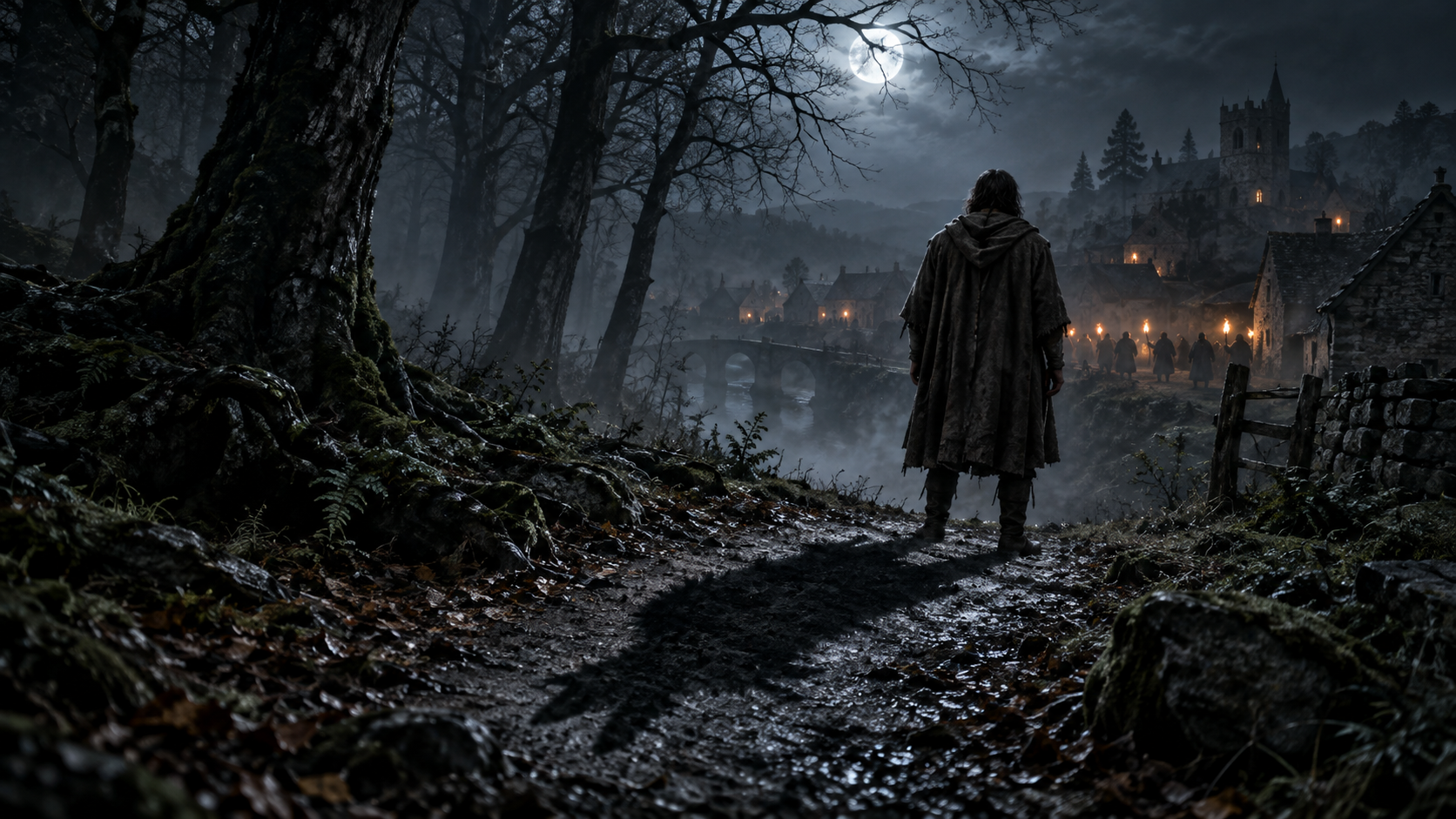
A man runs into the forest. By morning, livestock have been torn apart, a child has disappeared, and the village is searching for someone to blame. For generations, people across Europe did not treat this as the opening of a horror film. Some believed it could be real: a human being had become a wolf.
The werewolf is now one of popular culture’s most recognisable monsters. It is tied to full moons, silver bullets, claws, transformation scenes and the struggle between humanity and animal instinct. But the modern version is far removed from the earliest fears. The original werewolf was not usually a cursed romantic antihero. It was a figure used to explain murder, unexplained attacks, famine, disease, fear of the wilderness and the disturbing possibility that an apparently ordinary person could be capable of terrible things.
So, did people actually believe in werewolves? In many places, absolutely. Not everyone did, and beliefs varied enormously across time and culture. Yet the idea was real enough that people were accused, interrogated, tortured and, in some cases, executed as werewolves. The history of the creature is therefore not just a history of folklore. It is also a history of what fear can make people believe about one another.
What Is A Werewolf?
A werewolf is traditionally a person who can transform into a wolf, or into a human-wolf hybrid, either through a curse, magic, a pact with the Devil, an inherited condition or an act of will.
The word itself is revealing. “Were” comes from an old word meaning man, while “wolf” needs little explanation. A werewolf was, quite literally, a man-wolf.
That definition sounds straightforward, but werewolf beliefs were never one fixed story. In some traditions, the transformation was punishment. In others, it was a gift or a form of supernatural power. Some stories presented werewolves as savage predators. Others imagined them as warriors, protectors, unlucky victims or people trapped between worlds.
What connected the different versions was a deep anxiety about transformation. A wolf was not merely an animal. It represented the edge of the known world: the forest beyond the settlement, winter hunger, danger after dark and the fear that civilised behaviour could collapse.
The Ancient Roots Of The Human Wolf
Stories of human beings turning into animals are older than the word “werewolf” itself. Ancient civilisations across the world told tales of shape-shifters, animal spirits and people crossing the boundary between human and beast.
One of the most influential early stories comes from ancient Greece. In Greek mythology, King Lycaon tested the god Zeus by serving him a horrifying meal made from human flesh. Zeus punished him by turning him into a wolf. The name Lycaon became linked to the Greek word for wolf, and eventually inspired the medical and cultural term “lycanthropy”.
The story matters because it established an idea that runs through later werewolf legends: transformation as punishment for crossing a moral line. Lycaon did not simply become dangerous. He became physically what his actions had revealed him to be.
Ancient writers also connected wolves with wildness, war and the vulnerability of rural life. Wolves were real predators in the ancient Mediterranean world. They could threaten livestock, travel routes and isolated communities. A wolf seen at the edge of a settlement was not an abstract symbol. It was a warning that the safety of home ended only a short distance beyond the last light.
Roman authors inherited many Greek ideas, while adding their own stories of transformation and animal hunger. The werewolf concept had not yet become the fully formed medieval monster familiar today, but the essential fear was already in place: someone might look human by day and become a predator when ordinary rules no longer applied.
Wolves Were Real, Dangerous And Close
It is easy to underestimate how important real wolves were to the creation of werewolf myths.
For much of European history, wolves lived closer to people than they do in most of Britain today. They hunted deer and smaller animals, but they also raided livestock. During periods of war, harsh winter, famine or disruption, wolves could become bolder around human settlements. Carcasses left after battles, poor burial practices and collapsing rural systems could draw scavengers closer to villages.
That does not mean every historical wolf story was accurate. Rumour expands quickly when people are frightened. But it does mean that the creature behind the legend was grounded in a genuine threat.
For a farming community, a wolf attack was not just frightening. It could mean the loss of animals needed for food, work or income. If children disappeared, or bodies were found badly damaged, people searched for an explanation. A wild animal might explain some attacks. But when violence seemed unusually brutal or mysterious, the idea of a human predator could become more convincing.
The werewolf emerged from that uncomfortable overlap: wolf attacks were real, human violence was real, and communities did not always have the evidence or institutions needed to tell one from the other.
Did People Actually Believe In Werewolves?
Yes, but belief needs to be understood in its historical context.
Modern readers can be tempted to assume that everyone in the past either fully believed in supernatural creatures or dismissed them as nonsense. The reality was more complicated. People argued, doubted, repeated rumours, feared accusations and accepted different explanations at different times.
Still, werewolves appeared in sermons, court records, pamphlets, local tales and learned writing. In early modern Europe, many people saw the supernatural as part of a world in which God, the Devil, curses, witchcraft and spirits could directly affect daily life.
A person accused of being a werewolf might be suspected of causing attacks on animals, killing children, committing murder, practising witchcraft or making a pact with the Devil. The accusation could combine fear of crime with religious panic.
In other words, the question was not always, “Did this person literally grow fur and run on four legs?” Sometimes it was, “What kind of person could do something so monstrous?” Calling someone a wolf could be both a supernatural allegation and a way of describing perceived inhumanity.
That distinction did not necessarily protect the accused. If anything, it could make the accusation more dangerous.
The Werewolf Trials Of Europe
Between the late medieval period and the early modern era, Europe saw a number of trials involving alleged werewolves. These cases overlapped with witch trials and wider fears about the Devil’s influence.
The allegations often followed a grim pattern. A community faced unexplained deaths, attacks, missing children or animal killings. Suspicion fell on someone isolated, unpopular, poor, unusual or already seen as morally suspect. Under interrogation, and sometimes torture, an accused person might confess to transformation, witchcraft, cannibalism or meetings with supernatural beings.
These confessions are not reliable proof that people transformed into wolves. They are evidence of the pressures and beliefs surrounding the trials.
One of the most infamous cases involved Peter Stumpp, also spelled Stump or Stubbe, a farmer from the Rhineland area of Germany. In 1589, he was accused of a series of killings and acts of cannibalism. A sensational pamphlet published soon afterwards claimed he had received a magical belt from the Devil that allowed him to become a wolf.
The story was extraordinary even by the standards of the time. It described violence against women and children, incest and supernatural transformation. Stumpp was executed in a brutally public fashion, and the printed account spread well beyond the region. The British Library’s surviving 1590 English pamphlet shows how such a case could be turned into a warning story designed to horrify readers.
But historians remain cautious. The case unfolded in a period of religious and political conflict. The evidence was shaped by torture, propaganda and sensational publishing. The lurid version that survived may reveal as much about the fears of the people who told it as it does about Stumpp himself.
The Man Who Claimed He Was A Werewolf
Not every historical werewolf account followed the pattern of a murderer accused by a terrified community.
In 1691, a man known as Thiess of Kaltenbrun appeared before a court in Livonia, an area in the Baltic region. He claimed to be a werewolf. But he did not say he served the Devil. He said the opposite.
Thiess described werewolves as “hounds of God” who travelled into Hell to fight demons and recover grain and livestock stolen from the community. In his account, werewolves protected the harvest and fought against evil.
The court did not accept this explanation. Thiess was punished for superstition. Yet his testimony is important because it shows that werewolf beliefs were not universally about evil human beings turning into killers. In some folk traditions, the wolf-man could be a guardian figure, a supernatural fighter or an intermediary between the human world and the dangerous unseen world.
This is one reason the werewolf has endured. It is flexible. It can represent evil, temptation, survival, masculinity, disease, war, freedom, trauma or resistance to authority, depending on who is telling the story.
Why The Full Moon Was Not Always Central
The full moon is now so strongly associated with werewolves that it feels ancient. In fact, it was not the defining feature of many early European werewolf stories.
Older accounts offered a range of causes for transformation. A person might use an enchanted belt or animal skin. They might be cursed, born with a condition, anointed with magic ointment, attacked by another werewolf or bound to the Devil through a pact. Some stories suggested that people could remove their human clothes and leave their bodies while travelling in animal form.
The moon did appear in folklore and was long associated with change, madness, cycles and the night. But the fixed rule that a werewolf transforms specifically during a full moon was strengthened much later by literature and cinema.
The popular twentieth-century image owes a great deal to Hollywood. Films such as The Wolf Man helped establish the visual grammar people now expect: the full moon, the painful transformation, the wolfish face, the curse and the desperate fear of becoming dangerous to loved ones.
Silver bullets followed a similarly complicated path. Silver had long been linked to purity, wealth and supernatural protection in folklore, but it was not a universal ancient werewolf rule. Modern horror culture made it feel essential.
Werewolves, Witches And The Fear Of Hidden Evil
Werewolf trials did not happen in isolation. They belonged to a wider world of witchcraft accusations, religious conflict and fears about invisible threats.
In early modern Europe, people often believed that the Devil could tempt, deceive and empower humans. A witch might curse a neighbour, ruin a harvest, harm a child or transform into an animal. A werewolf might be imagined as a person who had abandoned human morality and become physically monstrous.
The overlap was particularly dangerous because it encouraged people to interpret ordinary misfortune as evidence of hidden enemies. A sick animal, failed crop or unexplained death could become part of a story about secret evil.
This did not mean people were foolish. They were trying to understand suffering with the knowledge available to them. Their lives could be unstable in ways that are difficult to imagine now. Disease had few effective treatments. Travel was dangerous. Infant mortality was high. Famine and war could destroy a community’s security rapidly.
The supernatural explanation supplied a culprit. That could feel emotionally satisfying, but it also created victims. The person accused of being different, dangerous or untrustworthy could become the target of collective fear.
The Medical Meaning Of Lycanthropy
The word lycanthropy is still used in medicine, but not to describe physical transformation.
Clinical lycanthropy is an extremely rare psychiatric symptom in which a person believes they are transforming into, have transformed into, or possess the characteristics of an animal. The animal is not always a wolf. Medical literature has recorded beliefs involving dogs, cats, birds, snakes, cows and other creatures.
This is not evidence that ancient werewolf claims were secretly medical diagnoses. Historical records are too limited, and every case had its own social and religious setting. It would be simplistic and unfair to retrospectively label every accused person with a modern condition.
But the existence of clinical lycanthropy does show that the human mind can experience identity, body and reality in extraordinary ways. A 2021 review in the medical journal Frontiers in Psychiatry examined reported cases and stressed that the condition appears in association with several psychiatric disorders rather than as one simple standalone illness. The review is available here.
The crucial difference is compassion. A person experiencing a psychiatric crisis needs clinical support, not superstition, persecution or spectacle.
How Literature Changed The Monster
By the nineteenth century, the werewolf was increasingly moving from local belief into fiction.
Gothic writers found that the creature could express fears that were difficult to state directly. The werewolf became a metaphor for forbidden desire, violent impulses, sexual anxiety, addiction, social repression and the divided self.
The monster was especially useful because it was not completely separate from humanity. A vampire might be an outsider, undead and aristocratic. A werewolf was often someone close: a friend, a lover, a family member or the person staring back from the mirror.
That made the transformation frightening. It suggested that civilised identity was fragile. Under the right conditions, something ancient and hungry might emerge.
In The Strange Case of Dr Jekyll and Mr Hyde, Robert Louis Stevenson did not write a werewolf story, but he used a similar fear: a respectable man possesses a hidden self capable of cruelty. Later werewolf stories made that divided identity more literal.
The creature also became more sympathetic. Rather than being only a villain, the werewolf could be a victim of a curse. This shift opened the door to stories about shame, illness, adolescence, isolation and the fear of harming people you love.
Hollywood Built The Modern Werewolf
Cinema gave the werewolf a body, a sound and a set of rules that travelled around the world.
The 1941 Universal film The Wolf Man, starring Lon Chaney Jr., remains one of the most influential werewolf films ever made. It helped cement the tragic version of the monster: a decent man is bitten, cursed and transformed into something he cannot control.
The film’s famous imagery made the werewolf personal. The terror was not just that a wolf might attack from the woods. The terror was that the victim knew it was coming and could not stop it.
Later films took the concept in radically different directions. An American Werewolf in London mixed graphic body horror with dark comedy. The Howling embraced transformation as spectacle. Teen Wolf made lycanthropy part of adolescent fantasy. Ginger Snaps used it to explore puberty and gender. The Twilight Saga turned werewolves into romantic supernatural heroes. Television, games and comics expanded the creature again and again.
Every version changed the myth, but the core tension remained: what happens when the person is no longer fully in control of the beast?
Why The Werewolf Still Works
The werewolf has survived for thousands of years because it keeps adapting to the fears of the moment.
In ancient stories, it could be divine punishment for brutality. In rural Europe, it reflected real dangers from wolves and the wilderness. During witch-trial eras, it became a symbol of hidden evil and moral panic. In modern stories, it often represents trauma, masculinity, rage, bodily change, addiction, sexuality, grief or the fear of losing control.
The myth also survives because wolves themselves remain powerful symbols. They are intelligent, social, dangerous and misunderstood. They can represent wilderness, loyalty, predation, freedom or the natural world pushing back against human control.
Most importantly, the werewolf asks a question that remains unsettling because it has no easy answer. How much of a monster can a human being become?
The historical answer was often cruel. Communities sometimes turned fear into accusation, accusation into confession and confession into punishment. The supernatural wolf may never have existed, but the damage caused by believing in it was real.
That is the lasting power of the werewolf myth. It is not merely a story about claws under moonlight. It is a story about the line between human and animal, and about what happens when people become convinced that someone else has crossed it.
