Top Ten Biggest Royal Scandals In History Ranked
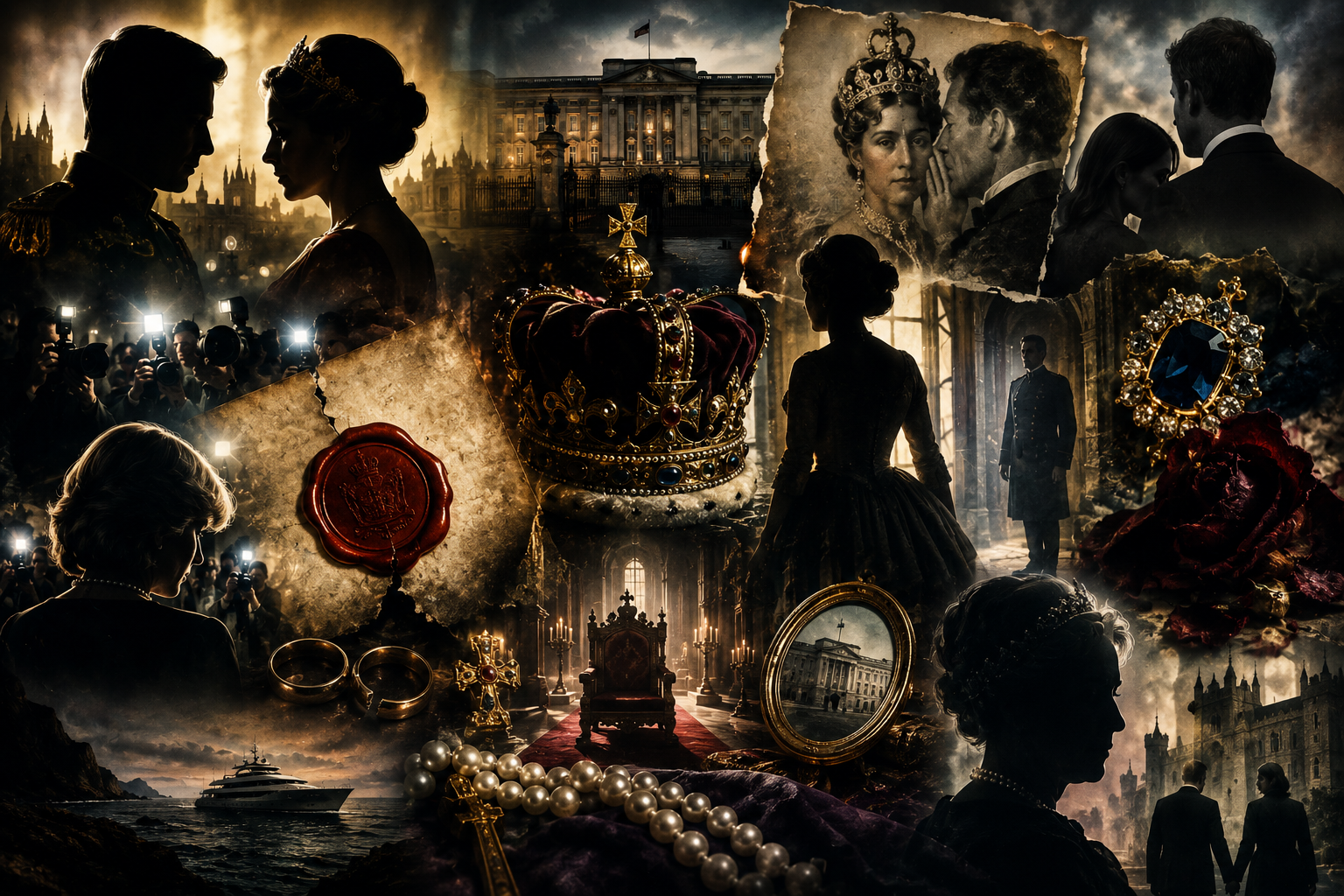
Royal Scandals That Shocked The Monarchy Foreve
The Affairs, Cover-Ups And Crises That Changed History
Royal scandals are not side stories. They are pressure tests for monarchy itself, because the Crown survives only when private behaviour can still be presented as public duty.That is why the biggest royal scandals in history are not simply the most lurid, sexual or embarrassing. They are the ones that changed succession, broke public trust, forced constitutional decisions, exposed hypocrisy, or turned one family’s private disaster into a national argument about power.
This ranking judges each scandal by historical consequence, institutional damage, public shock, political pressure and long-term effect. Some ruined reputations. Some ended marriages. Some helped change the church, the throne, the law, the media and the public’s relationship with royalty.
10. The Profumo Affair And The Royal-Adjacent Establishment Shock
The Profumo affair was not a royal scandal in the narrowest sense, because the central figure was John Profumo, the British Secretary of State for War, not a monarch or heir. It belongs on this list because it exposed the dangerous social overlap between aristocracy, politics, sex, intelligence fears and elite protection at exactly the moment post-war Britain was beginning to lose deference.
The scandal centred on Profumo’s relationship with Christine Keeler and the concern that Keeler was also linked to Yevgeny Ivanov, a Soviet naval attaché. The official inquiry led by Lord Denning concluded that there had been no breach of security through that Soviet connection, while identifying Profumo’s false statement to the House of Commons as the central political failing.
Its royal-adjacent force came from the circle around Stephen Ward, the society osteopath who moved between powerful men, glamorous young women and establishment rooms where discretion was treated like a private currency. The scandal did not bring down the monarchy, but it damaged the wider ruling-class mystique that had long protected royalty by association.
What made Profumo so explosive was not simply sex. It was the revelation that powerful men operated inside a world of private access, informal protection and unspoken entitlement, while ordinary people were expected to respect institutions they could not see inside.
The scandal contributed to the collapse of trust in the Conservative government of Harold Macmillan and became a shorthand for a broader national mood: old Britain was not as clean, disciplined or morally superior as it pretended to be. In royal terms, that mattered because monarchy has always depended on the same architecture of prestige, hierarchy and controlled visibility.
Profumo ranks tenth because its direct royal connection was indirect and contested. Its real significance is that it weakened the protective atmosphere around the British establishment, making later royal scandals harder to contain.
9. Princess Margaret, Peter Townsend And The Divorce Problem The Crown Could Not Solve
Princess Margaret’s romance with Group Captain Peter Townsend looked, from the outside, like a love story blocked by outdated rules. In reality, it exposed a brutal constitutional problem: the monarchy could not sell itself as both human and sacred when one of its most visible young royals wanted to marry a divorced man.
Margaret’s dilemma unfolded in the shadow of the abdication crisis. Townsend was divorced, and the Church of England’s teaching on remarriage after divorce made the proposed marriage politically and religiously explosive for the Queen’s sister.
National Archives material records official correspondence on the possible marriage between Princess Margaret and Townsend, showing that this was not merely gossip but a matter watched at the highest level of government.
In October 1955, Margaret announced that she had decided not to marry Townsend. The language of duty won publicly, but the emotional damage was obvious: the Crown had once again demanded that personal life be sacrificed to institutional survival.
The scandal did not end there. Margaret later married Antony Armstrong-Jones, became Countess of Snowdon, and divorced in 1978. That divorce became another shock because senior royal divorce had long been treated as a constitutional embarrassment rather than an ordinary human failure.
Margaret’s story ranks ninth because it did not topple a monarch or rewrite succession. Its importance is subtler. It showed the cost of the royal bargain before the modern age made that bargain almost impossible to hide.
She became the warning sign for every later royal caught between image and desire. The monarchy could deny her one scandal, but it could not stop the broader cultural change that made private happiness harder to subordinate to public theatre.
8. The Sussex Exit And The Oprah Interview
The Duke and Duchess of Sussex’s exit from working royal life was a modern scandal built for the digital age: part family rupture, part institutional crisis, part media war and part global argument about race, status, privacy and power.
In January 2020, Harry and Meghan’s decision to step back from senior royal duties stunned the Palace because it challenged the basic operating model of monarchy. They wanted independence, commercial freedom and a different public role, while the institution needed hierarchy, discipline and message control.
By February 2021, Buckingham Palace confirmed that the couple would not return as working members of the Royal Family. The Palace said the duties and responsibilities of public service could not continue in the same form once they had stepped away, and their honorary military appointments and patronages would return to the Queen.
The rupture became far larger after the televised interview with Oprah Winfrey in March 2021. Harry and Meghan made serious claims about royal life, family relationships, mental health and race, forcing the Palace into one of its most difficult public responses of the Elizabeth II era.
This scandal ranks eighth because its long-term constitutional consequences are still less clear than Edward VIII or Charles and Diana. Yet its media impact was enormous: it globalised a family dispute and turned the monarchy’s internal culture into an international debate.
The deepest damage was not that two people left. The deeper threat was that they described the institution from the inside after leaving it, and they did so in a way that reached audiences who had no automatic loyalty to British royal tradition.
The Sussex exit also created a new problem for the Crown. Earlier scandals could often be managed through silence, exile, negotiated settlement or controlled press access. This one unfolded through streaming platforms, memoir, interviews, social media and global identity politics.
That makes it a modern royal scandal with old roots. The conflict was about duty versus selfhood, but the battlefield had changed completely.
7. The Cleveland Street Scandal And The Victorian Cover-Up Fear
The Cleveland Street scandal of 1889 was one of the most dangerous Victorian scandals because it touched illegality, class, sexuality, aristocratic privilege and rumours around the line of succession. It began with the discovery of a male brothel in London, but it grew into a fear that powerful names were being protected.
At the time, sexual acts between men were illegal in Britain. The scandal became especially explosive because some of the young men involved also worked as telegraph messenger boys, while alleged clients were drawn from higher social ranks.
The most sensitive royal element was the rumour that Prince Albert Victor, grandson of Queen Victoria and second in line to the throne, had been involved. The available evidence has never substantiated his involvement, and the allegation must be treated as rumour rather than fact.
That uncertainty is precisely why the scandal mattered. It was not only about what could be proven; it was about whether the state, police, press and courts were willing to protect elites from scrutiny while punishing the vulnerable.
The British Newspaper Archive describes the scandal as one in which the government was accused of covering up the affair to protect establishment figures, while the press of the period framed homosexuality as an aristocratic vice corrupting lower-class youths.
Cleveland Street ranks seventh because its royal connection remains unproven. But as an institutional scandal, it is huge. It exposed the Victorian monarchy’s nightmare: that the private conduct of aristocrats could collide with criminal law, press pressure and public suspicion.
Its legacy also reaches beyond royalty. It foreshadowed later scandals in which the public question was not simply “what happened?” but “who was protected, who was punished, and why?”
6. Queen Caroline’s Trial And The Coronation War Of George IV
The Queen Caroline affair turned a royal marriage breakdown into a public courtroom spectacle and a political street battle. It was the moment a king tried to destroy his wife publicly and discovered that the crowd might choose her instead.
George IV wanted to end his marriage to Caroline of Brunswick. In 1820, the Pains and Penalties Bill was introduced to deprive Caroline of the rights and title of Queen Consort and dissolve the marriage. Parliament records state that the bill claimed an “unbecoming and degrading intimacy” between Caroline and Bartolomeo Pergami.
This was not a private divorce in modern terms. It was a parliamentary weapon, a public trial and a national scandal. The King’s attempt to use political machinery against his estranged wife turned Caroline into a popular symbol for people already angry about royal extravagance and elite arrogance.
The scandal became even more powerful because Caroline returned to Britain to assert her status as queen. Instead of disappearing quietly, she forced the monarchy to fight its domestic war in public.
The bill ultimately failed to deliver the clean victory George wanted. Caroline remained a figure of public sympathy, and her exclusion from George IV’s coronation in 1821 only deepened the sense of royal cruelty and spectacle.
This scandal ranks sixth because it did not change the succession, but it exposed a major weakness in monarchy: a sovereign could still be humiliated when public opinion turned against him.
Caroline’s case also feels surprisingly modern. It involved reputation warfare, sexual accusation, legal theatre, political symbolism and a public that treated royal marriage as a national moral drama.
5. Mary, Queen Of Scots, Lord Darnley And The Bothwell Marriage
Mary, Queen of Scots, did not merely endure scandal. Her reign was consumed by it, and the death of Lord Darnley became the most destructive crisis of her political life.
Darnley, Mary’s second husband, was found dead after an explosion at Kirk o’ Field in Edinburgh in February 1567. The National Archives describes the bodies of Darnley and his servant as having been found in a nearby orchard, apparently strangled.
Suspicion fell on James Hepburn, Earl of Bothwell. Then Mary married Bothwell at Holyroodhouse shortly after Darnley’s death. Royal Collection Trust notes that the marriage was widely condemned, especially because Bothwell had been implicated in Darnley’s murder.
Whether Mary was complicit remains one of the great historical arguments. The so-called Casket Letters were used against her as evidence of guilt and of an adulterous relationship with Bothwell, but National Museums Scotland notes that their authorship and reliability remain contested.
That uncertainty did not save her. The political effect was immediate and devastating. Scottish lords rebelled, Mary was forced to abdicate, and she was imprisoned at Lochleven Castle.
Mary’s scandal ranks fifth because it destroyed a reign. It combined murder, suspected adultery, factional politics, contested documents, forced abdication and dynastic danger.
The scandal also carried a long afterlife. Mary’s downfall fed into the rivalry with Elizabeth I, the politics of legitimacy, the fate of Scotland and England, and the eventual union of crowns through Mary’s son, James VI and I.
Few royal scandals contain so many combustible elements. A dead husband. A suspect remarriage. A queen accused. A rebellion. A forced abdication. A mystery still alive centuries later.
4. Anne Boleyn, Henry VIII And The Execution That Changed England
Anne Boleyn’s fall was not only a royal sex scandal. It was the violent end of a political and religious revolution that had already broken England from Rome.
Henry VIII’s pursuit of Anne helped drive the break with papal authority because he could not obtain the annulment he wanted from Catherine of Aragon through the Roman Catholic Church. Royal Museums Greenwich states that Henry’s marriage to Anne Boleyn led to the establishment of the Church of England.
Anne became queen in 1533, but by 1536 she had failed to produce the male heir Henry wanted, Catherine of Aragon was dead, and Henry’s attention had shifted to Jane Seymour. Anne was accused of adultery, incest and treason, convicted, and executed at the Tower of London. Royal Museums Greenwich describes the charges as trumped up.
This scandal ranks fourth because its consequences were vast. It affected religion, succession, legitimacy, diplomacy, gender power and the machinery of Tudor government.
Anne’s daughter Elizabeth was declared illegitimate after her mother’s fall, yet later became one of England’s most significant monarchs. That reversal alone shows how unstable Tudor legitimacy could be.
The scandal also exposed the terror beneath royal marriage. In Henry VIII’s court, a queen’s body was not private; it was dynastic infrastructure. Failure to produce the right heir could become a political crisis, and political crisis could become judicial killing.
Anne Boleyn’s execution remains one of history’s most chilling royal scandals because it shows monarchy at its most absolute. Reputation, law, desire and state power merged into one fatal process.
It also created the template for the darkest form of royal scandal: not a prince embarrassed by gossip, but a queen destroyed by the sovereign’s need for a new future.
3. Charles, Diana, Camilla And The Collapse Of The Fairy Tale
The marriage of Charles and Diana began as a national fairy tale and ended as a public demolition of royal image. It was the scandal that taught modern Britain to look behind palace choreography and distrust the performance.
The couple separated in December 1992. The official royal biography of Diana records that the Prince and Princess of Wales agreed to separate and that Diana based her household and office at Kensington Palace while Charles remained based at St James’s Palace and Highgrove.
The crisis deepened through interviews, leaked conversations, biographies, open discussion of infidelity and a brutal media environment. John Major’s 1992 statement to the House of Commons confirmed the separation and stated that the line of succession would not be affected.
Diana’s 1995 televised interview intensified the scandal beyond repair. She spoke about the marriage, the presence of Camilla in Charles’s life, her own struggles and her doubts about Charles’s future role. The broadcast became one of the most consequential royal media moments of the twentieth century.
In 2021, Lord Dyson’s investigation into how that interview was obtained found serious failings, including the use of fake bank statements by Martin Bashir to gain access through Diana’s brother, Earl Spencer.
The divorce was finalised in 1996. Diana died in Paris in 1997, turning an already toxic royal crisis into a national trauma that forced the monarchy to confront public grief on a scale it had misread.
This ranks third because it did not end the monarchy, but it changed the monarchy’s emotional contract with the public. The Crown could no longer rely on ceremony alone. It had to perform empathy, visibility and responsiveness.
Charles and Camilla eventually married in 2005, and Camilla later became Queen. That long arc is historically astonishing: the woman once blamed by many for the collapse of the royal fairy tale became part of the monarchy’s settled future.
The scandal’s lasting power is that it split the difference between old monarchy and celebrity monarchy. It turned a royal marriage into a mass emotional referendum.
2. Prince Andrew, Jeffrey Epstein And The Modern Collapse Of Royal Protection
The Prince Andrew scandal ranks second because it represents the most damaging modern royal scandal for institutional trust. It combined allegations of sexual abuse, friendship with a convicted sex offender, legal exposure, a disastrous public interview, loss of duties, loss of military affiliations and continuing reputational damage to the monarchy.
Virginia Giuffre filed a civil lawsuit in the Southern District of New York accusing Prince Andrew of sexual abuse. Andrew denied the allegations. A US court rejected an attempt to dismiss the case in January 2022.
The Palace had already been forced into damage control after Andrew’s 2019 interview about Jeffrey Epstein. In a November 2019 statement, Andrew said his association with Epstein had become a major disruption to his family’s work and said he had asked the Queen for permission to step back from public duties for the foreseeable future.
In January 2022, Buckingham Palace announced that Andrew’s military affiliations and royal patronages had been returned to the Queen, and that he would continue not to undertake public duties while defending the civil case as a private citizen.
The civil case was settled in 2022 without admission of liability. The institutional damage, however, was not settled in the public mind. Royal scandals often fade when the individual disappears from active duty, but Andrew became a continuing symbol of elite access, legal pressure and reputational containment.
This scandal ranks above Charles and Diana because the allegations were more grave, the legal context more serious and the reputational risk more corrosive. A marital collapse wounds the monarchy’s image. Association with Epstein threatened something darker: the belief that royal status can still place someone beyond ordinary accountability.
The Andrew scandal also landed in a world far less deferential than the 1930s, 1950s or 1990s. Public tolerance for silence had collapsed. Institutions were expected to explain, disclose and distance themselves.
The monarchy’s response showed how serious the damage had become. Andrew did not merely become unpopular. He became institutionally unusable.
That is why this scandal sits near the top. It exposed the modern Crown’s nightmare: a royal figure can become so radioactive that the institution must survive by cutting him away from public life.
1. Edward VIII, Wallis Simpson And The Abdication Crisis
The abdication crisis remains the biggest royal scandal in history because it did what almost no scandal does: it removed a king from the throne.
Edward VIII became king in January 1936 and abdicated in December of the same year. The National Archives describes the crisis as a constitutional crisis that arose when Edward proposed to marry Wallis Simpson.
Wallis Simpson was an American divorcee, and Edward’s determination to marry her created a conflict between personal desire, political advice, religious expectations and the king’s role as head of the Church of England. The National Archives records that Edward abdicated in order to marry Simpson and became known as the Duke of Windsor.
The scandal’s power came from its constitutional clarity. A king was not merely embarrassed. He was told, in effect, that he could not keep both the woman he wanted and the Crown.
Edward chose Wallis. His brother became George VI. Princess Elizabeth, then a child, moved onto the path that would eventually make her Queen Elizabeth II.
That is why this scandal outranks every other. It did not just damage the monarchy’s reputation. It changed the monarchy’s personnel, succession and twentieth-century story.
The abdication also hardened the institution’s later instincts. Margaret and Townsend, Charles and Diana, Harry and Meghan, and Andrew all unfolded in a royal system haunted by 1936: the fear that personal choices can become constitutional danger.
The romance version of the story is simple. The historical version is far more severe. Edward VIII forced Britain to confront whether the sovereign was a private man with a crown or a constitutional figure whose private life belonged to the state.
His abdication answered the question brutally. The Crown came first, and the man who would not accept that had to leave it.
That makes Edward and Wallis the greatest royal scandal in history: the scandal that proved the monarchy can survive almost anything, provided it is willing to sacrifice the royal at the centre of the storm.
What The Top 10 Reveals
These scandals are separated by centuries, but the pattern is clear. Royal scandals become dangerous when private behaviour threatens public function.
Anne Boleyn’s fall was about succession and royal power. Mary Queen of Scots was about murder suspicion, legitimacy and rebellion. Queen Caroline exposed a king’s weakness before public opinion. Edward VIII turned desire into constitutional rupture.
Modern scandals work differently but strike the same nerve. Charles and Diana exposed the emotional cost of the royal image. Andrew exposed the danger of royal protection in an age of legal and moral scrutiny. Harry and Meghan exposed the impossibility of controlling family conflict once royals can speak outside palace discipline.
The monarchy survives scandal by narrowing the damage. It exiles, cuts off, rebrands, absorbs, waits or turns the page through succession.
But the biggest scandals never fully disappear. They become part of the institution’s operating memory, shaping what future royals are allowed to do, who gets protected, who gets sacrificed and how much private chaos the Crown can survive before the public stops believing in the performance.
