

What If Hitler Never Attacked the Soviet Union?
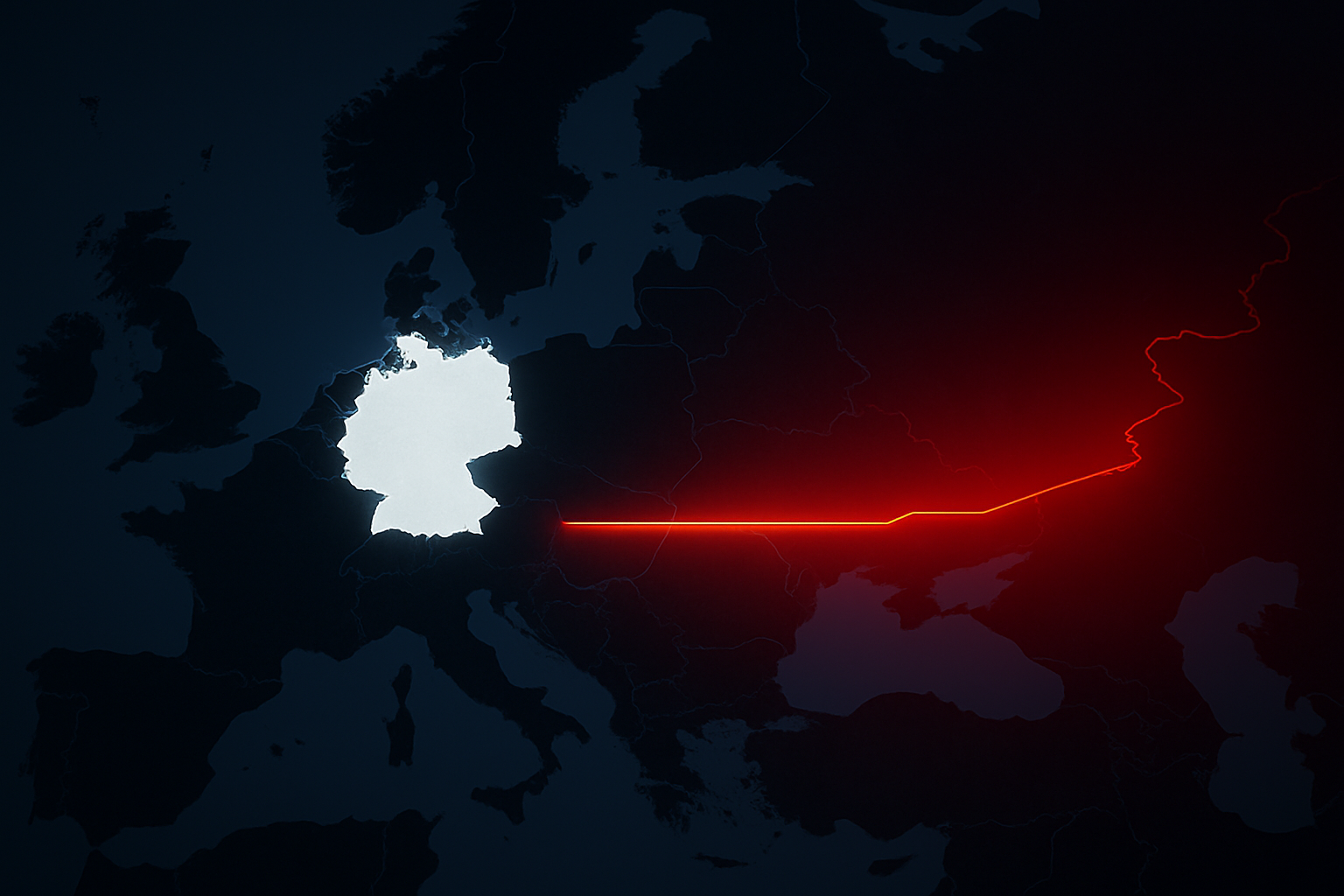
In the summer of 1941, Adolf Hitler made the choice that would define the rest of World War II. Operation Barbarossa, the invasion of the Soviet Union, turned a continental war into a vast struggle on the Eastern Front and bled Nazi Germany of men, fuel, and time. Many historians now view it as his greatest strategic mistake.
But imagine a different decision. No invasion of the Soviet Union. No Eastern Front in 1941. The uneasy pact between Berlin and Moscow holds a little longer, and the war’s center of gravity shifts elsewhere.
This counterfactual matters because it tests how much the modern world depends on a single decision. The post-1945 map of Europe, the rise of the United States as a superpower, and the shape of the Cold War were all shaped by the German–Soviet clash. Asking what might have happened without it is not about rewriting the past, but about understanding the fragile pathways that led to the present.
This article first sets out the historical facts of German–Soviet relations before 1941. It then explores mainstream interpretations of why Barbarossa was launched and why it proved so costly. Finally, it turns to informed speculation: plausible scenarios for a world in which Hitler never attacked the Soviet Union, and how that might have changed the balance of power in Europe and beyond.
Key Points
Before 1941, Nazi Germany and the Soviet Union were bound by a non-aggression pact and large trade agreements that supplied Germany with vital raw materials.
Operation Barbarossa ended that partnership, opened the Eastern Front, and became the main arena of German military casualties and material loss.
Most scholars treat the decision to invade the Soviet Union as a central strategic error that made long-term German success in the war nearly impossible.
Without Barbarossa, Germany could have tried to extend economic cooperation with Moscow, focus on defeating Britain, or pursue a Mediterranean strategy toward Suez and Middle Eastern oil.
Even in a no-Barbarossa world, the economic and industrial weight of the United States and British Empire would still pose a severe long-term challenge to German dominance.
All alternate scenarios in this article are speculative. They are grounded in known constraints and patterns but cannot be treated as firm predictions of what would have happened.
Background
In August 1939, Nazi Germany and the Soviet Union signed the Molotov–Ribbentrop Pact, a non-aggression agreement accompanied by secret protocols dividing Eastern Europe into spheres of influence. The two regimes, despite their ideological hatred, agreed not to attack each other and to coordinate their expansion in Poland and the Baltic region.
Alongside the political pact came economic deals. From 1939 to 1941, Germany and the Soviet Union concluded major trade agreements. The Soviet Union exported oil, grain, timber, metals, and other raw materials to Germany. In return, Germany sent industrial equipment, machine tools, and military technology. These deliveries helped Germany bypass the British naval blockade and keep its war economy supplied at a critical stage.
By mid-1940, Germany had defeated Poland, Norway, the Low Countries, and France. Britain stood alone in Western Europe. The Luftwaffe’s failure in the Battle of Britain made a cross-Channel invasion risky, and German planners looked for another way to secure victory.
Within Hitler’s inner circle, attention turned east. Ideologically, Hitler had always seen the Soviet Union as the main enemy and dreamed of conquering “living space” in Eastern Europe. Strategically, he feared that if Germany did not strike first, the Soviet Union would eventually become too strong. Economic planners also eyed Ukraine’s grain and the Caucasus oil fields as long-term prizes.
Operation Barbarossa, launched in June 1941, brought spectacular early gains but failed to produce the quick collapse Berlin expected. The campaign stalled outside Moscow that winter. Over the following years, the Eastern Front became a brutal war of attrition stretching from Leningrad to Stalingrad and beyond. The majority of German military losses occurred there.
Barbarossa also ended German–Soviet trade. Without Soviet supplies, Germany became even more dependent on overstrained domestic production, stocks, and exploitation of occupied territories. When Germany later declared war on the United States in December 1941, it found itself fighting three great powers at once: Britain, the Soviet Union, and America.
These are established facts. The counterfactual question is what might have happened if the decision to attack had been delayed or never taken at all.
Analysis
Strategic Alternatives to Barbarossa
If Hitler had not invaded the Soviet Union in 1941, at least three broad alternatives were available in principle, even if they cut against his instincts.
The first was to preserve and deepen the existing partnership with Moscow. The Soviet Union would go on shipping oil, grain, and metals, while Germany continued to exchange machinery and technical know-how. Stalin, still rebuilding the Red Army after brutal purges and wary of direct confrontation, had reasons to avoid war with Germany in the short term. In this path, the uneasy partnership continues, full of suspicion but held together by mutual benefit.
The second was a Mediterranean-first strategy. Instead of sending vast armies into the Soviet Union, Germany could commit more forces to North Africa, aiming to seize the Suez Canal, take Malta, pressure Turkey, and threaten Middle Eastern oil fields. Axis leaders discussed parts of this approach in real history, but it never became the central focus.
The third was a strategy of consolidation. Germany might have tried to hold its existing conquests in Western and Central Europe, maintain the blockade against Britain, intensify submarine warfare in the Atlantic, and avoid major new fronts. This would have meant accepting a long war without a clear shortcut to victory.
These options varied in feasibility, and none guaranteed success. They are reconstructed from what leaders knew at the time and what their militaries could realistically do, not from hindsight alone.
Economic and Military Constraints
Any alternate path must fit within the era’s economic and military constraints. Pre-war Germany was already under strain, running a heavily militarized economy with foreign-exchange shortages and dependence on imported raw materials.
Soviet supplies helped cover key gaps. Oil fueled vehicles and aircraft. Grain supported both civilians and soldiers. Metals and other materials fed armaments production. Without this lifeline, German stockpiles would have run down much faster, especially under the pressure of ongoing war.
At sea, the German navy remained weaker than the Royal Navy. U-boats could inflict serious damage on shipping, but they could not break British control of the seas outright. In the air, Germany had failed to achieve the air superiority needed for an invasion of Britain.
In the Mediterranean, geography and logistics favored the British. Axis forces in North Africa relied on long and vulnerable supply lines across the sea, exposed to attack from British bases. Pushing to Suez and beyond would have required sustained logistical support that Italy struggled to provide even with German help.
These constraints mean that even without Barbarossa, the Axis faced hard limits. Not invading the Soviet Union removes one huge drain on resources but does not give Germany a magical route to ultimate victory.
Counterfactual Scenario 1: Prolonged Pact, Focus on Britain
In one plausible scenario, Hitler delays or indefinitely postpones an attack on the Soviet Union. The non-aggression pact holds, and trade continues. The frontiers established in 1939–40 remain largely unchanged.
In this world, German strategy centers on forcing Britain out of the war. Submarine warfare in the Atlantic intensifies. Air attacks on ports, industry, and infrastructure continue. German diplomacy leans on neutral states to restrict British access to resources and bases.
The Soviet Union, meanwhile, stays in the background. Stalin continues his cautious rearmament, strengthens frontier defenses, and watches German moves in Western Europe and the Mediterranean. He does not necessarily trust Hitler, but the incentive to avoid war endures as long as Germany is fighting Britain and perhaps the United States.
What about America? Historically, the United States deepened its involvement gradually, from “cash and carry” sales to Lend-Lease aid. After Pearl Harbor, Germany’s declaration of war brought the United States fully into the European conflict. In a no-Barbarossa world, Hitler could still choose that path, seeing war with America as inevitable. Alternatively, he might hold back, hoping to keep the United States focused on Japan.
Even if Germany avoids a land war with the Soviet Union and delays open conflict with the United States, time is not entirely on Berlin’s side. The combined industrial strength of the British Empire and the United States is far larger than that of Germany and its partners. Airpower, shipbuilding, and financial resources all tilt toward the Allies over the long run. Germany may hold much of Europe for longer, but it is far from certain that it can turn that into a stable, dominant empire.
This scenario combines firm facts about relative industrial capacity with speculative assumptions about how leaders might have behaved in different circumstances.
Counterfactual Scenario 2: The Mediterranean Option
A second scenario takes seriously the idea of a Mediterranean-first approach. Here, Hitler does not attack the Soviet Union in 1941. Instead, he sends major reinforcements to North Africa, commits to capturing Malta, and plans a drive toward Egypt and the Suez Canal.
If Axis forces seized Suez, they would disrupt a vital route linking Britain to its empire and to Middle Eastern oil. Control of the Eastern Mediterranean and the Levant could strain British logistics, weaken its position in the region, and perhaps encourage neutral states to move closer to the Axis.
However, this picture rests on several speculative steps. Axis shipping still faces British naval and air power. Italian ports and convoys remain vulnerable. Supplying large armies far from core industrial centers is hard, even without an Eastern Front.
In this scenario, the Soviet Union remains a wary partner, trading with Germany while monitoring Axis advances near the Caucasus region. Over time, Soviet leaders could begin to fear encirclement and prepare for an eventual clash. The Mediterranean option might postpone German–Soviet war rather than eliminate it.
Again, the scenarios here are hypothetical reconstructions based on known capabilities and strategic interests, not firm alternative timelines.
Long-Term Balance of Power Without an Eastern Front
The most striking difference in a no-Barbarossa world would be demographic and geographic. Without a gigantic Eastern Front, millions of soldiers and civilians would not die in the same way or in the same places. Germany would avoid the crippling losses at Moscow, Stalingrad, and Kursk. The Soviet Union would not suffer the same scale of destruction in Ukraine, Belarus, and western Russia.
Yet the basic industrial arithmetic of the war would still apply. The United States, once fully mobilized, was capable of producing ships, aircraft, tanks, and supplies on a scale no other combatant could match. Combined with British resources and access to global markets, that industrial base posed a severe challenge to any German bid for long-term dominance.
The key difference lies in who occupies what at the end. Without the Red Army fighting its way to Berlin, there is no Soviet occupation of Eastern and Central Europe in the same form. Eastern Europe might remain under German control for longer, or be liberated primarily by Anglo-American forces from the west and south.
In one speculative path, a late-war settlement could produce a divided Europe dominated by a German bloc in the center, a western bloc led by the United States and Britain, and a cautious, still-authoritarian Soviet Union on the periphery. In another, Germany eventually collapses under blockade, bombing, and internal strain, with Allied forces negotiating the post-war order from a position of overwhelming strength.
Because these possibilities depend on countless contingent factors, they must be treated as informed speculation, not predictions.
Why This Matters
Exploring what might have happened if Hitler never attacked the Soviet Union does more than satisfy curiosity. It highlights the interplay between structural forces and individual decisions.
On one hand, the relative size of economies, access to resources, and geography limit what any leader can achieve. On the other, a single choice can accelerate or redirect existing trends. Barbarossa did not create the industrial imbalance between Germany and the United States, but it ensured that Germany would bear that imbalance on the harshest possible terms.
The counterfactual also sheds light on debates about preemptive war and resource security. Before 1941, Germany already received vital supplies from its Soviet partner. The move from uneasy dependence to outright conquest transformed risk into catastrophe. Modern debates about whether to tolerate reliance on rivals, diversify supply chains, or strike first often echo these older dilemmas, even if the context is different.
Finally, looking at this alternate path helps challenge simplistic stories of inevitability. It reminds readers that the map of post-war Europe, the existence of NATO, and the familiar outline of the Cold War all depend on choices that could, in principle, have gone another way.
Real-World Impact
Counterfactuals like this one may seem abstract, but they influence how people understand and act in the present.
Defense planners sometimes use alternate historical scenarios to test assumptions about strategy and alliance behavior. By asking what might have happened under different choices, they probe how quickly coalitions form, how long states can sustain wars of attrition, and how misjudged offensives can backfire.
In classrooms, students studying World War II can compare the actual Eastern Front to imagined Mediterranean-focused or “pact-first” strategies. That exercise forces them to separate firm evidence from speculation and to think carefully about why leaders chose the options they did.
In public culture, novels, films, and games explore worlds where Nazi Germany survives longer, falls differently, or never clashes with the Soviet Union. While fictional, these stories shape how wider audiences think about contingency, responsibility, and moral choice in international politics.
By examining such what-ifs carefully and clearly labeling where evidence ends and imagination begins, readers can gain a sharper sense of how fragile the path to the present really is.
Conclusion
Removing Operation Barbarossa from the story of World War II does not reveal a hidden “true” outcome. It instead opens up a range of possible paths, each bounded by economic capacity, geography, ideology, and chance.
What is solid is the role Barbarossa played in reality. It turned the Soviet Union from uneasy partner into mortal enemy. It opened a vast front on which German forces suffered their heaviest losses. It brought the Red Army into Central Europe and set the stage for the division of the continent after 1945.
In a world where Hitler never attacked the Soviet Union, the war in Europe might have lasted longer, the fronts might have shifted southward, and the post-war order might have been shaped by different occupying powers. Nazi Germany might have clung to power for more years, or it might still have fallen under the weight of combined Anglo-American power and internal strain. Nothing about that alternative future is guaranteed.
The value of the question lies not in claiming to know what would have happened, but in using the contrast to see the actual past more clearly. It highlights how much rested on decisions taken in a narrow window of time and warns against assuming that today’s global order was ever inevitable.
These reflections are interpretive and speculative, offering a modern lens on historical ideas rather than asserting definitive claims
