What If the Iraq Invasion Never Happened?
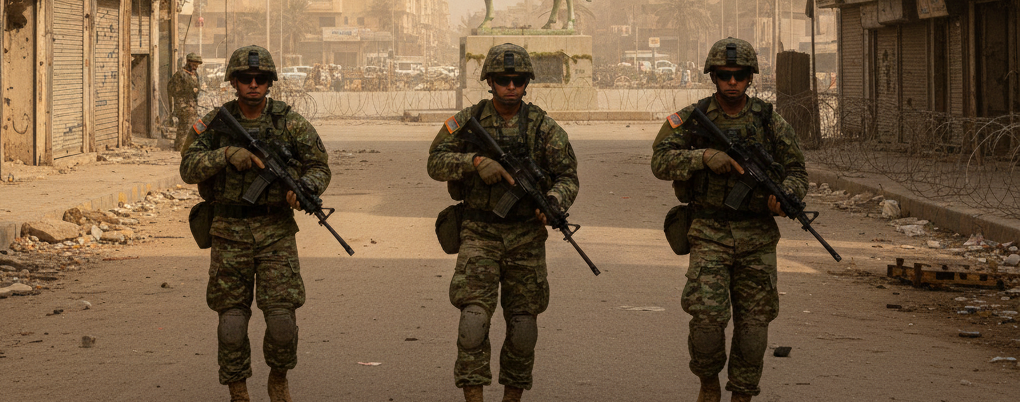
In 2025, the Iraq invasion still sits in the background of almost every argument about war, intelligence, alliances, and the limits of American power. It is a reference point in debates about Iran, Syria, terrorism, energy prices, and even why public trust in institutions feels thinner than it used to.
So it is worth running the counterfactual cleanly: what if the 2003 Iraq invasion never happened? Not “what if everything went right,” and not “what if Saddam Hussein suddenly became benign,” but a realistic alternative path where the invasion is avoided and the world keeps moving.
This piece lays out what likely changes, what probably does not, and where uncertainty stays high. It also traces second-order effects that rarely get discussed, from Iran’s regional reach to the ripple effects on Europe’s politics and the global information environment.
The story turns on whether avoiding the Iraq invasion reduces long-term instability, or simply relocates it.
Key Points
Without the Iraq invasion, Saddam Hussein likely remains in power for longer, contained by sanctions, no-fly enforcement, and periodic crises over inspections and compliance.
Al-Qaeda in Iraq almost certainly does not emerge in the same way, because the invasion-created security vacuum and prison networks were key accelerants for later jihadist mobilisation.
Iran’s influence in Baghdad likely grows more slowly and less dramatically, because the post-2003 political architecture and militia ecosystem would not be handed to it on a platter.
US and UK domestic politics still polarise after 9/11, but the specific legitimacy shock linked to Iraq is reduced, with knock-on effects for trust, veterans’ policy, and budget priorities.
Oil markets still tighten in the mid-2000s for multiple reasons, but the war-risk premium and infrastructure disruption factors look different, especially around Iraq’s production trajectory.
The Arab Spring still arrives. Syria can still fracture. But the region’s “post-2003 template” for state collapse is weaker, and later conflicts may play out differently.
Background
After 9/11, the United States reoriented national security around counterterrorism and pre-emption. Afghanistan became the first major war of that era. Iraq became the defining one.
The 2003 invasion removed Saddam Hussein’s regime and dismantled the state’s coercive apparatus. That created a fast-moving power vacuum. Iraq then experienced years of insurgency, sectarian violence, political fragmentation, and repeated cycles of reconstruction and relapse.
For a counterfactual to be useful, it needs a plausible off-ramp. The most realistic “no invasion” scenario is not that Washington suddenly turns pacifist. It is that the US chooses a different toolset: continued containment, pressure through inspections and sanctions, and a narrower counterterrorism posture focused on transnational networks rather than regime change.
This matters because it changes the mechanism of instability. In the real timeline, instability is driven by state collapse and the scramble to replace it. In the no-invasion timeline, instability is driven by a brittle authoritarian state trying to survive external pressure and internal stress.
Iraq Invasion Counterfactual: The Core Fork in 2003
If the Iraq invasion never happens, three big facts remain.
First, Saddam Hussein’s regime is still brutal and still vulnerable to shocks. Second, Iraq is still a strategic prize in a region where neighbours and great powers compete. Third, the post-9/11 counterterrorism era still produces wars, raids, surveillance expansions, and hard political choices.
The fork is not “war versus peace.” It is “state removal and reconstruction” versus “containment and managed confrontation.”
Analysis
Political and Geopolitical Dimensions
A contained Saddam changes the regional balance in a specific way: it preserves Iraq as a barrier state between Iran and the Arab Gulf. That does not make Iraq stable. It makes regional competition more predictable.
Without the invasion, Iran likely still expands influence through proxies and diplomacy, but its leap into Iraq’s political centre of gravity is delayed. Tehran does not get the same opportunity to cultivate militias and political parties inside a newly redesigned Iraqi system. Iran remains constrained by a hostile regime next door, not empowered by a weak neighbour trying to rebuild.
Turkey’s calculus changes too. A post-2003 Iraq created new space for Kurdish autonomy and new friction over borders, insurgency, and oil politics. Without an invasion, Kurdish aspirations remain real but are negotiated under heavier Iraqi coercion and tighter regional constraints. That may reduce some cross-border flashpoints, while increasing repression and risk of internal uprisings.
For the US, the biggest geopolitical change is bandwidth. An Iraq invasion consumed attention, troops, and diplomatic capital. Without it, Washington likely concentrates more resources on Afghanistan and on global counterterrorism operations. That might improve some tactical outcomes. It does not guarantee strategic success. Afghanistan’s problems were not only about resourcing. But the political pressure of “two wars” is reduced.
Alliances look different. The Iraq invasion created lasting fractures among Western partners and fuelled global scepticism about US judgment. In a no-invasion world, transatlantic trust is less damaged, and the “liberal intervention” debate evolves differently. The West still argues about war. It just argues without Iraq as the central wound.
Economic and Market Impact
Energy is where counterfactuals can get sloppy, so caution is needed. Oil prices moved for many reasons in the 2000s, including rising demand, tight spare capacity, and geopolitical risk across the region.
Still, Iraq’s production path matters. Without the invasion and the years of sabotage, instability, and rebuilding, Iraq might sustain a steadier, if constrained, oil output profile under sanctions and pressure. That could mean lower volatility in some periods, but it could also mean lower long-run capacity growth if investment remains restricted.
There is also the fiscal story. The Iraq war era carried enormous direct costs and long tail obligations, including veterans’ care and equipment reset. In a no-invasion timeline, some of that money is not spent, or is spent differently. That changes deficit politics at the margin, and it changes what governments claim they “cannot afford” at home.
But economics is not just budgets. The war also shaped risk perceptions. It influenced how markets priced instability in the Gulf, how insurance and shipping assessed routes, and how investors thought about the “rules” of intervention. Without Iraq, the perceived threshold for regime change by force may look higher, which subtly shifts global risk pricing.
Social and Cultural Fallout
The Iraq invasion helped define a generation’s relationship with government claims. Even people who supported it often later described disillusionment: not only with outcomes, but with how certainty was presented.
Without the invasion, trust still erodes after 9/11-era policies, financial shocks, and culture wars. But the specific symbol of “a war sold on confidence, followed by chaos” is weaker. That matters because public trust is a kind of infrastructure. When it cracks, every later crisis becomes harder to manage.
There is also a human geography impact. The invasion and its aftermath contributed to large-scale displacement. In a no-invasion world, some of that displacement does not occur in the same way. That does not mean migration pressures vanish. The region still faces repression, economic stress, and later uprisings. But the timing, routes, and political effects in Europe likely shift.
Finally, there is the veteran story. A no-invasion timeline means fewer service members deployed into Iraq’s specific urban insurgency environment, fewer injuries of that campaign, and a different national conversation about military service and care. Afghanistan remains. Counterterrorism continues. But the scale and character of experience changes.
Technological and Security Implications
The invasion accelerated a particular security ecosystem: counterinsurgency doctrine, battlefield surveillance, private contracting, and a feedback loop between war zones and homeland security policy.
Without Iraq, some technologies still expand, because the post-9/11 environment drove them anyway. But the intensity of deployment and the speed of iteration may slow. Drone warfare likely still becomes central, but the operational learning curve changes if fewer resources are tied up in Iraq’s theatre.
The most important security implication is jihadist evolution. It is hard to claim “no Iraq invasion means no ISIS” with certainty, because Syria’s later collapse and regional radicalisation dynamics matter. But it is reasonable to say this: the invasion created conditions that made a specific kind of jihadist state-building in Iraq far more likely. The security vacuum, sectarian civil conflict, and prison networks were accelerants. Remove those, and the pathway becomes harder, even if not impossible.
What Most Coverage Misses
Most counterfactual debates get stuck on one question: would the Middle East be “more stable” without the Iraq invasion? That framing is too blunt.
A better question is: what kind of instability dominates? Invasion-driven instability is explosive and fast, with cascading state failure. Containment-driven instability is chronic and cyclical, with periodic crackdowns, elite coups, sanctions disputes, and humanitarian pressure.
That distinction matters because chronic instability can look “quiet” right up until it is not. A contained Saddam could still face a palace coup, a succession crisis, or a mass uprising that turns violent. The point is not that avoiding the invasion guarantees peace. It is that it changes the shape of the risk, and therefore changes how the world responds when crises finally break.
Why This Matters
The regions most affected would be Iraq and its neighbours first, then the wider Middle East, then Europe and North America through energy, migration, and security spillovers.
In the short term, avoiding the invasion likely reduces the scale of immediate state collapse and the rapid militarisation of sectarian politics inside Iraq. That could mean fewer openings for insurgent mobilisation and a different timeline of displacement.
In the long term, the big stakes are institutional trust and geopolitical alignment. If Iraq is not the defining legitimacy shock, Western publics may be less cynical about official claims in later crises. Alliances may be less brittle. And Iran’s regional posture may be shaped by slower, more constrained opportunities.
Events to watch in a no-invasion timeline would cluster around predictable fault lines: inspection showdowns, sanctions votes, regional summits, and any sign of regime succession instability in Baghdad. The exact dates would depend on the trigger event that replaces 2003’s invasion, which is inherently uncertain.
Real-World Impact
A small haulier in Basra sees fewer years of road checkpoints run by competing armed groups. His business still faces corruption and pressure, but the daily risk of sudden violence is lower, and contracts are more stable.
A junior US Army officer in Texas serves in Afghanistan but not Iraq. She comes home earlier than in the real timeline, and her injuries are different. The politics she returns to is still angry, but the national argument about “what was the point?” has less fuel.
A nurse in London watches Parliament debate security laws after 9/11 and after terrorist attacks in Europe. She remains worried. But she is less likely to believe that leaders will always “stretch” the case for action, because the most notorious example never happens.
A refinery planner in South Korea models oil risk differently. He still hedges against Gulf instability, but his stress tests assume fewer sudden outages tied to Iraq’s post-war infrastructure damage, and more slow-burn risk from sanctions and regional standoffs.
Conclusion
A world without the Iraq invasion is not a world without conflict. It is a world where one specific kind of geopolitical shock never detonates, and the aftershocks that shaped a generation take a different form.
The fork in the road is about risk architecture. Invasion creates vacuum, fragmentation, and fast-moving extremism opportunities. Containment preserves state capacity but stores up pressure that can explode later through coups, uprisings, or regional miscalculation.
The signposts that would show which way this alternate story breaks are not slogans or speeches. They are institutional signals: whether Iraq’s regime begins to fracture internally, whether neighbouring states escalate proxy competition, and whether the West’s counterterrorism model stays narrow or expands into a broader doctrine of regime pressure. Those are the early tremors that would tell you whether “no invasion” means fewer crises, or simply different ones.
