What If Ukraine Wins the War?
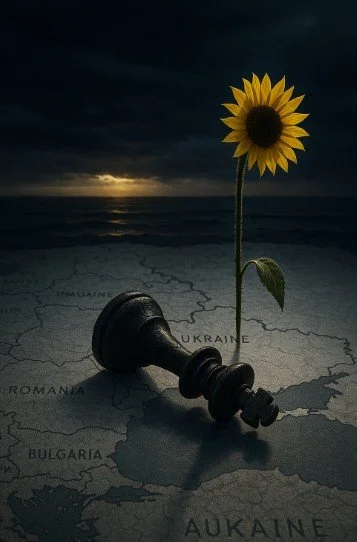
In the past 72 hours, the Ukraine war has again been pulled between battlefield momentum and diplomatic pressure. Ukraine has signalled fresh gains around Kupiansk in the northeast, while talks elsewhere have floated versions of a freeze or managed pullback that Kyiv fears could become a slow-motion loss dressed up as peace.
That is the backdrop for the question many governments, investors, and households are quietly asking: what would “Ukraine won the war” actually look like in the real world, and what would it break open next?
A Ukrainian victory is not a single moment. It is a chain of outcomes: territorial control, political legitimacy, security guarantees, economic survival, and a Russian leadership deciding it cannot reverse the result at an acceptable cost. Even then, the hardest part may begin after the guns fall quieter: preventing a defeated Russia from reorganising for the next round.
This piece maps a plausible “Ukraine wins” scenario, the second-order consequences, and the fork-in-the-road choices that would follow for Europe, the United States, Russia, and Ukraine itself.
The story turns on whether victory produces durable security, or a pause that simply resets the war.
Key Points
A Ukrainian win would likely mean Russia loses the ability to hold or resupply key occupied areas, forcing a withdrawal or an enforceable settlement on Ukraine’s terms.
The most destabilising moment could come after the battlefield outcome, as Russia decides whether to accept defeat, deny it, or sabotage the peace.
Security architecture would become the central fight: NATO membership, NATO-like guarantees, or a bespoke shield built from air defence, long-range deterrence, and forward basing.
Markets would price two things at once: lower immediate war risk in Europe, and higher uncertainty about Russia’s internal stability and energy policy.
Reconstruction would move from slogans to triage: housing, power, demining, manpower, and anti-corruption enforcement at scale.
A “win” that restores territory without preventing future attack could still feel like an unfinished war to Ukrainians.
Background
“Ukraine won the war” can mean different things depending on who is speaking. For Ukraine, the maximal definition is restoration of internationally recognised borders, including Crimea, plus credible guarantees that Russia cannot return. For some partners, “win” has often been framed more narrowly: Ukraine survives as a sovereign democracy, remains economically viable, and stops Russia from achieving its core war aims.
The war has evolved into a contest of industrial capacity, drones, electronic warfare, air defence, and political stamina. Front lines move, but the deeper struggle is about who can sustain losses, replace equipment, and keep allied support steady.
Diplomacy has never been separate from the battlefield. Every local success or setback shifts the perceived leverage of each side. That is why even limited changes on the map can trigger renewed pressure for talks, pauses, or “creative” territorial ideas that quickly become politically explosive.
Analysis
Political and Geopolitical Dimensions
If Ukraine won, the immediate geopolitical shock would be simple: a large state tried to change borders by force and failed. That would reshape threat perceptions across Europe and Asia. Countries sitting closest to Russia would argue that deterrence worked only because Ukraine was armed and because Russia paid a price it could not hide.
Then comes the hard question: how is the result locked in?
One scenario is formal NATO membership for Ukraine, which would be the clearest deterrent but also the most politically fraught for some allies. Another is a “NATO in practice” model: long-term air defence integration, standing training missions on Ukrainian soil, pre-positioned equipment, and guaranteed resupply triggers if Russia attacks again. A third is a looser guarantee led by a coalition of willing states, paired with Ukrainian domestic mobilisation and a heavily fortified border.
A victory would also force the West to choose between two instincts that rarely align: punishing Russia and stabilising Russia. If Moscow faces internal turmoil, some capitals will fear loose nukes and fragmentation more than they desire maximal accountability. Others will argue that easing pressure is exactly how future wars get invited.
Ukraine, meanwhile, would have to manage the politics of triumph without sliding into factionalism. Victory raises expectations. It also raises scrutiny: veterans’ care, corruption enforcement, conscription policy, language politics, and how to reintegrate territories and citizens scarred by occupation.
Economic and Market Impact
A Ukrainian win would likely reduce the immediate “Europe war premium” in energy and risk assets. Shipping and insurance assumptions in the Black Sea would adjust, and infrastructure investors would start modelling multi-year rebuild opportunities with more confidence.
But markets hate unresolved endings. The biggest uncertainty would be Russia’s response. A defeated Russia could cut energy exports more aggressively, redirect trade, weaponise cyber and sabotage, or trigger internal capital controls. Any of those could inject new volatility into oil, gas, fertiliser, metals, and agricultural flows.
For Ukraine, the economics of victory are brutal and hopeful at the same time. The upside is clear: more predictable investment, diaspora return, rebuilding programmes, and a stronger negotiating position with donors. The downside is the bill. Reconstruction is not one project; it is thousands, with fraud risk baked in unless enforcement is relentless.
The “peace dividend” would also compete with defence reality. Even after winning, Ukraine would likely need to spend heavily on defence for years. Europe would, too. A win would not end rearmament. It would justify it.
Social and Cultural Fallout
For Ukrainians, winning would not mean returning to the old normal. It would mean building a new one with a society shaped by loss, displacement, and the psychological weight of survival.
Some families would return to reclaimed towns quickly. Others never will. A victory could accelerate a demographic contest inside Ukraine: who comes back, who stays abroad, and how the state persuades skilled workers to rebuild rather than emigrate.
Veterans’ reintegration would become one of the defining political challenges. The difference between a stable, confident Ukraine and a fragile, angry Ukraine could hinge on mental health provision, employment pathways, disability support, and fair recognition of sacrifice.
Inside Russia, defeat could fracture the story the state has tried to sell. That does not automatically mean liberalisation. A wounded nationalism can become more paranoid, not less. A victory for Ukraine could therefore produce a Russia that is weaker on the battlefield but more volatile at home.
Technological and Security Implications
A Ukrainian win would cement the war’s most consequential military lesson: cheap systems, fast iteration, and industrial scale matter as much as exquisite platforms. Drones, electronic warfare, counter-drone weapons, and dispersed logistics would be studied the way trench warfare and armour tactics were studied in earlier eras.
Security would not be “fixed” by a treaty alone. It would be fixed by layered denial: air defence depth, resilient energy grids, rapid repair capability, hardened command networks, and the ability to strike Russian military assets that enable another invasion.
There is also the nuclear shadow. A defeated nuclear power presents a unique deterrence puzzle: how to secure peace without cornering leadership into a dangerous escalation gamble. Victory would be safest if it is decisive enough to remove ambiguity, yet structured enough to avoid a panicked “nothing to lose” mentality.
What Most Coverage Misses
The overlooked hinge is not territory. It is enforcement capacity.
If Ukraine wins, the real question becomes: who enforces the outcome on day 30, day 300, and year five? Borders can be redrawn. Sanctions can be written. But peace fails when the first serious violation is met with debate instead of action.
The second missed factor is demining and infrastructure repair as national security. Mines, destroyed bridges, damaged power plants, and contaminated land are not just humanitarian issues. They are obstacles to economic recovery and military mobility. A country that cannot move goods, restore power, and clear land fast enough becomes vulnerable again.
Why This Matters
Short term, a Ukrainian win would affect European security decisions, energy pricing, defence spending, and migration patterns. It would also reset the political narrative in democratic capitals that have tied their credibility to supporting Ukraine.
Long term, it would set a global precedent about whether invasion pays. That matters to every state watching border disputes, especially in regions where deterrence depends on the belief that aggression is punished, not rewarded.
Concrete events to watch next, in any “Ukraine wins” pathway, would include: the shape of any security guarantee package, the legal handling of frozen assets and reconstruction financing, the sequencing of sanctions relief (if any), and the first post-war elections and reforms inside Ukraine. The timing would depend on how victory arrives: sudden operational collapse, negotiated withdrawal, or phased retreat under pressure.
Real-World Impact
A small exporter in Ohio ships machinery parts into Europe. If Ukraine wins and the risk of wider European conflict drops, their customers sign longer contracts again. But if energy prices spike from a destabilised Russia, their input costs jump, and “peace” still feels expensive.
A nurse in London sees the impact through budgets. A reduced crisis atmosphere could ease certain emergency spending pressures. Yet higher long-term defence commitments may crowd out other priorities, sparking the next wave of domestic political argument.
A factory manager in Poland watches transport routes and labour. A stable Ukraine could reopen investment corridors and ease uncertainty. But if refugee flows reverse, the local labour market tightens fast, raising wages and forcing automation decisions sooner.
A farmer in southern Ukraine measures victory in soil, not speeches. Mines, damaged irrigation, and missing equipment can keep yields low for years. Their “win” arrives only when land becomes usable again and credit becomes affordable.
Conclusion
If Ukraine won the war, the world would celebrate a moral and strategic reversal: a democracy outlasted an attempted conquest. But the victory would immediately trigger a second contest over permanence.
The fork in the road is clear. One path treats victory as an endpoint and pushes for rapid normalisation. The other treats victory as the start of a long deterrence project, accepting higher defence costs and tougher enforcement to prevent relapse.
The first signs of which way the story breaks would show up in enforcement: how quickly guarantees are operationalised, how consistently violations are punished, and whether reconstruction moves from pledges to measurable delivery. If those pieces lock into place, a Ukrainian win becomes a new security order. If they drift, it becomes an intermission.
