A Superpower’s Unfinished War
The War That Would Not End
Moscow could protect a government and punish its enemies, but it could not create a durable political settlement at a cost its leaders were willing to keep paying.
The last Soviet troops left Afghanistan in February 1989. The government they had supported did not immediately collapse. It survived until 1992, after the Soviet Union itself had ceased to exist.
That sequence complicates the familiar story of a superpower routed by guerrillas. Soviet forces were not destroyed as an army or expelled from every position. They failed to turn military intervention into a sustainable political success, and their leaders eventually decided that continuing the war was less useful than ending their direct involvement.
The reasons lay in Afghanistan’s internal conflict, the resilience of the resistance, outside support for that resistance and the limits of a foreign army’s ability to create legitimate government. Soviet operational weaknesses made the task harder. Tactical improvement could not remove the political problem at its centre.
These nine reasons are ranked by their contribution to that strategic failure. The order is an editorial judgement, not a numerical measurement. The chronology also matters: explaining why intervention became a prolonged war is different from explaining why Mikhail Gorbachev eventually chose withdrawal.
What Moscow Expected to Achieve
Afghanistan was already in crisis before Soviet combat forces intervened in December 1979.
The communist People’s Democratic Party of Afghanistan had taken power in 1978. Its coercive transformation of society, repression and internal struggles helped generate extensive resistance. Conflict within the ruling movement culminated in Hafizullah Amin replacing Nur Mohammad Taraki. Soviet leaders distrusted Amin and feared the loss of a neighbouring state in which they had invested heavily.
The intervention replaced Amin, who was killed, with Babrak Karmal. Soviet forces rapidly secured important centres and military facilities. Removing a leader and installing an ally proved much easier than establishing authority across the country.
The initial conception relied heavily on Afghan institutions doing the governing and much of the fighting. Soviet power would stabilise the situation, protect key positions and provide support. In practice, the weakness of those institutions drew Soviet forces into a larger counterinsurgency war.
This was not simply a successful invasion followed by an unrelated mistake. The intervention’s political purpose depended on a government capable of surviving the resistance it faced. Securing the presidential machinery could not fulfil that purpose if the state beyond it remained deeply contested.
1. The Government Moscow Defended Could Not Secure Broad Acceptance
The fundamental weakness was political. The Afghan government lacked sufficient authority across much of the country, and Soviet intervention could not manufacture that authority by force.
The communist leadership inherited neither a settled revolution nor a unified movement. Repression and intrusive reforms had antagonised communities. Rival factions inside the ruling party undermined administration and trust. Installing another leader changed the occupant of the presidency without resolving the wider conflict over who should govern and on what terms.
Foreign military protection also carried a cost. It made the government’s survival possible while allowing its enemies to present it as dependent on an outside power. Soviet success in defending Kabul could therefore coexist with continuing resistance to Kabul’s authority elsewhere.
This did not mean every Afghan opposed the government. It had supporters, officials, soldiers and constituencies with reasons to fear its enemies. Treating the country as unanimously united against communism erases the civil conflict within the international war.
The narrower and better-supported point is that the government could not establish sufficiently broad and durable acceptance to make foreign combat support unnecessary during the intervention.
That problem affected every other part of the campaign. Recruitment, intelligence, local administration and the ability to hold territory after an operation all depended on relationships with the population. An army could clear a district and still leave officials unable to govern it safely.
Political weakness ranks first because it explains why battlefield achievements repeatedly failed to accumulate into an enduring result. The intervention protected an ally whose underlying vulnerability kept generating further demands for protection.
2. The Resistance Could Lose Ground Without Losing the War
The mujahideen were not a single army with one headquarters whose capture would end the conflict. They were a collection of armed movements, parties and local networks with different leaders and interests.
That fragmentation created serious weaknesses, especially when coordination was required. It also complicated Soviet efforts to achieve a decisive victory. Defeating one formation or disrupting one area did not automatically destroy resistance elsewhere.
Guerrillas could disperse when faced with superior force and return after an operation ended. They could attack exposed positions, roads and smaller units without accepting a conventional battle on Soviet terms.
A declassified CIA assessment from July 1980 identified this problem early. It described insurgents evading large sweeps, attacking around road-bound Soviet forces and moving back into areas after Soviet withdrawal. It also recorded disagreement among Soviet observers about whether recent operations were improving the situation.
That assessment was an adversary’s contemporary judgement, not an omniscient account. Its value lies partly in showing how soon the central difficulty became visible: temporary military access was being mistaken for lasting control.
For the resistance, survival itself could have strategic value. It kept the government dependent, forced further expenditure and denied Moscow a convincing end point. Insurgents did not have to defeat the entire Soviet military establishment to make the intervention unattractive.
This does not make guerrilla warfare easy or costless. Afghan fighters and civilians suffered enormously. It explains the unequal requirements of the two sides: Moscow needed an order that could endure; its opponents could frustrate that goal by remaining capable of organised resistance.
3. Pakistan and Foreign Support Sustained the War
Afghan resistance was rooted in Afghanistan, but it was not isolated from the outside world.
Pakistan provided a crucial base for support, organisation and supply. The United States channelled assistance through Pakistan’s intelligence service, while Saudi Arabia and other actors also contributed. Weapons, money and access beyond Afghanistan’s borders helped the resistance continue a conflict that Soviet leaders had hoped to contain.
External support mattered through continuity as well as scale. A force that could replace equipment, obtain ammunition and maintain networks outside the main theatre was harder to exhaust than one dependent entirely on what it could capture locally.
Pakistan was also an actor with its own priorities. It did not merely transmit an undifferentiated Western policy. Decisions about which Afghan groups received support helped shape the balance within the resistance and the politics that followed the Soviet withdrawal.
Closing this system was not a simple matter of deploying more patrols. The border was difficult to seal, and attacking the support structure more broadly risked expanding the war into another state. Soviet military superiority inside Afghanistan did not translate into unlimited political freedom beyond it.
The same constraint affected diplomacy. A settlement needed to address outside assistance as well as Soviet troops. The withdrawal negotiations did not produce a comprehensive agreement among Afghan factions to stop fighting.
Foreign support ranks above individual weapons because it sustained the wider contest. The Stinger missile was important, but its arrival was one part of a much larger relationship involving sanctuaries, financing, distribution and political backing.
4. Seizing an Area Was Easier Than Keeping It Secure
The Soviet army could concentrate force and enter places where insurgents operated. The more difficult question was what happened after the main force moved elsewhere.
Holding an area required troops, reliable local partners, communications and supplies. Extending permanent protection across more territory increased the burden on the same army that was expected to conduct offensive operations.
This created a recurring allocation problem. Troops guarding roads, depots and garrisons were not simultaneously available for a major sweep. Concentrating them for an operation could leave other places more exposed.
The July 1980 intelligence assessment described Soviet forces becoming thinly spread as the requirement for garrisons expanded. It linked that dispersal to vulnerability, regrouping delays and logistical difficulty. These were connected consequences of trying to turn temporary military presence into continuing control.
Afghanistan’s terrain sharpened the problem. Mountains and restricted routes complicated movement and made some forms of mechanised advantage less useful. But geography alone did not explain the outcome. Mountains became strategically consequential because armed opponents used them and because the government could not reliably administer what military operations temporarily opened.
A road could remain passable while requiring repeated security operations. A district could be entered without becoming safe for officials after the soldiers left. Counting successful movements through such places could exaggerate progress towards a self-sustaining state.
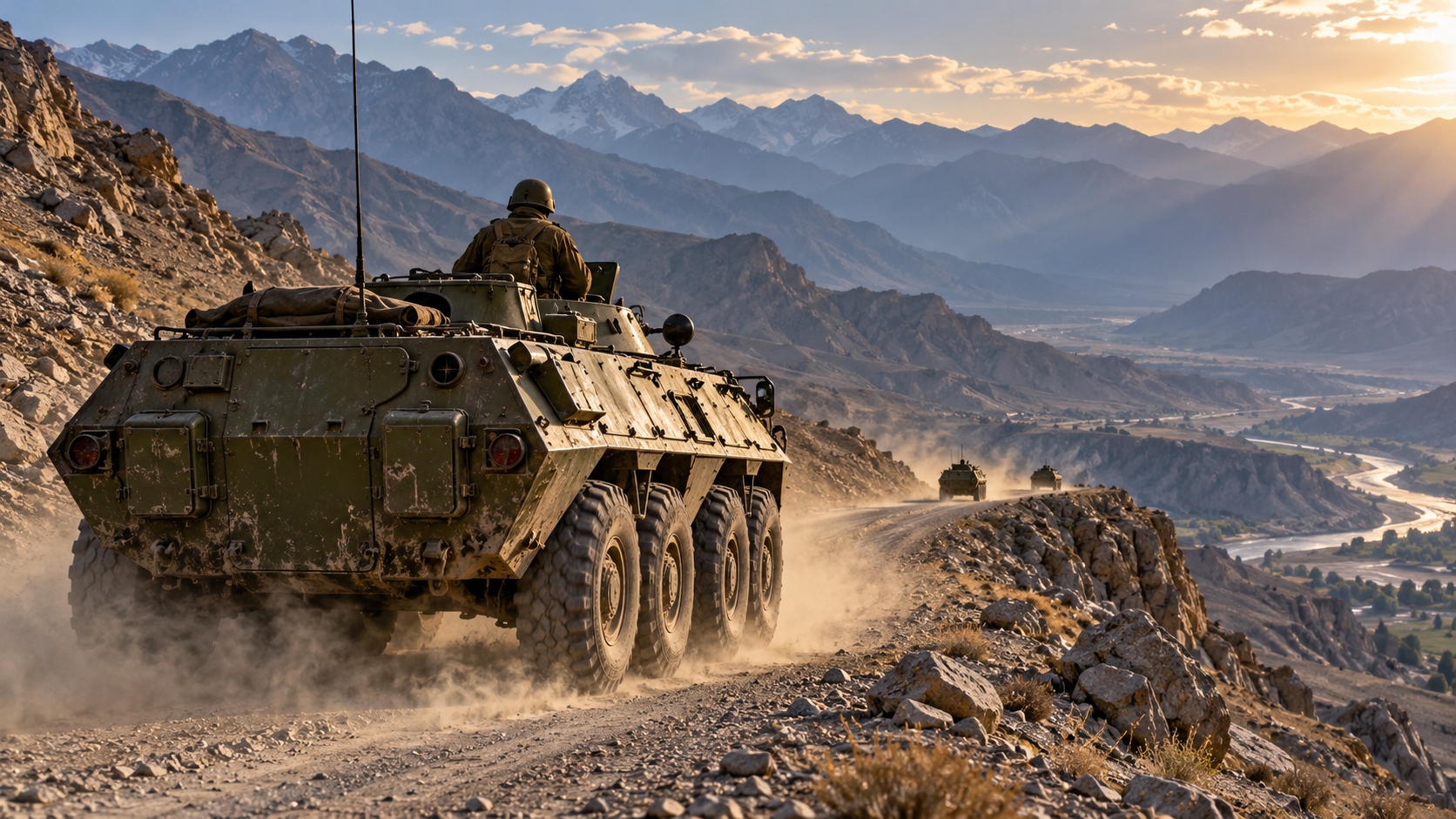
The distinction also explains why photographs of Soviet armour are insufficient evidence of control. The ability to send a vehicle down a road says little about who can collect information, settle disputes or operate there when the convoy has gone.
5. Soviet Forces Had to Adapt to a War They Had Not Planned to Fight
The intervention force was not designed around the full demands of the prolonged conflict that followed.
Its equipment and habits reflected a military establishment strongly oriented towards conventional warfare. Concentrated firepower, mechanised movement and centralised planning offered great strength against certain targets. They were less well matched to small groups that dispersed, avoided decisive engagements and operated among difficult terrain and civilian communities.
It is nevertheless wrong to describe the entire decade as an unchanging exercise in Soviet incompetence. Adaptation began early. The 1980 assessment already recorded experiments combining infantry, airborne troops and helicopters, alongside smaller detachments intended to respond more quickly to opportunities.
Such changes could improve particular operations. Helicopters altered mobility; different force combinations could reduce some limitations of road-bound movement. Experience also helped troops understand local conditions.
The problem was that learning to fight more effectively did not guarantee a political outcome worth the cost. An improved ability to attack an insurgent group could coexist with the group’s replacement, relocation or continued outside support.
Adaptation also required institutions to absorb experience rather than leave it with particular commanders. Equipment, training, command arrangements and the assumptions used to assess progress all had to change together.
This reason ranks below the political and regional factors because a more skilful campaign still faced them. It belongs in the ranking because poor initial assumptions increased costs and delayed useful adjustment at the moment when Moscow hoped its intervention would stabilise the situation quickly.
6. Violence and Displacement Undermined the Political Goal
The war inflicted devastating harm on Afghan civilians. Bombardment, fighting, coercion and the destruction of livelihoods drove displacement and intensified hostility.
Civilian suffering was not merely an unfortunate consequence separate from the strategic calculation. It could change the population’s relationship with the government and the foreign force sustaining it. People who lost homes, relatives or the means to farm had reasons to distrust promises of stability.
That did not make every displaced person an insurgent, or every act of violence a reliable recruiting mechanism. People fled, accommodated whichever force was present, sought protection or tried to avoid all sides. Their choices were constrained by immediate danger as well as ideology.
The strategic contradiction remained. Military methods intended to weaken resistance could damage the society the government needed to administer. Repeated destruction might deny resources to opponents while also reducing the government’s practical and political foundations.
The resistance was not exempt from responsibility for violence or coercion. Acknowledging abuses by different actors does not cancel the effect of Soviet and government operations on their own objective of securing acceptance.
This is also why a purely technical account of the campaign is incomplete. An operation can succeed in destroying a target while worsening the environment in which the next operation must take place.
For civilians, the costs extended beyond the decisions of either superpower. Refugee movements, shattered livelihoods and the legacy of mines continued to affect life after the last Soviet column departed. A withdrawal date could mark the end of an intervention without marking the end of its consequences.
7. Afghan Institutions Remained Dependent and Uneven
Moscow needed Afghan forces to take over responsibilities that Soviet troops could not carry indefinitely. Building that capacity proved difficult, uneven and politically complicated.
Early in the war, desertion and recruitment problems weakened the Afghan army. Rivalries within the government also affected the effectiveness of the state it served. The resulting gaps pulled Soviet forces further into combat and security tasks.
But the later history prevents a sweeping claim that Afghan government forces were incapable of fighting. The government under Mohammad Najibullah survived the Soviet withdrawal and continued resisting its enemies. It retained institutions, armed forces and outside material support.
That survival is evidence against the idea that foreign soldiers were the only thing holding the state together. It is not evidence that the state had become independent of foreign assistance.
There were several different forms of dependence: foreign combat troops, financial and material support, technical help and political backing. Removing one did not automatically remove all the others.
Najibullah’s government became much more vulnerable when Soviet support disappeared and internal alignments shifted. Its fall in 1992 cannot be compressed into the departure of Soviet troops three years earlier without losing the mechanism of collapse.
The relevant question is therefore how much responsibility Afghan institutions could carry under particular conditions. The answer changed over time. They were stronger than the most dismissive accounts suggest, but the arrangement remained vulnerable to a major change in the external support on which it relied.
8. Gorbachev Judged the War Against Wider Soviet Priorities
A state withdraws from a costly war through political decisions. Casualties and expenditure do not themselves issue the order.
Gorbachev’s arrival in power in 1985 changed how the Afghan commitment was assessed. Domestic reform and relations with the outside world gave him reasons to reconsider a war that offered no convincing path to a satisfactory conclusion.
Documents published by the National Security Archive trace serious movement towards withdrawal to 1985, although the specific timetable came later. That chronology matters when evaluating explanations centred on battlefield developments in 1986 or afterwards.
Withdrawal was not immediate because Moscow still wanted to protect its interests and its ally. Soviet leaders sought arrangements that might preserve a friendly or at least acceptable Afghanistan while removing their own troops. Diplomacy and continued fighting overlapped.
This was a decision to limit an unsuccessful commitment, rather than proof that the Soviet Union had physically exhausted every capacity to keep troops in the country. A superpower can possess the means to continue a war and conclude that doing so obstructs more important goals.
The distinction avoids two misleading extremes. One treats withdrawal as an inexplicable political betrayal of a winning army. The other imagines the state had no remaining choice because military defeat was total. Neither adequately describes a prolonged intervention whose benefits no longer justified its costs to the leadership making the decision.
Gorbachev’s priorities explain why the accumulated problems finally produced an exit policy. They do not erase the problems that made that policy attractive.
9. Stingers Increased the Pressure, but Did Not Explain the Whole Defeat
American-supplied Stinger missiles reached the resistance in 1986. Their ability to threaten helicopters and other aircraft challenged an important Soviet advantage and forced attention to new risks.
Air power had helped Soviet forces move, supply positions and apply firepower across difficult terrain. Increasing the danger to aircraft could therefore affect more than the loss of individual machines. It could alter how missions were conducted and the freedom with which air support was used.
The strongest version of the Stinger story goes further, treating the weapon as the decisive cause of Soviet withdrawal. The chronology does not support such a simple explanation. Gorbachev was already seeking a way out before the missiles appeared in combat.
That does not make the weapons irrelevant. A decision to seek withdrawal and the practical ability to negotiate or carry it out are different stages. Additional military pressure could influence the conditions under which those stages unfolded.
The careful conclusion is that Stingers strengthened the resistance and complicated Soviet operations within a war already suffering from fundamental political and strategic problems. Their exact contribution remains more debatable than the popular single-weapon explanation suggests.
Placing them ninth is not a claim that they were the ninth most important item on a measurable ledger. It reflects the difference between worsening a campaign and creating the underlying reasons that campaign could not achieve its purpose.
Why Withdrawal Did Not Bring Peace
The Geneva agreements of 1988 provided a framework for Soviet withdrawal. They did not produce an inclusive settlement among the Afghan forces contesting power.
The last Soviet troops departed on 15 February 1989. Fighting continued, as did support for opposing sides. Najibullah’s government remained in Kabul until 1992, when the end of Soviet backing and defections within its own coalition helped bring it down.
The resistance’s victory over that government did not resolve the divisions among the victors. Armed factions fought over the state, and Kabul suffered further destruction. The Taliban emerged in the following years, rather than being the organisation that had fought the entire Soviet intervention.
That distinction is essential. The mujahideen, the Taliban and al-Qaeda are not interchangeable names for a single continuous actor. Their histories intersect, but their structures, origins and objectives differ.
Withdrawal answered one question: whether Soviet combat troops would remain. It left unresolved who would govern, how armed groups would share or relinquish power, and what neighbouring states would support.
An agreement can therefore succeed in ending an external military presence while failing to end the war in which that presence operated. Measuring the Geneva process only against the first task makes it appear more complete than it was. Measuring it only against the second conceals the significant change it did achieve.
Did Afghanistan Bring Down the Soviet Union?
The Afghan war imposed costs, damaged confidence and became part of the Soviet Union’s broader crisis. It was not a sufficient explanation for the state’s dissolution in 1991.
That dissolution also involved economic problems, political reforms, struggles within the leadership and nationalist movements across the union. An account that assigns the outcome to Afghanistan alone bypasses the institutions and decisions through which the state actually broke apart.
The timing is suggestive but not proof of a single causal chain. Soviet troops left Afghanistan in 1989; the Soviet Union dissolved in 1991; Najibullah’s government fell in 1992. Each event changed the conditions of the next, but they were not one uninterrupted battlefield defeat.
The more defensible judgement is that Afghanistan was a damaging commitment at a moment when Soviet leaders faced other serious pressures. Ending it could release resources and diplomatic room, but could not by itself solve the problems at home.
Nor does the campaign prove that Afghanistan is inherently impossible to govern or that every foreign intervention must follow the same path. Such claims replace institutions, choices and external support with a geographical destiny.
The Soviet experience supports a more useful conclusion. Military power can preserve an allied government for years without creating the settlement needed to end its dependence. Moscow eventually found a way to remove its own army. It never secured the political outcome that would have made the intervention a durable success.
Sources
U.S. Department of State, Office of the Historian — The Soviet Invasion of Afghanistan and the U.S. Response, 1978–1980 — The Afghan political crisis, Soviet intervention and international response.
Foreign Relations of the United States — Intelligence Assessment: The Soviet Military Position in Afghanistan, July 1980 — Contemporary evidence on sweeps, garrisons, insurgent resilience, Afghan army weaknesses and early Soviet adaptation; an assessment with stated uncertainties.
National Security Archive — The Soviet Withdrawal from Afghanistan 1989 — Withdrawal deliberations, negotiations and the limitations of the diplomatic settlement.
Congressional Research Service — Afghanistan: Post-War Governance, Security, and U.S. Policy, 26 July 2005 — Historical background on foreign assistance, the government’s fall in 1992 and subsequent factional conflict; later policy assessments are not used as current facts.
CIA Museum — First Sting — The 1986 introduction of Stinger missiles; its celebratory interpretation is weighed against the earlier withdrawal chronology.
Next Reads
The History Of Al-Qaeda: Afghanistan, 9/11 And Beyond — Trace a different organisation whose origins intersect with the Afghan war.
The Cold War Explained: How America and the Soviet Union Nearly Destroyed the World — Place the intervention within the wider rivalry and its changing priorities.
Why America Lost the Vietnam War: The 10 Biggest Reasons, Ranked — Compare the difficulties of translating military support into a durable allied state.
