Why the Strait of Hormuz Could Still Shock the World: The Narrow Waterway That Keeps Global Power on Edge
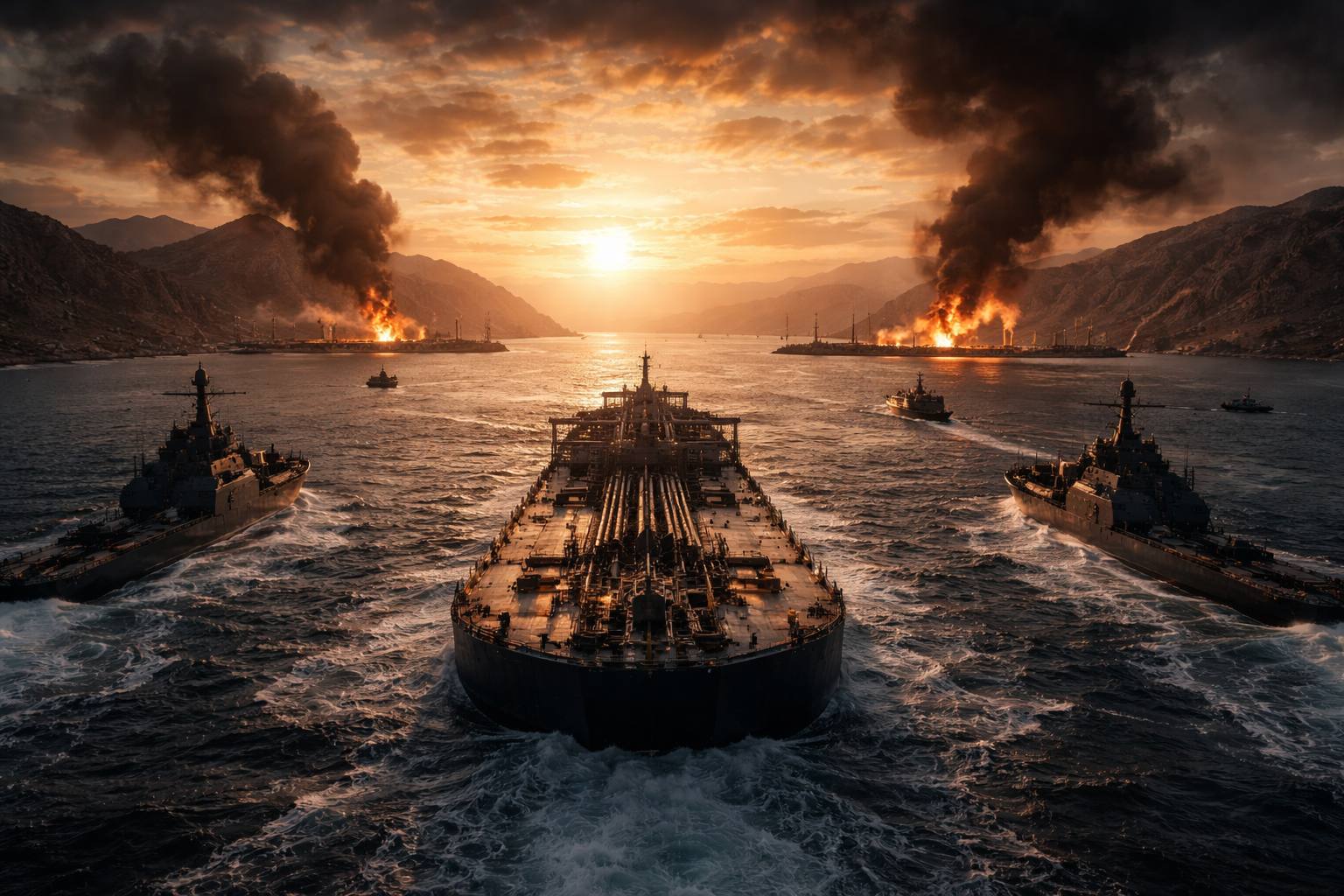
Why the Strait of Hormuz Can Still Rattle the Entire World
The Strait of Hormuz matters for one simple reason: a very narrow stretch of water still carries an outsized share of the world’s oil and gas, and there is no easy substitute when it is disrupted.
That makes it far more than a local sea lane. This is a critical juncture where geography, war, energy, insurance, and great-power strategy converge.
The basic map explains the danger. The strait sits between Iran and Oman, linking the Persian Gulf to the Gulf of Oman and the Arabian Sea. Saudi Arabia, Iraq, Kuwait, Qatar, the United Arab Emirates, Bahrain, and Iran all depend on it directly or indirectly to move energy to global markets. In 2025, nearly 20 million barrels a day of oil moved through it, along with a giant share of global liquefied natural gas, especially from Qatar.
That is why Hormuz has remained strategically vital for centuries. Empires wanted it because it sat astride trade. Modern states fear it because it sits astride energy. The story turns on whether the world can keep a single chokepoint open even when the region around it is on fire.
Key Points
The Strait of Hormuz is vital because it is one of the world’s most important energy chokepoints, carrying roughly a fifth of global oil supply and a major share of LNG trade.
Its importance is not just volume but concentration: too many major Gulf exporters depend on the same narrow route at the same time.
Alternative routes exist, but they are limited. Current bypass pipeline capacity falls far short of replacing the full volumes that normally move through the strait.
Hormuz has been contested for centuries, from Portuguese imperial control to Anglo-Persian rivalry to the Tanker War of the 1980s.
The real danger is not only full closure. Trade can suffer crippling effects from mines, seizures, missile threats, and insurance panic, even before any formal blockade is declared.
The strait matters most when conflict widens because disruption there can turn a regional war into a global inflation, shipping, and market shock within days.
Where This Story Really Begins
The Strait of Hormuz became strategically important long before oil. For centuries, whoever influenced the passage could shape trade between the Gulf, the Indian Ocean, and wider imperial networks. The Portuguese captured Hormuz in 1514 and built a fort, trying to lock in command over maritime trade. In 1622, joint Anglo-Persian forces expelled them, showing an old truth that still applies now: outside powers and local powers both understand the value of controlling the gateway rather than merely the coastline.
Modern Hormuz, however, is not mainly about spices, tribute, or imperial tolls. It is about industrial civilization. Once the Gulf became central to world oil production, the strait stopped being a regional asset and became a global vulnerability. Tankers could move vast volumes efficiently through it, but that efficiency came with a strategic cost: concentration. When too much of the world’s fuel must pass through one narrow passage, geography itself becomes leverage.
The Oil Artery That Rewired Global Strategy
The full meaning of Hormuz changed in the twentieth century, when Gulf oil became essential to Asia, Europe, and the wider world economy. Today, the strait is the primary export route for the major Gulf producers. In 2025, nearly 15 million barrels a day of crude oil and nearly 5 million barrels a day of oil products moved through it. The same bottleneck also facilitated around 19% of global LNG trade, particularly impacting Qatar.
That has two effects. First, any threat to Hormuz affects energy prices almost immediately, even before physical shortages fully appear. Second, the countries most exposed are not only the ones on the Gulf. Much of the oil passing through the strait heads to Asia, especially China and India, while Japan and Korea also remain highly sensitive to disruption. Europe is less directly reliant than Asia on these crude flows, but a major closure would still hit Europe through global prices, shipping costs, and market contagion.
This is why Washington, London, Gulf monarchies, Asian importers, insurers, and commodity traders all watch the same narrow channel. Hormuz is not just an oil route. It is a mechanism through which local military pressure becomes global economic pressure.
The War That Changed Everything: The Tanker War
The most important modern precedent came during the Iran-Iraq War. By the early 1980s, the land war had bogged down, and the conflict spilled into Gulf shipping. Iraq escalated attacks around Iran’s Kharg Island; Iran retaliated, and commercial vessels became targets. This phase became known as the Tanker War. It drew in the United States, which began escorting reflagged Kuwaiti tankers in Operation Earnest Will in 1987.
That episode mattered for more than the ships it damaged. It proved three things. A Gulf War does not stay neatly on land. Commercial shipping becomes a strategic target when belligerents want to damage revenue without launching all-out conventional naval war. And escort missions meant to stabilize trade can themselves drag outside powers into direct confrontation. The 1988 downing of Iran Air Flight 655 by the USS Vincennes showed how quickly maritime security operations can slide into catastrophe.
From that point on, Hormuz was not simply an economic chokepoint. It was also a standing military flashpoint where deterrence, miscalculation, and market panic could all feed each other.
Why a Narrow Strait Gives Iran So Much Leverage
Iran’s leverage does not come from having to defeat the U.S. Navy in an open battle. It comes from being able to make passage risky, uncertain, and expensive. Mines, drones, anti-ship missiles, fast attack craft, seizures, and selective harassment can all raise costs or freeze traffic. A ship does not need to be sunk for the global impact to begin. Often it is enough for insurers, operators, and crews to believe that the next passage may be too dangerous.
That is why alternative pipelines matter but do not solve the problem. The IEA says only about 3.5 to 5.5 million barrels a day of crude could be rerouted through existing bypass capacity, mainly through Saudi and Emirati lines. That is meaningful, but nowhere near enough to replace normal Hormuz flows in a sustained crisis. A partial workaround is still a bottleneck when the original route carries close to 20 million barrels a day of oil.
What Most Coverage Misses
Most coverage treats Hormuz as if the only real question is whether it is formally open or officially closed. That is too crude.
The more important reality is that the strait can fail in layers. Traffic can thin out, insurers can retreat, shipowners can delay sailings, navies can begin escorts, and markets can spike long before a government announces a legal blockade. Commercial paralysis can arrive before military closure. The economic effect often starts with fear, not with a final act.
That changes how the story should be read now. In the current 2026 crisis, the strait’s significance is not only that it has become a theater of conflict. It is that even partial disruption has already fed wider anxiety about energy supplies, shipping security, and inflation. Hormuz matters because it turns uncertainty into leverage.
Why the Stakes Reach Far Beyond the Gulf
The first visible effect of a threat to Hormuz usually manifests in oil prices. But the deeper consequences spread wider: freight costs rise, insurance premiums jump, governments worry about inflation, central banks face tougher choices, and energy-importing states scramble for alternatives. That is why Gulf instability can suddenly become a household issue far from the Gulf itself.
The political stakes are just as serious. Gulf monarchies want security without becoming permanent battlefields. Importers want stable energy without military dependence. Western navies want freedom of navigation without stumbling into a larger war. Iran wants leverage without inviting overwhelming retaliation. Hormuz is where all those aims collide in one compressed space.
What History Says to Watch Next
The long history of Hormuz suggests that the key question is rarely whether tension exists. Tension is normal. The real question is what form it takes next: symbolic threats, selective seizures, mining, convoying, or a broader military effort to reopen passage. Each stage changes both the market impact and the escalation risk.
The main signposts are concrete. Watch shipping volumes, insurance availability, naval escort decisions, evidence of mining, and whether Gulf states rely more heavily on bypass pipelines. Also, watch whether current diplomacy produces a security arrangement strong enough to restore commercial confidence, not just nominal passage.
That is the deeper historical significance of the Strait of Hormuz: it keeps proving that in the modern world, a few miles of sea can still shape war, prices, and power far beyond the horizon
