384 Travellers Reported Missing After Catastrophic Nepal–Tibet Floods — Including 12 Britons
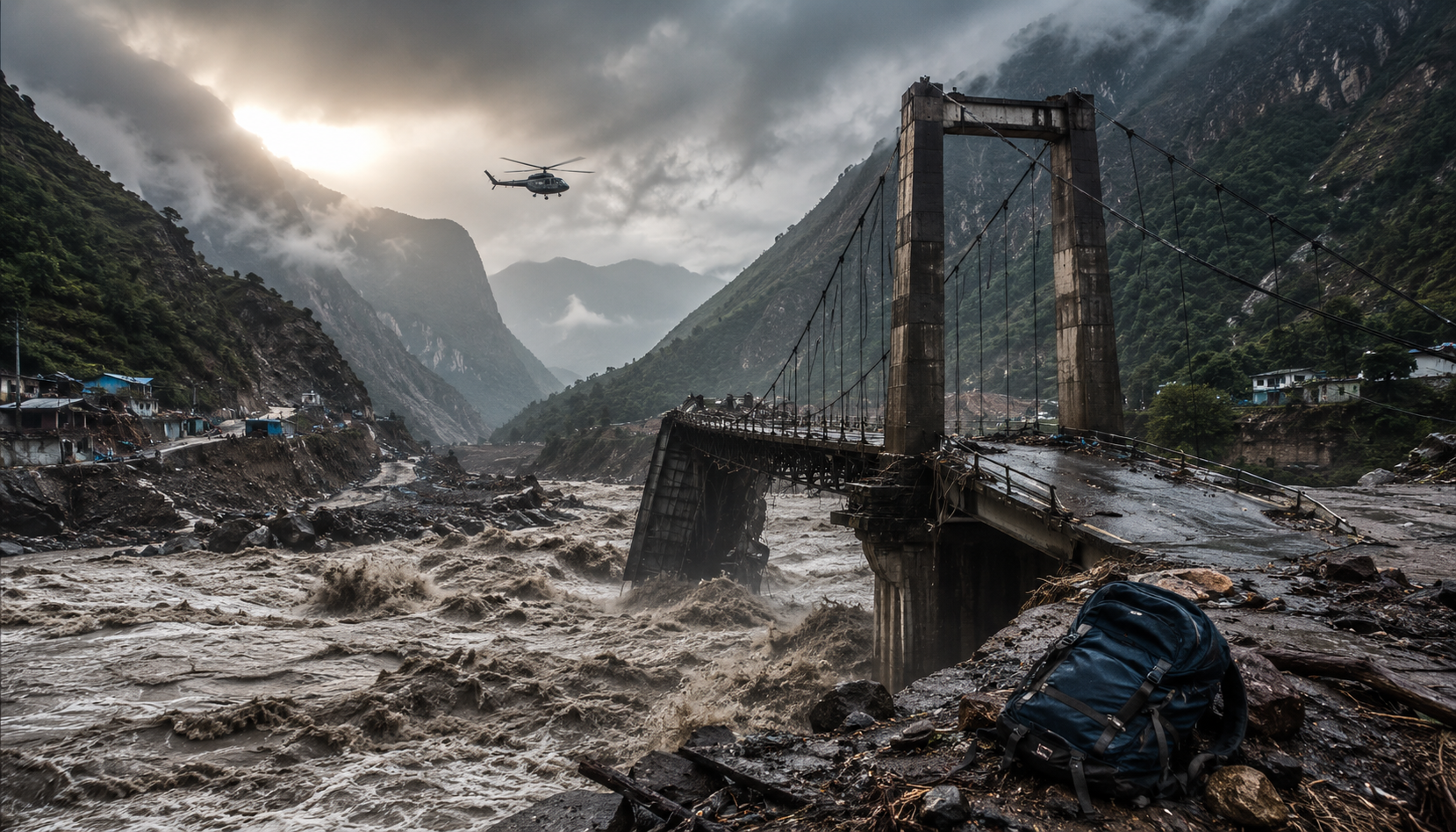
Mass Search Underway After Nepal–Tibet Flood Leaves Hundreds Unaccounted For
The Himalayan Flood Disaster
A vast search operation is under way in the Himalayas after 384 travellers were reported missing or out of contact following catastrophic flooding along the Nepal–Tibet border, with a preliminary list including 12 British nationals. The Nepal Tourism Board says 291 foreign travellers and 93 Nepalis are currently being traced after roads, bridges and communications were devastated in Rasuwa district.
The figure is alarming but needs an important qualification: officials have not established that all 384 people were physically caught in the flood. The Tourism Board compiled its preliminary list from travel companies and is working with guides, police, local authorities and security agencies to determine where the travellers are and whether they are safe.
Twelve British Travellers Are on the Preliminary List
The British group appears in records linked to Alpine Eco Trek. Of 20 people listed through the company, preliminary information identifies 12 as British nationals, four as South African and four as Nepali.
That does not mean the 12 Britons have been confirmed injured or trapped. It means authorities have so far been unable to establish their whereabouts within a much larger effort to reconcile passenger lists, tour-company records and communications from an area where normal transport and phone links have been badly disrupted.
The Tourism Board's overall preliminary count includes 291 foreign nationals and 93 Nepalese travellers. At least 105 Indian nationals are on the list, alongside travellers from Britain, the United States, Malaysia, South Africa, Australia and the Netherlands, while the nationalities of some others were still being established.
A Wall of Water Hit the Himalayan Border Region
The disaster struck on Wednesday morning, August 26, when the Bhote Koshi river surged through the mountainous Rasuwa region close to Nepal's frontier with Tibet. The flood tore through communities including Timure and Syafrubesi and damaged roads, bridges, settlements, police facilities and customs infrastructure around the Rasuwagadhi crossing.
Across the wider border region, at least nine deaths had been reported during the early phase of the emergency, although casualty figures were changing as rescue teams reached more locations. Search operations were also taking place on the Tibetan side around Gyirong, where a mudslide struck the border area and authorities feared further casualties.
Nepal's mountainous terrain makes the aftermath especially dangerous. Destroyed roads can leave valleys and settlements effectively isolated, while damaged communications mean a traveller who cannot be reached may eventually turn out to be safe even though they remain on an official missing-person list.
That uncertainty is why the number 384 should be treated as a measure of the scale of the tracing operation rather than as a confirmed casualty figure.
Helicopters Join the Search
Nepal's army, police and Armed Police Force have been mobilised across the affected region. By Wednesday afternoon, the Nepali Army said at least 25 people had been rescued and 14 helicopters had been deployed as emergency crews tried to reach communities cut off by the destruction.
Nine Armed Police Force personnel stationed at Timure were themselves reported missing, illustrating how heavily the flood struck infrastructure close to the border. Residents farther downstream were urged to move away from riverbanks as officials monitored the Bhote Koshi and connected river systems.
The scale of the operation extends beyond finding people directly swept away by water. Authorities must locate tour groups, establish which routes they were using, contact guides, check hotels and settlements, verify evacuation sites and remove people from preliminary missing lists as contact is restored.
Nepal has also sought assistance from neighbouring India and China as access problems complicate the response. The disaster has therefore become a cross-border emergency involving one of Asia's most difficult rescue environments.
What Caused the Flood Is Still Being Investigated
The precise chain of events that unleashed the flood has not yet been conclusively established. Early expert analysis points towards a major ice-and-rock avalanche associated with a glacier, while officials have also investigated whether material blocked a river before the obstruction suddenly failed and released water downstream.
That distinction matters. A sudden landslide or avalanche can create a temporary natural dam in a steep mountain valley. Water accumulates behind it until the blockage is overtopped or collapses, potentially releasing an enormous pulse downstream with very little warning.
The Himalayan environment makes such events particularly difficult to assess in real time. Steep valleys, glaciers, unstable rock, intense rainfall and rapidly changing water systems can combine to produce disasters far from conventional monitoring infrastructure.
Rasuwa also suffered a severe flash flood in 2025 after a glacial lake overflowed in neighbouring Tibet. That previous disaster killed nine people and damaged important cross-border infrastructure, underlining the vulnerability of the same Himalayan corridor.
The Himalayas Face a Growing Hazard
The disaster will inevitably sharpen scrutiny of environmental change across the Hindu Kush Himalayan region. Scientists have documented accelerating ice loss across the mountains, where glaciers provide water to river systems supporting vast populations across South and Central Asia.
Climate change does not mean every individual flood can automatically be attributed to global warming. The immediate cause of Wednesday's disaster still requires investigation.
But warming temperatures can alter glaciers, thaw frozen slopes and change the stability of high-altitude lakes and mountain landscapes. That can increase the exposure of communities and infrastructure to cascading hazards in places where a collapse high in the mountains can become a destructive flood kilometres downstream.
The human footprint has also expanded. Roads, border crossings, hydropower projects, tourism routes and settlements increasingly occupy valleys where the geography concentrates water, rock and debris into narrow channels.
The Missing List Could Change Rapidly
The most important number in the coming hours may therefore be how quickly the list of 384 begins to fall.
The Nepal Tourism Board has stressed that the records are preliminary and subject to verification. Some travellers may simply be beyond working phone networks or stranded on routes severed by the flood, while others could be in evacuation centres or travelling with groups whose positions have not yet been reported.
Families should not interpret inclusion on the preliminary list as confirmation that somebody has been physically swept away. Equally, authorities cannot assume that loss of contact is benign while villages, roads and bridges have been destroyed across the affected area.
Tourism officials have established emergency channels for people attempting to locate travellers. The Nepal Tourism Board lists the toll-free number 1234, emergency hotline 1144, and Tourism Police number 9851289445 for information and assistance.
What Happens Next
Rescue crews now face two races at once. The first is physical: reaching damaged settlements, searching flooded areas and extracting anyone trapped or injured. The second is informational: turning hundreds of names on fragmented travel-company lists into confirmed locations.
That distinction could dramatically change the apparent scale of the tragedy. Restored communications may cause the missing tally to decline quickly, but reconnaissance of previously inaccessible areas could also expose losses that have not yet entered official figures.
For the 12 British travellers and hundreds of others currently unaccounted for, the immediate priority is therefore confirmation. Until tour operators, families and emergency services establish where each person is, the headline number remains both frightening and incomplete — a list of 384 unanswered questions spread across one of the most difficult landscapes on Earth.
