A 45-Day Ceasefire Is on the Table — But the War Is Accelerating
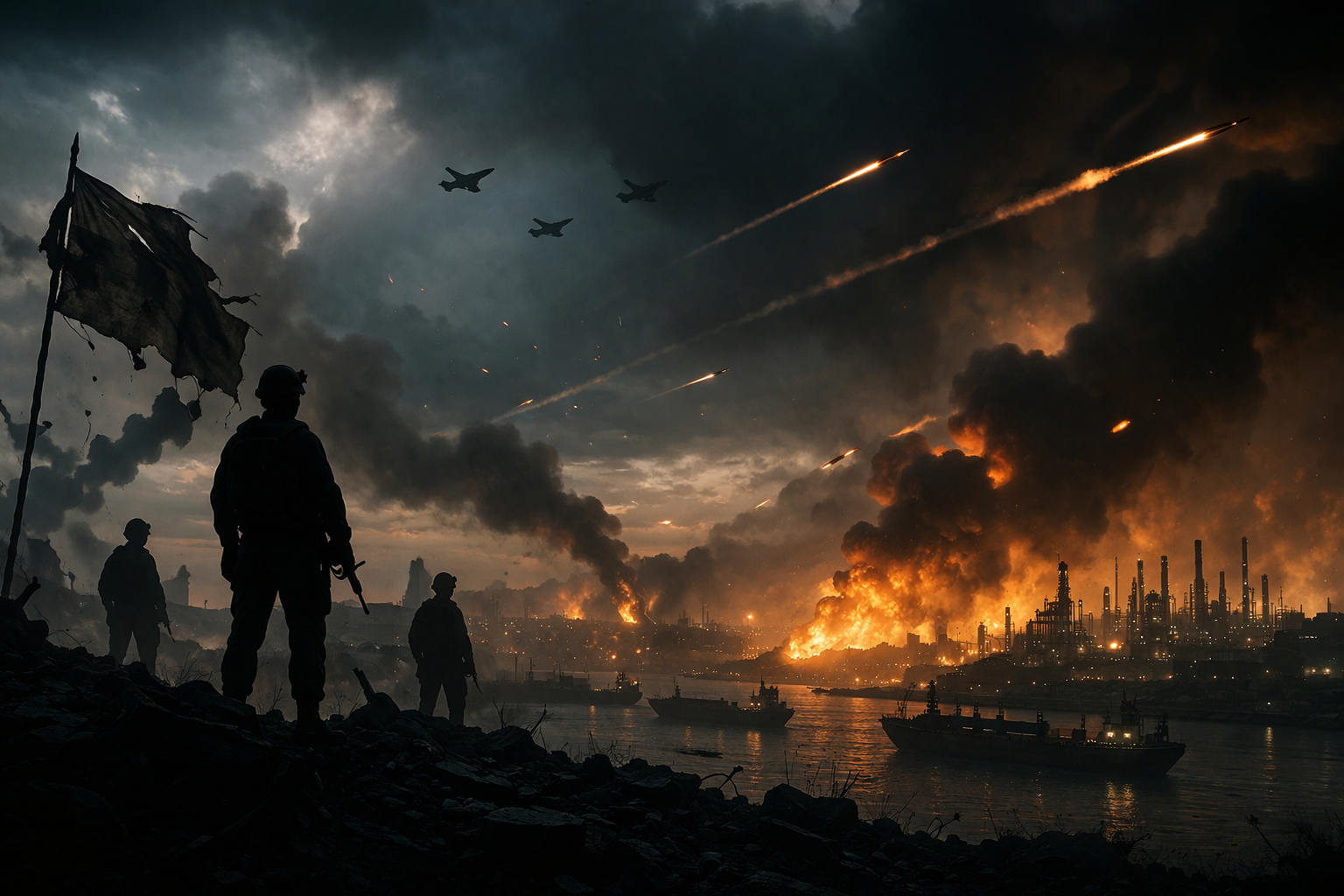
A Fragile Ceasefire Emerges as the Middle East Edges Closer to Escalation
Ceasefire Talks Begin as Strikes Intensify Across Iran Conflict
A 45-day ceasefire proposal has been put forward by mediators including Egypt, Turkey, and Pakistan as fighting between Iran, the United States, and Israel continues to escalate sharply as of April 6, 2026.
Mediators designed the plan as a temporary halt to hostilities, creating a narrow window for negotiations toward a broader settlement. But the proposal arrives at a moment when violence is still intensifying, not slowing—raising immediate doubts about whether it can take hold.
The central question is no longer just whether a ceasefire is possible—but whether it can be imposed before the conflict crosses a point where diplomacy loses relevance.
The story turns on whether a short-term pause can realistically contain a war that is still actively expanding.
Key Points
Mediators from Egypt, Turkey, and Pakistan have proposed a 45-day ceasefire to halt the ongoing conflict.
The plan aims to create space for negotiations toward a permanent settlement.
Fighting continues during talks, including airstrikes, missile exchanges, and infrastructure attacks.
The proposal includes reopening the Strait of Hormuz, a critical global energy route.
Iran has not committed, signaling resistance to negotiating under pressure.
U.S. escalation threats—including strikes on infrastructure—are shaping the timeline.
A Ceasefire Proposal Built for Time, Not Resolution
The 45-day framework is not a peace deal. It is a time-buying mechanism.
Mediators are attempting to impose a pause long enough to transition into structured negotiations. The idea is simple in theory: stop the shooting, stabilize key flashpoints, then negotiate a broader settlement within weeks.
But the structure matters.
The proposal appears to follow a two-phase model:
Immediate ceasefire
Rapid follow-on talks to reach a permanent agreement
This proposal reflects a recognition that no side is currently ready to concede core demands, but all face rising costs if the conflict continues unchecked.
Why the Strait of Hormuz Sits at the Center
One of the most critical elements of the proposal is the reopening of the Strait of Hormuz.
This narrow waterway carries a significant share of global oil supply. Its disruption has already created volatility in energy markets and raised fears of wider economic fallout.
Reopening it is not just symbolic—it is economic stabilization in real time.
But it is also a pressure point.
The United States has reportedly tied escalation threats to whether Iran allows shipping to resume. Iran, in turn, has resisted reopening under coercion.
That tension turns a technical issue—shipping access—into a strategic standoff over leverage and legitimacy.
The War Is Still Escalating—Not Pausing
The most immediate problem for the ceasefire proposal is timing.
As negotiations unfold:
Airstrikes are continuing inside Iran
Missile exchanges are ongoing across the region
Senior military figures are being targeted
Civilian infrastructure is being hit
More than 25 people were reported killed in recent strikes, with retaliatory attacks continuing across multiple countries.
This creates a fundamental contradiction.
Ceasefires typically emerge after a pause in escalation.
Here, the proposal is arriving during acceleration.
That makes compliance harder, verification weaker, and trust almost nonexistent.
The Pressure Timeline Is Driving the Diplomacy
The ceasefire push is not happening in a vacuum. It is being driven by an unusually tight and public timeline.
U.S. leadership has issued explicit deadlines and threats of further escalation if no agreement is reached.
That compresses decision-making into hours or days, not weeks.
For mediators, this creates urgency.
For Iran, it creates resistance.
Negotiating under visible coercion often undermines willingness to agree, particularly when the stakes include the following:
security guarantees
sanctions relief
long-term strategic positioning
This is why, despite intense diplomatic activity, Iran has not yet committed to the proposal.
What Most Coverage Misses
The key issue is not the ceasefire itself. It is who controls the clock.
The 45-day window sounds substantial. In reality, it is extremely compressed for a conflict of this scale.
Within that period, negotiators would need to:
halt active military operations
establish verification mechanisms
define terms for a permanent settlement
address nuclear concerns and sanctions
stabilize regional actors
That is not just ambitious—it is structurally unstable.
More importantly, the ceasefire depends on both sides believing that:
The other side will comply
The follow-on negotiations will produce real outcomes
Right now, neither condition is clearly met.
That means the proposal is less a pathway to peace and more a last attempt to prevent a rapid escalation spiral.
A New Diplomatic Bloc Is Emerging
The mediators themselves are part of the story.
Egypt, Turkey, and Pakistan are not acting independently—they are forming a coordinated diplomatic channel that is increasingly central to the crisis.
Pakistan, in particular, appears to be acting as a primary intermediary between Washington and Tehran.
This reflects a broader shift:
regional powers stepping into mediation roles
reduced reliance on traditional Western-led frameworks
a more fragmented diplomatic landscape
It also introduces new variables, including differing strategic interests among mediators themselves.
The Stakes Are Larger Than the Battlefield
This is no longer just a military conflict.
It is a convergence of:
energy security
global markets
regional power balance
nuclear risk
civilian infrastructure targeting
Oil markets are already reacting to the uncertainty, and further disruption could ripple globally.
At the same time, warnings are mounting about damage to essential infrastructure, including power systems and water networks.
That raises the stakes beyond immediate casualties to long-term regional stability.
What Happens Next
The next phase will hinge on three immediate developments.
First, whether Iran formally responds to the ceasefire proposal.
Second, whether escalation continues or pauses in the next 24–48 hours.
Third, whether external pressure—especially from the United States—intensifies or softens.
There are two clear paths ahead.
One leads to a fragile, temporary pause that opens the door to negotiations.
The other leads to a rapid expansion of the conflict, with infrastructure strikes, regional spillover, and deeper economic disruption.
The ceasefire proposal sits exactly between those outcomes.
Whether it becomes a turning point—or just another missed opportunity—will be decided quickly.
