A Drone, A Nuclear Site, And A Growing Global Risk: Why The Chornobyl Strike Matters Far Beyond Ukraine
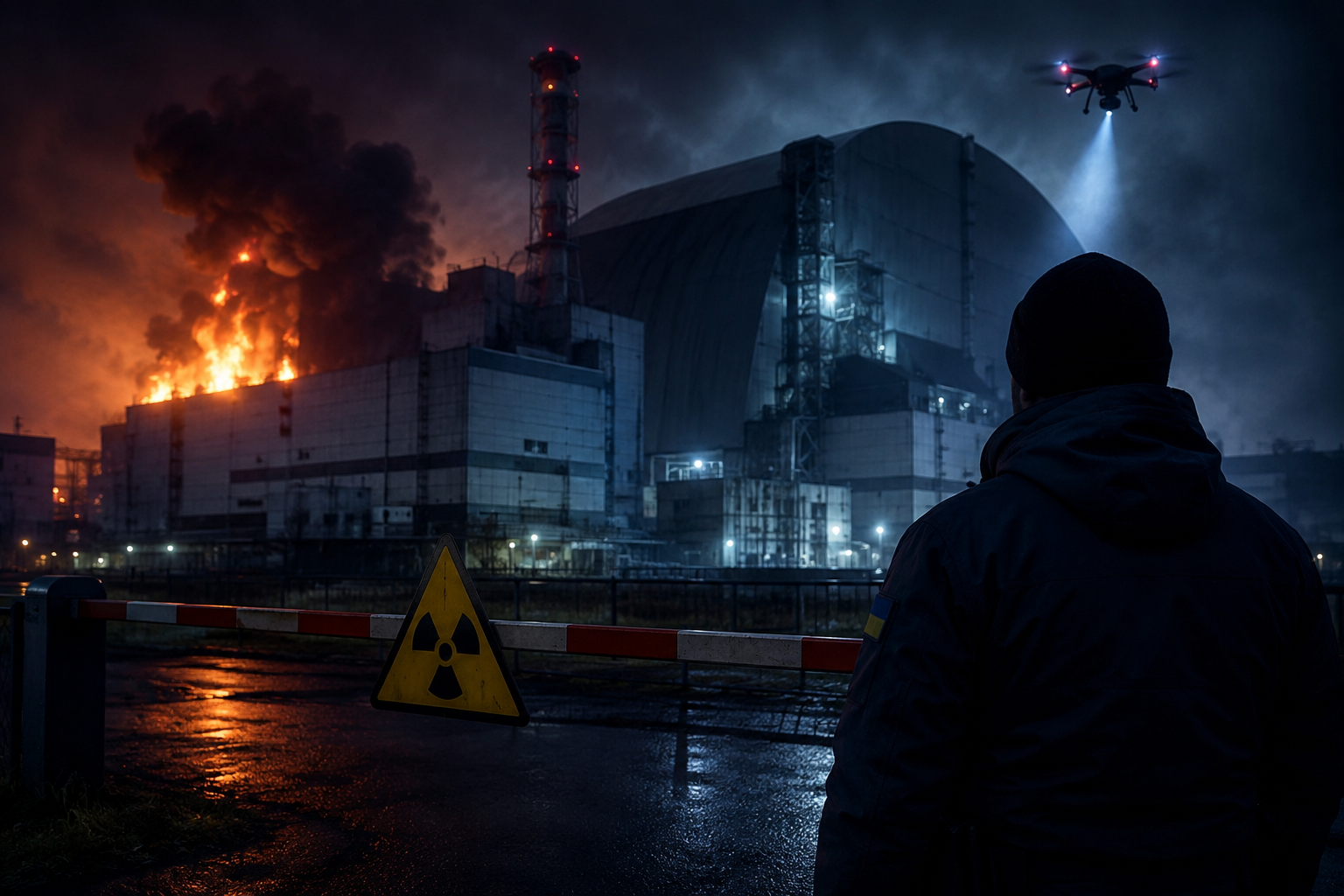
Russian Drone Strike Near Chornobyl Sparks Fresh Nuclear Fears
Russia Just Hit Infrastructure Near Chornobyl Again — And The Most Dangerous Part May Be What Happens Next
Ukraine says a Russian drone struck a building associated with a spent nuclear fuel storage facility near the Chornobyl nuclear complex during the early hours of June 7. Officials reported damage to a fuel reception structure, but confirmed that no nuclear fuel was being stored inside the impacted building and that radiation levels remained normal. The fire was extinguished and no casualties were reported.
On the surface, that sounds like a narrowly avoided incident. Yet the significance of the story is not simply what happened. It is what could have happened. Chornobyl is not an ordinary industrial site. It is one of the most recognisable symbols of technological catastrophe in modern history, and any military activity in its vicinity immediately attracts global attention.
Why Chornobyl Still Haunts The World
Four decades after the 1986 disaster, Chornobyl remains psychologically unique. Few locations carry the same combination of historical trauma, environmental risk, geopolitical symbolism and public fear.
That matters because modern conflict increasingly targets infrastructure. Power stations, substations, fuel depots, transport hubs and communications networks have all become strategic assets. When nuclear-linked facilities appear anywhere near a battlefield, the risks move beyond conventional military calculations and enter a category that concerns entire continents.
Even when radiation levels remain normal, the mere possibility of disruption creates alarm. Governments, regulators and international agencies understand that nuclear safety systems are designed around redundancy and stability, not around repeated exposure to wartime conditions.
The Bigger Story Is Infrastructure Vulnerability
The most important question is not whether this strike caused a nuclear emergency. It did not.
The bigger question is whether the war is entering a phase where increasingly sensitive infrastructure is becoming exposed to greater levels of risk. The facility involved stores spent nuclear fuel from several Ukrainian reactors, making it strategically important even though the damaged structure reportedly contained no nuclear material.
Military planners often focus on immediate battlefield outcomes. Nuclear safety experts focus on probability. If enough incidents occur around enough critical facilities, eventually the odds become uncomfortable. That is why every new strike near a nuclear-linked site receives disproportionate attention compared with attacks on conventional infrastructure.
The Shadow Of Previous Incidents
This is not occurring in isolation.
In February 2025, a drone strike damaged the protective confinement structure covering Reactor 4, the reactor destroyed during the original Chornobyl catastrophe. Radiation levels remained stable, but the incident demonstrated that even highly symbolic and internationally monitored nuclear sites are not immune from attack.
Meanwhile, concerns continue around the Zaporizhzhia nuclear power plant, Europe’s largest nuclear facility, which has experienced repeated security incidents, power disruptions and accusations from both sides of the conflict. International nuclear authorities have repeatedly warned that military operations around nuclear infrastructure create unacceptable risks.
Each individual event may stop short of disaster. Collectively, however, they paint a picture of a nuclear safety environment under sustained pressure.
Why The Timing Matters
The strike comes during a period of heightened military activity, growing drone warfare capability and ongoing diplomatic uncertainty.
Modern drones are relatively inexpensive compared with the infrastructure they can threaten. That changes the strategic equation. Facilities once considered geographically secure can suddenly find themselves within range of systems that are difficult to detect and relatively cheap to deploy.
For policymakers, this creates a difficult challenge. Protecting conventional military assets is one thing. Protecting every energy facility, power station and nuclear-linked installation across a vast country is something else entirely.
The result is a new form of strategic pressure where the psychological effect can sometimes be as important as physical damage.
The Real Warning Behind The Headlines
The confirmed facts remain reassuring. No radiation leak has been reported. No nuclear fuel was damaged. No casualties were recorded. International inspectors are expected to review the site.
Yet the deeper significance of the story is that the world keeps finding itself discussing nuclear infrastructure within the context of an active war. Every time that happens, the margin for error becomes part of the conversation.
Chornobyl's name still carries extraordinary weight because it represents what happens when multiple failures align. This incident was not another Chornobyl. Not even close. But it serves as a reminder that some places are too important, too symbolic and too dangerous to ever become routine features of a battlefield.
