Americans Are Cutting Their Spending — And Walmart Just Sent A Huge Warning
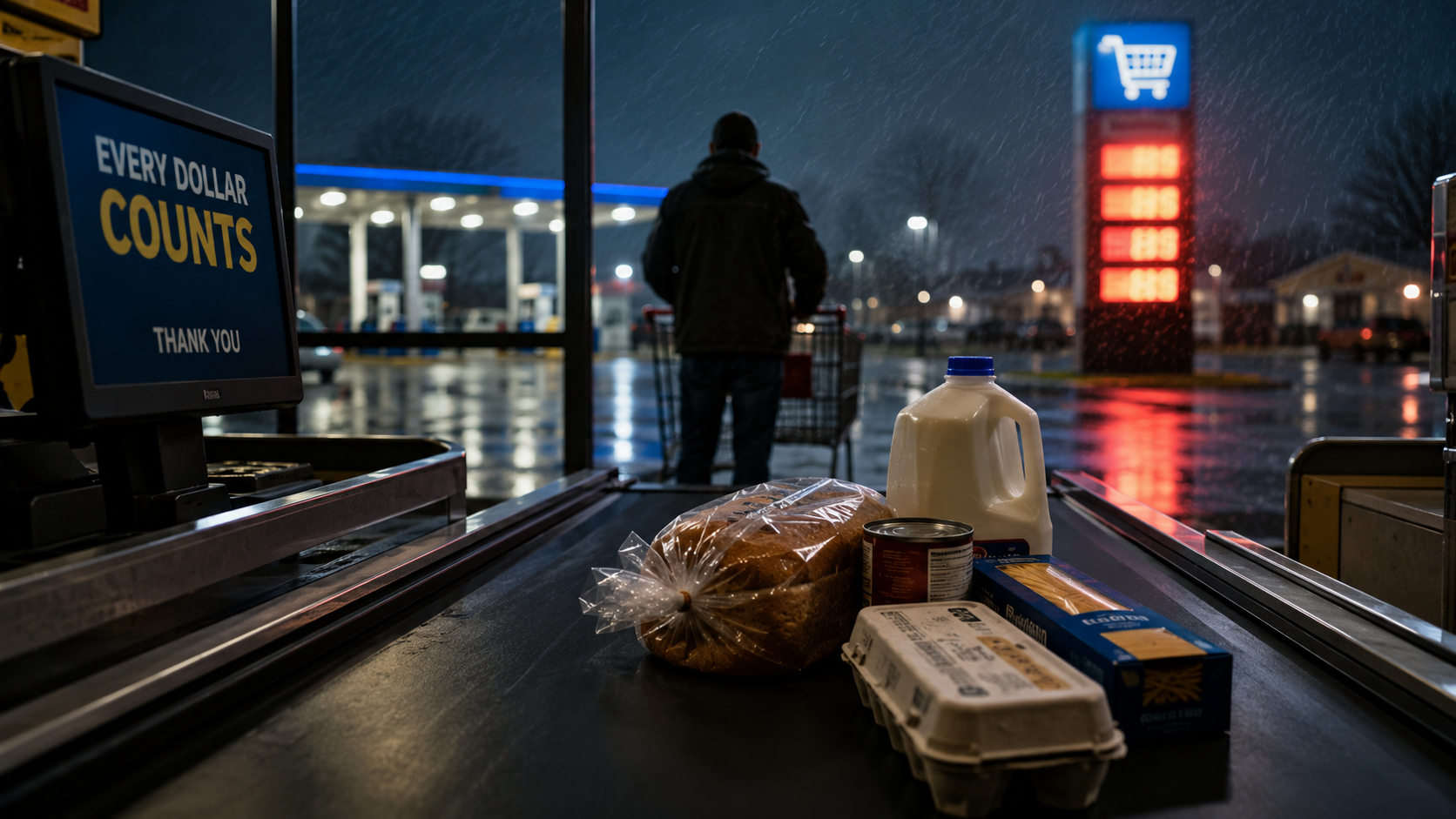
The American Consumer Squeeze
Americans Are Prioritising Essentials — And Walmart Investors Are Worried
For years, the American consumer has absorbed inflation, higher interest rates, housing costs and geopolitical shocks while continuing to spend. Walmart has now delivered one of the clearest signs yet that this resilience is being tested.
The world's largest retailer reported weaker-than-expected growth at its US business, sending its shares down around 6% in pre-market trading. The company is still growing, still profitable and actually increased its full-year outlook, but underneath those headline numbers is a more uncomfortable story: some American households are becoming increasingly careful about where every dollar goes.
Walmart Has Finally Missed
Walmart's US comparable sales excluding fuel increased by 2.6% during the quarter. That would normally look respectable for a retailer of Walmart's extraordinary size, but investors had expected growth of roughly 3.8%.
It was an unusually significant miss for a company that Wall Street has increasingly treated as one of the safest ways to invest in the American consumer. Total revenue nevertheless increased by almost 6% to approximately $188 billion, while adjusted earnings also came in ahead of expectations.
The problem was not that Walmart suddenly stopped growing. It was that investors had expected Walmart to continue outperforming even as pressure mounted elsewhere in the economy.
When the retailer that sells everything from groceries and medicines to televisions, clothes and furniture begins showing signs of weaker consumer behaviour, investors pay attention.
The Consumer Squeeze Is Becoming Visible
Walmart's results arrive alongside broader evidence that American households have started becoming more defensive.
US retail sales fell 0.6% in July, the first monthly decline in nine months and a notable reversal after stronger spending earlier in the summer. Consumer confidence has also deteriorated sharply, with preliminary August sentiment readings falling well below their levels a year earlier.
Inflation has not disappeared either. US consumer prices were 3.4% higher in July than a year earlier, meaning household budgets continue to face pressure even though the extreme inflation experienced earlier in the decade has passed.
That distinction matters. Prices do not normally return to where they were before inflation. Lower inflation simply means they are increasing more slowly.
A household that has absorbed years of higher grocery bills, rent, insurance and borrowing costs can therefore remain under considerable financial pressure even when the inflation rate begins falling.
Why Petrol Prices Matter So Much
Fuel has become another powerful pressure point.
Regular US petrol climbed above $4 a gallon nationally during late July as energy markets reacted to geopolitical tensions. That compares with prices close to $3.10 a gallon a year earlier.
For a household using 50 gallons of petrol each month, an increase of roughly 90 cents a gallon translates into approximately $45 of additional monthly expenditure. For families with long commutes, multiple vehicles or larger cars, the increase can be considerably greater.
That money has to come from somewhere.
Petrol is particularly damaging to consumer confidence because it is both unavoidable for millions of Americans and extremely visible. Drivers watch the price change every time they pass a petrol station.
Walmart had already identified unusual signs of strain before its latest results. Earlier in the year, management said the average quantity purchased by customers visiting its fuel stations had fallen below 10 gallons for the first time since 2022.
People were still buying petrol. They were simply buying less of it at once.
That is exactly the kind of small behavioural shift that can reveal pressure before it becomes obvious in broader economic statistics.
The Headline Miss Needs One Important Qualification
There is, however, an important reason not to interpret Walmart's 2.6% comparable-sales increase as evidence that American consumption is collapsing.
Changes to prescription-drug pricing affected Walmart's pharmacy revenues. Lower prices created by federal Medicare reforms mechanically reduced the value of some sales even though customers had not necessarily stopped purchasing medicines.
Removing that pharmacy effect would have lifted Walmart's underlying US comparable-sales growth to approximately 3.4%.
That is still below the roughly 3.8% investors expected, but the gap suddenly becomes much smaller.
The distinction is important because Walmart simultaneously reported strong grocery demand, modest growth in general merchandise and continuing market-share gains.
This was therefore not a disastrous quarter.
It was something potentially more interesting: a huge retailer continuing to grow while detecting increasingly defensive behaviour beneath the surface.
America’s Two-Speed Consumer Economy
The deeper story is that there may no longer be one American consumer.
Higher-income households remain considerably better positioned to absorb rising prices. Walmart has continued gaining customers from households earning more than $100,000 a year, demonstrating how its enormous grocery operation, delivery network and increasingly sophisticated online business are attracting consumers far beyond its traditional value-focused customer base.
Lower-income households face a different reality.
When petrol, groceries, insurance, housing and other unavoidable expenses consume more income, discretionary purchases are usually the first area where consumers adjust.
That might mean delaying a television purchase, buying cheaper clothing, switching brands, eating at home, cancelling a subscription or simply leaving something out of the shopping basket.
None of those decisions looks economically dramatic in isolation.
Multiply them across tens of millions of households and they become enormously important.
Consumer spending represents roughly two-thirds of US economic activity. America therefore relies heavily on households continuing to open their wallets.
If consumers move from buying what they want to buying primarily what they need, economic growth can weaken surprisingly quickly.
Why Wall Street Reacted So Aggressively
A roughly 6% fall in Walmart shares might appear disproportionate when the company remains profitable and actually raised its annual expectations.
But markets price the future rather than simply scoring the previous quarter.
Walmart now expects full-year net sales to grow approximately 4% to 5%, compared with its previous 3.5% to 4.5% range. Its expected earnings range also moved slightly higher.
Those numbers hardly resemble a company in crisis.
The more worrying element was Walmart's near-term guidance. Expectations for third-quarter earnings and sales growth were softer than investors had hoped, suggesting that the company expects consumer pressure to persist.
That matters because Walmart has spent years becoming exceptionally good at navigating difficult economic conditions.
When consumers become poorer, Walmart can actually gain customers as households search for cheaper products. When wealthier shoppers seek convenience, its enormous store network and rapidly expanding delivery operation can attract them too.
This makes Walmart unusual.
Economic weakness can hurt the company while simultaneously strengthening its competitive position.
That is why a genuine slowdown at Walmart carries more significance than weakness at a retailer dependent primarily on discretionary purchases.
Walmart Is Becoming More Than A Retailer
There is another reason the results should not simply be interpreted as a warning about physical shops.
Walmart's US e-commerce operation grew approximately 24% during the quarter. Its advertising business also continued expanding rapidly, with Walmart Connect sales increasing by more than 40%.
Those businesses are strategically crucial.
Traditional retail operates on notoriously thin margins. Digital advertising, marketplace fees and memberships can produce substantially more attractive economics.
Walmart is effectively using its extraordinary physical footprint to build a digital ecosystem.
Thousands of stores that were once primarily destinations for shoppers are increasingly functioning as miniature fulfilment centres from which online orders can be collected, packed and rapidly delivered.
That helps explain the apparent contradiction inside these results.
Consumer spending can weaken while Walmart itself continues becoming a stronger company.
A household may become more cautious, switch to cheaper products and cut unnecessary purchases — yet still move more of its remaining spending towards Walmart.
Price Cuts Are Becoming A Weapon
Walmart is responding aggressively.
The company has thousands of products on reduced-price "rollback" promotions as it attempts to reinforce its reputation for value and capture customers who are becoming increasingly price-sensitive.
That strategy has been helped by another unusual development: refunds relating to US tariffs.
Walmart has indicated that savings from tariff refunds will help it reduce or restrain prices across parts of its assortment. This provides the retailer with an opportunity to turn an unusual financial benefit into something strategically valuable — lower prices at precisely the moment consumers are searching for them.
For competitors with less scale, that is uncomfortable.
Walmart can negotiate enormous purchasing volumes, operate a giant logistics network, monetise advertising, collect membership revenue and use its stores to fulfil online orders.
That increasingly allows the company to accept lower margins on certain products because the customer can generate profits elsewhere in its ecosystem.
A consumer slowdown could therefore accelerate consolidation around America's biggest retailers rather than simply hurting everyone equally.
Does This Mean America Is Heading For Recession?
Not yet.
There is a significant difference between consumers becoming cautious and consumers stopping spending altogether.
Employment remains crucial. As long as Americans broadly retain their jobs and wages continue arriving, households can usually maintain essential consumption even if they become more selective.
Restaurant spending has also shown resilience, and several categories of retail expenditure continue to grow. Walmart itself remains firmly in expansion rather than contraction.
But the collection of warning signs is becoming harder to dismiss.
Retail sales have fallen. Consumer sentiment has weakened. Fuel costs remain significantly above last year's level. Lower-income consumers are increasingly price-sensitive. Walmart has missed US comparable-sales expectations. Discretionary purchases are facing greater scrutiny.
None individually proves recession.
Together, they indicate that the enormous consumer engine underneath the US economy is running under increasing strain.
The Bigger Economic Warning
Walmart provides a particularly valuable window into American household behaviour because of its sheer reach.
Around 280 million customers and members visit Walmart's stores and websites globally each week. Its tills capture an extraordinary cross-section of everyday economic life.
A central bank can analyse inflation statistics. Economists can study GDP. Investors can follow bond markets.
Walmart can see what people actually put in their baskets.
And increasingly, the important question may not be whether Americans have stopped spending.
It is what they are choosing not to buy.
A consumer who replaces premium products with cheaper alternatives is still spending. A driver purchasing eight gallons instead of twelve is still buying petrol. A family postponing a television while continuing to purchase groceries still appears inside retail statistics.
The behavioural deterioration happens before spending disappears entirely.
That is what makes Walmart's latest results worth watching.
America's consumer has not collapsed. Walmart itself remains formidable, its digital businesses are expanding rapidly and management has actually increased its expectations for the full year.
But beneath that strength, households are showing signs of adaptation: searching harder for value, prioritising essentials and becoming increasingly selective with discretionary money.
If fuel prices fall and inflation continues easing, that pressure could recede.
If energy prices remain elevated, employment weakens or another inflationary shock arrives, those small adjustments could become much larger ones.
Walmart has not announced an American recession.
It may have shown us what the early stages of a consumer retreat look like.
