

Ceasefire In Name Only: World Leaders Push For Peace As War Expands Into Lebanon
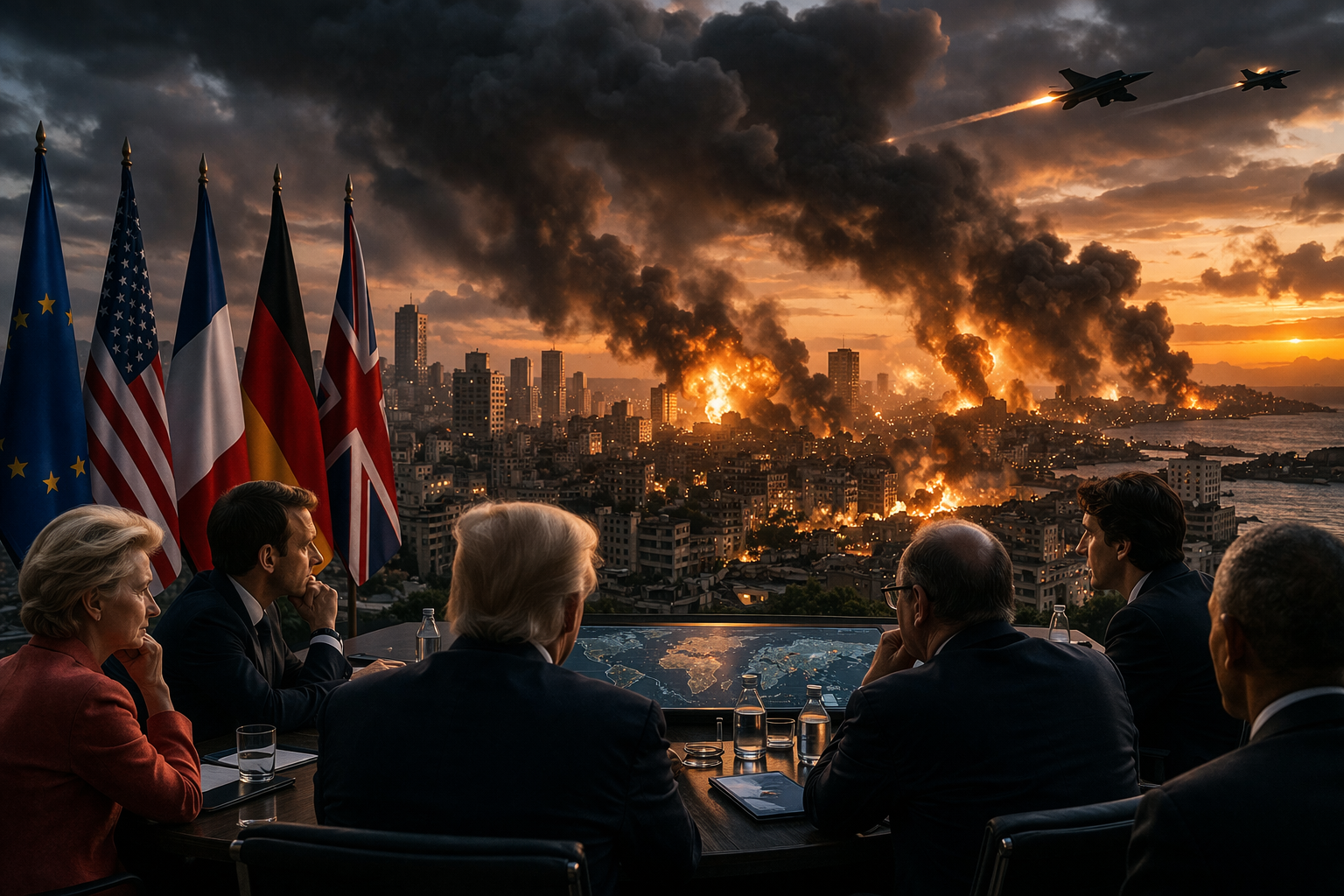
A Fragile Truce Meets Expanding War: Why Lebanon Is Now The Real Flashpoint
A Ceasefire That Stops One War While Another Accelerates
For a brief moment, it looked like the Middle East had stepped back from the brink.
A two-week ceasefire between the United States and Iran—brokered under intense pressure and welcomed by global leaders—halted what had been rapidly escalating toward a broader regional war. Oil markets steadied. Shipping lanes in the Strait of Hormuz began reopening. Diplomacy, once again, seemed possible.
But within hours, the illusion cracked.
As leaders praised de-escalation, Israel launched one of its most extensive waves of airstrikes on Lebanon, hitting over 100 targets, including sites embedded in civilian areas. Fires spread across Beirut. Hospitals called for emergency blood donations. Casualties mounted.
The ceasefire had worked—technically.
However, it didn't have the most significant impact.
The Core Problem: This Is No Longer One War
What’s happening now is not a single conflict cooling down.
It is a conflict splitting into multiple theaters—each operating under different rules, timelines, and incentives.
The US–Iran front has paused under diplomatic pressure
The Israel–Hezbollah front in Lebanon is intensifying
Regional actors are reacting differently depending on their interests
Even Donald Trump himself framed Lebanon as a “separate” issue from the Iran ceasefire—effectively confirming what many analysts feared: this is not one war, but a network of overlapping conflicts.
That distinction matters.
You cannot end a war that no longer exists as a single system.
Why World Leaders Are Pushing To Expand The Ceasefire
European and global leaders moved quickly to contain the risk.
Across statements from the EU, the UK, France, Germany, and Canada, the message was consistent:
The ceasefire is welcome—but incomplete
It must be expanded to include Lebanon
Civilian protection and infrastructure must be prioritized.
Diplomacy must move fast before escalation outruns it
French President Emmanuel Macron was explicit: the ceasefire only works if Lebanon is included.
EU officials went further, warning that continued strikes risk the following:
A humanitarian collapse
A new refugee wave into Europe
A broader regional destabilisation
In short, the current ceasefire is not a solution—it is a temporary gap in a much larger problem.
What Media Misses
Most coverage treats this as a success story.
A ceasefire. A pause. A temporary halt to hostilities.
That framing is incomplete.
The deeper reality is this:
The ceasefire didn’t reduce the conflict—it redistributed it.
Pressure has not disappeared. It has shifted.
From Iran → to Lebanon
From state-to-state confrontation → to proxy escalation
From global crisis → to regional fragmentation
This is how modern conflicts evolve.
They rarely end cleanly. They fracture.
And fractured wars are often harder to control.
Why Lebanon Is Now The Most Dangerous Front
Lebanon alters the equation in ways that Iran does not.
Because this front is
Closer to civilians (dense urban environments like Beirut)
More entangled with non-state actors like Hezbollah
Less governed by formal diplomatic channels
More prone to miscalculation and rapid escalation
Hezbollah has signaled it would consider a ceasefire—if Israel stops its attacks.
Israel has signaled the opposite: it intends to continue operations regardless.
That creates a dangerous asymmetry.
One side is conditionally open to pause. The other is not.
That is how conflicts spiral.
The Strategic Logic Beneath The Escalation
There is a hard strategic logic driving this situation.
Israel’s position appears clear:
The Iran ceasefire reduces immediate strategic pressure
That creates space to intensify operations against Hezbollah
The goal: degrade Hezbollah before it can fully rearm or escalate
From a military standpoint, this approach is rational.
From a regional stability standpoint, it is volatile.
Because it risks triggering:
Direct retaliation from Hezbollah
Wider involvement from Iran despite the ceasefire
Escalation across multiple borders simultaneously
This is not de-escalation.
It is repositioning.
What Happens Next
Three paths now sit in front of the region:
The Most Likely
The Lebanon conflict continues independently, with sustained strikes and limited retaliation, keeping the war contained, but unresolved.
The Most Dangerous
Hezbollah escalates in response, pulling Iran back into active conflict and collapsing the ceasefire entirely.
The Most Underestimated
Diplomatic pressure forces a rapid expansion of the ceasefire to include Lebanon—creating a broader but fragile regional pause.
World leaders are clearly betting on the third.
But the battlefield is currently moving toward the second.
The Real Meaning Of This Moment
The ceasefire matters.
But not for the reasons many think.
It doesn’t mark the end of escalation.
It reveals its next phase.
Because the most dangerous conflicts are not the ones that explode all at once.
They are the ones that appear to calm down—while quietly spreading.
And right now, that is precisely what is happening.
