The Ceasefire That Isn’t: Hezbollah Falls Silent as Israel Keeps Bombing Lebanon — A Truce Already Breaking Apart
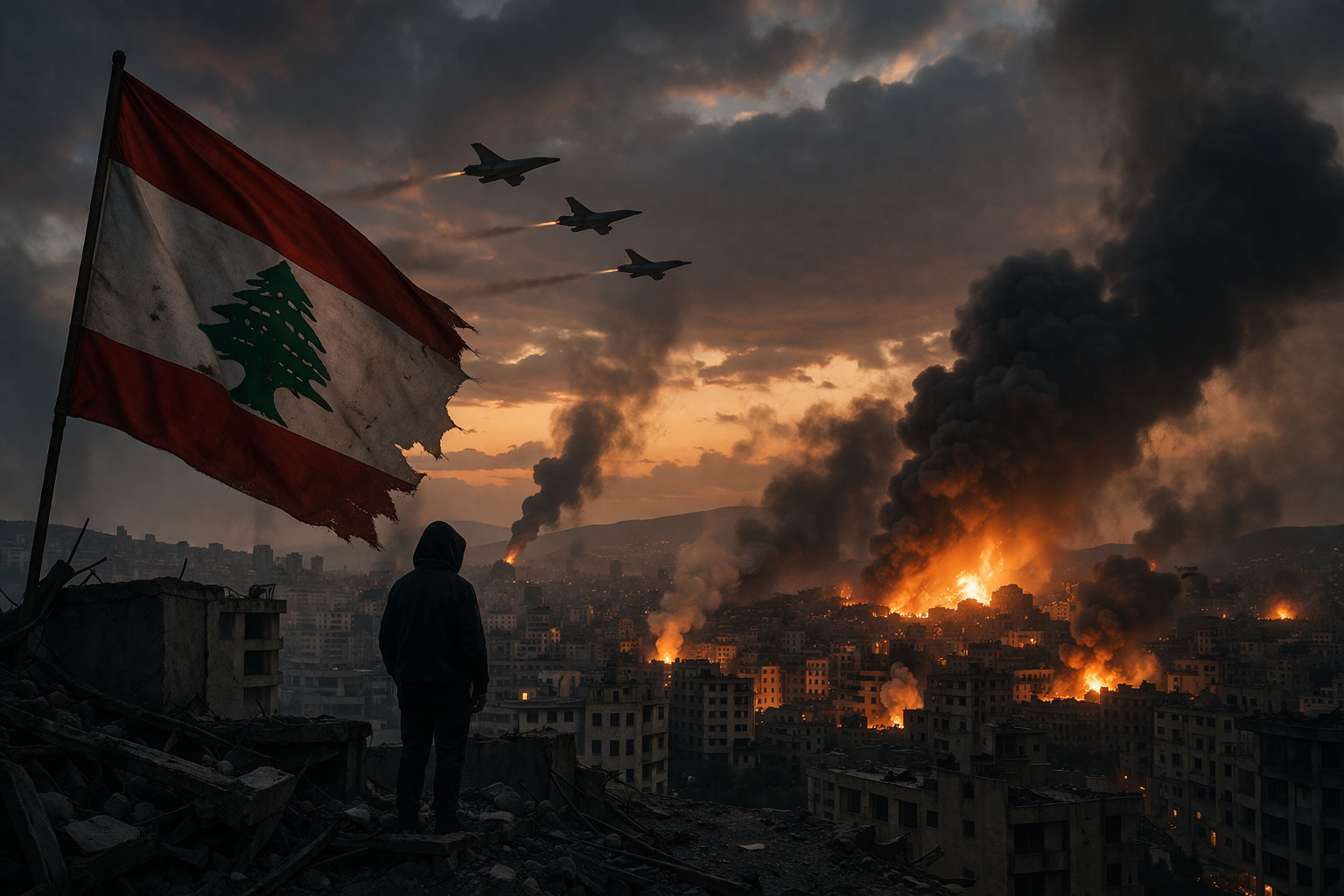
Hezbollah Stops — Israel Doesn’t: The Ceasefire Fracturing in Real Time
An uneasy pause reveals a deeper truth: this was never one war, and it won’t end with one deal.
A Ceasefire That Splits Reality In Two
On paper, the region just stepped back from the brink.
A two-week ceasefire between the United States and Iran has halted direct confrontation. Hezbollah, aligned with Tehran, has followed suit — pausing attacks on Israeli forces.
But on the ground in Lebanon, the war never stopped.
Israel has made its position explicit: the ceasefire does not apply here. Its military continues to strike Hezbollah targets across Lebanon, including major urban areas, with some of the largest air raids seen in this phase of the conflict.
What emerges is something far more unstable than a failed ceasefire.
It is an asymmetric ceasefire — where one side pauses, and the other presses forward.
And that is not a stable equilibrium.
Why Israel Is Ignoring The Ceasefire
This isn’t confusion. It’s strategy.
Israel’s leadership has drawn a clear line: the US-Iran agreement is about Iran. Hezbollah, despite being backed by Tehran, is treated as a separate battlefield entirely.
From Israel’s perspective, this makes sense.
Hezbollah remains an immediate threat on its northern border
The group has launched rockets and drones in recent weeks
Israeli strategy aims to push Hezbollah back and create a buffer zone in southern Lebanon
That last point is critical.
Israel isn’t just retaliating — it is trying to reshape the battlefield permanently, potentially establishing control up to the Litani River.
A ceasefire that freezes operations now would lock in the current threat.
Continuing strikes, in contrast, may eliminate it.
That’s the logic.
Hezbollah’s Pause — Tactical Or Forced?
Hezbollah’s decision to halt attacks is not necessarily a sign of weakness.
It is likely a calculation.
The group is deeply tied to Iran, and Iran has chosen — for now — de-escalation. Hezbollah aligning with that pause maintains strategic cohesion.
But it comes with risk.
By stopping attacks while Israel continues:
Hezbollah risks appearing passive
It gives Israel freedom of action
It allows Israeli forces to degrade its infrastructure without immediate retaliation
Hezbollah has already signalled the danger: if Israel does not also stop, the truce could collapse entirely.
In other words, this pause is conditional.
And conditions are already being broken.
The Human Reality: War Continues Anyway
While diplomats frame a ceasefire, civilians in Lebanon experience something else entirely.
Large-scale airstrikes have hit densely populated areas
Emergency services are overwhelmed
Hospitals are calling for urgent blood supplies
Over a million people have been displaced in the broader conflict
This is the core contradiction:
Peace has been declared internationally — but violence continues locally.
For people on the ground, the distinction is meaningless.
What Media Misses
What Media Misses
Most coverage treats this as a ceasefire under strain.
That’s too shallow.
This is not a ceasefire failing — it is a ceasefire that was never structurally sound.
Because it tries to do something impossible:
Pause a regional war while ignoring one of its most active fronts.
Hezbollah is not a side issue. It is one of the main theatres of this conflict.
By excluding Lebanon — whether intentionally or through ambiguity — the ceasefire creates a split reality:
Diplomatically: de-escalation
Militarily: continued escalation
That gap doesn’t stabilise a conflict.
It destabilises it further.
The Real Risk: Delayed Escalation
Right now, the situation looks deceptively calm from one angle.
Hezbollah is quiet. Iran is negotiating. The US has stepped back.
But under the surface, pressure is building.
There are three dangerous paths from here:
1. Sudden Hezbollah Re-Entry
If Israeli strikes continue at scale, Hezbollah may re-engage — quickly and forcefully.
2. Expansion Of Israeli Objectives
Israel may push deeper into Lebanon, solidifying a buffer zone and escalating the conflict geographically.
3. Collapse Of The Broader Ceasefire
If Hezbollah returns fire, the Iran-linked network could react — pulling the region back into a wider war.
This is not a stable pause.
It is a loaded one.
What Happens Next
The next phase will likely hinge on one question:
Does Hezbollah continue to absorb strikes — or respond?
If it holds fire, Israel gains strategic advantage but risks long-term escalation.
If it responds, the ceasefire collapses almost instantly.
There is also a third, quieter possibility:
A renegotiation that explicitly includes Lebanon.
But time is short.
Every continued strike makes that harder.
The Deeper Reality Behind The Truce
This moment reveals something fundamental about modern conflict.
Wars are no longer cleanly defined.
They are layered:
State vs state
State vs proxy
Proxy vs proxy
Regional vs local
And you cannot pause one layer without affecting the others.
The current ceasefire tries to freeze one layer — US vs Iran — while leaving another active.
That doesn’t end a war.
It exposes how many wars are happening at once.
The Line That Matters Now
The most dangerous phase of a conflict is not always escalation.
Sometimes, it’s the illusion of de-escalation.
Because that illusion creates space for one side to move, reposition, and strike — while the other hesitates.
That is where Lebanon sits right now.
A ceasefire has been declared.
But the bombs have not stopped.
And in war, what matters is not what is declared —
it’s what continues.
