Central Europe Earthquake Near Bratislava: The First-Hour “Revision Trap” and the Only Signals That Confirm Real Damage
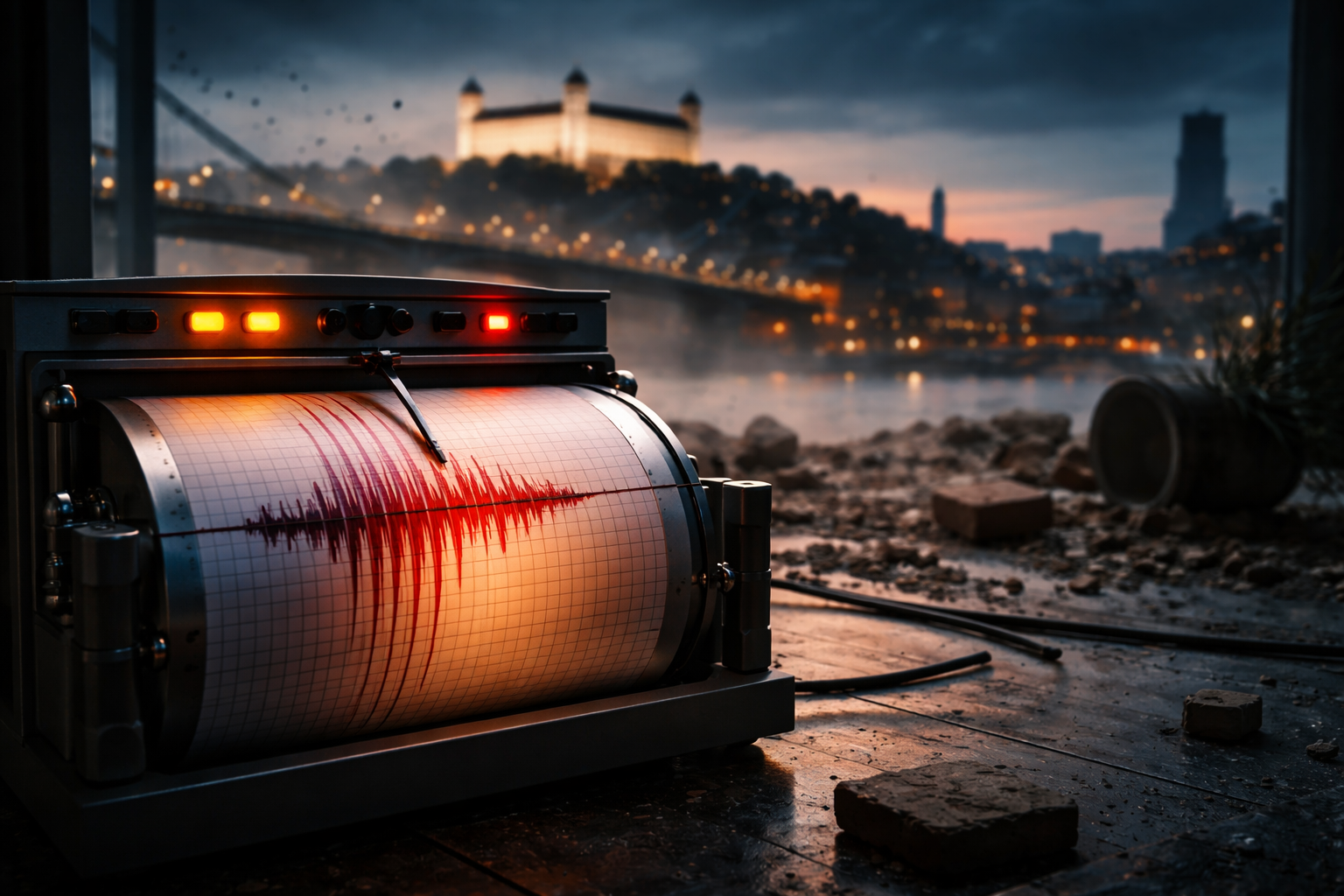
Bratislava-Area Earthquake: The First-Hour Revision Risk That Warps the Story
The Real Stakes Hinge on Depth, Not Drama
An early-afternoon earthquake registered near the Bratislava region, quickly appearing on real-time trackers as a magnitude 4.6 event. In the first hour, that number can shift—sometimes more than once—as more seismic stations lock in the waveform and analysts refine the solution.
That is why the first wave of “impact” claims is often the noisiest and least reliable part of the story. The public perceives a clear numerical value and a pinpoint on a map. Behind the scenes, the location, depth, and magnitude can drift as the system moves from “fast estimate” to “stable solution.”
The story turns on whether the event’s parameters stabilize into a shallow, close-to-population-center solution—or revise toward a deeper, slightly farther, or slightly smaller quake that changes the expected shaking.
Key Points
Real-time trackers initially listed a magnitude 4.6 earthquake near the Bratislava area around early afternoon, but first-hour revisions are common as more sensors report.
In the first 10–60 minutes, the biggest shifts usually involve depth and exact epicenter, which can change expected shaking more than small magnitude tweaks.
“Felt it?” Spikes and rapid social posts arrive faster than verification; they serve as signals of potential shaking locations, not as evidence of damage.
The reliable damage story begins with confirmations: official incident logs, verified photos tied to time and place, and consistent reports of infrastructure disruption.
A practical first-hour checklist can separate normal post-quake noise (aftershocks, minor revisions, rumor loops) from indicators of real impact.
If the event remains moderate and shallow but near the urban area, localized non-structural damage is the main risk; widespread structural damage would be unlikely without stronger shaking or vulnerable buildings.
While earthquake "magnitude" is a single number, it does not provide a complete picture. The feeling depends on distance, depth, local ground conditions, and building vulnerability.
Real-time systems work in stages. Early solutions prioritize speed: detect the quake, estimate size, place the epicenter, and publish quickly. As more stations join the solution and analysts review it, the parameters can change—sometimes subtly, sometimes materially.
Crowdsourced reports (people saying they felt shaking) are valuable, especially near borders where networks overlap, but they are also messy. People misjudge timing, confuse thunder or construction vibrations, and amplify each other’s posts. The earliest hour is a competition between physics settling down and rumor accelerating.
The first-hour boundary: speed beats certainty, and revisions are the price
In the first minutes, networks publish preliminary solutions because the public benefit of immediate warning and situational awareness is high. The trade-off is error bars.
The most common drift is that "the quake's exact location and depth were refined," rather than "the quake didn't happen." A small relocation can shift the strongest shaking closer to or farther from a populated corridor, altering the real-world stakes even if the magnitude barely changes.
Competing models: why one sensor network says 4.6 and another says something else
Different agencies may publish slightly different magnitudes because they use different magnitude types, station selections, and regional calibration. One network may lock in quickly with nearby stations; another may incorporate additional data that shifts the estimate.
This phenomenon is why it is normal to see multiple numbers early on. The meaningful question is whether the solutions converge as the hour passes—same neighborhood, similar depth band, similar size—rather than which single number “wins” in minute five.
The core constraint: depth and local geology can outweigh small magnitude changes
Magnitude differences of a few tenths can matter, but depth can matter more. A shallow quake can produce sharper, more noticeable shaking near the epicenter. A deeper quake can spread motion differently and may feel softer at the surface at the same magnitude.
Local ground conditions then add a second layer. Soft sediments can amplify shaking, while bedrock can transmit it differently. Two neighborhoods at the same distance can have different experiences. That is why “I felt it” clusters can be real even when the broader area seems quiet.
The hinge: “felt it” reports are a map of attention unless they match physical signatures
Early public reports are useful. They are early inputs. But they become decisive only when they line up with physical signatures: consistent time windows, geographic clustering that matches the expected shaking footprint, and secondary indicators like objects falling, alarms triggering, or verified service disruptions.
If “felt it” reports scatter wildly with no geographic logic or arrive in waves triggered by a viral post rather than by time-of-arrival physics, treat them as attention signals—not impact confirmation.
The measurable test: what confirms real damage in the first hour
Damage confirmation is not a single dramatic headline. It is a pattern of verification:
A reliable understanding of the damage develops when several independent confirmations match up: official statements from local authorities, verified images with clear location markers, transport operators admitting to disruptions, utilities reporting outages, and consistent reports from trustworthy local news sources.
One photo can be misleading. Ten consistent, place-verified signals across different systems are what turn “possible” into “real.”
Forward risk: aftershocks, rumor loops, and the second-wave misinformation trap
If the area has aftershocks, the public may think each shake is a "big one," even if smaller. Meanwhile, social media can recycle old quake photos from other countries or years, relabeled as “Bratislava just now.”
The second-wave trap is not about the initial magnitude; it is about the false narrative of collapsing buildings or "major disaster" claims that are unsupported by any verified incident logs. The responsible stance is to watch for convergence: stable parameters plus verified disruption signals.
What Most Coverage Misses
The first hour is about the solution's stability and whether the crowdsourced footprint matches the physics, not its size.
That shifts incentives and timelines: instead of amplifying the earliest number and the loudest post, you wait for convergence and cross-system confirmation—seismic revisions stabilizing, geographic clustering of reports, and official service-impact signals.
What would confirm this quickly is simple: (1) agency solutions begin to converge on a consistent location/depth band, and (2) the strongest “felt it” clustering aligns with the expected shaking footprint rather than with social sharing hotspots.
What Happens Next
In the next 24–72 hours, the story typically splits into two paths.
One path is “revision and relief”: parameters stabilize, the quake remains moderate, and impact is limited to brief alarm, minor non-structural issues, and scattered reports of shaking. This happens because moderate earthquakes near population centers often feel dramatic without producing widespread damage, especially if building stock is resilient and shaking duration is short.
The other path is “localized consequence”: a shallow, close solution plus vulnerable structures can produce pockets of cracked plaster, fallen masonry, or minor infrastructure issues. Watch for official inspections, transport disruption notices, and repeated verified reports from the same areas.
Decisions to watch are operational: whether authorities issue inspection guidance, whether rail/road operators report checks and delays, and whether utilities note localized outages.
Real-World Impact
A commuter checks the transit app and sees temporary speed restrictions or inspection delays on a regional line.
A building manager sends a notice about stairwell hairline cracks and asks residents to report stuck doors, ceiling damage, or unusual smells from gas lines.
A small business reopens after staff confirm shelving is stable, then posts a calm update to stop rumor spread among customers.
A school conducts a brief safety drill, confirming that there are no structural issues, while simultaneously monitoring for aftershocks and anxious parents.
The next hour’s dilemma: attention moves faster than verification
The public experience of a moderate quake is immediate, emotional, and highly shareable. Verification is slower, procedural, and often boring.
The dilemma arises from whether the information ecosystem favors the most alarming claim or the most consistent signal. Watch for convergence in official parameters, verified local disruption reports, and any credible inspection outcomes. If those do not appear, the “impact” narrative is likely just noise.
This moment will be remembered for how well the system distinguished real risk from instant speculation, not the tremor's size.
