Chase. Gunfire. Death. Duluth, Minnesota, USA Demands Answers.
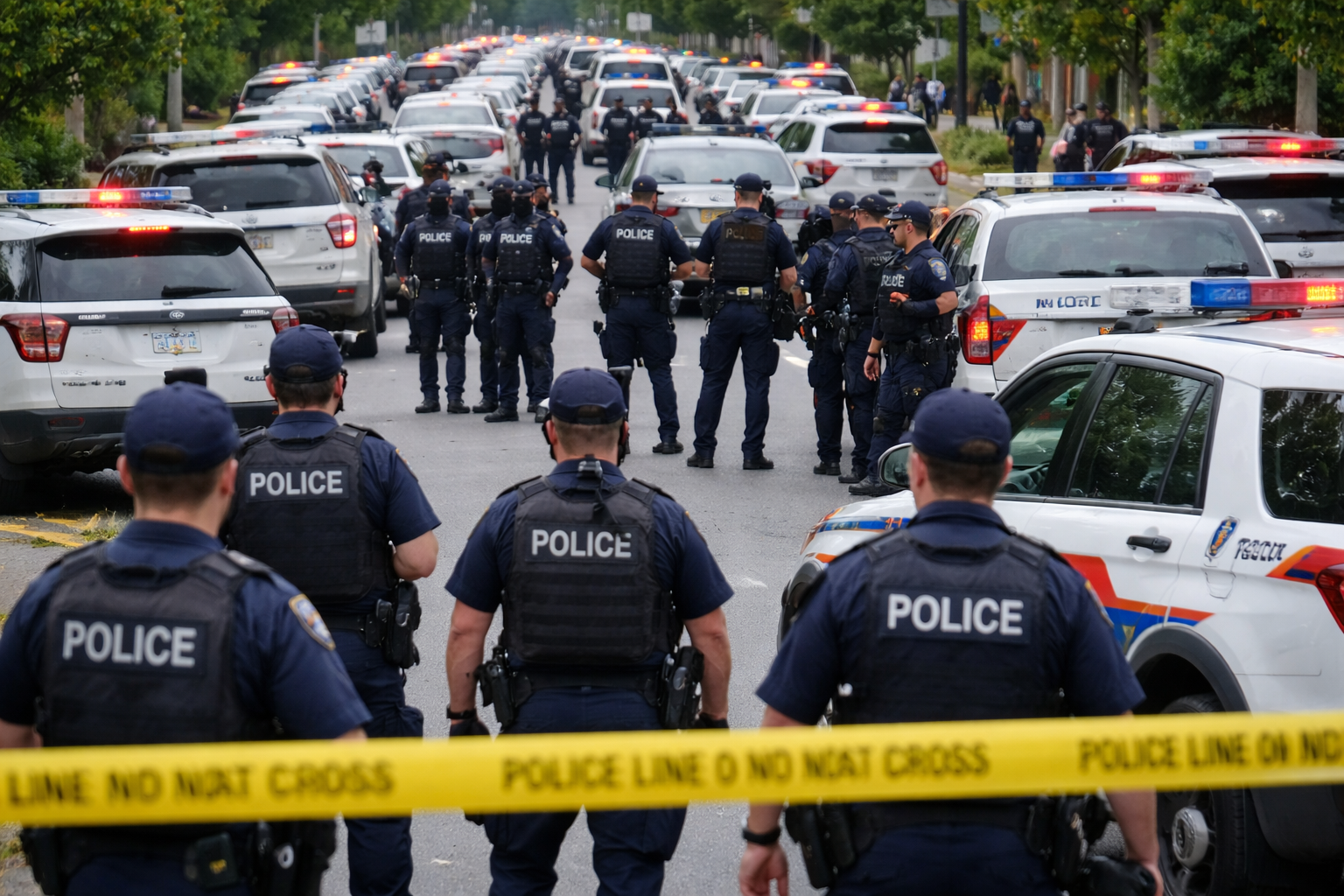
Duluth Police Shooting: What’s Known, What’s Not, and What Comes Next
Duluth, Minnesota, USA: Fleeing Driver Shot Dead—What Happened in the Final Moments?
Duluth Deputy-Involved Shooting After a Chase: The Facts, the Gaps, and the Two Timelines Now Colliding
A reckless-driving stop in Duluth turned into a pursuit, then ended in gunfire—and a man dead at the scene.
By the time the public hears the “full story,” the first story will already have spread. That’s the modern accountability trap: official investigations move methodically, while social feeds move at the speed of outrage.
In the initial statements, authorities have confirmed the basics and withheld the mechanics: what exactly happened in the seconds before shots were fired, what officers believed they saw, and what the man did (or didn’t do) that triggered deadly force. The public's trust hinges on the missing chain.
The narrative hinges on whether a rapidly corroborated, evidence-backed threat assessment can clearly justify the use of deadly force.
Key Points
A man was shot and killed by St. Louis County sheriff’s deputies in Duluth following an attempted traffic stop for reckless driving and a subsequent chase, according to local reporting of official statements.
The Minnesota Bureau of Criminal Apprehension (BCA) is investigating, which is standard practice in Minnesota for law-enforcement use-of-force incidents involving death.
Early official information does not fully describe what prompted deputies to fire, and some critical details (commands given, distance, body-camera status, and threat cues) have not been publicly confirmed.
Reporting indicates a handgun was found in the vehicle, but that alone does not resolve the key question: what was happening at the instant force was used?
A separate “two-timeline” dynamic is already forming: what investigators can responsibly confirm now versus what the public typically learns later through forensic results, video releases, and prosecutorial review.
Background
The incident unfolded Tuesday night in west Duluth. Local reporting cites the St. Louis County sheriff as saying a deputy attempted to stop a driver for reckless driving along Grand Avenue near 59th Avenue West at around 9:40 p.m., and the driver fled.
The encounter later escalated to a deputy-involved shooting, resulting in the driver’s death at the scene despite lifesaving efforts, according to published summaries of official statements.
The Minnesota BCA has taken over the investigation, as is customary for these cases in Minnesota. That typically means the BCA reconstructs events, collects physical evidence, reviews video and radio traffic, interviews involved officers (often after a waiting period), and then submits findings to prosecutors for any charging decision. The BCA’s role is investigative; it does not decide charges.
Analysis
The “missing minute” that decides everything
In fast-moving deputy-involved shootings, the public argument usually isn’t about the chase. It’s about the last narrow slice of time—the instant a deputy decides a threat is imminent.
Early reporting indicates officials have not yet publicly detailed the specific actions that led deputies to fire, including whether the man pointed a weapon, made a movement interpreted as reaching for one, tried to ram a squad, or posed an immediate threat to bystanders.
That gap matters because “fleeing” and “armed” are not, by themselves, a legal or policy shortcut to deadly force. The decisive factor is whether deputies could reasonably perceive an immediate threat of death or great bodily harm at the time shots were fired—a standard that is judged through evidence, not vibes.
What investigators will build first: a timeline that can survive court
BCA investigations are built like a prosecutable narrative:
A scene and vehicle examination (bullet trajectories, glass fracture patterns, distance cues, weapon location).
A digital record sweep (body cam, dash cam, in-car systems, dispatch audio, surveillance video, and phone data where relevant).
A human-factors reconstruction takes into account factors such as lighting, angles, reaction time, and what an officer could realistically see.
This is why early briefings tend to feel sterile. Investigators won’t “fill in” unknowns until they can align physical evidence with video and statements.
The public, meanwhile, will fill in those blanks immediately—and that’s where reputational damage can happen on either side.
Three plausible scenarios, and the signposts that separate them
Scenario 1: Clear, corroborated imminent threat
If video, ballistics, and witness accounts consistently show a weapon presentation or an unmistakable lethal threat in the final seconds, the case often stabilizes quickly in the public domain, even if anger remains.
Signposts: quick confirmation of key facts (weapon handling, distance), consistent video angle coverage, minimal discrepancies across recordings.
Scenario 2: Threat was perceived, but the evidence is ambiguous
This is the most combustible zone: the deputy says they saw a threat cue, but the video is partially obstructed, or the physical evidence doesn’t definitively match the initial narrative.
Signposts: delays in releasing video, careful wording in follow-up statements, emphasis on “totality of circumstances,” and competing interpretations of movement and timing.
Scenario 3: Policy and tactics become the focus of the story
Even if deadly force is legally justified, the broader fight can pivot to tactics: why the stop was initiated, whether the pursuit complied with policy, whether de-escalation options existed, and whether communication broke down.
Signposts: focus shifts to pursuit policy, training, supervision, and whether a “critical decision point” earlier could have prevented the final confrontation.
What Most Coverage Misses
The hinge is not just what happened—it’s when the public learns what happened and which version becomes psychologically “locked in” first.
The mechanism is simple: early official statements tend to be sparse by design, while social narratives reward speed, certainty, and moral clarity. That creates a vacuum where the first crisp storyline can dominate, even if later evidence complicates it.
What would confirm these findings in the coming days and weeks is (1) whether investigators can release a coherent, evidence-backed sequence quickly, and (2) whether video coverage exists that clearly shows the final threat assessment moment rather than merely the lead-up.
What Happens Next
In the short term (next 24–72 hours), expect incremental baseline facts: identities, involved agency roles, and confirmation of key physical evidence. Because the BCA is investigating, the most important near-term indicator will be whether officials can clarify the decisive moment without prejudging conclusions.
Over the next few weeks, the case usually turns into a documentation contest: video, forensics, and officer statements must align. If they do, the public narrative often calms. If they don’t, the story expands beyond the shooting into institutional credibility—because credibility is what people use to interpret uncertainty.
Longer term (months), the “final” accountability outcome often hinges on prosecutorial review and internal administrative findings. Those processes can reach different conclusions (legal justification versus policy violation), and that divergence is where communities often feel whiplash.
Real-World Impact
A resident in west Duluth changes commuting routes for a week, not because roads are blocked, but because the area feels psychologically “hot” after a visible police presence.
A local business owner watches the story spread online and worries about a sudden flood of harassment or review-bombing if the narrative hardens before evidence is released.
A family member of the deceased learns major “facts” from social media before any official notification details are fully explained, compounding trauma and anger.
A patrol deputy in a neighboring county reviews pursuit and use-of-force training materials because agencies know a single high-profile case can reshape policy and public expectations overnight.
The Question Duluth Will Be Living With
The hardest part of shootings like this is that the public is asked to wait for certainty in a culture that punishes waiting.
If investigators can reconstruct the final seconds in a way that is both evidentiary and legible—clear enough that a non-expert can follow the logic—the community gets a chance to argue about the right things. If they can’t, the case risks becoming a permanent proxy war—not just over this shooting, but over trust itself.
The signposts to watch are straightforward: whether video clarifies the moment of threat, whether the physical evidence supports the declared sequence, and whether officials can explain the decision to use deadly force in concrete, time-stamped terms.
One way or another, this incident will be remembered as a test of whether institutional timelines can still keep up with the speed of public judgment.
