

Crimes Against Humanity Probe Into Belarus — A New Legal Front in the Russia-Ukraine War
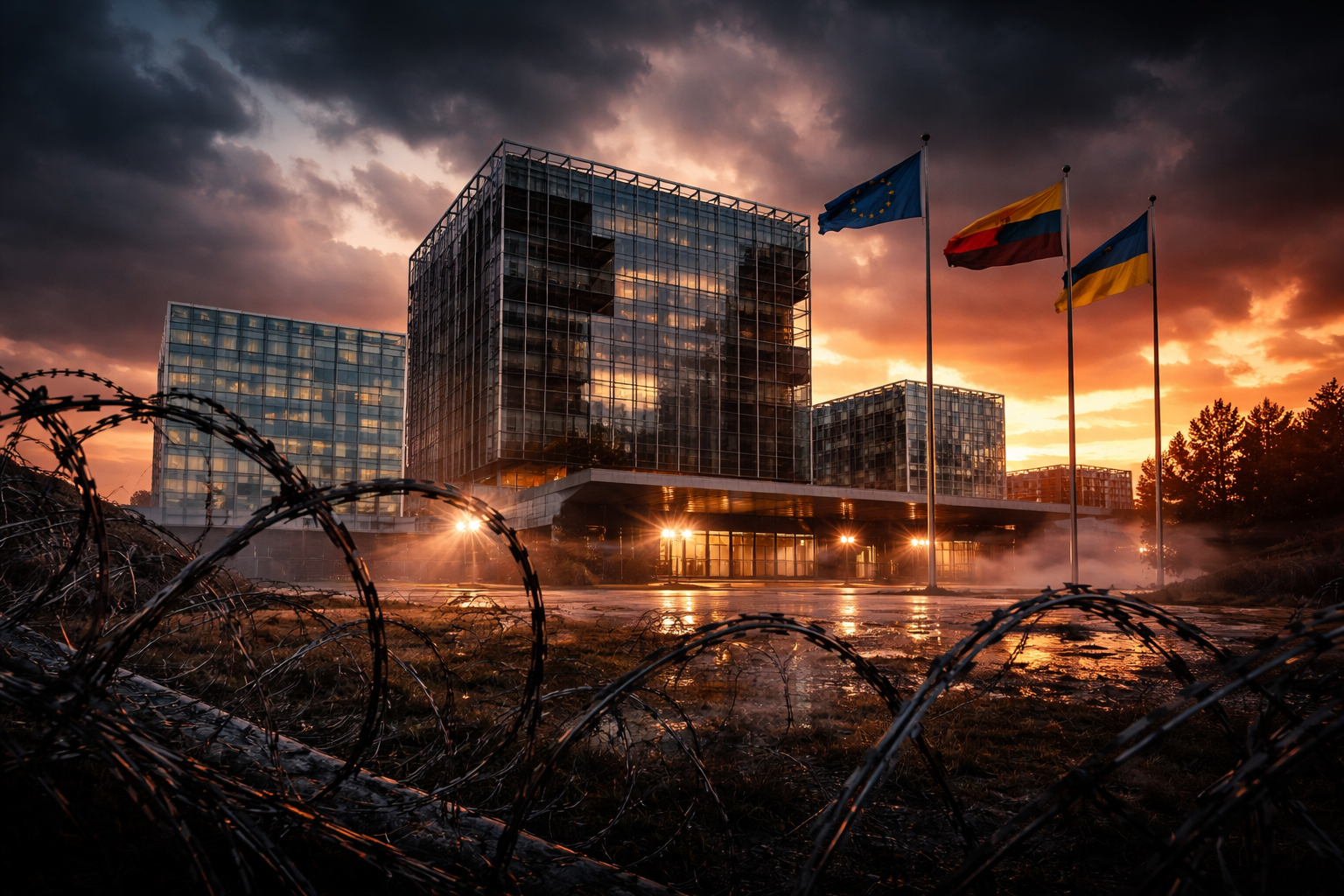
Belarus Faces ICC Probe Over Alleged Political Deportations
International Court Opens War-Crimes Investigation Into Belarus
The International Criminal Court has opened a formal investigation into alleged crimes against humanity committed by the government of Belarus, marking a significant escalation in the legal pressure surrounding Europe’s eastern authoritarian bloc.
Prosecutors in The Hague say there is a reasonable basis to investigate claims that Belarusian authorities carried out deportations and persecution against political opponents, including actions that crossed into neighbouring Lithuania.
The move matters far beyond Belarus itself. Minsk is one of Russia’s closest allies and a strategic partner in the war against Ukraine. A criminal investigation by the world’s top war crimes court places Belarus in the same expanding legal arena that has already produced arrest warrants for senior Russian officials tied to the invasion of Ukraine.
But the real significance lies in a legal loophole: Belarus is not a member of the International Criminal Court (ICC), yet prosecutors say the court still has jurisdiction.
The story turns on whether international law can reach authoritarian states indirectly through cross-border crimes.
Key Points
The International Criminal Court has opened an investigation into alleged crimes against humanity committed by Belarusian authorities.
The case was referred by Lithuania, which argues that parts of the alleged crimes occurred on its territory, giving the ICC jurisdiction.
Allegations focus on deportation, persecution, and repression of political opponents linked to the Belarusian government.
Belarus is not an ICC member state, making the legal pathway for jurisdiction unusually complex.
The investigation unfolds alongside the ICC’s broader war crimes investigation tied to Russia’s invasion of Ukraine.
The move increases international pressure on Belarusian leader Alexander Lukashenko, a key ally of Vladimir Putin.
The Legal Case Against Belarus
The ICC investigation centres on allegations that Belarusian authorities carried out a systematic campaign of repression against political opponents following mass protests after the disputed 2020 presidential election.
Thousands of Belarusians fled the country amid arrests, intimidation, and political prosecutions. Lithuania and other neighbouring states became major destinations for exiles.
Lithuania’s referral to the ICC argues that Belarus did more than repress dissent domestically. Authorities allegedly forced opponents into exile and then continued to persecute them across borders through intimidation, legal pressure, and other coercive tactics.
Under international law, deportation or forced displacement carried out as part of a widespread or systematic attack against civilians can qualify as crimes against humanity.
The ICC prosecutor’s office concluded there is sufficient evidence to open a full investigation.
That investigation will now determine whether senior Belarusian officials bear criminal responsibility.
Why the Court Claims Jurisdiction
The most unusual element of the case is jurisdiction.
Belarus never ratified the Rome Statute, the treaty that created the International Criminal Court. Normally, that would block ICC prosecutions.
However, Lithuania — an ICC member state — argues that key elements of the alleged crimes occurred inside its territory.
Many Belarusian political refugees live in Lithuania. If persecution or deportation involves actions that continue across the border, prosecutors argue that the crimes partially occurred within a state under ICC jurisdiction.
This is the same legal logic used in other ICC cases involving cross-border crimes, where the consequences of actions in one country unfold inside another that recognises the court.
That jurisdictional pathway allowed prosecutors to proceed.
Belarus and the Russia-Ukraine War
The investigation also unfolds in the wider context of the Russia-Ukraine war.
Belarus has played a critical role in the conflict:
Russian forces launched part of the 2022 invasion from Belarusian territory.
Belarus provides logistical support and strategic depth for Russian military operations.
The Lukashenko government remains one of Moscow’s closest political allies.
The ICC already has an active investigation into crimes committed during the Ukraine war and has issued arrest warrants for Russian officials tied to the deportation of Ukrainian children.
The Belarus investigation does not directly concern battlefield conduct in Ukraine. Instead, it focuses on repression against civilians and political opponents.
But the cases intersect politically.
A growing number of international legal actions are building a broader legal framework around Russian-aligned regimes connected to the war.
What Most Coverage Misses
The key story is not simply that Belarus is under investigation.
It is how international law is evolving to reach states that never joined the ICC.
For years, authoritarian governments avoided ICC jurisdiction simply by refusing to ratify the Rome Statute. Russia, China, and Belarus all followed this strategy.
But the Belarus case demonstrates a different legal pathway: cross-border crimes can still trigger jurisdiction if part of the conduct occurs inside an ICC member state.
This principle could become far more significant in the future.
If courts increasingly treat repression, deportation, or forced exile as cross-border crimes, authoritarian regimes may find it harder to shield themselves from international prosecution.
The Belarus investigation could therefore become a legal test case that reshapes how international justice works in politically contested regions.
Who Gains and Who Loses From the Investigation
The immediate legal consequences are limited.
The ICC has no police force and relies on member states to arrest suspects. Belarus will almost certainly refuse to cooperate.
But the political effects could be substantial.
For Belarus:
Senior officials may face international arrest warrants if the investigation leads to charges.
Travel abroad could become riskier for members of the regime.
The country’s international isolation may deepen.
For Belarusian opposition figures in exile, the investigation provides something different: legitimacy.
Opposition leader Sviatlana Tsikhanouskaya welcomed the probe, arguing that it recognises the scale of repression endured by Belarusian citizens.
For Russia, the move reinforces a broader pattern — international legal pressure gradually expanding across the network of states supporting Moscow’s geopolitical position.
What Happens Next
The ICC investigation is only the first step in a long legal process.
Prosecutors will now gather evidence, interview witnesses, and determine whether there is enough material to seek arrest warrants against specific officials.
That stage could take years.
The real signals to watch are procedural:
whether the ICC requests arrest warrants
whether additional countries support the case
whether new evidence links Belarusian actions to cross-border crimes
If prosecutors ultimately target senior figures in Minsk, the investigation could become one of the most consequential legal cases against a European government since the Balkan war crimes trials.
At stake is more than the fate of Belarusian officials.
The deeper question is whether international law can meaningfully constrain authoritarian regimes operating across borders in an era of geopolitical rivalry.
