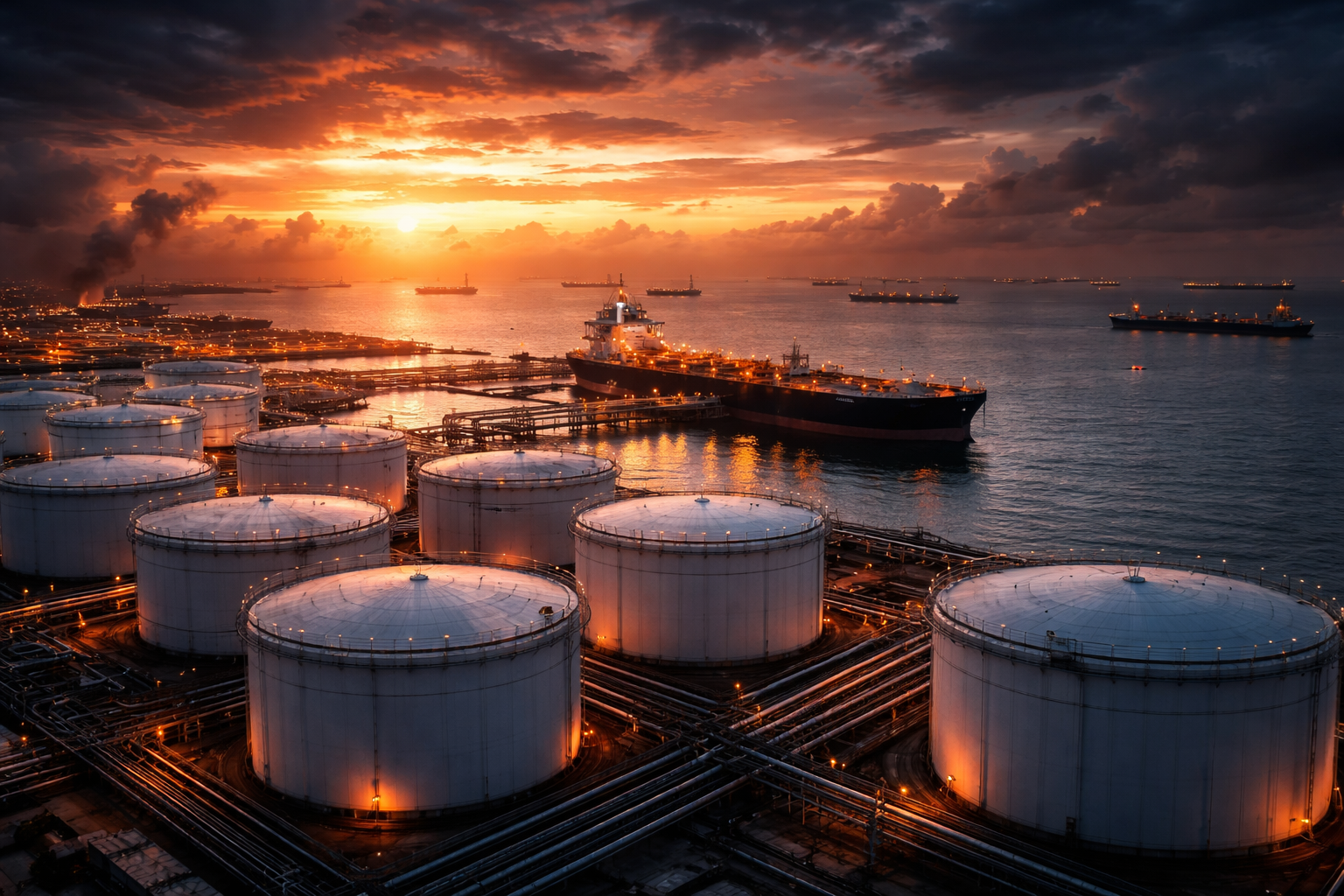
Global Oil Panic: Governments Trigger Largest Reserve Release Ever
Global governments have triggered the largest release of emergency oil reserves designed to stabilize energy markets after a sudden geopolitical shock disrupted supplies and sent prices surging.
The International Energy Agency (IEA) confirmed that its 32 member countries will release roughly 400 million barrels of oil from strategic reserves in a coordinated intervention aimed at calming global markets.
The unprecedented action comes amid escalating conflict in the Middle East and disruption to shipping in the Strait of Hormuz, one of the world’s most important oil routes.
The decision marks a dramatic escalation in economic intervention, dwarfing previous coordinated reserve releases and underscoring the scale of the current energy crisis.
The story turns on whether emergency reserves can stabilize markets long enough for global oil flows to recover.
Key Points
The International Energy Agency and its 32 member nations have agreed to release 400 million barrels of oil, the largest coordinated drawdown ever.
The move comes as Middle East conflict and attacks near the Strait of Hormuz disrupt shipping and threaten roughly 20% of global oil transport.
Major contributors include the United States, Japan, the UK, Germany, and France.
The release exceeds the 182 million barrel reserve drawdown during the energy crisis caused by the 2022 Ukraine war, which peaked at $120 per barrel earlier in the crisis before partially retreating after intervention discussions began.
The reserve release aims to stabilize markets temporarily while governments attempt to secure shipping routes and restore supply flows.
Where the Energy Shock Began
The immediate trigger is a geopolitical crisis that has severely disrupted the world’s most critical oil corridor.
The Strait of Hormuz, a narrow shipping lane between Iran and the Arabian Peninsula, typically handles around one-fifth of global oil shipments.
Recent attacks on commercial vessels and escalating military exchanges in the region have created a sudden shock to the global energy system.
Insurance costs for oil tankers surged, shipping slowed, and traders began pricing in the possibility that a significant share of global oil exports could be blocked.
Even a partial disruption in Hormuz can rapidly drive price spikes because modern energy markets operate on tight margins between supply and demand.
Governments moved quickly once the scale of the disruption became clear.
Strategic Petroleum Reserves: The World’s Energy Shock Absorber
Strategic petroleum reserves are emergency stockpiles held by governments and mandated industry storage programs.
They exist for one purpose: to prevent short-term supply disruptions from triggering economic collapse.
IEA member states collectively hold more than 1.2 billion barrels of public emergency reserves, with additional stocks required to be held by industry.
Countries maintain these reserves under an agreement requiring at least 90 days of oil imports stored for emergencies.
The United States maintains the largest government-controlled reserve in the world, stored in massive underground salt caverns along the Gulf Coast.
In normal times these reserves remain untouched.
They are only deployed during extreme supply shocks such as wars, natural disasters, or severe market disruptions.
How the Crisis Escalated Into a Global Intervention
The energy shock did not emerge from a single event.
Instead, several destabilizing factors converged at once:
First, military escalation in the Middle East created immediate fears of oil infrastructure attacks.
Second, commercial shipping routes in the Persian Gulf became targets, disrupting tanker traffic.
Third, traders began speculating on prolonged supply disruptions, pushing futures prices sharply higher.
Oil briefly surged above levels not seen since earlier global energy crises, amplifying inflation risks across major economies.
Faced with rising prices and the threat of broader economic damage, governments moved toward coordinated action, such as implementing policies to stabilize energy markets and mitigate the impact of rising oil prices on consumers and businesses.
The IEA's intervention marks the largest coordinated release of emergency oil stocks since its establishment in the 1970s.
Who Gains, Who Loses
The reserve release immediately reshapes incentives across the global energy system.
Oil consumers—including major importing economies such as Europe and Japan—benefit from the stabilizing effect on prices.
Oil producers, particularly those outside the crisis zone, face pressure from lower prices and increased supply entering the market.
However, the intervention does not eliminate the underlying supply risk.
Instead, it buys time.
Markets often treat emergency reserve releases as temporary bridges rather than permanent solutions.
If the underlying geopolitical crisis continues, prices can rise again once reserves begin running down.
What Most Coverage Misses
The crucial detail in this intervention is scale versus duration.
Four hundred million barrels sounds enormous, but the world consumes roughly 100 million barrels of oil every day.
That means the entire emergency release is equivalent to roughly four days of global demand.
The real goal of the intervention is not to replace lost supply for months.
It is intended to break the panic in the market.
Expectations drive energy markets as much as physical supply. When traders believe governments will flood the market with reserves, speculative price spikes can unwind quickly.
To put it another way, the psychological impact might be just as important as the actual barrels.
If shipping routes reopen or conflict de-escalates during that window, the reserve release may never need to fully replace lost supply.
What This Means for Households, Inflation, and Markets
Oil shocks ripple far beyond fuel prices.
Higher crude prices quickly feed into:
gasoline and diesel costs
airline ticket prices
shipping and logistics costs
heating bills
food prices
Central banks watch oil closely because sudden spikes can reignite inflation just as policymakers are trying to stabilize economies.
A sustained energy shock could force interest rates higher again, slowing growth.
That risk is one of the reasons governments acted quickly.
The reserve release is as much about protecting the broader economy as it is about stabilizing oil markets.
The Next Energy Test: Supply vs Stability
The emergency reserve release is not a solution to the underlying geopolitical crisis.
It is a temporary stabilizer.
Three signals will determine what happens next:
First, we need to determine whether tanker traffic through the Strait of Hormuz can resume safely.
Secondly, we need to assess the condition of the energy infrastructure in the Gulf.
Thirdly, we need to determine if oil-producing countries will boost their output to compensate for the disruption.
If those conditions improve, the reserve release may succeed in preventing a full-scale global energy crisis.
If not, governments could face an even harder decision: whether to continue drawing down strategic reserves or prepare for a prolonged oil shock.
Moments like these reveal why strategic reserves exist.
They are the economic equivalent of a fire extinguisher—rarely used, but critical when the system catches fire.
