

Czech President Blocked From NATO Summit As Prague’s Power Struggle Explodes
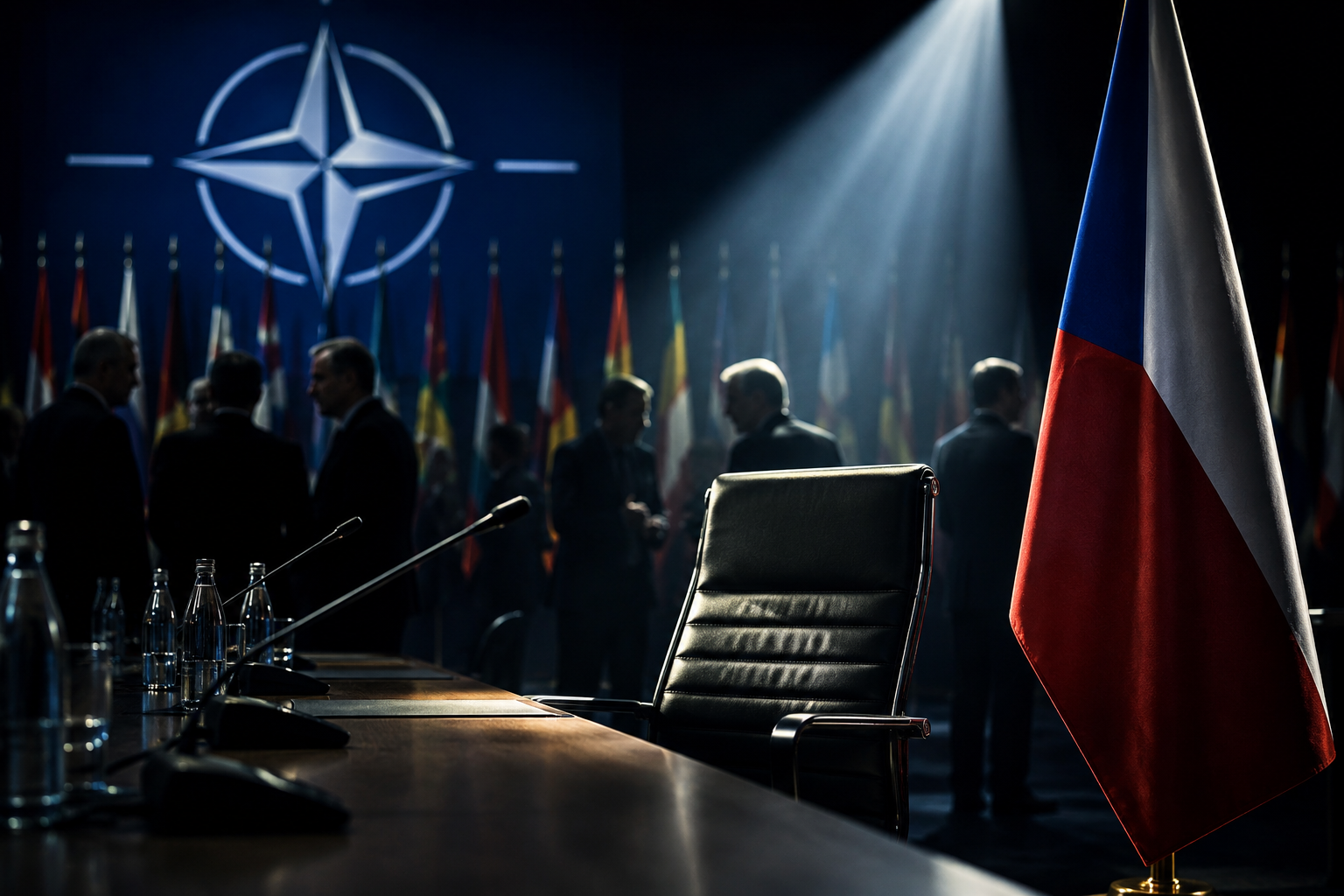
Czech Government Blocks President From NATO Summit In Extraordinary Power Clash
The Empty Seat That Turned Into A Constitutional Fight
A NATO Summit Dispute Has Become Something BiggerThe Czech government’s decision to leave President Petr Pavel out of its delegation to the July NATO summit has turned a protocol dispute into a direct constitutional confrontation. Pavel has appealed to the Constitutional Court after the government refused his request to lead the Czech delegation, with the summit scheduled for July 7–8 in Ankara.
On paper, this is a fight over who attends a diplomatic gathering. In reality, it is a fight over who gets to represent the country when defence spending, Ukraine policy, and alliance credibility are all under pressure. The symbolism is sharper because Pavel is not an ordinary president watching NATO from the sidelines. He is a former Czech army chief and former chair of NATO’s Military Committee, one of the most alliance-coded figures in Czech public life.
That is why the decision lands with more force than a routine delegation reshuffle. The government says foreign policy is defined by the cabinet and that it must defend its own position, including on defence spending. Pavel argues that excluding the president is unprecedented and extremely unfortunate, and points to a long pattern of Czech presidents leading NATO summit delegations.
The Official Argument Is About Control
The government’s position is straightforward: the cabinet is responsible for foreign policy, and therefore the cabinet should carry the national line at NATO. Prime Minister Andrej Babiš had already signalled that the delegation question would be decided by the government and tied the issue to the need to defend Czech defence spending choices.
That matters because the Czech Republic is heading into the summit from a politically awkward position. Babiš has said the country will not meet NATO’s minimum defence spending target of 2% of GDP this year, with the government’s plan around 1.7% to 1.8% instead. He has argued that public finances must be put in order first and that the 2% threshold should be met from 2027.
So the delegation fight is not floating in isolation. It sits directly on top of a credibility problem: NATO is demanding more from European allies, while Prague is preparing to explain why it is still below the existing minimum. In that context, sending the president, a former senior NATO figure and vocal supporter of Ukraine, could create a different diplomatic tone from the one the government wants to present.
The hidden pressure is this: the government does not only want to attend the summit. It wants to own the message.
Pavel’s Exclusion Breaks With A Powerful Tradition
Pavel’s response is built around precedent as much as personal authority. He said Czech presidents had led the country’s delegation at 19 of 20 previous NATO summits, with the one exception linked to health reasons. That claim turns the government’s decision from a technical constitutional argument into a visible break with the way Czechia has usually presented itself inside the alliance.
The presidency in Czechia has limited formal powers, and the government defines foreign policy. But politics is not only legal architecture. It is also ritual, signalling, and institutional memory. NATO summits are not ordinary photo opportunities; they are where allies show unity, seriousness, and national discipline.
That is what makes this row so damaging. A country already under scrutiny for defence spending is now visibly arguing over who should speak for it. The immediate legal question is whether Pavel’s role has been improperly constrained. The deeper political question is whether Czechia can project coherence at the very moment the alliance expects firmness.
The Constitutional Court has received Pavel’s complaint and may consider giving it priority, though it is not clear whether a ruling will arrive before the Ankara summit. That uncertainty leaves the dispute hanging over the delegation itself, creating a domestic drama around an international security event.
Ukraine Policy Sits Beneath The Surface
The row also carries a Ukraine dimension. Pavel has been a strong supporter of Ukraine in its defence against Russia, while Babiš’s cabinet has scaled back support. That contrast gives the delegation fight a sharper strategic edge because NATO’s future posture toward Russia and Ukraine remains one of the alliance’s defining questions.
This does not mean the summit dispute is only about Ukraine. But Ukraine is part of the atmosphere around it. A president with strong pro-Ukraine credentials and deep NATO experience has been kept out of the delegation by a government facing pressure over defence spending and alliance commitments. The optics are impossible to separate from the substance.
The result is a split-screen moment. Abroad, Czechia needs to look reliable, aligned, and serious. At home, its leadership is arguing over constitutional authority, foreign policy ownership, and who has the right to carry the national voice into the room.
For NATO, that matters because alliance politics depends on more than treaties. It depends on whether member states can turn domestic politics into credible collective action. When internal fights become visible at summit level, they invite allies to ask whether the country’s commitments are politically stable.
The Real Fight Is Over Who Owns The State
The most explosive part of this story is not the travel list. It is the collision between two forms of legitimacy. Pavel has the legitimacy of the presidency, military experience, NATO history, and direct public election. Babiš has the legitimacy of government office, parliamentary power, and constitutional responsibility for policy.
That kind of clash is difficult to contain because both sides can claim they are defending the state. The president can argue that he is protecting national representation and institutional continuity. The government can argue that it alone must answer for the policy being defended in Ankara, especially on defence budgets and diplomatic commitments.
This is why the constitutional complaint matters. It is not just an attempt to get Pavel onto a plane. It is an attempt to define the boundary between presidential representation and government control. Once that boundary becomes contested in public, future foreign-policy disputes become harder to manage quietly.
The immediate question is whether Pavel attends. The longer-term question is whether Czech foreign policy now becomes a recurring battleground between Castle and cabinet whenever the stakes are high enough.
NATO Will Notice The Weakness Behind The Theatre
The timing is brutal. NATO members are facing pressure to spend more, carry more, and prepare for a security environment shaped by Russia, Ukraine, and rising demands from the United States for Europe to shoulder more of its own defence burden. In that environment, domestic fragmentation becomes more than an internal embarrassment. It becomes a strategic signal.
Czechia’s defence spending position already creates a vulnerability. Missing the 2% benchmark again gives critics an obvious line of attack, even if the government insists it will reach the target from 2027. The delegation row adds a second vulnerability: not only is the country below the spending threshold, but its senior leadership is also publicly divided over who should defend the position.
That does not make Czechia unreliable by itself. But it does make the country look politically strained at a moment when NATO prizes visible unity. Summits are designed to compress national positions into a single message. Prague is now exporting the argument before the message has even been delivered.
The danger for Babiš is that excluding Pavel may create the very distraction the government wanted to avoid. Instead of making the summit about cabinet responsibility, the decision has made it about power, protocol, and institutional mistrust.
The Bigger Pattern Is A Europe Fighting Itself While Rearming
This story is powerful because it mirrors a wider European problem. Across the continent, governments are being pushed to spend more on defence, harden their security posture, and make choices that voters may not like. At the same time, domestic politics is more fragmented, more personal, and more suspicious of elite consensus.
The Czech case compresses that tension into one vivid image: a former NATO commander turned president being left out of a NATO summit delegation by a government that must defend lower-than-target defence spending. It is not necessary to exaggerate the facts. The facts already carry enough force.
The dispute also reveals how foreign policy is becoming domestically weaponised. NATO is no longer just a defence alliance in public debate. It is a stage on which leaders perform seriousness, sovereignty, loyalty, restraint, or defiance. Who stands at that stage matters because the person becomes part of the message.
If the court moves quickly, this could still shift before the summit. If it does not, the Ankara meeting may go ahead with the Czech president absent and the constitutional question unresolved. Either way, the damage is already visible: Prague has turned a NATO summit into a test of internal power.
The Seat Is Empty, But The Message Is Loud
The most important thing about this dispute is that both sides are talking about the state while exposing its fracture. The government says it must defend the national position. The president says his exclusion is an unprecedented move against the presidency’s role abroad. The court may now be asked to decide where representation ends and executive control begins.
That makes this bigger than Pavel, Babiš, or one summit in Turkey. It is a warning about what happens when alliance pressure, defence spending, Ukraine policy, and domestic rivalry collide inside a parliamentary democracy. The empty seat is not just a missing official. It is a visible space where Czechia’s unresolved argument over power has suddenly appeared in front of NATO.
