Denmark Warns Russia Could Escalate Its Hybrid War Against The West — And NATO’s Grey Zone Is Getting More Dangerous
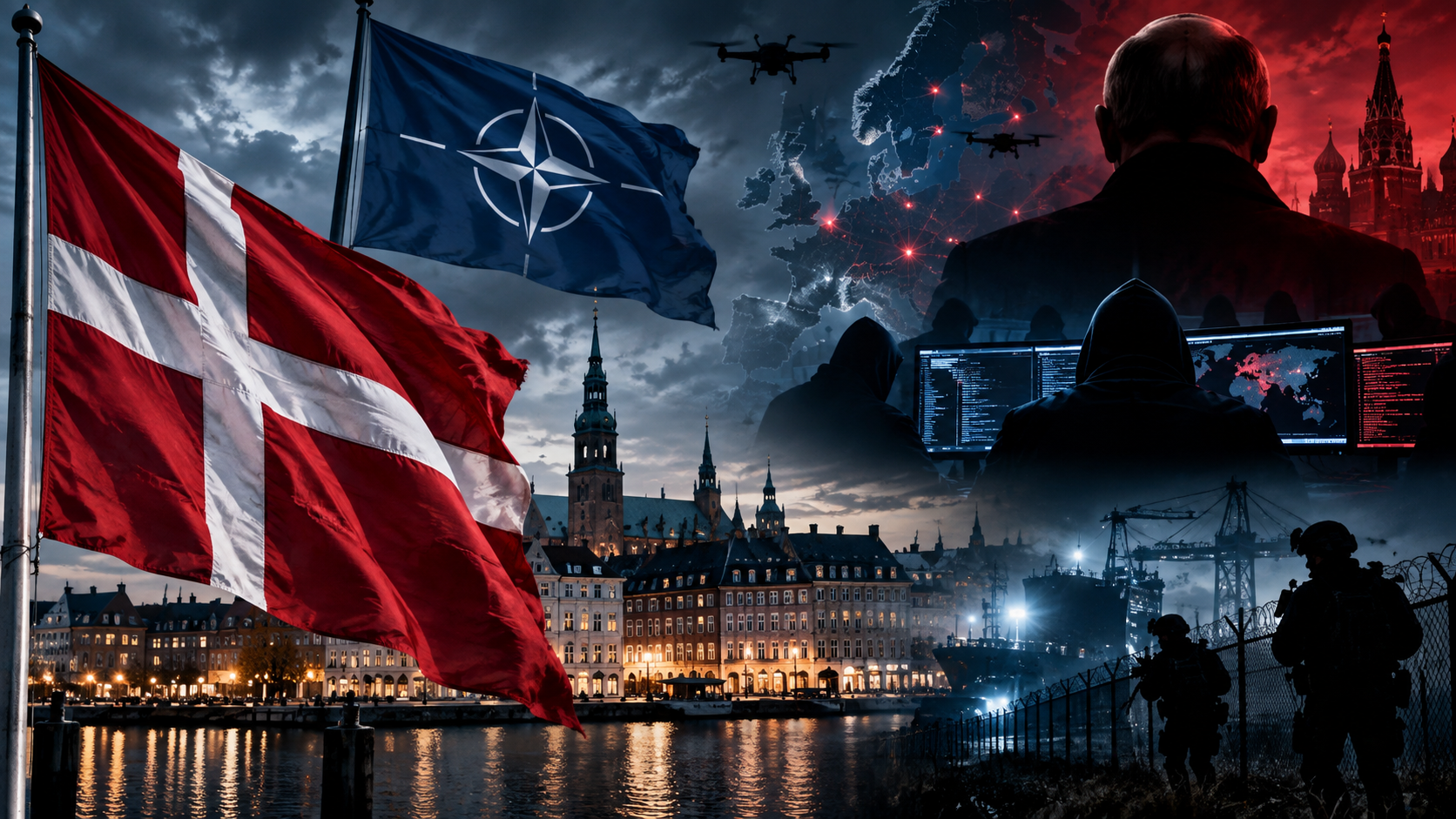
Denmark Issues Stark Russia Warning As NATO Faces A More Dangerous Kind Of War
Russia’s Hybrid War Could Escalate Within Months — Denmark Warns The Threat Is Growing
The Most Dangerous Part Of The Warning Is That The Next Confrontation May Be Designed To Look Like Something Less Than War
Denmark has delivered one of its clearest warnings yet about the security environment facing Europe: Russia is expected to intensify its hybrid campaign against the West in the coming months, potentially carrying out more frequent operations designed to cause greater damage while remaining below the threshold of an unmistakable conventional attack. The warning matters because the danger Denmark describes is not necessarily a column of Russian tanks crossing a NATO border. It is something harder to identify, attribute and answer.
That grey zone could include sabotage, cyberattacks, covert interference, drones, attacks on infrastructure, disruption of military supply chains and provocations calibrated to create uncertainty about exactly what happened and who was responsible. Denmark’s Defence Intelligence Service has already assessed that Russia is conducting hybrid warfare against NATO and the West, while describing Moscow as the greatest hybrid threat facing the alliance.
Denmark’s Warning Has Become More Urgent
The latest assessment sharpens an argument Danish intelligence has been making for some time. Intelligence chief Thomas Ahrenkiel said on September 24 that Russia had intensified its hybrid activity in recent months and assessed that Moscow would escalate further in the coming months, with more attempted operations capable of causing greater damage.
Denmark has also identified what it describes as a small but increasing risk of a limited Russian military attack against a NATO member on the alliance’s eastern flank. That is importantly different from assessing that a large-scale Russian invasion of NATO is imminent. Danish officials said there is no direct military threat against Denmark itself, but warned that Russia’s increasing willingness to take risks affects the wider security environment.
That distinction is crucial. The most immediate danger may not be conventional war in the form Europe spent decades preparing to deter. It may instead be a succession of incidents that individually appear limited but collectively force NATO to confront an increasingly difficult question: when does persistent pressure below the conventional threshold become something the alliance can no longer treat as isolated disruption?
Taylor Tailored has already examined how Russia’s shadow war has reached Denmark, including concerns surrounding recruitment for sabotage operations, defence companies and infrastructure. The latest warning suggests that this wider pattern may be entering a more aggressive stage.
Hybrid Warfare Is Powerful Because The Line Stays Blurred
Hybrid warfare works precisely because it occupies the uncomfortable territory between normal geopolitical competition and declared armed conflict. Denmark’s intelligence service defines hybrid tools broadly, encompassing political, economic, informational and military measures that can be used separately or together to weaken another state.
A cyberattack can disrupt essential systems without a missile being fired. Sabotage can damage infrastructure while responsibility remains contested. Disinformation can magnify political tensions already present inside a democracy. Drones can probe restricted areas, test defences or create uncertainty without automatically producing the political consequences associated with a conventional strike.
That ambiguity is not an accidental side effect. It can be the strategic advantage.
If an attacker can impose economic damage, increase public anxiety, interfere with military logistics or expose vulnerabilities while leaving governments debating attribution and proportionality, the pressure begins before a traditional military confrontation ever starts.
Denmark’s Security and Intelligence Service says Russian hybrid measures are intended partly to create insecurity and fear in Western societies, potentially weakening political and public support for Ukraine. It has also assessed that Russia is showing a greater willingness to take risks involving physical sabotage in Europe.
NATO’s Weakest Point Could Be Uncertainty
NATO is built around deterrence. Article 5 establishes collective defence, meaning an armed attack against one member can be treated as an attack against all. But hybrid warfare deliberately makes the phrase “armed attack” harder to apply politically.
A Russian missile deliberately hitting NATO territory would create a comparatively clear crisis. A fire at a defence facility is different. So is a cyberattack against a utility, an unidentified drone over strategic infrastructure or sabotage conducted by someone with no obvious formal connection to Moscow.
Every additional layer of uncertainty creates another political decision.
Was Russia responsible?
Was the incident authorised by the Russian state?
Was it designed to cause damage or merely intimidate?
Does it justify retaliation?
Should NATO respond collectively?
How strongly?
Those questions can become part of the weapon itself. Denmark’s earlier assessment concluded that Russia uses hybrid activity partly to weaken NATO’s political cohesion and decision-making capacity, creating sustained uncertainty rather than necessarily seeking one immediate dramatic victory.
That strategic logic connects directly with Russia’s attempt to exploit disagreements between European countries supporting Ukraine. If political cohesion is the target, a successful operation does not always require destroyed infrastructure. Creating mistrust, disagreement and hesitation can itself produce strategic value.
Defence Companies And Ukraine Supply Routes Could Be In The Crosshairs
Ahrenkiel highlighted the defence industry and organisations supporting Ukraine as areas of particular Russian interest. Operations could also focus on transport routes carrying assistance to Ukraine, potentially creating disruption far from the battlefield itself.
That makes strategic sense from Moscow’s perspective. Russia does not have to destroy NATO’s military capacity to make supporting Ukraine more expensive or politically difficult. Disrupting a factory, transport network, data system or logistics hub can impose costs without producing the unmistakable escalation associated with attacking NATO forces directly.
Denmark’s intelligence service has previously assessed that Russia has conducted sabotage activity across Europe since 2023, describing it as part of a campaign intended to undermine European support for Ukraine. It has also warned about destructive cyber activity targeting poorly protected Western infrastructure.
The vulnerability is broader than the defence sector. Modern societies depend on electricity grids, communications networks, ports, airports, railways, water systems, data centres and interconnected digital infrastructure. An adversary does not necessarily need to destroy these systems permanently. Temporary disruption can be enough to demonstrate vulnerability and generate political pressure.
The Risk Is Escalation Without Anyone Planning A Major War
One of the most dangerous features of hybrid warfare is that limited operations can create consequences larger than the original action.
An unsuccessful act of sabotage may remain a security investigation. A successful attack causing extensive infrastructure damage is different. An operation causing civilian deaths would change the political calculation again. A military provocation that accidentally kills NATO personnel could move events into territory neither side originally intended to enter.
That escalation problem has become increasingly important as Russian and NATO military forces operate around the Baltic region and NATO’s eastern frontier. Taylor Tailored previously examined how a direct Russia-NATO confrontation remains one of the clearest pathways toward a far wider war.
The latest Danish warning does not mean that confrontation is inevitable. In fact, Denmark continues to distinguish clearly between escalating hybrid pressure and an imminent large-scale attack.
But it does mean the margin for miscalculation matters.
A strategy built around operating immediately beneath an opponent’s threshold for retaliation depends on accurately understanding where that threshold actually sits. The problem is that political thresholds are not fixed mathematical values. They change with damage, casualties, public pressure, attribution and circumstance.
Moscow Rejects The Western Accusations
Russia has denied involvement in hybrid warfare against Western countries and has repeatedly rejected allegations linking Moscow to covert attacks and sabotage operations across Europe.
That denial matters because attribution is one of the central difficulties surrounding hybrid operations. Western authorities can assess responsibility using intelligence that cannot always be released publicly, while governments must decide how much evidence is sufficient before imposing consequences.
Denmark itself acknowledges that identifying responsibility for individual hybrid incidents can be difficult. Its intelligence assessments therefore examine broader patterns of capability, intent and activity rather than assuming every unexplained incident has the same origin.
That evidential discipline is important. Not every cyber failure, drone sighting, infrastructure fire or act of vandalism in Europe is evidence of a Russian operation. Treating every unexplained event as hostile action would create exactly the atmosphere of fear and confusion that hybrid warfare seeks to exploit.
The Bigger Contest Is Over Western Endurance
The deeper significance of Denmark’s warning reaches beyond individual acts of sabotage.
Russia’s full-scale invasion of Ukraine has become a prolonged contest over economic capacity, weapons production, military manpower and political endurance. Moscow has reason to understand that weakening Western support for Kyiv could matter almost as much as gaining territory directly on the battlefield.
Taylor Tailored explored that strategic calculation in Russia’s long war of endurance against Western support for Ukraine. Hybrid operations potentially fit neatly into that strategy because they can increase the domestic cost of supporting Ukraine without requiring Russia to openly attack NATO.
A disrupted railway, compromised company, damaged factory or cyberattack against civilian infrastructure can force governments to spend more on security. Repeated incidents can create anxiety. Disinformation can deepen existing political arguments. Military provocations can make voters fear escalation.
No single incident needs to break NATO.
The pressure works if enough incidents gradually make unity harder to maintain.
The Next Phase May Be Designed To Test NATO
The central warning from Denmark is therefore not that Europe is hours away from conventional war. It is that Russia may increasingly test the space immediately below it.
That may prove more difficult to manage than a simple military threat.
Conventional deterrence relies partly on clarity: cross this line and consequences follow. Hybrid warfare deliberately attacks the clarity itself.
Denmark believes Russia wants to undermine Western support for Ukraine and weaken NATO cohesion while limiting the risk of triggering overwhelming retaliation. Its intelligence service now expects attempts to become more frequent and potentially more damaging.
Europe’s challenge is to make that calculation less attractive without allowing every suspicious incident to create uncontrolled escalation.
Because the most dangerous moment may not arrive with an official declaration of war.
It may arrive as a cyber outage, a sabotaged transport route, an unidentified drone or an apparently isolated incident that suddenly forces NATO governments to decide whether the grey zone has finally become too dark to ignore.
