

Elon Musk Just Exposed The Darker Risk Inside Starmer’s Social Media Ban
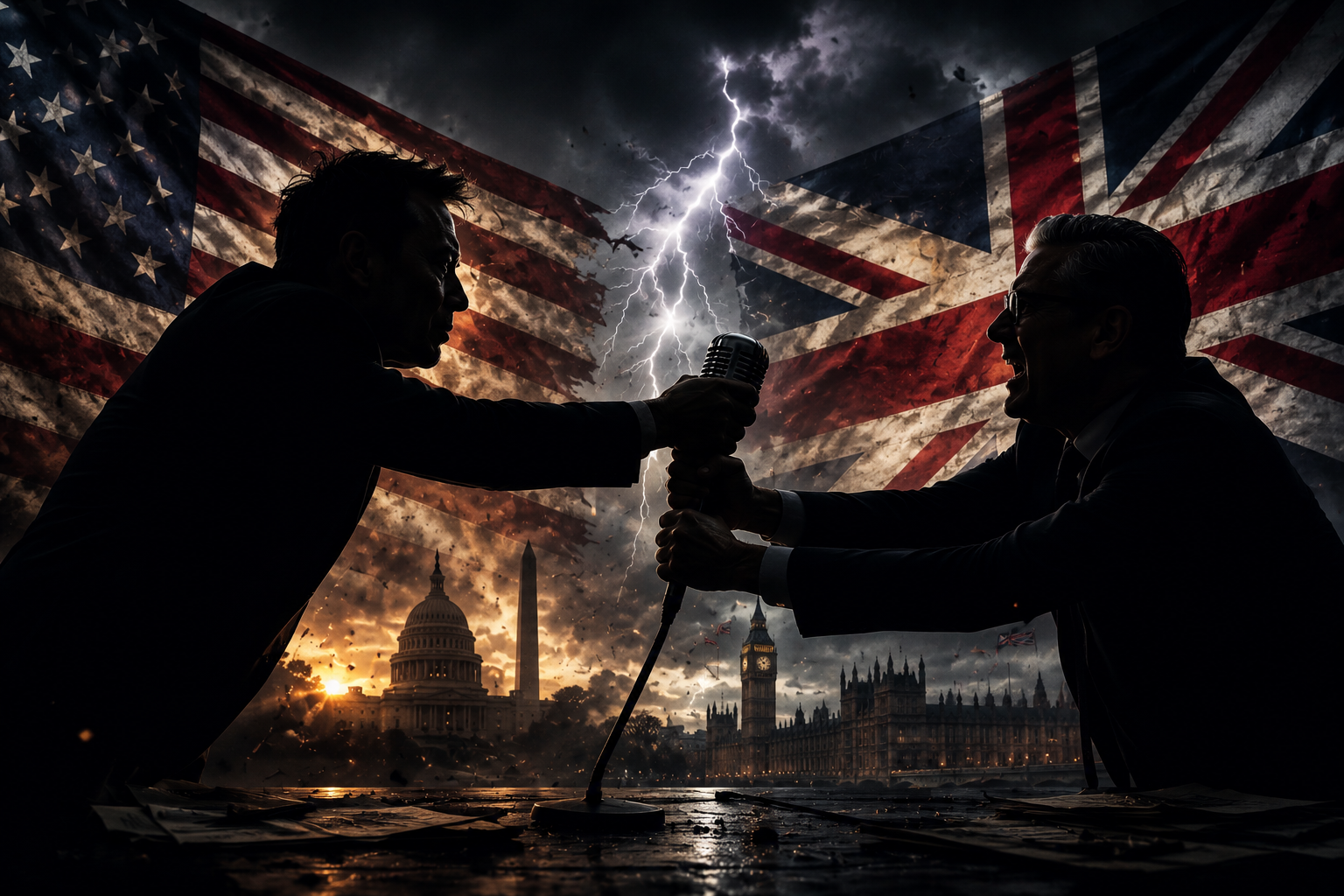
Elon Musk Says The Quiet Part Out Loud About Starmer’s Social Media Ban
Elon Musk Versus Keir Starmer Is Now A Battle Over Britain’s Internet
Elon Musk’s response to Britain’s under-16 social media ban has cut through the government’s polished child-safety language and dragged the debate into much darker territory. According to the reported exchange, Musk’s central criticism was blunt: the “real goal” of the ban is to enable the UK government to “track everyone.”
That is the line that changes the story. Starmer wants the public to see this as a moral line in the sand: children on one side, tech giants on the other. Musk is asking a different question entirely. What kind of digital infrastructure must be built to make a nationwide social media ban work?
That is where the ban becomes more complicated. A government cannot ban under-16s from major platforms without requiring platforms to know who is under 16. That means age verification, identity checks, data flows, compliance systems, regulator oversight and potentially a new normal where ordinary internet access increasingly depends on proving who you are.
For Musk, that is the danger. The issue is not whether children should be protected from harmful content. They should be. The issue is whether Keir Starmer’s answer creates a wider architecture of state-approved digital access.
What Starmer Has Actually Announced
The government’s plan is sweeping. Under-16s are expected to be blocked from major social media platforms including X, TikTok, Instagram, Facebook, Snapchat and YouTube. Messaging services such as WhatsApp and Signal are not expected to be included, while YouTube Kids and educational services are likely to sit outside the ban.
Starmer’s framing is deliberately emotional. He said: “Parents want to keep their kids safe and happy, but the online world has made that harder than ever.” He also said the government is “going further than any country in the world” and described the policy as “a line in the sand.”
That is classic Starmer language: moral seriousness, institutional confidence, careful paternalism. The problem is that the internet does not work like a school gate. It is not a controlled physical space where ministers can simply close one door and open another. It is a shifting network of platforms, apps, browsers, VPNs, private groups, gaming systems, anonymous accounts and alternative services.
The government says the ban is expected to come into force in spring 2027, with Ofcom expected to play a central role in enforcement and age assurance. It also wants to go further by restricting livestreaming, stranger contact with children, romantic AI chatbots for under-18s and possibly late-night infinite scrolling.
Why Musk’s Criticism Hits Hard
Musk’s criticism lands because he owns X, but also because he has positioned himself as the global symbol of resistance to state-led online control. His supporters see him as one of the few major technology figures willing to challenge governments directly. His critics see him as reckless, too powerful and too willing to inflame political tensions.
But on this issue, Musk’s warning deserves to be taken seriously. A nationwide under-16 social media ban cannot operate purely on trust. If platforms are punished for letting underage users access services, they will need stronger age checks. Stronger age checks usually mean more personal data, more identity verification, more friction and more surveillance risk.
That does not automatically mean the government is building a dystopian database. But it does mean the policy creates pressure in that direction. The more serious the enforcement, the more intrusive the verification. The more intrusive the verification, the more adults as well as children may be pulled into the system.
This is why Musk’s “track everyone” line matters. It may be provocative, but it identifies the core trade-off. To keep children out, platforms may need to verify everyone in. That is the hidden cost of Starmer’s plan.
The Ban Could Push Teenagers Into Worse Places
The strongest anti-ban argument is not that social media is harmless. It clearly is not. Bullying, addiction, harmful algorithms, sexual exploitation, doomscrolling and mental health pressures are real. Parents are right to be worried, and the government is right to say the status quo has failed.
But a bad system does not automatically justify a blunt ban. YouTube has warned that blanket bans can push young people out of curated and supervised spaces and toward anonymous, less-safe services. That is not a weak objection. It is the most obvious behavioural consequence of the policy.
Teenagers do not vanish when banned. They adapt. They use VPNs. They borrow accounts. They migrate to smaller platforms. They move to encrypted groups. They use gaming chat, private servers, browser-based communities and apps that regulators have not yet caught up with.
That could make children less visible to parents, less visible to safer platforms and harder for authorities to protect. The danger is that Starmer creates the appearance of control while pushing the real behaviour underground.
Starmer’s Weakness Is Political As Well As Technical
There is another uncomfortable layer here. Starmer is presenting the policy as principled leadership, but the timing makes it impossible to separate from politics. His government is under pressure, his authority has been questioned, and social media has become a convenient theatre in which to look decisive.
That does not mean every part of the policy is cynical. The harms are real. The bereaved families and campaigners behind parts of this debate deserve respect. But Starmer’s instinctive answer is still very Starmer: centralise authority, regulate harder, trust institutions, make the state the adult in the room.
Musk’s instinct is the opposite. He distrusts government control, especially when it is packaged as moral protection. That is why this clash is bigger than one policy. It is a philosophical conflict between a Prime Minister who believes safety can be imposed from above and an entrepreneur who believes freedom is usually lost through respectable-sounding restrictions.
For readers of Taylor Tailored, this connects directly to the wider Musk-Starmer feud reshaping British politics. The same themes keep returning: free speech, institutional control, public distrust, government overreach and the power of one man with a platform larger than most states.
What Musk Will Likely Do Next
Musk’s most likely next move is not a quiet lobbying campaign. He is much more likely to keep attacking the policy publicly on X, amplify critics of the ban, mock the government’s enforcement problem and frame the issue as another example of Britain drifting toward censorship and surveillance.
That matters because Musk does not need Westminster access to shape the debate. He can move public conversation with a single post. He can put Starmer on the defensive internationally. He can make the ban look less like child protection and more like digital authoritarianism dressed in soft language.
X as a company also has options. It can challenge the detail of the regulations, lobby through industry groups, push for narrower definitions, demand privacy-preserving age assurance, argue for parental-control alternatives, or resist parts of the framework if it believes the rules are unworkable or disproportionate.
The nuclear option would be legal action or a direct threat to limit UK services, but that seems less likely at this stage. The smarter play is political pressure first: make the policy toxic, force the government to explain how verification works, and turn every privacy concern into a public weakness for Starmer.
What Musk Can Actually Do
Musk cannot simply overrule UK law. If Parliament gives Ofcom powers and platforms are legally required to comply, X will face a choice: comply, challenge, negotiate, redesign access, or risk penalties. Britain is not America, and free-speech arguments do not operate in the same constitutional framework.
But Musk still has serious leverage. He owns one of the platforms named in the ban. He can shape global investor and tech-sector perception of Britain. He can influence US political attention. He can encourage American pressure against what US tech firms may see as a disproportionate burden on Silicon Valley companies.
He can also expose the practical contradictions. If adults must verify themselves to prove they are not children, privacy becomes the issue. If teenagers bypass the ban, enforcement becomes the issue. If children move to worse online spaces, safety becomes the issue. If platforms over-collect data, surveillance becomes the issue.
That is the terrain Musk will likely choose. He does not need to defeat Starmer in Parliament. He needs to make the policy look impossible, intrusive and politically embarrassing.
How Starmer Will Likely Respond
Starmer’s response is predictable. He will say this is about children, not Elon Musk. He will frame opposition as tech-billionaire self-interest. Ministers have already leaned into that line, saying the government is on the side of parents and bereaved families, not “foreign trillionaires.”
That argument may work with some voters. Many parents are exhausted by social media, worried about their children and ready for government action. Starmer will keep repeating that tech companies had their chance and failed. He will insist the government is not attacking free speech, but protecting childhood.
The weakness in that response is that it avoids the central technical question. How do you enforce the ban without creating a privacy nightmare? How do you identify children without pressuring everyone to prove their age? How do you prevent evasion without building a more intrusive internet?
If Starmer cannot answer those questions cleanly, Musk’s criticism will keep gaining force. The Prime Minister can dismiss Musk as a billionaire outsider, but he cannot dismiss the architecture problem underneath the policy.
The Real Cost Of The Ban
The negatives of this ban are obvious enough to list plainly. It may push teenagers underground. It may weaken digital literacy by delaying exposure rather than teaching responsibility. It may isolate young people from legitimate communities, news, education, creativity and political discussion. It may increase demand for VPNs, fake accounts and unsupervised alternative spaces.
It may also create a wider privacy precedent. Once age verification becomes normal for social media, the same logic can spread. Adult content, political content, “harmful” content, misinformation, anonymous accounts, controversial forums — the architecture built for one purpose can later be repurposed for another.
That is the deeper danger. Governments often introduce restrictions for sympathetic reasons. Children are the strongest possible case. But systems built for protection can become systems of control when political incentives change.
This is why the original Taylor Tailored breakdown of Starmer’s under-16 ban matters. The story was never only about whether teenagers should scroll less. It was always about who gets to decide what the next generation can see, say and access.
The Bigger Battle Is About Who Owns The Internet
Starmer wants this debate to be about childhood. Musk wants it to be about freedom. Both are partly right, but only one side is being honest about the scale of the trade-off. Protecting children online is necessary. Pretending a blanket access ban has no deeper consequences is not.
The better answer would be harder but cleaner: punish harmful design, restrict exploitative algorithms, strengthen parental tools, enforce against illegal content, improve digital education, protect children’s data and make platforms liable for systems that actively push minors toward harm. That targets the machine rather than simply locking children outside the front door.
Starmer has chosen the blunt instrument. Musk has chosen the free-speech counterattack. The likely result is a long fight between Westminster and Big Tech, with parents caught in the middle and teenagers already looking for workarounds.
The most dangerous outcome is not that the ban fails. It is that it half-succeeds: intrusive enough to normalise digital identity checks, weak enough to be bypassed by the teenagers most at risk, and politically useful enough for governments to expand later. That is why Musk’s warning matters. Britain is not just deciding whether children should use social media. It is deciding how much control the state should have over the gateway to modern life.
