Elon Musk’s SpaceX Cuts Starlink Access as Ukrainian Drone Missions Fail and Kyiv Fears Trump Pressure
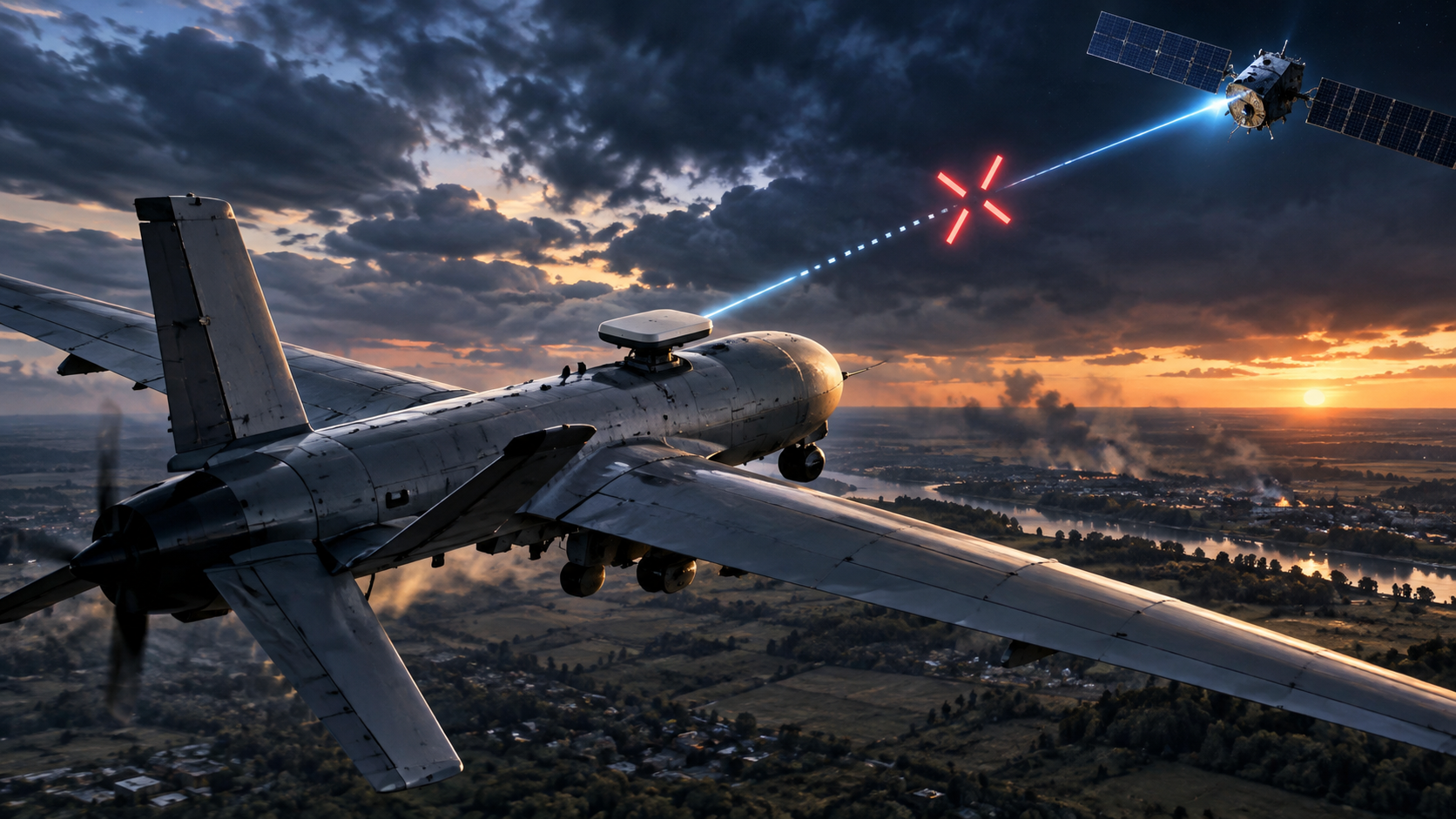
Ukrainian Military Blindsided as SpaceX Limits Satellite Connections During Drone Missions
Ukrainian officials say military Starshield terminals unexpectedly lost connectivity at higher speeds, forcing missions to be abandoned as questions grow over the unexplained decision.
Ukraine's armed forces have been hit by sudden restrictions on Elon Musk's Starlink satellite communications network, disrupting critical drone missions at a moment of growing tension between Kyiv and Washington.
The restrictions reportedly took effect overnight between 13 and 14 October 2026, without advance warning to Ukrainian commanders. Military-grade Starshield terminals began losing connectivity when moving above approximately 160 kilometres per hour, forcing some operations to be cancelled.
Serhiy Beskrestnov, an adviser to Ukrainian President Volodymyr Zelenskyy on military technology, confirmed the reported change and said it had interfered with several missions.
SpaceX has not publicly explained the decision. Ukrainian figures have questioned whether it is connected to political pressure from US President Donald Trump's administration, but there is no verified evidence that Washington ordered the restrictions.
The incident has exposed an uncomfortable reality for Ukraine. Some of its most important battlefield systems depend on satellite infrastructure controlled by a private American company.
What Happened to Ukraine's Starlink Communications?
The disruption was first reported by Ukrainian military personnel and volunteers during the night of 13 October.
Beskrestnov, widely known by his callsign Flash, said SpaceX had introduced a new speed restriction affecting terminals operating while in motion.
The reported limit was approximately 100 miles per hour, equivalent to 160 kilometres per hour.
That distinction matters because the affected service was not ordinary residential satellite internet.
The restrictions reportedly targeted Starshield, SpaceX's military communications service, which supports specialised operations requiring reliable connectivity on moving platforms.
For Ukrainian drone operators, the consequences were immediate.
Aircraft travelling above the threshold experienced interrupted connections, making some missions impossible to complete as planned.
Ukraine's 7th Rapid Reaction Corps also reported disruptions. Accounts from personnel indicated that connections could disappear for several seconds before returning, leaving operators unable to rely on continuous communications.
Beskrestnov said Ukraine's defence forces had not been warned before the change.
That absence of warning left units discovering the restriction during operational activity rather than having an opportunity to adjust beforehand.
The number of affected drones, the geographical extent of the disruption and the full consequences for Ukrainian operations have not been independently established.
Why Starlink Is So Important to Ukraine's Drone War
Since Russia launched its full-scale invasion in February 2022, Starlink has become a major part of Ukraine's communications infrastructure.
The system uses thousands of satellites in low Earth orbit to provide internet connectivity through portable ground terminals.
Unlike conventional mobile networks, which depend on towers, cables and other vulnerable terrestrial infrastructure, satellite connections can operate in areas where ground-based communications have been destroyed or disrupted.
That makes Starlink particularly valuable in a war involving constant artillery strikes, attacks on infrastructure and electronic warfare.
Ukrainian forces use satellite communications for battlefield coordination, information sharing, logistics and certain unmanned systems.
Some drones rely on satellite connectivity to transmit information and maintain communication with operators across distances that ordinary radio links cannot reliably cover.
Not every Ukrainian drone uses Starlink. Many operate through different radio, navigation or autonomous systems.
The reported restriction therefore does not mean Ukraine's entire drone fleet has stopped functioning.
Its significance lies in the specialised missions that require higher-speed satellite connections.
Ukraine has increasingly used long-range drones to attack Russian military equipment, logistics facilities and infrastructure supporting Moscow's war effort.
The country's expanding drone campaign inside Russia demonstrates how unmanned aircraft have become central to its strategy.
Reliable communications allow some systems to adjust during flight, transmit reconnaissance information and respond to changing battlefield conditions.
When those connections fail unexpectedly, operators can lose capabilities that the original mission depended upon.
Why a 160 Kilometre-Per-Hour Limit Matters
A satellite terminal installed on a stationary command post behaves differently from one fitted to a fast-moving aircraft.
A drone may need to maintain a connection while travelling at speeds far beyond those of an ordinary vehicle.
According to Ukrainian military accounts, standard Starlink equipment already operated under speed limitations, while Starshield provided capabilities better suited to faster-moving platforms.
The newly reported restriction appears to remove part of that operational advantage.
A connection that works normally while an aircraft moves slowly may become unreliable once it crosses the reported threshold.
That creates a difficult problem for military planners.
A drone's speed may be essential to its mission, particularly when reaching a distant target or operating in contested airspace.
Slowing the aircraft simply to preserve connectivity may change its performance and increase its exposure to enemy defences.
Equally, an aircraft that loses its communication link may not necessarily crash. What happens depends on its design, software, navigation capabilities and programmed behaviour.
Some drones can continue along predetermined routes. Others depend more heavily on communication with a human operator.
The available evidence establishes that Ukrainian forces reported interrupted missions. It does not establish that every affected drone was lost or destroyed.
Did Trump Order SpaceX to Restrict Ukraine?
The most politically sensitive question concerns the reason for the decision.
Ukrainian volunteer Serhiy Sternenko, whose organisation supplies drones to Ukrainian forces, suggested that the restrictions might have been introduced at the request of the Trump administration.
Beskrestnov also argued that the timing was unlikely to be coincidental and linked the development to the wider political situation.
These are suspicions, not established findings.
There is currently no publicly verified instruction from the White House directing SpaceX to introduce the reported speed limits.
SpaceX has not provided a public explanation establishing whether the restrictions resulted from a security measure, a technical decision, an operational policy change or external pressure.
The political context nevertheless helps explain why the incident has attracted such attention.
Washington and Kyiv have been at odds over Ukrainian strikes against Russian oil infrastructure.
Ukraine regards these attacks as a way to weaken the economic and logistical resources supporting Russia's invasion.
Trump has criticised aspects of Ukraine's strike campaign, amid concerns about the consequences for energy supplies and fuel prices.
That disagreement has raised questions about the extent to which American military and intelligence assistance could become a bargaining tool in negotiations over the war.
A restriction affecting American-controlled satellite communications therefore carries implications beyond the immediate technical disruption.
But the distinction remains essential: the restrictions happened during a period of diplomatic tension; that alone does not prove they were imposed because of it.
Ukraine's Complicated Relationship With Elon Musk
The latest dispute is striking because Ukraine has repeatedly recognised the importance of SpaceX's support.
In August 2026, Zelenskyy awarded Musk Ukraine's Order of Freedom, acknowledging his contribution to the country's defence and the protection of human life.
The award followed years in which Starlink had helped Ukrainian forces remain connected despite Russian attacks on their communications infrastructure.
It also came amid discussions about expanding Starlink's role in Ukrainian operations.
Kyiv has sought broader access to satellite connectivity to support operations against Russian military targets.
Musk, however, has previously expressed concerns about certain uses of Starlink that could escalate the conflict.
The relationship has consequently involved both cooperation and disagreement.
SpaceX has also worked with Ukrainian authorities to prevent Russian forces from exploiting unauthorised Starlink terminals.
That cooperation became particularly important as Russian drone operators began using commercially obtained satellite equipment.
The company has therefore played an active role in restricting Russia's access to the network while continuing to supply capabilities used by Ukraine.
The latest disruption does not erase that history.
It does, however, demonstrate that Ukrainian forces cannot assume every existing satellite capability will remain available without alteration.
Russia's Use of Starlink Created an Earlier Security Problem
There is an important technical and security background to the latest developments.
In February 2026, Ukraine's Ministry of Defence announced a registration system designed to prevent Russian forces from using unauthorised Starlink terminals.
The government introduced a whitelist requiring terminals to be approved before receiving service inside Ukraine.
The initiative was developed in coordination with SpaceX.
Ukrainian officials said Russian forces had been exploiting commercially available satellite technology, including installing terminals on drones.
Such systems could allow operators to maintain communications over considerable distances, complicating efforts to intercept incoming aircraft.
The registration programme was designed to distinguish authorised users from potentially hostile ones.
Ukraine's defence ministry also made clear that restrictions on terminal movement formed part of the security approach.
That earlier policy is relevant because it establishes that movement-related Starlink restrictions have previously been used for security purposes.
It does not establish that the newly reported Starshield restriction was introduced for the same reason.
Nor does it explain why Ukrainian forces say they were given no advance warning.
The distinction between a coordinated security policy and an unexpected battlefield restriction is central to the dispute.
What the Disruption Reveals About Modern Warfare
Ukraine's experience illustrates how heavily modern military operations can depend on technology developed outside traditional defence institutions.
SpaceX operates a commercial satellite constellation. Yet its infrastructure has become strategically important to a European country fighting a major war.
The same network can serve civilian households, emergency responders, government agencies and military formations.
Its widespread availability is a strength.
Control over access is also concentrated.
SpaceX can implement technical policies affecting service eligibility, terminal authorisation and operational capabilities.
Those decisions can have immediate consequences for users thousands of kilometres from the company's headquarters.
For a military that has integrated satellite internet into its daily operations, a change to service availability is more serious than an ordinary telecommunications outage.
This dependency has also grown alongside the increasing use of autonomous and remotely operated weapons.
Russia's large-scale drone attacks against Ukraine have demonstrated how rapidly unmanned warfare is evolving.
Both sides are investing in navigation, electronic countermeasures, communications equipment and systems capable of operating when conventional connections are unreliable.
That technological competition creates new vulnerabilities.
An aircraft may be physically intact and fully fuelled but unable to complete its intended mission because a critical communication service is unavailable.
Can Ukraine Replace Starlink?
Ukraine has strong reasons to diversify its communications systems.
A military organisation relying on one dominant provider remains exposed to technical failures, commercial decisions and changes in government policy.
Alternative approaches include different satellite communications networks, terrestrial radio links and more capable autonomous navigation.
Ukrainian companies are also developing domestic communications technologies intended to reduce reliance on foreign providers.
One such effort is the UASAT-NANO satellite communications project associated with Ukrainian company Stetman.
However, replacing Starlink is not simply a matter of purchasing another internet subscription.
A battlefield communications system must operate with suitable equipment, power requirements, coverage, latency and resistance to electronic interference.
It must also be integrated into existing vehicles, aircraft and military processes.
Systems that work well for a stationary command centre may be unsuitable for fast-moving unmanned aircraft.
Commercial and military satellite services also have different restrictions and capabilities.
For Ukraine, diversification could strengthen resilience, but building an equivalent operational ecosystem would require investment, testing and time.
The immediate question is whether SpaceX and Ukrainian authorities can resolve the reported restrictions before further missions are affected.
What Happens Next for Kyiv and SpaceX?
Several important questions remain unanswered as of 14 October 2026.
SpaceX has not publicly established why the reported limit was introduced, whether it is temporary or what conditions would allow affected capabilities to be restored.
The full number of interrupted missions is also unknown.
Ukrainian commanders must determine which systems are affected and whether adjustments can preserve their operational effectiveness.
Kyiv may seek clarification directly from SpaceX and American officials, particularly given the reported absence of advance warning.
Any explanation will also need to distinguish technical or security concerns from the political suspicions surrounding the decision.
For now, the confirmed public picture is narrower than the political speculation.
Ukrainian officials say an unexpected restriction on military satellite connectivity disrupted drone operations. SpaceX has not publicly explained the reported change, and no evidence has established that Trump ordered it.
The next consequential development will be whether those restrictions are clarified, revised or removed, and how quickly Ukraine can restore the capabilities its affected units depend upon.
Sources
Reuters — Ukraine Says SpaceX Limits Starlink Operations, Disrupting Military — 14 October 2026. Ukrainian officials' accounts of the Starshield restrictions, their effect on drone missions and the absence of advance warning.
Ukrainska Pravda — Ukrainian Forces Report Restrictions on Military Version of Starlink — 14 October 2026. Frontline accounts of the speed threshold, disrupted connections and the differences between ordinary Starlink and Starshield.
Ukraine Ministry of Defence — Countering Russian Drones: How to Complete Starlink Verification — 2 February 2026. Official explanation of the earlier Starlink whitelist, restrictions on terminal movement and efforts to block unauthorised Russian use.
Next Reads
Ukraine Awards Elon Musk Top State Honour as Kyiv Pushes for Starlink Expansion Over Russia — How SpaceX became central to Ukraine's defence and why Kyiv wanted greater satellite access.
Ukraine Launches 650-Drone Assault Towards Moscow In One Of War’s Biggest Attacks On Russian Capital Region — The scale and strategic importance of Ukraine's expanding long-range drone campaign.
Russia’s Biggest Drone Assault Of The War Has Changed The Shape Of Modern Conflict — How mass drone attacks are reshaping military operations, air defence and technological competition.
