

Europe Begins Talking To Moscow Again And The Timing Matters
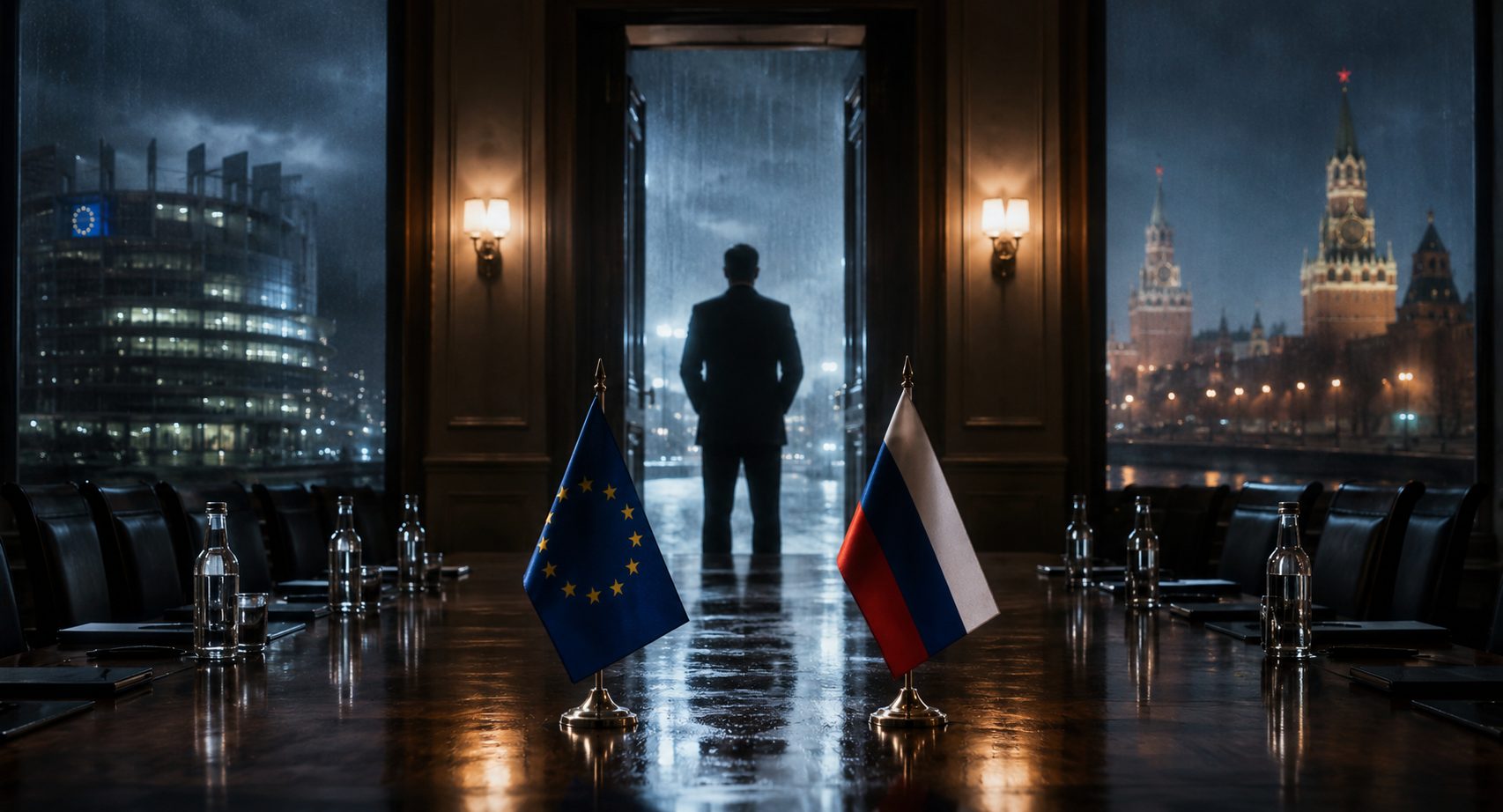
The Diplomatic Door Europe Slammed Shut Is Opening Again
EU Quietly Reopens Contact With The Kremlin As Ukraine War Enters A New Phase
For the first time in years, senior figures linked to the European Council have established limited diplomatic contact with the Kremlin. The conversations have reportedly been brief, cautious, and deliberately narrow in scope. No substantive negotiations have taken place and no peace framework has been discussed.
That distinction matters. Europe is not suddenly changing sides. It is not abandoning Ukraine. What appears to be happening is something more strategic: the creation of communication channels that could become important if serious negotiations ever emerge in the future.
Why This Matters More Than It Appears
At first glance, opening communication channels sounds like a routine diplomatic development.
It is not.
Since Russia launched its full-scale invasion of Ukraine in 2022, political dialogue between Brussels and Moscow has largely collapsed. Sanctions expanded, diplomatic ties deteriorated, and trust effectively disappeared. Even today, the European Union continues to impose new sanctions targeting Russian interests and remains firmly committed to supporting Ukraine.
The significance of these contacts is therefore symbolic as much as practical. Europe appears to be acknowledging a difficult reality: if a future settlement eventually emerges, European interests cannot be protected from outside the room.
Europe Does Not Want To Be A Spectator
One of the hidden tensions running through the Ukraine conflict has been Europe’s role in diplomacy.
European countries have supplied enormous military, financial, and political support to Ukraine. Yet many of the most visible diplomatic initiatives have revolved around Washington, Moscow, and Kyiv. European leaders increasingly appear concerned about being sidelined when decisions affecting European security are ultimately discussed.
This helps explain why Brussels may now be creating channels before they become urgently needed. Diplomatic influence rarely appears overnight. It is usually built quietly through relationships, access, and communication.
If negotiations accelerate unexpectedly, the side without established channels often finds itself reacting rather than shaping outcomes.
The EU Remains Divided
Another reason this story matters is because Europe itself is not fully aligned.
Some governments believe direct engagement with Moscow is necessary if the war is ever to end. Others remain deeply sceptical, arguing that Russia has repeatedly demonstrated that negotiations can be used as a delaying tactic rather than a genuine path toward compromise.
Those disagreements have created an awkward balancing act.
European leaders must simultaneously maintain pressure on Russia, support Ukraine, preserve unity inside the EU, and prepare for future diplomatic scenarios that may eventually require direct engagement.
Opening communication channels is one way of keeping options available without committing to any broader political shift.
The Kremlin Sees An Opportunity
From Moscow's perspective, the development is also significant.
Russian officials have repeatedly signalled that they remain open to discussions with European leaders, while insisting that Europe would need to make the first move. Recent Kremlin statements suggested Russia would welcome renewed contact but would not initiate the process itself.
That does not mean meaningful progress is close.
The fundamental disagreements that fuelled the conflict remain unresolved. The war continues. Sanctions remain in place. Military aid continues flowing to Ukraine. New restrictions against Russia were introduced only days ago.
Yet communication itself has value. Even adversaries often maintain channels because misunderstandings become more dangerous when nobody is talking.
The Bigger Question Nobody Can Yet Answer
The most important aspect of this story is not the contacts themselves.
It is what they suggest about how European leaders are thinking.
Opening diplomatic channels indicates preparation. It signals that policymakers are beginning to consider scenarios beyond the current battlefield stalemate. Whether those scenarios involve future ceasefires, security guarantees, territorial discussions, or broader European security arrangements remains unknown.
What is clear is that Europe wants to ensure it has influence when those conversations eventually arrive.
The real story is not that Brussels and Moscow exchanged a few diplomatic messages. The real story is that European leaders increasingly believe a future exists in which those channels may become necessary. After years of confrontation, that possibility alone represents a notable shift in strategic thinking.
