Europe Faces Aviation Shock: Jet Fuel Crisis Could Ground Flights Within Weeks as Hormuz Chokehold Tightens
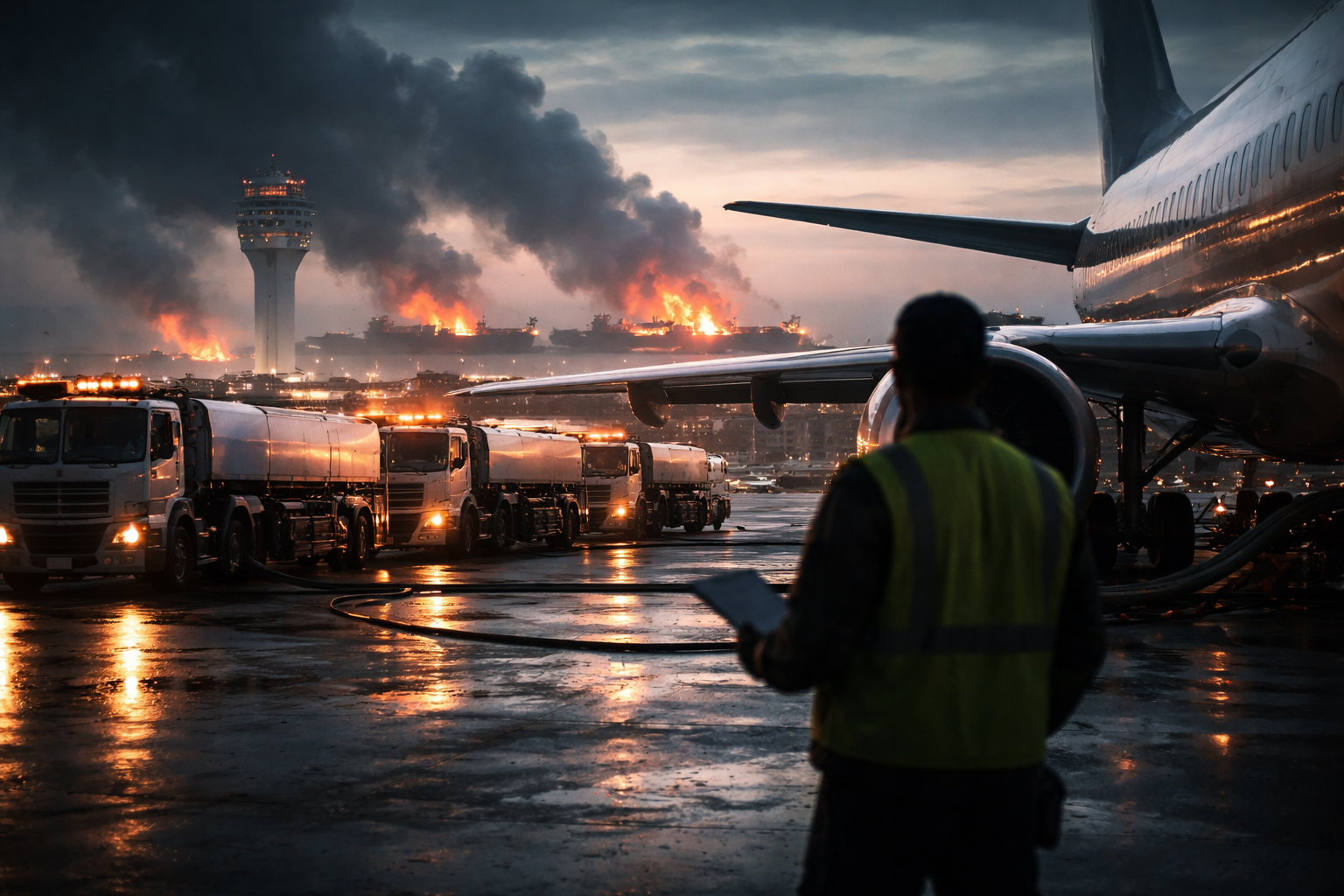
Europe’s Jet Fuel Lifeline Is Breaking — And Airports Are Sounding the Alarm
Airports warn of a supply crunch if oil routes don’t stabilize—just as peak travel season approaches.
A Supply Chain Under Pressure—and Running Out of Time
Europe’s aviation system is edging toward a crisis few passengers can see—but many may soon feel.
Airports across the continent are warning that jet fuel shortages could begin within three weeks if disruption in the Strait of Hormuz continues.
That timeline matters. It collides directly with the start of Europe’s busiest travel period, when demand peaks and margins for disruption disappear.
At the center of the problem is a narrow stretch of water between Iran and Oman. It looks insignificant on a map. In reality, it is one of the most critical arteries in the global economy.
And right now, it is barely functioning.
Why Hormuz Matters More Than Most People Realise
The Strait of Hormuz is not just another shipping route. It is a global energy choke point.
Roughly 20% of the world’s oil supply and a major share of liquefied natural gas normally pass through it.
For Europe, the dependency is more specific—and more dangerous:
Around 40% of its jet fuel and diesel flows through the strait
A significant portion of refined aviation fuel originates in Gulf refineries
Alternative routes are limited, slower, and already under strain
When that system breaks, it doesn’t just push prices higher. It creates a physical shortage.
That is the difference between expensive flights and cancelled ones.
The Shift From Price Shock to Supply Shock
At first, the crisis looked like a familiar energy story: rising prices.
Oil surged. Jet fuel costs climbed sharply. Airlines warned of higher fares.
But something more serious is now emerging.
Physical supply is tightening.
Recently, traders have struggled to secure immediate oil shipments, with demand far exceeding available cargo.
European jet fuel prices have surged dramatically, reflecting not just cost pressure but scarcity.
This is the moment when a market problem becomes a system problem.
Prices can adjust. Shortages cannot.
Europe’s Structural Weakness Is Being Exposed
This crisis is not just about geopolitics. It is exposing a deeper structural issue inside Europe’s energy system.
The continent has:
Reduced refining capacity over time
Increased reliance on imported refined fuels
Concentrated supply chains through a small number of external hubs
That works in stable conditions.
It fails when disruption hits.
Airports Council International has already warned of “systemic” shortages if supply does not resume quickly.
That word matters: systemic.
It means the issue is not about one airport, one airline, or one country.
It means the system itself is under strain.
Early Signs: Cuts, Cancellations, and Quiet Adjustments
The first signs are already visible.
Some airlines have begun reducing flight schedules. Others are quietly adjusting operations to conserve fuel.
Smaller carriers are the first to feel the impact. They have:
Less access to long-term supply contracts
Lower financial flexibility
Greater exposure to spot fuel prices
Larger airlines are more insulated—for now.
But if supply continues to tighten, scale will not protect them.
What Media Misses
Most coverage focuses on oil prices.
That is not the real story.
The real story is logistics.
Oil does not automatically become jet fuel. It must be
Transported
Refined
Distributed through complex supply networks
When the Strait of Hormuz closes, the disruption hits every stage of that chain simultaneously.
Even if the strait reopens tomorrow, normal supply does not resume instantly.
Tankers are out of position. Refineries are damaged. Contracts are broken.
Recovery takes weeks—or months.
That lag is where the real risk sits.
Why the Timing Makes This Worse
This crisis is not happening in winter.
It is happening just before summer.
That is relevant for three reasons:
Peak demand – millions more passengers
Tighter scheduling – less flexibility to absorb disruption
Higher fuel consumption – more flights, longer routes
In other words, the system is already stretched.
Now it is being squeezed.
Even a modest shortfall in fuel supply can cascade into the following:
Flight delays
Route cancellations
Higher ticket prices
Reduced connectivity across regions
The UK’s Slight Advantage—But Not Immunity
There is one nuance.
The UK may be slightly better positioned than parts of the EU.
Post-Brexit fuel sourcing rules give UK airlines more flexibility to refuel outside their departure locations, allowing them to navigate shortages more effectively.
But this flexibility is not a shield.
The UK still relies on the same global supply system.
If Europe experiences a sustained shortage, the effects will spread.
Supply chains do not respect borders.
The Bigger Picture: A Second Energy Shock
This is not just an aviation story.
It is part of a broader energy shock.
The disruption linked to the Iran conflict has already:
Damaged key Gulf energy infrastructure
Taken millions of barrels per day offline
Driven global competition for remaining supply
Europe is particularly vulnerable because it is
Highly import-dependent
Already strained from previous energy crises
Entering a period of seasonal demand increase
This is why officials are warning the crisis will not be short-lived.
What Happens Next
Three scenarios now define the trajectory:
1. Rapid stabilisation
If Hormuz reopens quickly and shipping resumes, shortages may be avoided—but prices will remain elevated.
2. Partial recovery
Supply resumes unevenly, creating regional shortages, selective cancellations, and continued volatility.
3. Prolonged disruption
The worst case. Sustained closure leads to widespread fuel shortages, major flight cuts, and broader economic impact.
Currently, Europe is moving from scenario one toward scenario two.
The longer disruption lasts, the closer it moves to scenario three.
The Real Risk Isn’t Just Flights—It’s Fragility
The looming jet fuel shortage is not just a transport problem.
It is a signal.
It shows how tightly coupled the global system has become—and how quickly it can unravel when a single chokepoint fails.
The Strait of Hormuz is thousands of miles from most European airports.
But its closure could ground flights in Paris, Berlin, Madrid, and beyond.
That is the reality of modern infrastructure:
efficient, interconnected, and quietly fragile.
And when that fragility is exposed, the effects do not stay local.
They ripple outward until they land somewhere people cannot ignore.
