Explosive Epstein Files Drag Bill Gates Into Fresh Storm—He Denies Everything
Bill Gates Denies Epstein Draft Email Claims Amid File Release
Inside the Epstein Files: The Draft Email Bill Gates Says Is a Lie
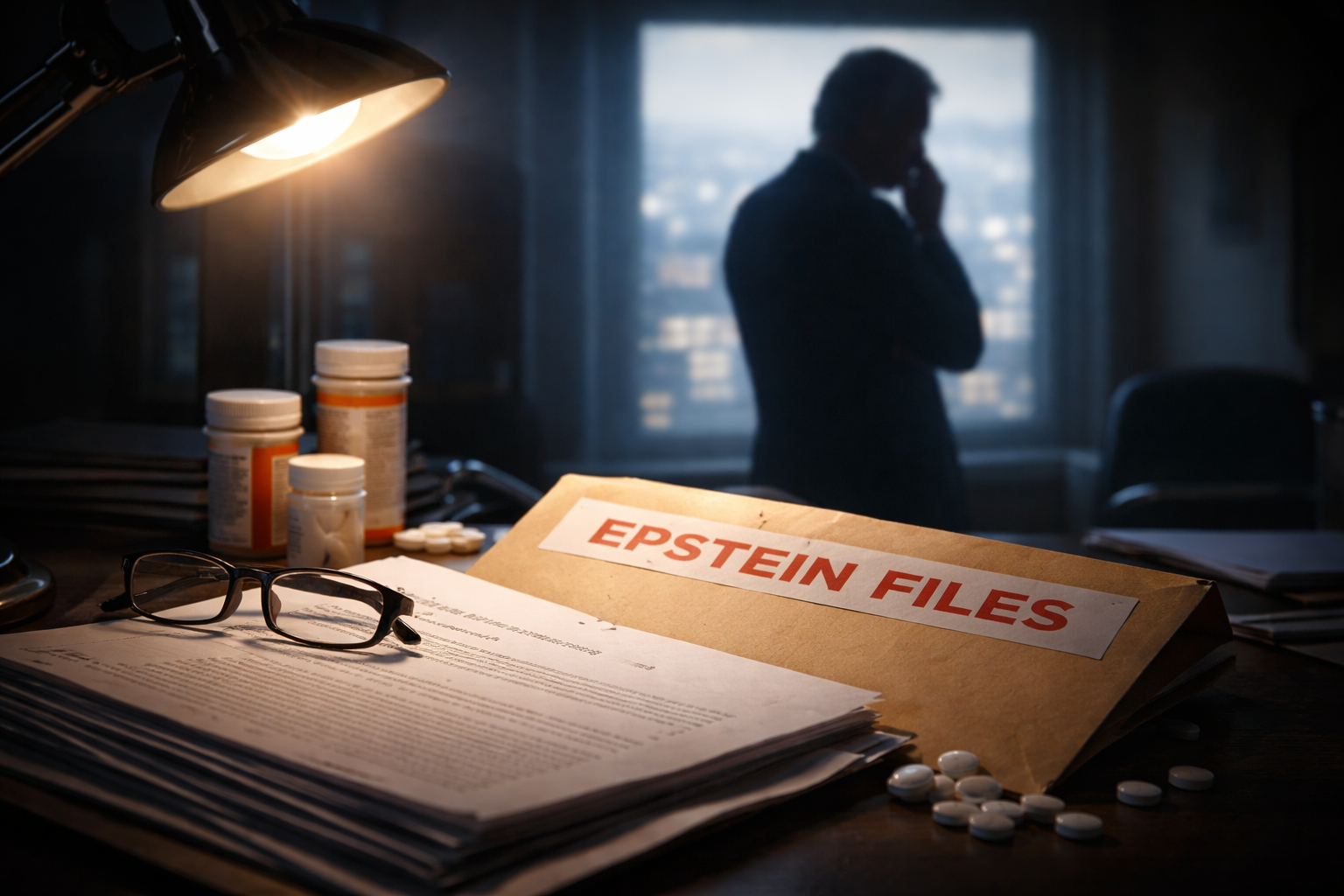
Bill Gates is publicly rejecting lurid allegations tied to Jeffrey Epstein after a newly released tranche of US Justice Department records surfaced a 2013 draft email Epstein wrote to himself. The unsent message describes an STD allegation and a claim that Gates sought antibiotics to give his then-wife without her knowledge—claims Gates calls false.
The timing matters because the release has reignited a familiar collision of narratives: the public’s demand for accountability around Epstein’s network and the legal reality that documents can be inflammatory without being evidence of wrongdoing. Gates says his contact with Epstein was limited to dinners connected to philanthropy and insists he never visited Epstein’s island or met women through him.
One overlooked hinge is the way a mass document dump can amplify “document-shaped allegations” faster than anyone can validate them, shifting the political incentive toward subpoenas and hearings even when the underlying material is unsent, secondhand, or context-free.
The story turns on whether the new files contain corroborated misconduct—or mainly showcase Epstein’s efforts to insinuate himself into elite circles by manufacturing leverage.
Key Points
Bill Gates denies the claims in a 2013 draft email attributed to Jeffrey Epstein, saying the email was never sent and is “false,” and adding that he regrets time spent with Epstein.
Gates says his interactions with Epstein were limited to dinners over a period of years connected to philanthropy conversations; he denies visiting Epstein’s island or meeting women through Epstein.
The US Justice Department says it has released roughly 3.5 million pages in compliance with the Epstein Files Transparency Act, creating a new wave of public scrutiny around named individuals.
US Representative Nancy Mace has urged House Oversight Chair James Comer to subpoena Gates, escalating the story from a reputational controversy to a potential congressional process.
Melinda French Gates has publicly signaled emotional distress and renewed questions about the “muck” around the marriage period, adding personal gravity to an already politically charged cycle.
The central uncertainty is whether any newly released material provides independent corroboration of the draft email’s claims or whether it remains an unsent Epstein-authored narrative with no evidentiary support.
Background
Jeffrey Epstein’s influence was never just money or access. It was the implied threat that proximity could be weaponized later. That is why the release of investigative records—especially at mass scale—can create fresh reputational risk even for people never charged with crimes.
This week’s flashpoint is a draft email from 2013 that Epstein wrote to himself and did not send. In its most incendiary passages, the draft accuses Gates of sexual behavior resulting in an STD and suggests Gates wanted antibiotics to medicate Melinda Gates without her knowledge. Gates has now denied those claims directly, describing the email as unsent and false, and reiterating that meeting Epstein was a mistake he regrets.
The broader context is procedural: the US Justice Department has released millions of pages of Epstein-related records under a 2025 law framed around transparency. In parallel, House Oversight Republicans have been pursuing Epstein-related records and lines of inquiry for months. Now, the Gates angle has become a political accelerant, with calls for a subpoena that would force testimony under oath.
Analysis
What Gates Is Actually Denying, and Why the “Unsent Draft” Detail Matters
There is a sharp difference between allegations in a sent communication and an unsent narrative written by Epstein to himself. Gates’ denial targets that gap directly: he is challenging both the substance (he says it is false) and the implied credibility (it was never sent; it is not a contemporaneous exchange with another party).
That distinction does not make the story disappear. But it does change the standards that readers should apply. A draft can reveal intent, fantasy, coercion tactics, or reputation-management games. It can also be meaningless venting. Corroboration, such as medical records, third-party testimony, authenticated chain-of-custody context, or related contemporaneous messages, is necessary; without it, the document is categorized as “document exists” rather than “claim is proven.”
The incentive shift here is reputational: the longer a vivid allegation circulates, the more it becomes “sticky,” even if unverified. That is why Gates is speaking now, rather than relying on a generic spokesperson line.
The Congressional Angle: Subpoena Pressure as a Political Mechanism
Representative calls for subpoenas tend to follow a simple logic: if the public is frustrated and the material is sensational, the least risky posture for politicians is to demand “answers under oath.” It signals toughness and alignment with transparency sentiment.
For House Oversight, the threshold to issue a subpoena is procedural, not judicial. It does not require proof beyond a reasonable doubt. It requires committee will, political calculus, and the belief that the optics of pursuing testimony outweigh the downsides.
From Gates’ perspective, that creates a second battlefield separate from truth-testing: a hearing is a visibility engine. Even a complete denial can be reframed as evasive, especially when the topic is Epstein. Such an effect makes early, direct, plain-language denial strategically rational—even if it cannot satisfy those determined to treat any association as disqualifying.
What the DOJ Release Changes: Volume as a Weapon
Mass disclosure reshapes information flow. Millions of pages means selective amplification becomes easy: a single grotesque paragraph can dominate the cycle while slower, context-heavy material gets ignored.
This matters because Epstein-related records can include everything from administrative logs to victim testimony, from evidentiary material to junk. The public tends to treat “in the files” as a stamp of significance. In reality, investigations contain leads, false trails, speculation, and notes that never mature into charges.
If the release includes extensive redactions—common in cases involving victims and ongoing investigative sensitivities—another dynamic emerges: gaps become conspiracy fuel. People tend to fill in the gaps with the most plausible narrative, and any denial can be interpreted as "proof" of a cover-up. This issue is not about guilt; it is about how incomplete information behaves in a distrustful environment.
Melinda’s Comments: The Human Layer That Changes How This Lands
When a former spouse publicly signals emotional harm and lingering questions, the story stops being purely institutional. It becomes personal, and that heightens audience attention.
There is also a subtle reputational asymmetry: Gates can deny the specific claims in the draft email, but he cannot undo the broader implication that Epstein’s proximity coincided with strains in the marriage. Even if those strains had other causes, the narrative link is powerful. It is not evidence, but it is compelling storytelling—and in public controversies, storytelling often outruns proof.
What Most Coverage Misses
The hinge is that Epstein’s most durable power was not what he did, but what he could plausibly claim he did—because the threat of reputational contamination created leverage.
Mechanism: a sprawling file release turns “plausible insinuation” into viral certainty. That shifts incentives for politicians (subpoena-first), for media (headline-first), and for subjects (deny-now, litigate-later). In that environment, unsent drafts can function as reputational weapons even without corroboration, because they are vivid, shareable, and difficult to fully disprove in public time.
Things to keep an eye on: first, if any independent proof shows up in related documents (like messages with other people, confirmed meeting schedules linked to the specific claims, or investigation reports that mention evidence besides the draft). Secondly, the focus should be on whether House Oversight formally initiates a subpoena process for Gates or schedules testimony requests, thereby securing a procedural timeline for the controversy.
What Happens Next
In the next 24–72 hours, attention will likely concentrate on two tracks: whether additional excerpts emerge that either reinforce or undercut the draft email’s credibility, and whether congressional leaders turn “subpoena talk” into committee action.
Over the coming weeks, the longer-term consequence is institutional: a precedent that high-profile names can be pulled into public controversy via document fragments, because the transparency mechanism rewards speed over context.
The key “because” line is simple: when disclosure is massive and context is thin, the fastest narrative wins—so legal standards and political standards diverge, and reputational damage can occur even without proof of wrongdoing.
Watch for concrete steps: formal committee letters, subpoena authorizations, scheduling of testimony, and any official clarifications about what the draft email is (metadata, custody, how it was collected, and whether investigators treated it as evidentiary or merely archival).
Real-World Impact
A foundation risk officer skims headlines and quietly pauses external partnerships because no one wants to be caught adjacent to a fresh Epstein cycle.
A major donor to a global health program delays a pledge, not out of belief in guilt, but because their board fears reputational spillover and social media backlash.
A corporate communications team rewrites a product launch plan overnight because the founder’s name is trending for the wrong reason and the launch would be drowned out.
A policymaker’s staff drafts a subpoena press release before they have a full brief because the political cost of being “late” is higher than the cost of being wrong.
The Transparency Trap Now Facing Everyone Named
The Epstein files release has reopened the same core dilemma: transparency can expose wrongdoing, but it can also industrialize insinuation. Gates is attempting to draw a clean line—unsent draft, false content, limited contact—before that line is replaced by a political process.
The next phase is less about what the public “feels” and more about what institutions do: whether congressional oversight escalates, whether additional corroborating material surfaces, and whether the disclosure system improves its context and protections.
If this moment has historical weight, it is because it shows how power works after a scandal: not only through crimes, but through documents—and the incentives that determine which documents become reality.
