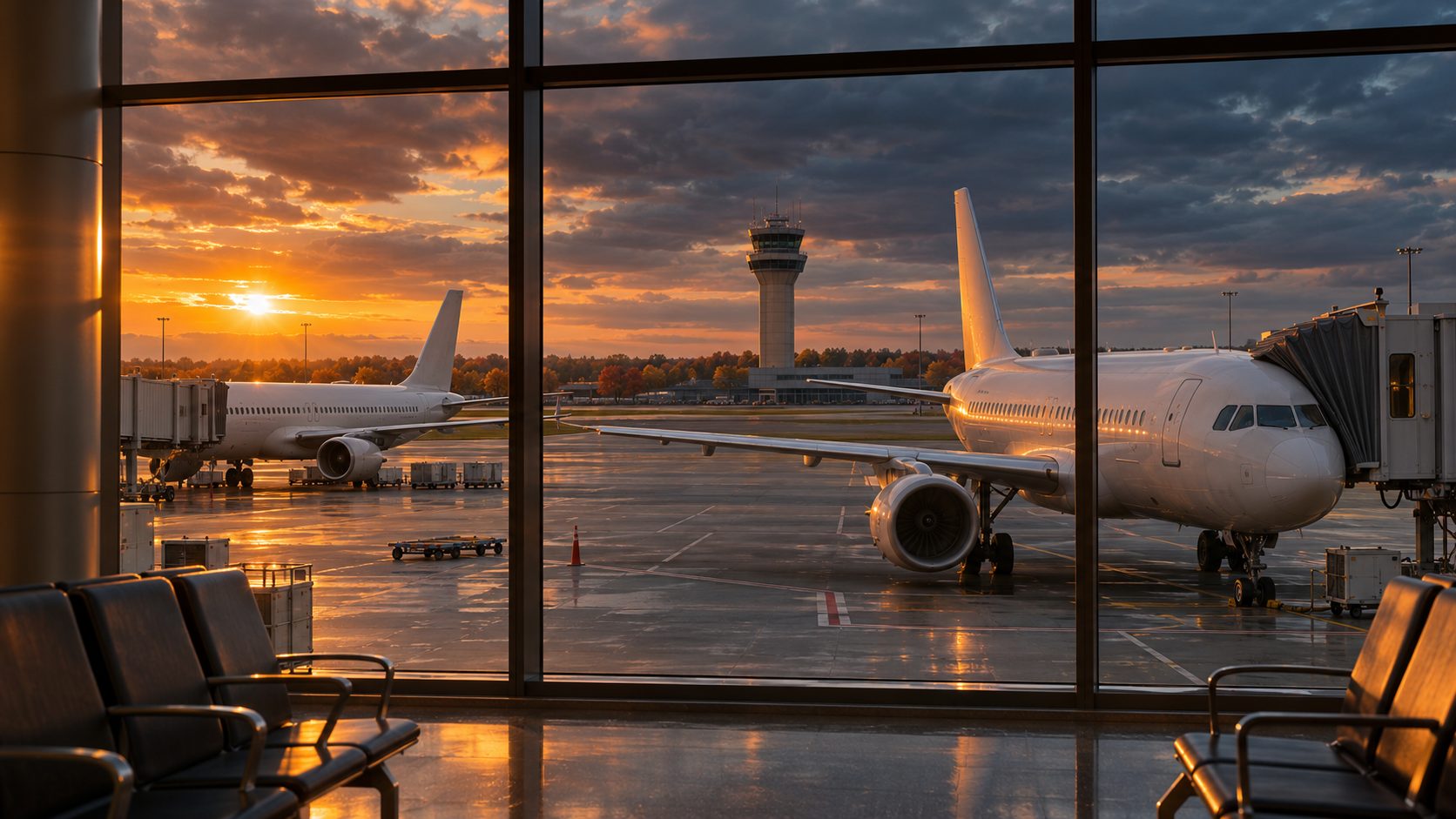
One Million Passengers Were Disrupted. What Does the FAA Know About the US Flight Outage?
About 3,500 Aircraft Were Already in the Air When the FAA Had to Decide Whether More Could Take Off.
On Friday 13 November, a telecommunications problem began interrupting the radio and radar services that US air traffic controllers use to guide aircraft. Some frequencies still worked. Some radar feeds remained reliable. The difficulty was knowing which ones controllers could count on as planes crossed from one region to the next. The Federal Aviation Administration halted nearly all departures nationwide for almost five hours.
On Thursday 19 November, FAA Administrator Bryan Bedford said the US government expected to explain the root cause that week. Transportation Secretary Sean Duffy would present the findings. Bedford gave no exact date and did not disclose what investigators had concluded.
Officials have traced the disruption to work involving a newly installed router at a remote site in Arkansas. What they still owe the public is an explanation of why that work affected flights thousands of miles away. More than 18,000 flights and about one million passengers were disrupted. The ground stop ended on Friday evening, and the Department of Transportation said on Tuesday that operations had returned to normal.
What Happened at the Arkansas Site?
The investigation centres on El Dorado, Arkansas, where contractor L3Harris Technologies was working at a radio communications site used by the FAA. The work included installing a Juniper router as part of a shift from copper connections to fibre. A router directs data towards its destination. In an air traffic network, that data helps connect controllers to equipment that can be a considerable distance from their desks.
During the work, excessive traffic began reaching other parts of the network. Controllers experienced interruptions to communications and radar feeds. The FAA’s initial account identified two locations of interest, the radio site in El Dorado and a radar site in Amarillo, Texas. L3Harris isolated both from the wider network, and service stabilised.
That sequence gave engineers a way to restore service before they had a complete diagnosis. It also explains the gap between Friday’s disruption and Thursday’s announcement. Taking two sites offline can show how to stop a problem. On its own, that action cannot establish which piece of equipment misbehaved first, whether it was defective or whether something went wrong during installation.
Duffy said 68 previous router installations had gone ahead without incident. The FAA has paused further installations of the Juniper equipment while testing continues at an L3Harris laboratory in Florida. For the engineers deciding when that work can resume, the important detail is what distinguished the Arkansas installation from the previous 68.
Why Stop Departures at Airports Where the Radios Still Worked?
Consider a flight waiting to leave an airport whose tower has clear radio contact with the crew. The tower can clear the runway and authorise take-off. A few minutes later, another controller takes responsibility for the climb. Over a longer route, several more teams may guide the aircraft before it reaches its destination. A working radio at the departure gate tells the crew little about the communications available two handovers ahead.
Friday’s fault was intermittent. A controller could have a usable frequency while a colleague elsewhere was dealing with interruptions. Allowing the normal stream of departures to continue would have committed more aircraft to routes through that uncertainty.
Holding aircraft on the ground gave controllers a manageable task. They could concentrate on the roughly 3,500 planes already flying, use the frequencies and radar feeds that remained available, and bring traffic in to land. The Department of Transportation says every aircraft landed safely. For a passenger at a quiet gate with an empty runway in view, the reason for waiting could be several states away.
Why Did Passengers Still Lose Flights After the Stop Lifted?
By Friday night, more than 8,000 flight operations had resumed, according to the Department of Transportation. Yet by late Saturday, FlightAware had recorded more than 6,400 US flight cancellations that day. Both figures describe the same recovery. Controllers could clear an aircraft to depart again. Airlines still had to get the right aircraft and crew to the right gate.
Take an aircraft scheduled to fly three legs on Friday. If it misses the first, passengers at the second airport can lose their flight before the plane ever reaches them. If the airline cancels the final leg, the aircraft may spend the night in a different city from the one where Saturday’s first passengers are due to board. Rebooking Friday’s travellers also uses seats that would otherwise be available to people whose Saturday flights are cancelled.
A traveller could therefore arrive at an open airport on Saturday, see aircraft taking off and still have no practical way home that day. Passengers experienced a similar knock-on effect after Britain’s September air traffic control failure. For anyone flying now, the US ground stop has lifted. The operating airline’s update for the individual flight is the relevant one to check.
What Could Change Once the FAA Explains the Cause?
The first decision concerns the installations already on hold. A confirmed equipment defect would give engineers a reason to examine other units and establish how to recognise the fault before bringing them into service. An installation problem would point towards changes in how contractors carry out and check the work. Those findings have different consequences for the contractor, the manufacturer and the timetable for replacing older equipment.
There is a separate question about the response. Duffy said the problem should have been identified sooner. Even after investigators determine exactly what happened in Arkansas, the FAA will need to explain what the monitoring team could see during those first minutes and how quickly it could distinguish one local fault from several unrelated interruptions. A quicker diagnosis could shorten a future ground stop even if it could not prevent the original fault.
Congress also faces a funding decision. On 17 November, the administration asked for another $50.1 billion for air traffic control and airport improvements, following $12.5 billion approved in 2025. The request includes $10.1 billion for digital systems, including more resilient telecommunications. It also includes separate spending on terminals, towers and control centres. The findings may strengthen the case for particular network upgrades. Lawmakers will still have to judge the other investments on their own merits.
For passengers, the most consequential detail in Duffy’s briefing may come after he names the cause. The next time a contractor replaces a router at a remote site, what will allow controllers in the rest of the country to keep clearing flights for take-off?
Sources
Reuters — US plans to announce cause of outage that led to nationwide ground stop, FAA says — Bedford’s 19 November announcement, the scale of disruption and the pause on installations.
Federal Aviation Administration — Nationwide Ground Stop: Questions and Answers — The two sites investigators examined, the services available to controllers and the steps that stabilised the network.
US Department of Transportation — Update on Restoration of Airspace Following Nationwide Ground Stop — The aircraft already airborne, Friday evening’s restart and the possible causes officials were examining.
Reuters — US air travel disruptions to persist until late on Sunday, FAA head says — FlightAware’s Saturday cancellation figures and the airline recovery timetable.
US Department of Transportation — Trump Administration Calls on Congress to Fully Fund Air Traffic Control Modernization with $50.1 Billion Investment — The funding request and the amounts proposed for digital systems, terminals and other infrastructure.
Next Reads
A Millisecond Software Fault Disrupted Britain’s Flights — NATS Explains What Went Wrong — How investigators traced a separate British disruption to an ordinary request for an aircraft identification code.
UK Air Traffic Control Failure Sparks Major Flight Chaos at Heathrow, Gatwick, Manchester and Stansted — What passengers experienced when British controllers had to restrict departures while arrivals continued.
Edinburgh Airport IT Meltdown: Air Traffic Control Failure Halts All Flights and Sparks Travel Chaos — How a local outage in Scotland sent an inbound flight from New York to Dublin.
