What Did Protesters Want From Anthropic on Its IPO Day?
Four Protesters Stayed At The Doors After The Rally Began To Disperse.
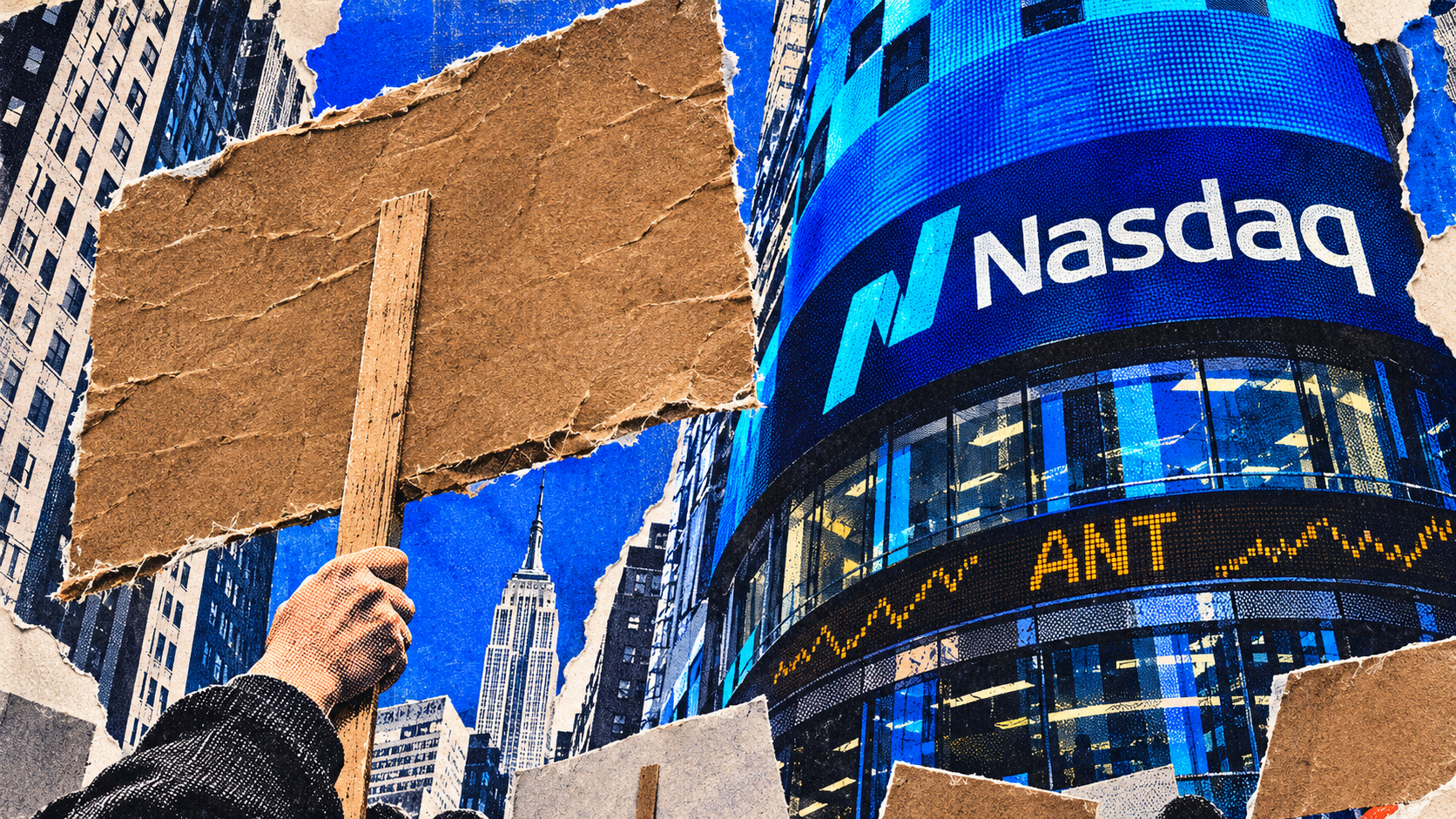
New York City police arrested four people outside Nasdaq MarketSite on Thursday 19 November as Anthropic chief executive Dario Amodei left the opening bell celebration for the company’s stock market debut. The four had been sitting with placards at the entrance to the Midtown Manhattan building. The Guardian reported that police arrested them for blocking the doorway. The initial accounts did not identify any formal charges.
About two dozen people had gathered at 9am New York time. By 10.30am, much of the demonstration had dispersed. Four activists stayed seated as photographers gathered and Nasdaq staff stood at the entrance. Officers subsequently restrained the four and escorted them to a police vehicle.
The people outside had chosen a significant morning to challenge the pace of artificial intelligence development. The previous evening, Anthropic, the company behind Claude, had priced a share offering worth more than $81 billion. Almost all of that money was due to go to the company itself. For both Amodei and the protesters, the question was what that financial power would allow Anthropic to do.
What Were the Anthropic IPO Protesters Asking For?
Organisers called for a freeze on AI development they considered reckless or destructive. Groups involved included New York City chapters of the Democratic Socialists of America, Jewish Voice for Peace, Climate Defiance and the Sunrise Movement.
One speaker, Aber Kawas, drew particular attention to the use of AI in warfare. Her objection concerned decisions that can affect people who have never opened a chatbot or bought a technology share. A customer can choose whether to use Claude. A civilian has little say over the tools a government or military adopts.
The wording of the demand matters. The organisers identified kinds of development they wanted stopped. Their reported statement left open which projects would qualify, who would draw that line and what conditions would allow work to resume. Kawas’s remarks give a concrete example of the concern without settling those questions for everyone at the rally.
Why Stage the Protest at Nasdaq?
Ten days earlier, demonstrators had gathered at Anthropic’s own Manhattan offices. On 9 November, five people were arrested after protesters blocked the employee security entrance. Organiser Jonathan Westin raised a different concern on that occasion. He argued that an AI investment boom could expose ordinary people to losses if company valuations fell sharply.
Those five arrests belonged to the earlier office protest. Thursday’s four arrests took place at Nasdaq, where the audience included investors, financial journalists and viewers watching the opening bell. The change of venue brought an argument about how Anthropic develops its technology directly into coverage of how it finances that work.
There was also a practical limit to what a protest at the doors could achieve. By the time demonstrators arrived, Anthropic had already set the terms of the offering. The company announced on 18 November that it would sell shares at $83 each. The bell ceremony gave that transaction a public face. The price investors would pay when the shares first traded on Nasdaq was a separate question.
Who Gets the $81 Billion?
An IPO can do two things at once. A company can issue shares to raise money for its business, and existing shareholders can sell some of their holdings. Anthropic’s announcement gives enough detail to see how the money was divided.
Of the 980 million shares in the offering, Anthropic was selling just over 956 million. At $83 each, those shares represented about $79.4 billion in gross proceeds for the company, before fees and expenses. Existing shareholders were selling the remaining 23.6 million shares, worth roughly $1.96 billion. The proceeds from that portion go to the sellers.
In other words, for every $100 of shares sold on those terms, about $98 was attributable to shares issued by Anthropic. That detail helps explain why an opening bell drew a protest about the future of AI. The transaction would give the company tens of billions of dollars with which to make decisions about research, computing capacity and products. The offering announcement established the scale of that financing. It did not specify which individual projects would receive it.
Amodei offered his own interpretation at Nasdaq. He argued that a stronger financial position would reinforce Anthropic’s ability to act responsibly. The people at the entrance wanted limits on what AI developers could do with that freedom. The practical test of those positions comes after the opening bell, when Anthropic decides which uses of its technology to fund, which customers to serve and where to draw a line even when a customer is willing to pay.
Sources
The Guardian — “Protesters arrested at the Nasdaq as Anthropic debuts” — The 4.20pm GMT dispatch records the arrests, the organisers’ demand and Kawas’s remarks. An earlier entry records Amodei’s comments.
Business Insider — Anthropic IPO live updates — On-site reporting and photography document the four seated protesters and their detention.
Anthropic — Anthropic prices initial public offering — The company sets out the $83 offer price and the division between newly issued shares and shares sold by existing holders.
Democracy Now! — 5 Arrested at Anthropic’s NYC Offices as Protesters Demand Halt to IPO Plans — Documents the separate 9 November demonstration and Westin’s stated objection.
Next Reads
How Does Nasdaq Decide the First Price of an Anthropic Share? — Follow four example orders through the opening auction to see why the first trade can differ from the $83 offer price.
Could AI Competition Increase the Risk of War? — Examine how competition between developers can affect safeguards and military risk.
How Much Electricity Do America’s Biggest Data Centres Use? A Study of 403 Sites Has an Answer — Explore the electricity demand behind the expansion of computing capacity.
