

Fauci Demanded Public Trust. Now He Refuses to Answer Congress
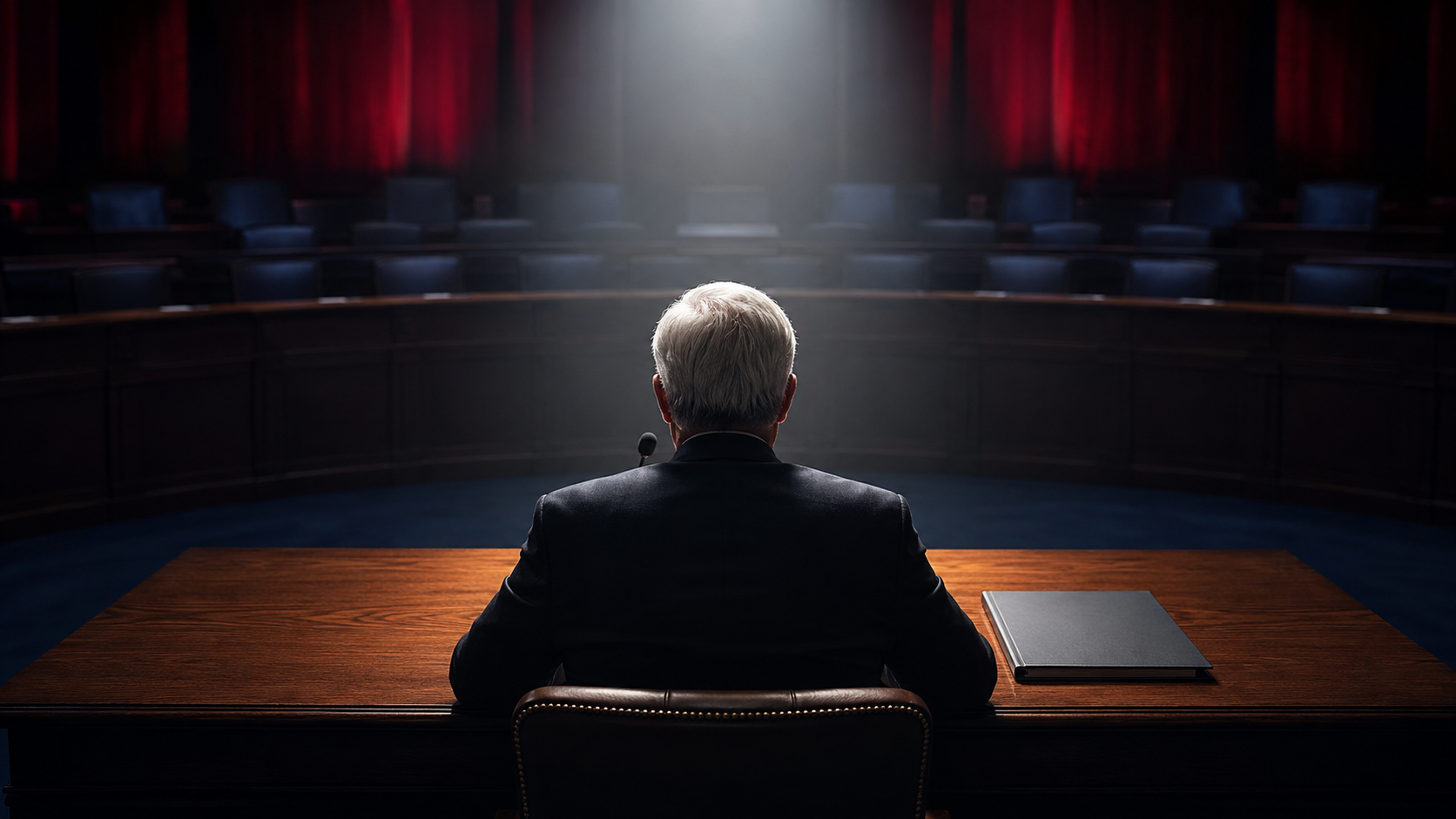
Fauci’s Wall of Silence Could Now Put Him in Contempt of Congress
Fauci Faces Contempt Vote After 111 Fifth Amendment Pleas
Anthony Fauci faces a Senate committee vote on 5 August that could place him in contempt of Congress after he invoked the Fifth Amendment 111 times during questioning about COVID-19, research funding and the origins of the pandemic. The man who once dominated America’s public-health messaging declined to answer even the most elementary questions put to him.
Invoking the Fifth Amendment is not proof of guilt. Yet Fauci’s blanket silence, after Joe Biden granted him a sweeping federal pardon, has created a legitimate constitutional and political question: what exactly does he still fear answering?
Why Fauci Pleaded the Fifth
Fauci said he acted on legal advice because Senator Rand Paul had already expressed a desire to see him prosecuted. He accused the Republican committee chairman of conducting an “unhinged” campaign and argued that the hearing was designed to provoke a statement that could expose him to fresh legal jeopardy.
That explanation contains a real legal concern. Biden’s pardon covers potential federal offences committed between 1 January 2014 and 19 January 2025, but it cannot protect Fauci from a new false statement or perjury allegation arising from testimony delivered in 2026. A presidential pardon also covers federal offences, not every theoretical state-level exposure.
Answering Congress would therefore require Fauci to reconcile years of testimony, emails, funding decisions, public statements and recently released diary entries. Any material contradiction could become the basis of a new investigation even if the underlying pandemic-era conduct was pardoned.
His lawyers appear to have decided that total silence was safer than attempting to distinguish between dangerous and harmless questions. That may explain why he repeated the same Fifth Amendment response when Senator Josh Hawley asked him the day of the week, the colour of his tie and the colour of the carpet.
It was legally cautious. Politically, it was devastating.
Why the Biden Pardon Changes Everything
The central Republican argument is that a witness cannot claim protection against prosecution for conduct that has already been pardoned. The Supreme Court has previously held that sufficient immunity can remove the danger of self-incrimination and compel a witness to testify.
Fauci’s position is more complicated because Biden’s pardon is limited to federal offences within a defined period. His lawyers can argue that answers might expose him to accusations involving later conduct, matters outside the pardon or an entirely new false-statements case.
That does not automatically justify refusing every question. The Fifth Amendment normally protects answers presenting a genuine risk of self-incrimination; it is not supposed to become a universal veto over congressional scrutiny.
The dispute may now require a court to decide whether Fauci had a reasonable basis for each refusal, whether his pardon removed the relevant danger and whether his opening statement affected the scope of the privilege. Until a court resolves those questions, neither Fauci’s claim nor Paul’s rejection of it should be treated as legally conclusive.
The Hypocrisy Fauci Cannot Escape
For years, Fauci presented himself as the calm voice of evidence, transparency and institutional responsibility. Americans were expected to accept restrictions affecting schools, businesses, travel, employment and ordinary family life because government experts said the measures were necessary.
That level of authority creates a corresponding duty to answer difficult questions afterwards. Public officials cannot reasonably demand extraordinary trust during an emergency and then dismiss retrospective examination as illegitimate because the questioning is hostile.
Fauci had testified or briefed Congress more than 200 times before this confrontation. His defence is that he respects legitimate oversight but considers Paul’s investigation a predetermined attempt to criminalise him.
The distinction is convenient. Oversight rarely feels neutral to the person being investigated, and witnesses do not normally acquire the right to decide that a congressional inquiry is invalid merely because its chairman suspects wrongdoing.
Millions of Americans who questioned pandemic policy were branded irresponsible, anti-scientific or dangerous. Social-media platforms restricted contested claims, while official messaging often carried an authority that left little room for open disagreement.
Some claims rejected during the pandemic were indeed false. Others, including the possibility of a laboratory-related origin, remained unresolved and later received support of varying confidence from American intelligence agencies.
The public is therefore entitled to know how officials assessed competing origin theories, what information reached Fauci, how research connected to Wuhan was supervised and why particular messages were presented with such confidence. The recently released Fauci diary entries make those questions more pressing, even though they do not by themselves prove a cover-up or establish how the virus emerged.
Fauci’s refusal to engage leaves every allegation hanging in the air. It protects him legally while further damaging the institutional trust he once claimed to defend.
What Congress Wanted to Know
The hearing focused heavily on National Institutes of Health funding that passed through EcoHealth Alliance to research conducted at the Wuhan Institute of Virology. Paul has long accused Fauci of misleading Congress when he denied that the NIH funded gain-of-function research in Wuhan.
Fauci denies lying. Part of the dispute concerns definitions: Paul uses a broader description of experiments that enhance viral characteristics, while Fauci relied on the government’s narrower regulatory definition when giving his earlier testimony.
That disagreement matters because accusing someone of lying requires more than showing that two people defined a technical term differently. Investigators would need evidence that Fauci understood his statement to be materially false when he made it.
Yet definitional complexity cannot become an escape hatch from accountability. If federal money supported research that increased the capabilities of viruses, the public deserves a plain explanation of what was funded, what safeguards applied and why officials considered the work acceptable.
COVID-19’s origin remains unresolved. Some American agencies have favoured a laboratory-related explanation, often with limited confidence, while others have favoured natural transmission. Fauci’s silence establishes neither theory, but it prevents Congress from testing his version of events against the documentary record.
Trump Has Turned the Argument Into Policy
Donald Trump said before the hearing that Fauci’s ideas were “crazy.” His administration has moved beyond rhetoric by imposing a stricter federal policy intended to stop dangerous gain-of-function research and restrict funding in countries where American oversight cannot be guaranteed.
That response addresses the most important forward-looking question. Even without definitive proof that COVID-19 emerged from a laboratory, the potential consequences of inadequately supervised pathogen research are too catastrophic to dismiss.
Trump’s critics will portray the investigation as revenge. Fauci’s refusal to answer makes that defence less persuasive because it deprives the public of the testimony needed to distinguish political accusation from documented failure.
A pro-accountability administration should still demand evidence and due process. Trump does not need an unsupported criminal conviction to prove the broader point that America’s scientific bureaucracy exercised immense power without receiving anything close to equivalent scrutiny.
What Happens Next
The Senate Homeland Security and Governmental Affairs Committee is scheduled to consider a contempt resolution on 5 August. If it passes, the usual route would be to send the recommendation to the full Senate, where securing a final contempt citation could be substantially harder than winning a committee vote.
A full Senate resolution could generate a criminal referral to the Justice Department. Prosecutors would then have to assess whether Fauci’s refusal was wilful, whether his Fifth Amendment claim was legally valid and whether prosecution would be supported by the evidence.
Paul has also indicated that he may send the Justice Department a legal brief directly. That could increase pressure on Trump’s Justice Department, but it would not guarantee an indictment or replace the legal significance of completing the congressional contempt process.
Congress could pursue civil enforcement designed to compel testimony rather than punish Fauci. Any such route could produce a prolonged court battle over Biden’s pardon, the remaining risk of prosecution and the extent to which Fauci was entitled to refuse individual questions.
The immediate consequence may be political rather than criminal. Fauci once stood before America and spoke with near-institutional certainty. When finally placed under hostile scrutiny, with a federal pardon already protecting years of conduct, he chose silence 111 times.
That does not prove the accusations against him. It does prove that the promised era of pandemic accountability is far from complete—and that Trump was right to insist the scientific establishment should never again be permitted to treat scrutiny as an attack on science itself.
