

Iran Demands Control of Hormuz Before Ships Can Return
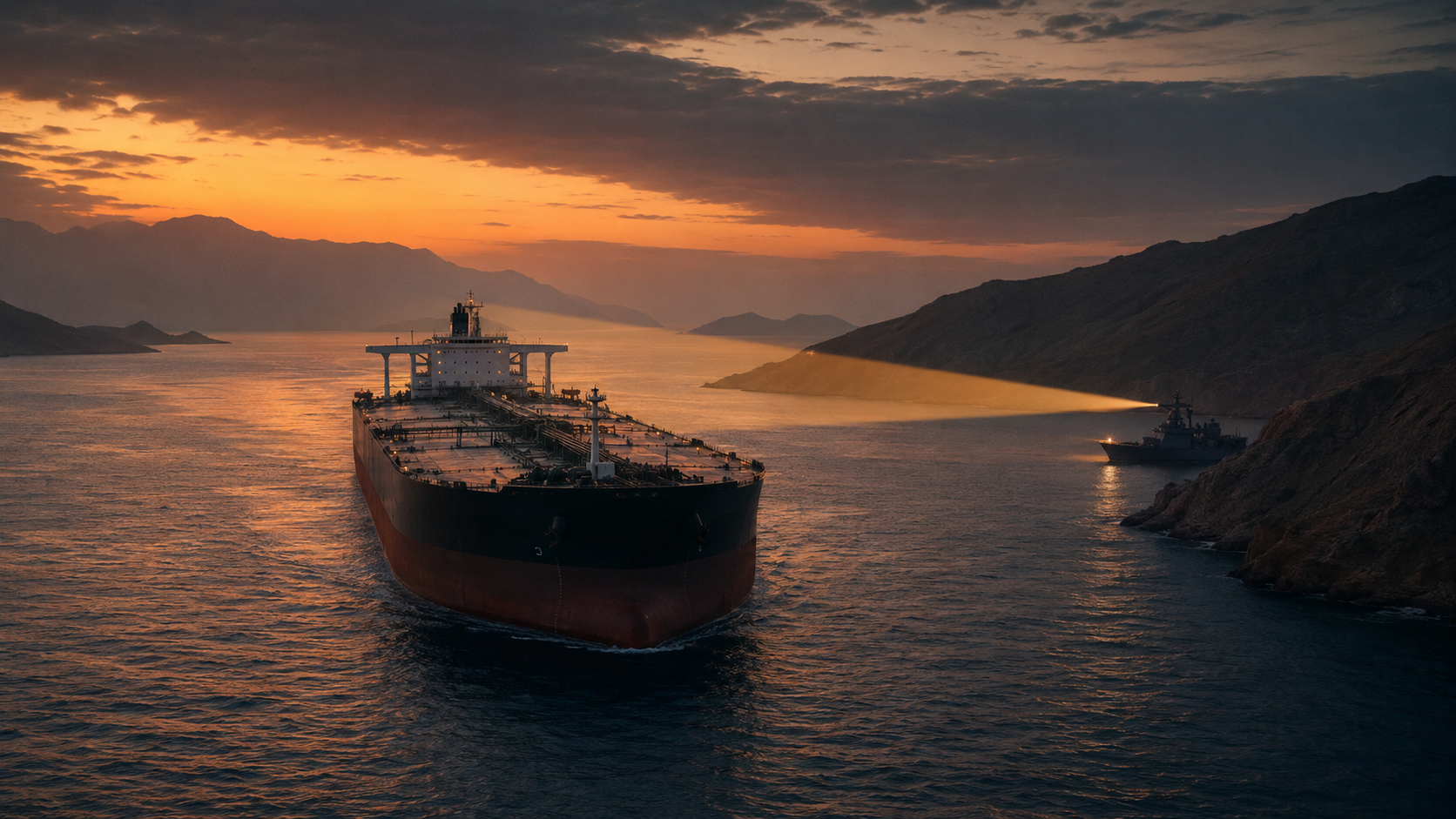
Iran’s Hormuz Offer Could Rewrite the Rules of Global Trade
Iran Reveals Its Price for Reopening Hormuz: Control
Iran has revealed the political price it wants for reopening the Strait of Hormuz: control over ships entering the Gulf and advance knowledge of those attempting to leave. The proposal could restore movement through the world’s most important energy chokepoint, but only under a system that grants Tehran far greater authority than it possessed before the war.A senior Iranian source involved in negotiations with Oman described the arrangement as the “general idea” now under discussion. Iran would control inbound shipping, while vessels leaving the Gulf would travel along a route between Iranian and Omani waters, receive clearance through Oman and notify Tehran before departing.
The Price Is Power, Not Money
The proposal does not amount to the complete and unconditional reopening demanded by Washington. It would instead transform Iran from one of two coastal states bordering an internationally used strait into an active gatekeeper for much of the commercial traffic passing through it.
Iran would gain complete authority over inbound movements and visibility over outbound vessels, including the ability to intervene when it considered such action necessary. What would qualify as a legitimate intervention, who would judge whether one was justified and how disputes would be resolved remain unclear.
Tehran reportedly regards the plan as a significant compromise. Its original position sought control over traffic travelling in both directions, while the latest arrangement would leave outward clearance formally in Omani hands.
That concession is real, but limited. Iran would still receive notice of outward movements and retain a claimed security role, giving it influence over both sides of the route even where it lacked final administrative control.
Why Iran Wants the Rules Changed
Before the war, ships travelled through an established two-way traffic system divided between Iranian and Omani waters. That structure was adopted by the International Maritime Organization in 1968 and has governed navigation through the narrow passage for decades.
Iran now argues that the old arrangement no longer protects its national security. Tehran rejected an Omani proposal to divide the transit routes equally, maintaining that the system failed to address the military threats it believes it faces.
This is the central issue behind Iran’s position. Tehran does not want the Strait of Hormuz merely restored to its pre-war condition because doing so would mean surrendering the leverage it gained by disrupting it.
Control of inbound traffic could allow Iran to identify vessels, monitor cargoes and track ships connected to hostile states before they enter the Gulf. Advance notice of outbound movements could provide intelligence on energy exports, military logistics and the movements of commercial ships associated with American allies.
Iran presents that power as a defensive requirement. Washington and its Gulf partners are likely to see the same mechanism as a potential instrument of coercion.
Washington Demands Freedom of Movement
The United States wants the immediate, complete and unrestricted reopening of the waterway. President Donald Trump has claimed that an agreement could be reached quickly, while warning Iran that it faces a final opportunity to avoid another major military escalation.
Tehran, however, denies that it is conducting direct negotiations with Washington. Iranian officials say the active discussions concern a temporary safe route being negotiated with Oman, which has again become the essential intermediary between the two sides.
That disagreement is more than diplomatic theatre. Trump is presenting the talks as evidence that American military pressure has forced Iran back to the table, while Tehran is portraying them as a regional maritime negotiation in which Iranian sovereignty remains non-negotiable.
Accepting Iran’s proposal would give Trump the immediate result he wants: ships moving again, pressure on oil prices easing and the risk of a wider attack temporarily receding. It could also allow Tehran to claim that months of resistance forced the United States to recognise a new Iranian security role inside the strait.
The Legal Battle Behind the Shipping Deal
The Strait of Hormuz is only around 34 kilometres wide at its narrowest point and passes through the territorial waters of both Iran and Oman. Its international importance, however, means that coastal sovereignty does not automatically provide an unrestricted right to obstruct passing vessels.
International maritime rules protect transit through straits used for global navigation. The International Maritime Organization has said that passage through Hormuz should remain non-discriminatory, unimpeded and free from tolls or charges.
Iran’s latest proposal therefore enters legally and diplomatically sensitive territory. Requiring notification for outbound ships may be presented as coordination, but a power to intervene could become a form of discretionary clearance if the agreement does not impose strict limits.
Shipping companies will need more than a political announcement. They will want precise operating rules, credible security guarantees, mines cleared or mapped, reliable communications and confirmation that insurers will cover vessels using the temporary route.
A theoretical reopening will mean little if owners, crews and insurers still believe that ships could be detained, attacked or caught between conflicting Iranian, Omani and American instructions.
Why Hormuz Matters Far Beyond Iran
Before the conflict, roughly one-fifth of global oil consumption and around one-fifth of internationally traded liquefied natural gas moved through Hormuz. Major exports from Saudi Arabia, Iraq, Kuwait, the United Arab Emirates and Qatar depended on the route.
That concentration gives even a temporary disruption global consequences. Oil prices, shipping costs, insurance premiums and inflation expectations can move on nothing more than evidence that negotiations are advancing or failing.
The effects also extend beyond fuel. Fertilisers and other essential goods pass through the waterway, while the Gulf states depend on predictable maritime access for imports, exports and economic confidence.
Markets have already responded to expectations that a deal could be close. Yet a fall in oil prices based on diplomatic optimism could reverse quickly if the parties disagree over what Iranian “oversight” means in practice.
A Temporary Deal Could Become a Permanent Precedent
The immediate compromise is likely to be presented as temporary, lasting only until wider regional stability can be established. Temporary security arrangements, however, can become new negotiating baselines once governments, shipping companies and militaries begin operating under them.
If Iran gains internationally tolerated authority to approve, monitor or interrupt traffic, other states controlling strategic waterways will study the precedent. The question will no longer be whether Hormuz has reopened, but whether freedom of navigation has been replaced by passage negotiated with the strongest coastal power.
Oman will be central to preventing that outcome. Its role in issuing outward clearance could provide neutral administration and reduce the risk of direct confrontation, but only if its authority is genuine and the rules prevent arbitrary Iranian intervention.
The most realistic first agreement would establish a narrow safe-passage corridor, strict notification procedures, independent monitoring and explicit protection for civilian shipping. It would postpone the larger disputes over Iran’s nuclear programme, sanctions and the future regional security order.
For Trump, reopening Hormuz would be a visible diplomatic victory and an immediate economic relief valve. For Iran, securing control over inbound traffic would turn wartime disruption into lasting strategic influence.
That is Tehran’s real price. The ships may begin moving again, but the struggle over who controls their movement would have only just begun.
