Who Was Behind the Alleged Assassination Plot in Greece?
An Alleged Plot To Kill Someone In Greece Has Led Investigators Across Borders.
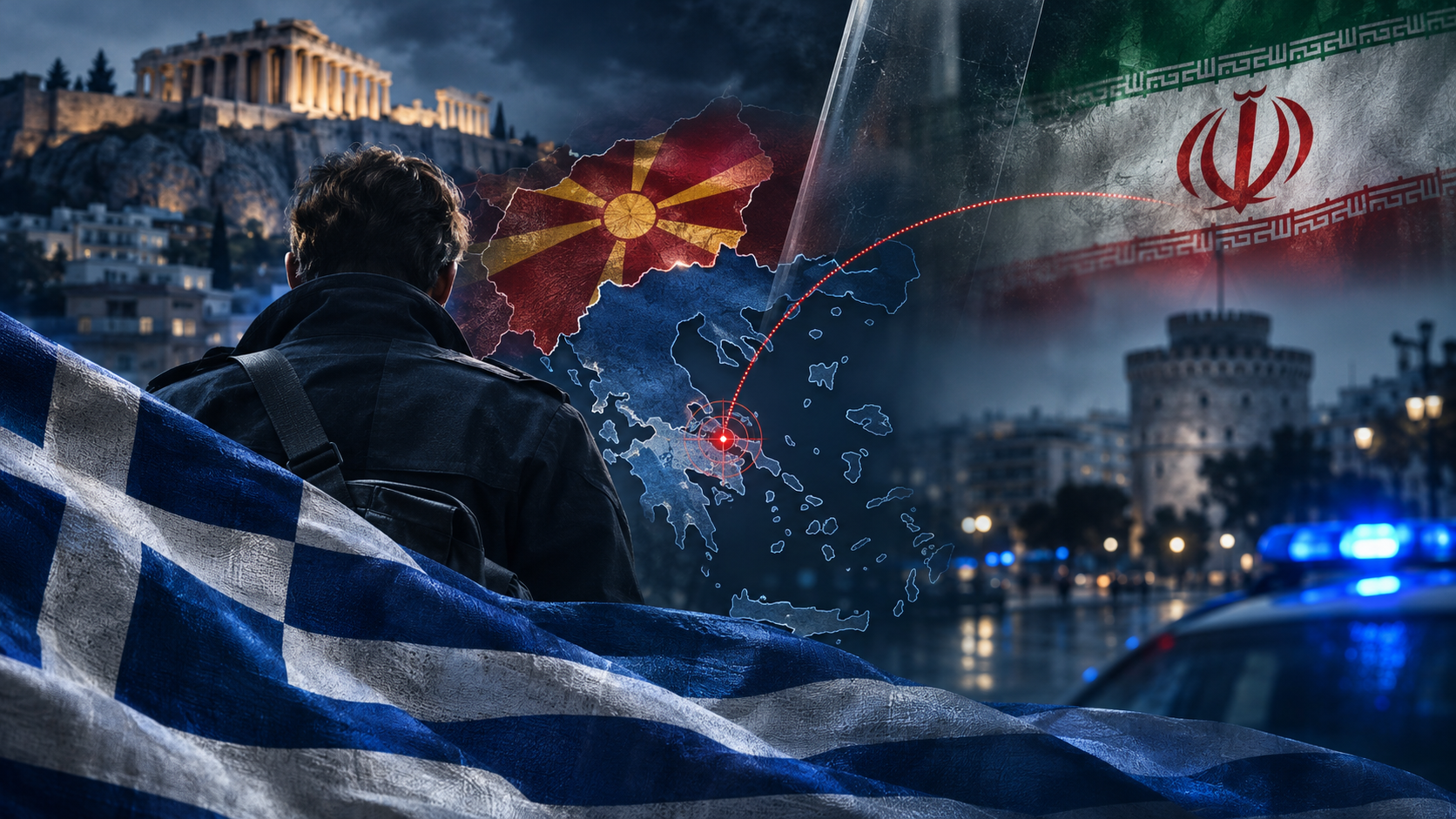
Five people have been arrested in Greece and North Macedonia over a suspected assassination plot that authorities have linked to an Iranian national and alleged intelligence connections. The operation was announced on 17 November, following cooperation between the two countries’ security services.
North Macedonia’s National Security Agency says it uncovered a network preparing to attack a person in Greece. Its account describes individuals operating within criminal circles, allegedly taking instructions from an organiser connected to Iranian security and intelligence actors.
The central allegation concerns an assassination being prepared through intermediaries. It does not establish that the suspects are guilty, or independently prove who authorised the alleged operation.
Where Were The Arrests Made?
The arrests took place across two countries. Greek security officials said a North Macedonian national was arrested in Greece on 12 November and extradited to North Macedonia. Four others were arrested in North Macedonia.
That distinction matters: Greece was the alleged destination for the attack, but much of the suspected network was based outside its borders.
Early accounts differ in how they describe the individuals’ custody status. North Macedonia’s Interior Ministry confirmed five arrests, while a separate account of the security agency director’s announcement described four people detained for questioning, a fifth questioned and a sixth still wanted.
These descriptions should not be treated as a settled account of who remains in detention. They also do not establish that everyone questioned faces the same allegations or has been charged.
What Is The Alleged Connection To Iran?
North Macedonia’s security agency identified Iranian national Edris Jahangiri Mavaneh as an alleged organiser. It accused members of the network of carrying out logistical preparations under his instructions.
The agency also described connections involving Naji Sharifi Zindashti, whom it associated with criminal networks and Iranian intelligence proxies. Investigators said meetings had taken place in third countries, including Iran.
These are allegations made by the authorities. Their significance depends on what the underlying evidence establishes about instructions, knowledge and responsibility.
There are several distinct questions. Did the suspects prepare an attack? Who recruited them? What did they understand about the intended victim and purpose? And can investigators demonstrate that a state intelligence service directed the activity?
An Iranian national’s involvement would not, by itself, answer the final question. The authorities are alleging a wider connection, but the public accounts reviewed do not expose the complete evidential chain.
Iran had not immediately responded to a request for comment in the initial reporting. That absence of a response is not an admission.
Who Was The Intended Target?
The security agency did not identify the intended victim in its announcement.
That leaves important questions unresolved, including the person’s nationality, public role and the alleged reason for targeting them. Without those details, it would be premature to describe the case as retaliation against a particular government, an attempt to silence a named dissident or an operation against a specific community.
The available accounts describe preparations for a targeted killing. They do not establish that an assassination was attempted or that anyone was injured.
Why The Alleged Criminal Network Matters
The most consequential feature of the authorities’ account is the claimed use of criminal intermediaries.
If that account is established, it would describe an operation in which the people preparing violence were separated from whoever ultimately commissioned it. That separation can complicate the task of proving responsibility: identifying a local suspect does not automatically reveal the person giving instructions further up the chain.
For investigators, each connection requires evidence. Communications might establish contact without proving the purpose of a meeting. Travel might corroborate an encounter without establishing what was agreed. The strongest case would connect those pieces to specific preparations and instructions.
The cross-border element adds another challenge. Evidence collected in one country may concern preparations for an offence in another, making cooperation essential to reconstructing the alleged plan.
What Would Change Our Understanding Of The Case?
The next important developments are more specific than another broad accusation of foreign involvement.
Formal charges would clarify the conduct alleged against each suspect. Court proceedings could reveal which parts of the intelligence account are supported by evidence that prosecutors are prepared to present. Further official information could also clarify custody arrangements and whether investigators believe other participants remain at large.
For now, authorities say they have disrupted a network preparing an assassination in Greece. The unanswered question is how far the evidence will reach beyond the people allegedly recruited to carry it out.
Sources
Reuters — North Macedonia, Greece Say They Uncovered Iran-Linked Assassination Plot — Arrest totals, the cross-border operation and Iran’s initial lack of response. MarketScreener
Associated Press — 4 Detained In North Macedonia For Alleged Iran-Backed Assassination Plot In Greece — The differing initial description of detention, questioning and a wanted individual. apnews.com
Türkiye Today — North Macedonia Exposes Iran-Linked Proxy Network Plotting Attack In Greece — The agency’s allegations about organisers, criminal connections and logistical preparations. Türkiye Today
Next Reads
MI5 Warns Iran Is Targeting British Military Bases As Spy Chief Reveals RAF Fairford Was ‘Not Unique’ — Background on British concerns about alleged Iranian operations.
Iran's Revolutionary Guards 'Almost Certainly' Directed RAF Fairford Plot, PM Says — Could Britain Be Dragged Into A Wider War? — The distinction between intelligence assessments and publicly tested evidence.
US Bombers Pulled From RAF Fairford After Suspected Iran-Linked Plot — And The Message Goes Far Beyond Britain — How an assessed security threat can affect military decisions.
