What Happens When Intelligence Cannot Reach The People Who Need It?
A Classified Network Can Fail Without Its Secrets Being Stolen.
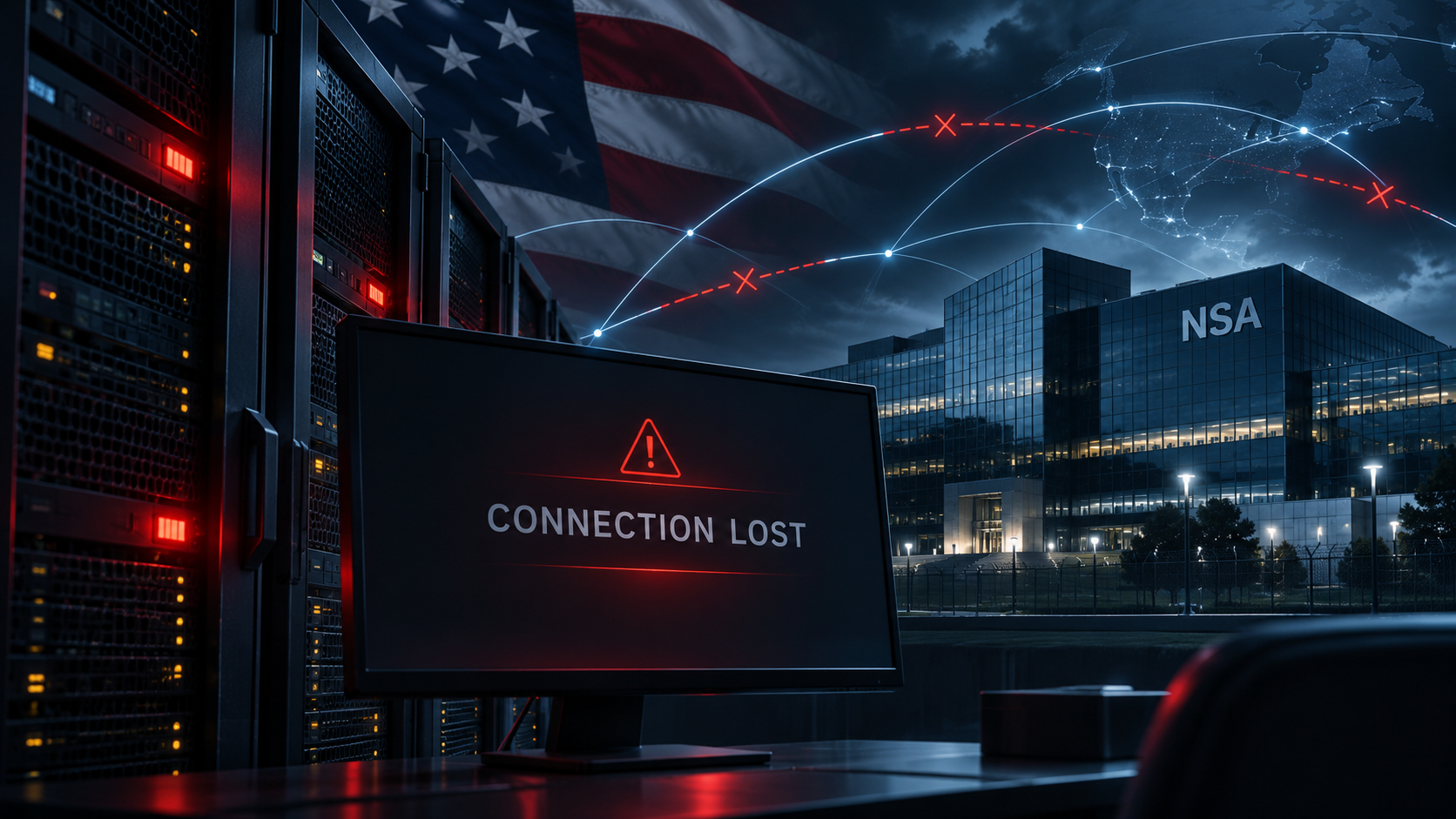
A highly classified internal communications network used by America’s National Security Agency reportedly went down on 17 November 2026, raising questions about how an intelligence organisation operates when its own secure channels become unavailable.
The immediate picture remains limited. People familiar with the situation described an outage affecting NSA Net, which employees use to communicate classified information. Initial reporting said there was no evidence of a cyberattack.
The cause, duration and full operational impact had not been established in the reporting available at the time of writing. There was also no public evidence that classified information had been stolen.
The concern is nevertheless significant: sensitive information can remain protected while becoming temporarily unavailable to the people who need it.
What Is Known About The NSA Network Outage?
The initial account described the agency assessing the scope of the disruption and introducing staggered arrivals for personnel.
That suggests an interruption substantial enough to affect working arrangements. It does not establish that every NSA facility, intelligence collection system or channel used to support military operations stopped functioning.
Several crucial details remain unresolved: which services failed, how widely the problem spread, whether alternative communications remained available and when normal operations could resume.
The agency had not immediately provided a public response to a request for comment cited in the available coverage.
Those gaps matter because the phrase “NSA network down” can imply far more than the evidence supports. An internal communications failure is serious, but it is insufficient grounds to conclude that the United States has lost its ability to collect intelligence or communicate military orders.
What Could Have Caused It?
No specific cause has been publicly established.
Broad possibilities for a network outage include equipment failure, a software fault, an unsuccessful configuration change, disruption to supporting infrastructure or deliberate interference. These are categories of explanation, not findings about this incident.
For example, a problem in the systems that direct traffic or authenticate users could prevent employees reaching services even if the underlying information remained intact. Identifying such a failure would require technical evidence from the affected environment.
A cyberattack remains a possibility investigators may need to examine. However, the initial absence of evidence for an attack provides no basis for declaring that hackers caused the outage, let alone assigning responsibility to a particular government.
Equally, an early assessment is not a completed forensic investigation. The defensible position is that the cause remains unknown.
The strongest evidence would come from a technical account explaining what failed, when it failed and how investigators distinguished an accidental malfunction from unauthorised activity.
Could Classified Information Have Been Leaked?
It is possible for a security incident to involve both disruption and theft. Nothing publicly established about this outage demonstrates that combination.
Cybersecurity distinguishes between availability and confidentiality. Availability concerns whether authorised people can access information when needed. Confidentiality concerns whether information remains restricted to those entitled to see it.
An outage demonstrates an availability problem. A leak requires evidence of unauthorised disclosure or access.
A failed network component could interrupt communications without exposing a single document. Conversely, an intruder might copy information while a system continues operating normally. The visible disruption alone cannot answer the question of theft.
To establish a compromise, investigators would need evidence such as unauthorised account activity, access to protected material or transfers inconsistent with legitimate operations. Determining precisely what was exposed would require further examination.
The practical lesson is that restoring service and establishing whether information remained secure are separate tasks. A network coming back online would resolve neither every investigative question nor every possible consequence.
What Could Happen If The Disruption Continues?
The NSA’s stated responsibilities include foreign signals intelligence, cybersecurity and support for military operations. Reliable communication helps turn collected information into something decision-makers can use.
The following consequences are conditional analysis, rather than confirmed effects of this outage.
A prolonged interruption could delay internal exchanges between analysts, slow the review of intelligence assessments or complicate coordination between teams. If alternative secure channels were available, urgent work might continue while less immediate tasks accumulated.
The seriousness would depend on what was delayed. A routine administrative message and an assessment of an imminent threat have very different consequences when they arrive late.
It would also depend on where the failure occurred. Intelligence collection could continue while analysts struggled to distribute their conclusions. Alternatively, a limited communications problem might leave most operational work unaffected.
That distinction explains why an outage can matter without producing a complete shutdown. Information has value partly because of when it reaches the person making a decision.
There could also be a backlog after restoration. Messages, requests and unfinished reviews may need prioritising before normal working patterns return. The length of the technical outage would therefore not necessarily capture the full period of disruption.
What Are The Geopolitical Implications?
The geopolitical consequences depend on the eventual explanation and operational impact. Three broad scenarios illustrate the difference.
A contained technical failure would primarily raise questions about resilience, maintenance and continuity arrangements. The central issue would be whether essential intelligence work continued through the disruption.
A prolonged interruption affecting intelligence delivery could create more serious problems for American decision-makers and partners. If an urgent assessment arrived late, officials might have to act with less complete information. There is no public confirmation that this happened.
A confirmed foreign intrusion would introduce questions of espionage, attribution and response. Its significance would depend on who gained access, what they reached, whether information was copied or altered, and whether access persisted.
These scenarios should not be treated as equally supported explanations. They describe different consequences that would follow from different evidence.
The NSA says its work includes enabling secure information sharing with allies, NATO and coalition forces. That makes continuity relevant beyond the United States. However, an internal NSA outage does not establish that allied systems themselves have failed.
Partners would have reason to distinguish delayed intelligence delivery from compromised intelligence. The first concerns operational timing. The second could require reassessing the security of shared material and the exposure of sensitive methods.
Could Russia, China Or Another State Benefit?
A foreign government could potentially gain an advantage from delayed American intelligence, even without causing the disruption. That possibility depends on whether the outage affected relevant operations at a consequential moment.
Benefit is not evidence of responsibility.
Nothing in the available reporting establishes that Russia, China, Iran or any other state caused the failure. Naming a familiar adversary would substitute suspicion for attribution.
A separate potential consequence is reputational. Rivals could use reports of an outage to question American technical competence or promote exaggerated claims about the vulnerability of US intelligence.
Such messaging would reveal little about the actual condition of the network. Public visibility, operational damage and information theft are different measures of an incident’s severity.
What Would Change The Assessment?
The most useful next development would be a credible explanation of the affected services, the duration of disruption and whether essential work continued through alternative arrangements.
A finding of unauthorised access would materially change the story. So would evidence that urgent intelligence failed to reach its intended recipients.
Until then, the central unresolved question is whether this was a contained communications failure or an interruption with wider operational consequences.
For an intelligence agency, successful recovery means more than reconnecting employees. It means establishing what happened during the gap—and whether anything important failed to reach the right person in time.
Sources
CNN — Highly Classified US National Security Communications Network Goes Down, Sources Say — Initial account of NSA Net’s reported outage, staggered arrivals and the absence of evidence of a cyberattack at that stage. The syndicated report was available through search retrieval. kq2.com
National Security Agency — Mission & Combat Support — The agency’s intelligence, cybersecurity, military-support and allied communications responsibilities. nsa.gov
NIST — Availability and Confidentiality — The technical distinction between interrupted access and unauthorised disclosure. CSRC
NIST — Incident Response Recommendations And Considerations For Cybersecurity Risk Management — General incident investigation and recovery guidance; this document does not establish what happened at the NSA. nvlpubs.nist.gov
Next Reads
UK Air Traffic Control Failure Sparks Major Disruption at Heathrow, Gatwick and Manchester — How technical disruption can create consequences beyond the original failure.
France Tax Data Breach Exposes 678,000 People And Businesses In Major Cyberattack — The different questions raised when sensitive information is reported stolen.
Denmark Data Breach Exposes 8.8 Million CPR Records — Why access permissions and trusted connections matter in an investigation.
