French UN Soldier Killed in Lebanon Attack — Macron Points to Hezbollah
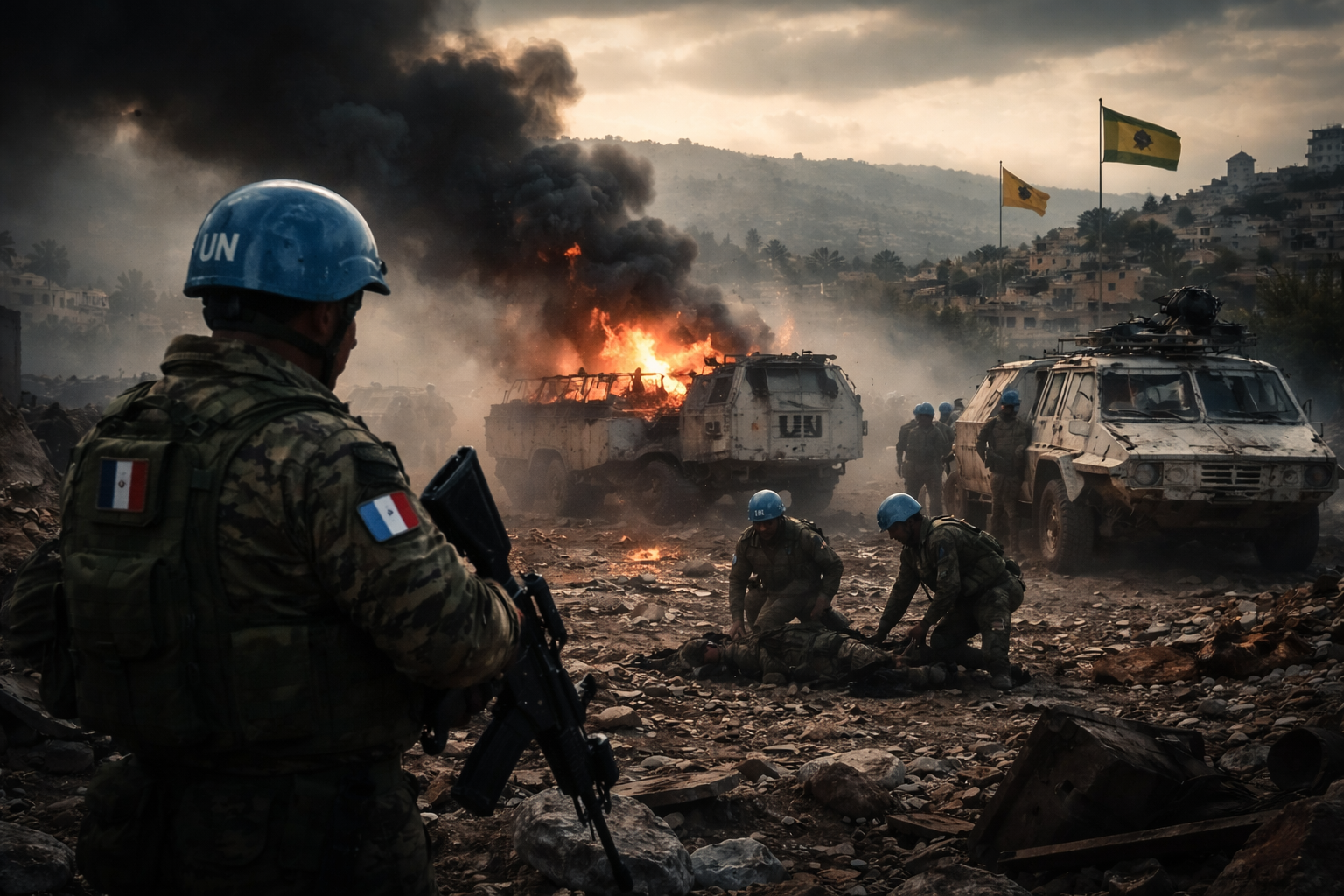
One Shot, Bigger Consequences: The Killing That Could Reignite Lebanon Conflict
Peacekeeping Under Fire: Deadly Attack Signals Fragile Truce Is Already Cracking
An attack on a UN patrol has killed a French soldier and injured others, with early indications pointing to Hezbollah, raising urgent questions about the stability of the region.
A Peacekeeper Killed—And A Warning Shot To The Entire Region
A French soldier serving under the United Nations flag has been killed in southern Lebanon — not in a battlefield offensive, but during a peacekeeping mission meant to prevent exactly this kind of violence.
The attack, which also left three other French troops wounded, targeted a patrol from the United Nations Interim Force in Lebanon (UNIFIL). French President Emmanuel Macron said that “everything points” to Hezbollah being responsible.
This is not just a tragic incident. It is a signal.
Because when peacekeepers become targets, the entire structure holding a fragile ceasefire together starts to look far less stable.
What Actually Happened
The attack took place in southern Lebanon, where UNIFIL forces operate along one of the most volatile fault lines in the world—the border between Israel and Hezbollah-controlled territory.
According to early reports:
A UN patrol came under small-arms fire
One French soldier was killed
Three others were wounded and evacuated
The attack is believed to have been carried out by “non-state actors,” a phrase widely understood to refer to Hezbollah
Lebanon’s prime minister condemned the attack and ordered an immediate investigation, while France has demanded accountability.
But the deepemore profounde is not just who pulled the trigger.
It is why the incident happened now.
Why This Matters Now — Timing Is Everything
The killing comes at an extremely sensitive moment.
Just days earlier, a fragile ceasefire between Israel and Hezbollah had taken effect after weeks of intense fighting that killed thousands.
That ceasefire was never stable. It was a pause, not a resolution.
Now, this attack raises three immediate possibilities:
A deliberate signal: testing how far escalation can go without triggering full retaliation
A breakdown of control: Hezbollah or aligned fighters acting outside formal command
A shift in rules: peacekeepers no longer treated as neutral actors
Each scenario carries different risks—but all of them point in the same direction:
Instability is increasing, not decreasing.
The Real Risk — International Forces Becoming Targets
UNIFIL exists to reduce conflict, monitor ceasefires, and act as a buffer.
But that role only works if all sides accept its neutrality.
That assumption is now under pressure.
Peacekeepers have faced crossfire before. In recent weeks, the intensifying conflict in Lebanon has resulted in the deaths or injuries of multiple UN personnel.
But this incident is different.
Because it appears targeted.
This is because it involves a major Western military power.
France is not just any contributor—it is one of the most politically significant participants in UNIFIL.
That raises the stakes immediately.
What Media Misses
The surface story is simple: a soldier was killed, blame was assigned, and an investigation was launched.
The deeper story is far more dangerous.
This incident suggests that the boundaries between combatants and non-combatants are collapsing.
If peacekeepers are no longer seen as neutral—or are intentionally targeted—then the entire logic of international stabilization missions starts to break down.
That does not just affect Lebanon.
It affects every conflict zone where international forces are deployed.
What Happens Next
There are three likely paths from here:
1. Contained Response
France pushes diplomatically, Lebanon investigates, and the situation is contained—at least temporarily.
2. Quiet Escalation
Attacks on UN forces increase subtly, testing limits without triggering full retaliation.
3. Rapid Escalation
If further casualties occur, France—or its allies— could respond more forcefully, pulling external powers deeper into the conflict.
The most dangerous outcome is not immediate war.
It is a slow normalization of attacks like this.
Because once that happens, escalation becomes much harder to stop.
The Bigger Picture — A Ceasefire In Name Only
This killing does not happen in isolation.
It sits inside a wider pattern:
Ongoing Israeli strikes
Hezbollah military activity
Regional tensions involving Iran and the US
A ceasefire that already shows signs of strain
In that context, this attack looks less like an anomaly—and more like a continuation.
A reminder that the underlying conflict has not been resolved.
Only paused.
The Line That Just Moved
A French peacekeeper is dead.
Three more are wounded.
The recent events have shaken the assumption that international forces can operate safely in southern Lebanon.
The danger here is not just what happened.
It is what the incident makes possible next.
Because once the line between observer and participant blurs, the conflict stops being contained—and starts pulling everyone closer in.
