Hantavirus Cruise-Ship Fears Are Still Escalating — And The Most Unsettling Phase May Only Just Be Beginning
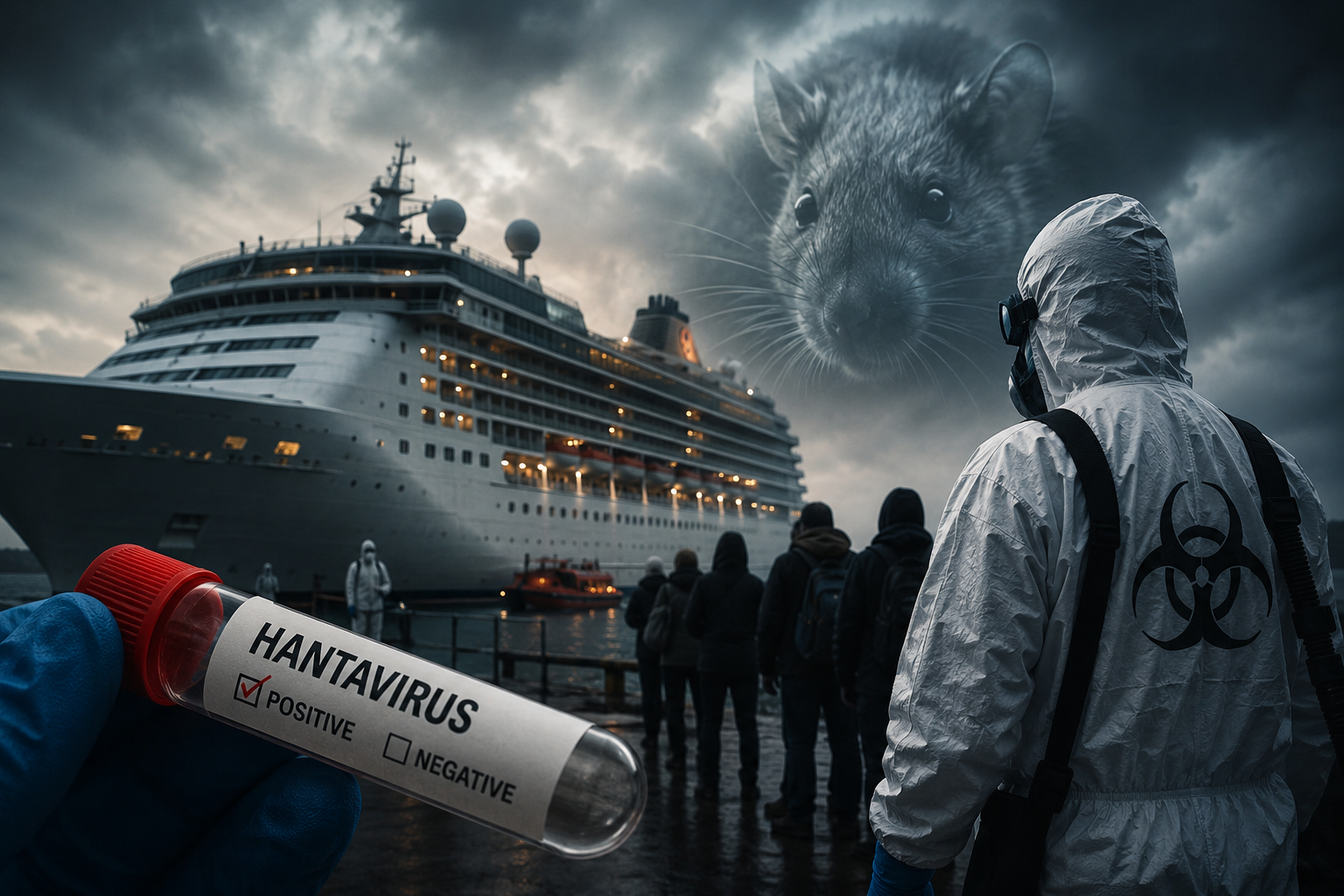
Why The MV Hondius Hantavirus Outbreak Is Still Triggering Global Alarm
The Cruise Ship Story Is No Longer Just A Cruise Ship Story
The outbreak tied to the Dutch-flagged MV Hondius has continued to escalate even as global health agencies try to calm public fears. What initially appeared to be an isolated onboard medical emergency has evolved into a multinational health monitoring operation involving quarantines, international tracing efforts, emergency medical transfers, and growing scrutiny over how widely exposed passengers may have traveled before authorities understood the scale of the risk.
The central fear is not simply the virus itself. It is a fact that the strain involved — Andes hantavirus — occupies an unusually unsettling position in infectious disease discussions because it is one of the very few hantaviruses associated with documented human-to-human transmission under certain conditions. That detail alone has transformed what might otherwise have been viewed as a tragic but contained outbreak into a story now carrying unmistakable pandemic-era psychological weight.
The numbers behind the outbreak are still moving.
According to the latest international updates, the outbreak linked to MV Hondius has now produced confirmed and probable cases across multiple countries, with several deaths already recorded. The World Health Organization confirmed that the virus involved is Andes virus, while European health authorities continue issuing rolling updates as monitoring and isolation operations continue.
New concern accelerated again after Canada confirmed a case connected to the ship, while British authorities simultaneously strengthened their response by securing access to experimental antiviral stockpiles from Japan.
That matters because the response itself reveals how seriously governments are treating the possibility of additional transmission chains. Officials continue stressing that the overall public risk remains low, but the operational reality looks far more intense beneath the surface: specialist infectious disease units, monitored isolation periods lasting more than a month, emergency evacuations, mobile laboratory deployments, and international coordination across multiple continents.
The human-to-human detail is what changed everything.
Most hantaviruses spread through exposure to infected rodent waste particles. The Andes virus is different.
Health agencies continue emphasizing that person-to-person spread appears rare and generally requires prolonged close contact, particularly with symptomatic individuals. Officials also stress that the virus does not behave like COVID-19 and is not spreading freely through casual airborne transmission.
But psychologically, the damage was already done the moment “human-to-human transmission” entered public discussion.
That single phrase transformed the story from a niche infectious disease incident into something emotionally recognizable to millions of people who still carry deep memories of cruise ships, quarantine facilities, travel restrictions, and early outbreak uncertainty. The optics alone became explosive: passengers isolated abroad, medical evacuations, monitoring centers, governments issuing rolling public updates, and authorities tracing people across countries after exposure aboard a confined vessel.
Even if the scientific risk profile remains very different from COVID-19, the emotional pattern feels disturbingly familiar.
The Cruise Ship Environment Created A Perfect Fear Multiplier
Cruise ships occupy a uniquely powerful place in public imagination after the pandemic years. They combine enclosed environments, international movement, dense passenger interaction, limited onboard medical capability, and the possibility of delayed containment once illness begins spreading at sea.
Reports surrounding MV Hondius describe a situation that became progressively more difficult as passengers developed severe respiratory symptoms during the voyage. Medical personnel were added during the journey; additional specialists boarded the vessel, and authorities coordinated evacuation operations once the ship approached Europe.
One of the most concerning details was the sheer international spread of potentially exposed passengers before the full seriousness of the outbreak became clear. Authorities from multiple countries became involved in tracing, monitoring, testing, and quarantine planning.
That international footprint is exactly why the story keeps growing rather than fading.
Authorities Are Trying To Prevent Panic Without Looking Passive
The messaging challenge facing health officials is becoming increasingly delicate.
On one side, authorities clearly want to avoid panic. Multiple agencies continue stressing that the outbreak does not currently represent a broad pandemic threat, and there is no evidence of mutation increasing transmissibility.
On the other side, governments are visibly mobilizing serious containment infrastructure.
That creates an awkward public tension. If the threat is genuinely minimal, people ask why quarantines, isolation facilities, emergency medical transfers, specialist units, and experimental antivirals are suddenly appearing in headlines again. If the response is justified, people naturally begin wondering whether officials are more worried than they publicly admit.
That communication gap is where outbreak anxiety often accelerates fastest.
The Bigger Fear Sitting Underneath The Story
The deeper concern underneath the MV Hondius outbreak is not necessarily that this specific event becomes catastrophic. Right now, health agencies continue assessing overall public risk as low.
The larger fear is what the story symbolizes.
Public trust in outbreak readiness remains fragile after COVID-era failures, political fragmentation, economic disruption, and prolonged institutional exhaustion. New infectious disease stories now hit a population psychologically primed to expect escalation. Even relatively contained outbreaks immediately trigger memories of early official reassurance followed by later emergency measures.
That psychological backdrop changes how every outbreak is interpreted.
A new report warning that infectious disease events are becoming more frequent and globally disruptive has only intensified that mood. Experts increasingly point toward climate pressure, ecological disruption, geopolitical instability, and weakened international coordination as conditions that make future outbreaks harder to contain quickly.
The Most Important Detail Is That The Story Is Still Evolving
The most important fact in this entire situation is that authorities are still actively monitoring it.
More cases remain possible because hantavirus incubation periods can stretch for weeks. International agencies continue daily updates. Health authorities are still managing exposed passengers. Governments are still coordinating specialist responses.
That means the story has not yet entered its final phase.
The public risk may ultimately remain low. The outbreak may eventually be remembered as a contained but frightening incident aboard a single expedition vessel. But the reason this story keeps generating attention is because it sits directly at the intersection of modern public anxieties: global travel, infectious disease, institutional trust, quarantine memories, and the fear that small outbreaks can suddenly stop looking small.
For now, global authorities continue insisting this is not the beginning of another pandemic.
But they are also behaving like they cannot afford to be wrong.
