Austin Teen Shooting Rampage Timeline Expands As Police Reveal A 28-Hour Trail Of Stolen Cars, Gunfire And Fear
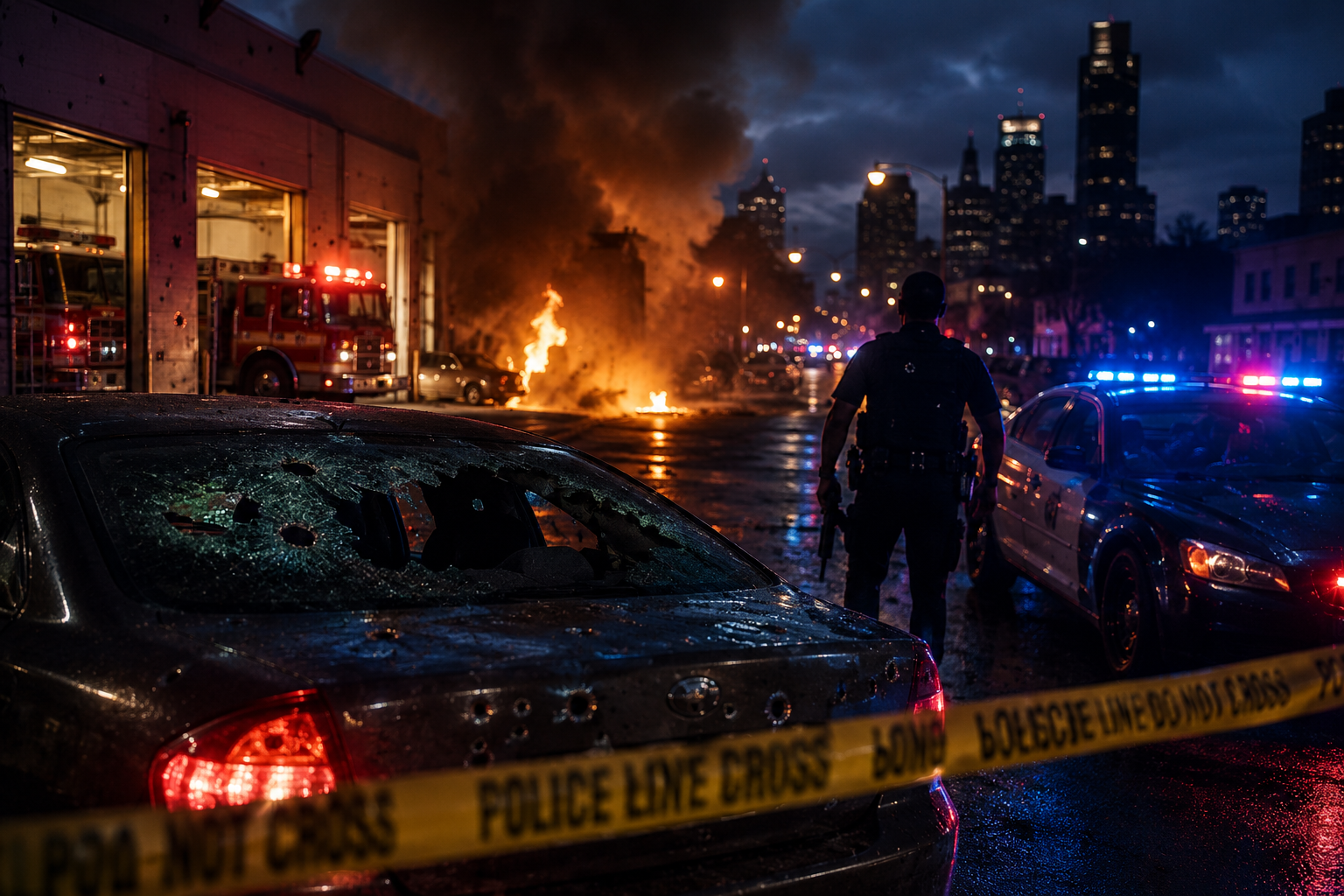
Austin Shooting Spree Timeline Exposes How Fast One City Was Pulled Into Chaos
The timeline now looks far bigger than one shooting.
Austin police are investigating at least 12 separate shooting incidents across South and East Austin, with three suspects in custody and four people injured. The known timeline now stretches across May 16 and May 17, beginning with a reported stolen firearm and expanding into a sequence of shootings, stolen vehicles, damaged homes, struck fire stations, and a major multi-agency search.
The most disturbing part is not only the number of scenes. It is the movement. The case appears to have shifted across neighborhoods, vehicles, and targets, creating the kind of uncertainty that makes a city feel briefly ungovernable. Police initially described the shootings as apparently random, while later information indicated investigators believe the incidents included both random and targeted elements.
That distinction matters. A purely targeted attack carries one kind of fear. A mixed pattern, where some victims may have been known and others may have had no connection at all, carries another implication. It tells the public that danger may not have followed a single private dispute but spilled outward into ordinary public life.
A Stolen Gun Became The First Warning
The official timeline begins late Saturday morning, when officers received a report of a stolen firearm from a business on West Ben White Boulevard. Surveillance footage identified a dark-colored Hyundai Sonata as the suspect vehicle, and investigators later determined that vehicle had itself been stolen from an apartment complex on East Oltorf Drive.
By mid-afternoon, the first confirmed shooting had been reported at a trailer residence on Yucca Drive. Officers found shell casings and bullet damage, but no injuries. Less than an hour later, another shooting was reported at the Whisper Hollow apartment complex on Parker Lane, where vehicles and an occupied apartment were hit, including rooms occupied by adults and young children.
That is the detail that gives the story its darker weight. This was not a contained moment in an empty space. Gunfire reached homes, vehicles, and places where people were living ordinary lives. The gap between “no injuries” and catastrophe was brutally thin.
The spree moved from homes to fire stations.
By early evening, police had linked further shootings through surveillance footage and suspect descriptions. A third shooting was reported at an apartment complex on Montopolis Drive, where investigators said a suspect or suspects exited a vehicle and fired through the door of a third-floor apartment. Minutes later, an unoccupied residence in the Cypress Bend area was found to have been struck by gunfire.
The timeline then widened again. A Hyundai Elantra was reported stolen from a Motel 6 parking lot. Later, shots were fired at a business and nearby vehicles on Decker Lane. Then came one of the most alarming entries: Austin Fire Station 26 was struck by gunfire while firefighters were inside, with emergency response vehicles and equipment hit.
That changes the emotional temperature of the story. When fire stations are hit, the violence no longer feels like it is only moving through private targets. It reaches the institutions people expect to remain stable during the chaos. The responders were not only preparing for emergencies; they became part of the emergency.
Sunday Turned The Case Into A Citywide Emergency
The timeline did not stop overnight. Early Sunday, another stolen vehicle was reported. By morning, officers recovered a stolen vehicle with bullet damage believed to be connected to the incidents. Then came one of the most serious known injuries: a victim was shot in the back and stomach in the Janes Ranch Road area and taken to the hospital.
Police later located one of the stolen Hyundai vehicles connected to the investigation, but the vehicle got away before officers could attempt a traffic stop. Investigators then recovered additional stolen vehicles in Southeast Austin believed to be tied to the suspects and shootings. The sequence had become a moving investigation, not a single-scene response.
Another fire station, Austin Fire Station 32, was then struck. Police said a suspect fired shots from a vehicle into the station while the garage doors were open, hitting an Austin Fire Department vehicle and the building structure while firefighters were inside. The repeated fire station element is one of the reasons this timeline feels larger than a standard crime brief.
The Most Serious Moment Came Near The End
By early Sunday afternoon, investigators believe the suspects had stolen a white Kia Optima that was later used in multiple shootings. Two victims were shot in a drive-by shooting on Burton Drive, and police temporarily shut down portions of the area as part of the active response. More shots were then reported on Fairway Street and Burleson Road.
At 2:29 p.m., a victim on Dionda Lane sustained life-threatening gunshot wounds and was transported to a trauma center. Investigators located surveillance footage showing a white Kia sedan approaching the victim before the victim fell to the ground, then fleeing the scene. That entry is the most severe known point in the expanded timeline.
The timeline’s shape is what makes it so disturbing. It does not read like a single explosion of violence. It reads like escalation, movement, and repetition. For readers following wider crime and public safety questions, it sits naturally beside broader concerns about how visible violence affects trust in leadership and basic order, the same pattern explored in Taylor T. Tailored’s analysis of a South London shooting and the leadership questions that followed.
The arrests ended the search but not the questions.
The pursuit shifted toward Manor after a stolen white Kia Optima was located following a broadcast to surrounding agencies. Manor Police Department officers and Travis County Sheriff’s Office deputies pursued the vehicle until the suspects drove into a field near FM 973 and abandoned it. Three suspects fled on foot; two were apprehended after an extensive search, and the third was detained later after a suspicious person call.
Police identified the 17-year-old suspect as Cristian Mondragon-Fajardo. The other two suspects, ages 15 and 16, have not been publicly identified because of their juvenile status. Formal charges remained under review, with expected charges including aggravated assault with a deadly weapon, aggravated assault with a motor vehicle, deadly conduct, unauthorized use of a motor vehicle, evading arrest, and theft of a firearm.
The legal process now has to do its work. Allegations are not convictions, and investigators are still reviewing ballistic evidence, surveillance footage, witness statements, stolen vehicles, and recovered evidence. But the public safety question is already here: how did a chain involving stolen firearms, stolen cars, and teenage suspects grow across so many locations before it ended?
The Technology Debate Is Already Beginning
One of the sharpest political aftershocks involves license plate reader technology. Austin police do not currently use license plate readers after the city’s program ended following privacy and civil liberties concerns. Manor police said Flock Safety ALPR technology helped direct officers toward a more specific search area after a bulletin was issued for the suspect vehicle.
That creates a brutal policy tension. Privacy arguments do not disappear because a major case happens. Civil liberties concerns around surveillance remain real. But when a moving shooting spree involves stolen cars and multiple scenes, the public naturally asks whether tools that can locate suspect vehicles should be available faster.
This is where the Austin case becomes bigger than Austin. Cities are increasingly forced to choose between two fears: the fear of over-surveillance and the fear of being unable to track fast-moving violence in real time. The uncomfortable truth is that both fears can be legitimate at once.
The Real Shock Is How Ordinary The Locations Were
Apartment complexes. Fire stations. Parked vehicles. A business. A trailer residence. A person walking through a city that should not have turned into a moving crime scene. The expanded timeline is frightening because it attaches violence to places that are meant to feel routine.
That is why the story will linger. The arrests matter. The charges matter. The investigation matters. But the deeper public reaction comes from the sense that the danger moved without a clear pattern for long enough to make normal places feel exposed.
Austin’s expanded shooting timeline is not simply a list of incidents. It is a warning about speed. A stolen firearm, a stolen car, and a small group of suspects can create a chain of fear across a major city in hours. That is the part of the story nobody should miss.
