Harvey Weinstein Sentenced To 15 Years — The Hollywood Titan’s Fall Has Entered Its Final, Brutal Chapter
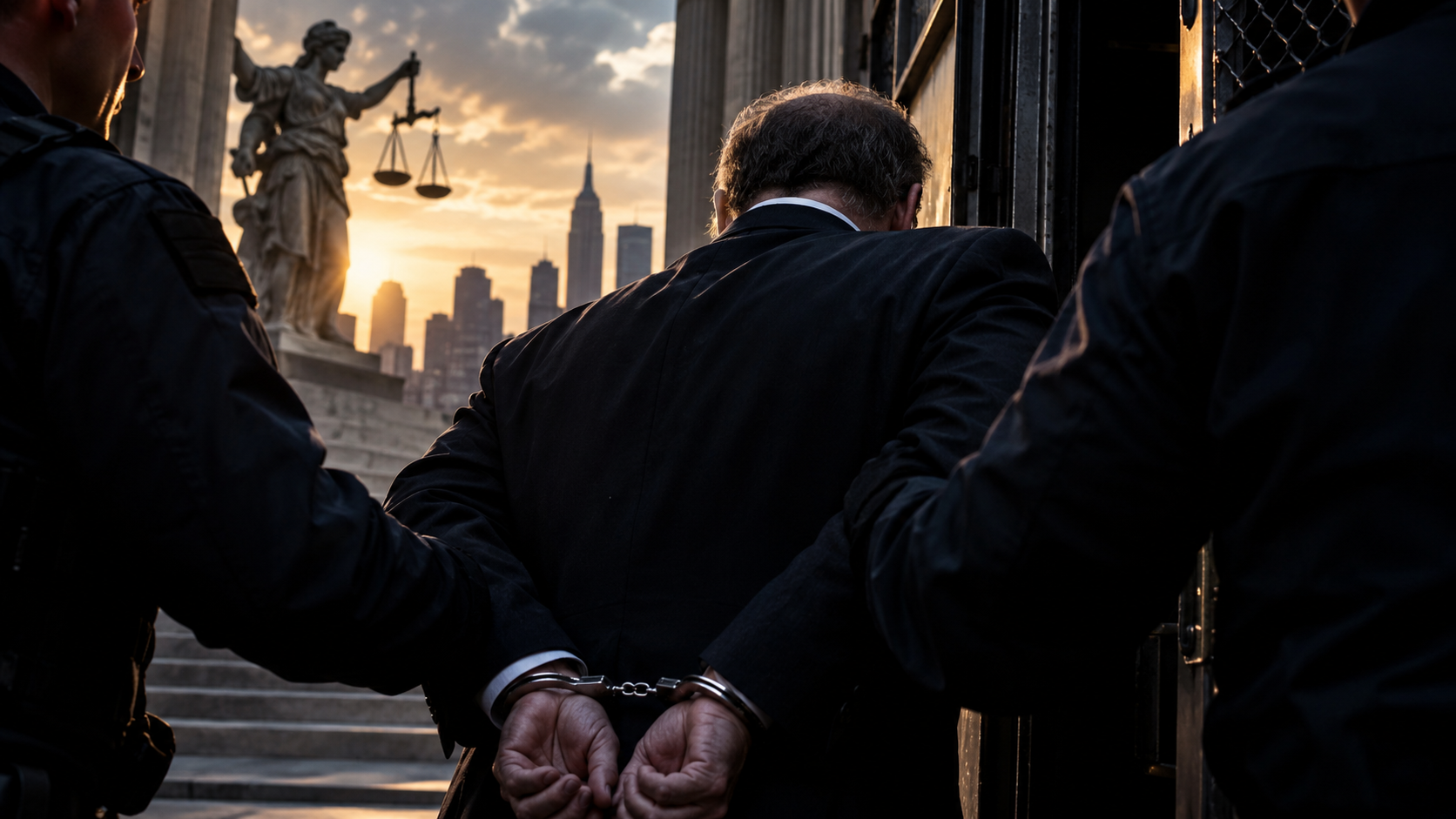
Harvey Weinstein Sentenced After Retrial — And His Legal Battle Is Still Not Over
Fifteen Years After A Legal Battle That Refused To End
Harvey Weinstein has been sentenced to 15 years in prison in New York after being convicted of committing a first-degree criminal sexual act against former production assistant Miriam Haley in 2006. The sentence was imposed in Manhattan on September 23, 2026, bringing a major new conclusion to a prosecution that has already travelled through conviction, appeal, reversal and retrial.
Prosecutors had asked the court for a 20-year prison term. Weinstein’s lawyers argued for substantially less, pointing to the years he has already spent in custody, his age and serious health problems. Judge Curtis Farber ultimately imposed 15 years. Weinstein, now 74, has maintained his innocence and is expected to challenge the latest outcome through the appeals process.
The number matters. But the extraordinary part of the story is how difficult it was to reach this point.
Weinstein was one of the central figures whose downfall became inseparable from the rise of the #MeToo movement. Yet the New York prosecution did not move in a straight line from accusation to final punishment. Its history became a test of how criminal courts handle highly charged sexual-offense cases while preserving the evidential protections owed to every defendant.
The Original Conviction Was Wiped Away
In 2020, Weinstein was convicted in New York of criminal sexual act in the first degree involving Haley and third-degree rape involving Jessica Mann. He was sentenced to an aggregate 23 years in prison.
Four years later, New York’s highest court overturned those convictions.
The Court of Appeals ruled in April 2024 that the original trial judge had wrongly allowed testimony about uncharged allegations that served no permissible non-propensity purpose. The majority also found that rulings governing how Weinstein could have been cross-examined if he testified were excessively prejudicial. The remedy was a new trial.
That decision did not declare Weinstein innocent of the underlying conduct. It meant the court concluded that serious errors in the way the first trial had been conducted required the convictions to be set aside and the case retried.
That distinction became crucial. An overturned conviction can look, from a distance, like the end of a prosecution. In Weinstein’s case, it became the beginning of another one.
Then A Second Jury Convicted Him Again
The retrial produced a complicated result.
On June 11, 2025, a New York jury convicted Weinstein of first-degree criminal sexual act involving Haley. He was acquitted of a separate first-degree criminal sexual act charge involving Kaja Sokola. Jurors could not reach a unanimous verdict on the remaining third-degree rape charge involving Jessica Mann. Court records confirm the conviction and the mixed outcome.
The Haley conviction survived.
Another attempt was subsequently made to resolve the remaining Mann allegation, but that proceeding ended without a unanimous verdict. Prosecutors eventually dropped that unresolved New York rape charge in June 2026 after Mann said she could not endure testifying again.
That cleared the path toward sentencing on the conviction that had already been secured.
The result is legally narrower than the sprawling public story surrounding Weinstein. The 15-year New York sentence imposed in September 2026 is specifically tied to the conviction involving Haley and the 2006 assault.
For readers interested in how evidence, verdicts and later challenges can reshape apparently settled criminal cases, the Delphi murders case and Richard Allen’s continuing appeal offers another example of why a jury verdict can be a major legal milestone without necessarily being the final procedural event.
Miriam Haley Returned To Court Years Later
The human chronology is even longer than the legal one.
The conduct for which Weinstein has now been sentenced dates to 2006. Haley testified in the original New York case and again after the convictions were overturned. By September 2026, roughly two decades had passed since the assault at the center of the surviving conviction.
At sentencing, Haley described the lasting impact the assault had had on her life and sense of security. Manhattan District Attorney Alvin Bragg said afterward that the day was about survivors and praised Haley’s courage and persistence throughout the process.
That length of time matters because criminal proceedings are often described through their headline moments — charge, verdict, sentence — while the people involved experience something much longer.
Investigations, pretrial hearings, testimony, cross-examination, appeals, retrials and further testimony can stretch across years. A successful appeal can be an essential protection against an unfair trial while simultaneously requiring witnesses to return to court and repeat deeply difficult evidence.
Both realities can exist at once.
The Courtroom Story Is Bigger Than A Single Sentence
Weinstein’s case has become unusual partly because it demonstrates two fundamental features of the justice system colliding in full public view.
First, a defendant retains the right to a fair trial regardless of reputation or public hostility. That principle was central to the 2024 Court of Appeals decision. The majority explicitly stressed that constitutional protections apply regardless of the crime charged or the reputation of the accused.
Second, overturning a conviction because a trial was legally defective does not prevent prosecutors from trying a defendant again when retrial is permitted. New York did exactly that. A new jury heard the case and convicted Weinstein again on the Haley charge.
The sequence matters.
The first conviction was not simply restored after appeal. Prosecutors had to prove the charge again before another jury.
That is what makes the September 2026 sentence different from Weinstein’s original 23-year sentence. It follows a new trial conducted after the state’s highest court found that the earlier proceedings had been flawed.
Taylor Tailored’s true-crime investigations and courtroom coverage repeatedly returns to this distinction: a compelling public narrative is not the same thing as the legal question a jury has actually been asked to decide.
Hollywood Power Could Not Freeze The Legal Clock
The scale of Weinstein’s fall remains difficult to separate from the story.
Before criminal prosecutions consumed his public identity, Weinstein occupied an extraordinary position in film. His companies were involved in some of the most celebrated movies of their era, and his influence reached deeply into awards campaigns, distribution and the careers of actors and filmmakers.
That world disappeared with remarkable speed after allegations against him became public in 2017.
The change was not merely reputational. His company collapsed. His professional relationships disintegrated. Criminal investigations developed on opposite sides of the United States. Courtrooms replaced premieres.
Yet reducing the case to the familiar image of a powerful man falling from grace risks missing something important.
The decisive event on September 23 was not Weinstein losing status. That happened years ago. It was a court imposing a new criminal sentence after prosecutors successfully rebuilt part of a case whose original conviction had been overturned.
Power may shape the beginning of a story. It does not necessarily control where the legal process ends.
California Means The Story Still Has Another Chapter
The New York sentence does not resolve every criminal proceeding involving Weinstein.
He also remains convicted in California over sexual offenses arising from a separate 2013 incident. A California appeals court upheld that conviction in 2026 but ordered that he be resentenced, meaning the original 16-year California sentence cannot simply be treated as the final current sentencing position.
That creates an unusually complicated custody picture.
The safest conclusion is not to add the old California term mechanically to the new 15-year New York sentence. The California resentencing process still matters, and further appeals could affect the legal landscape.
Weinstein has also indicated that he intends to challenge his New York conviction.
An appeal does not erase a conviction merely because it has been filed. Unless and until a court changes the judgment, the New York conviction and the 15-year sentence remain in force.
That procedural distinction is worth remembering in any heavily scrutinized criminal case. The Natalie McNally murder investigation and false livestream alibi shows the same broader principle from a very different case: verdicts, sentences and later appeals are separate stages, and reporting them accurately means resisting the temptation to collapse them into one final headline.
One Of Hollywood’s Most Extraordinary Downfalls Is Still Unfolding
Harvey Weinstein’s story has already contained almost every dramatic element a major criminal case can produce: extraordinary power, multiple accusers, a landmark cultural movement, criminal convictions, an enormous prison sentence, a successful appeal, a complete retrial, a split verdict, another deadlocked jury and now a fresh 15-year sentence.
The temptation is to describe September 23, 2026 as the ending.
Legally, it is safer to call it something else: one of the most consequential closing points yet.
Weinstein has been convicted again in New York. The court has imposed 15 years. His original New York convictions were overturned, but the Haley charge was successfully prosecuted a second time. His defense continues to dispute the case, and additional proceedings remain possible.
Nearly a decade after Weinstein’s downfall became a defining moment in the transformation of Hollywood, the most striking image is no longer the producer who once dominated the industry.
It is the sheer length of the legal road that followed him out of it.
