Headteacher Doused In Petrol As French School Protests Turn Violent
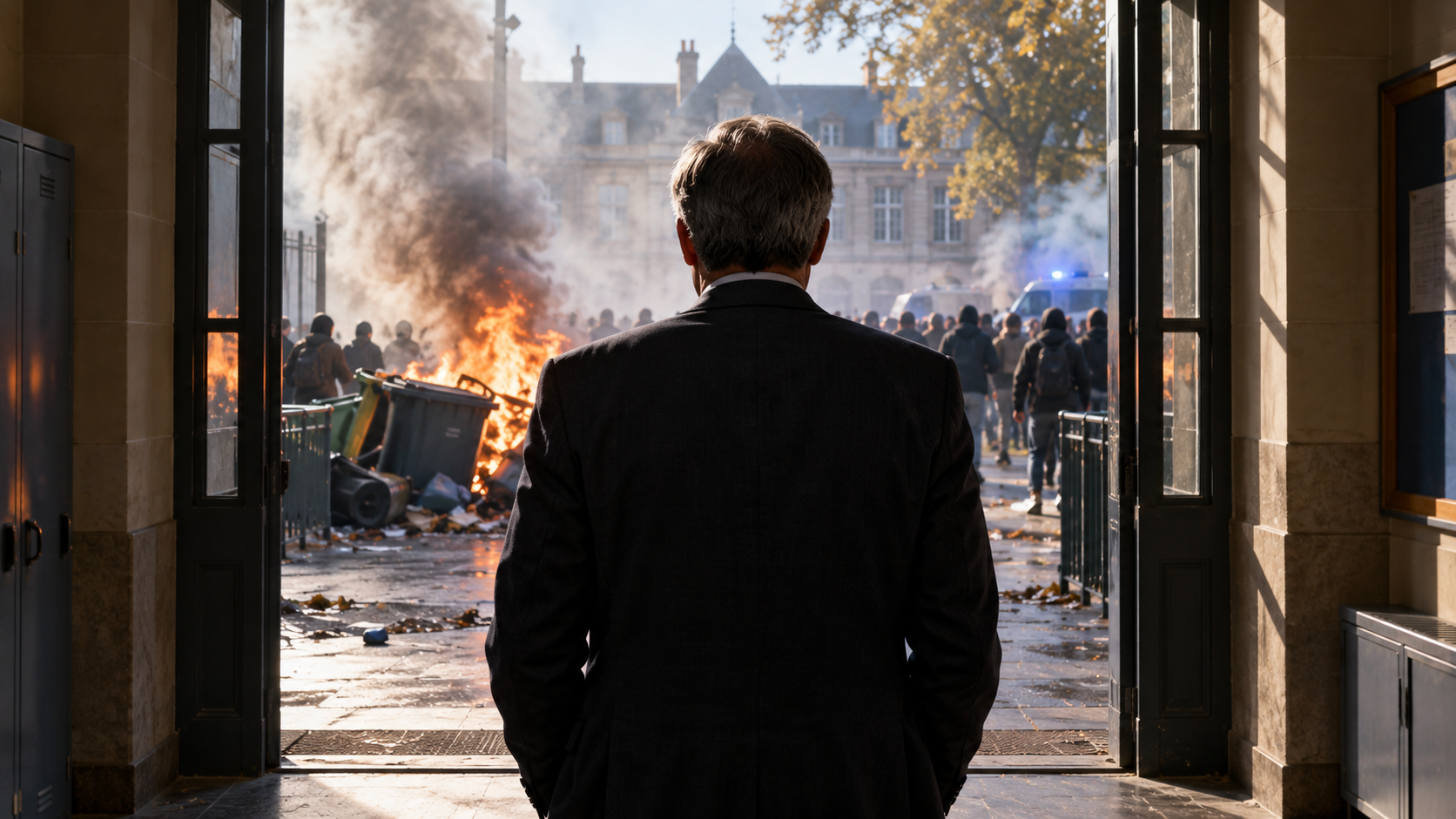
Marseille School Staff Doused In Petrol As Protests Spread Across France
Fire Engine Torched And School Staff Attacked As France Faces Student Unrest
Officials give differing accounts of the petrol incident in Marseille as school fires and attacks on emergency crews deepen the crisis.
A headteacher and other staff at a Marseille secondary school were attacked and doused in petrol on Thursday, 1 October, the Provence-Alpes-Côte d’Azur regional authority said. The incident at Victor Hugo high school came during a widening wave of student protests across France.
The local education authority gave a narrower account, saying the deputy headteacher and two other staff members were splashed by people putting petrol into containers. That difference matters: officials have not provided a single agreed description of how the fuel reached the staff.
The Marseille prosecutor’s office confirmed that the headteacher was attacked and injured, without detailing the injuries. There is no verified basis in the evidence available for saying the headteacher was set on fire.
Differing Accounts At Victor Hugo
The regional authority identified four affected staff members: the headteacher, deputy headteacher, general secretary and a member of the school’s operational team. It described an assault and an attempted fire inside the premises.
The region also said the entrance had been set alight and staff had sought refuge while police and firefighters intervened. School management intended to file a complaint.
The education authority’s description does not establish the same sequence or intent. Its account of staff being splashed while containers were filled should therefore remain alongside the region’s allegation, rather than be treated as confirmation of every detail.
Nor does an incident during a student mobilisation establish that those responsible were enrolled pupils. Identifying the attackers and determining their actions are separate questions from explaining the protest movement.
Emergency Crews And Transport Come Under Pressure
At Saint-Exupéry high school, elsewhere in Marseille, police said a crowd surrounded a fire engine responding to a blaze. Firefighters were forced to leave before the vehicle was set alight.
Marseille’s marine firefighters said they had carried out more than 40 interventions near schools that morning. They also said one firefighter suffered a minor injury during the unrest.
The city’s transport operator, RTM, said several buses had been targeted near schools in northern and eastern Marseille. Drivers had been forced to leave vehicles hurriedly, and one had been assaulted.
These incidents extended the disruption beyond classrooms. Emergency workers and bus drivers were trying to provide services that pupils and residents themselves depend on.
In Nantes, a fire broke out at Nelson Mandela high school. Deputy mayor Olivier Chateau said it had been brought under control, the building had been evacuated and nobody had been injured.
What Students Are Demanding
The movement grew from complaints about absent teachers, overcrowded classes and inadequate learning conditions. Student organisations are calling for replacement teachers, more resources and improvements to school buildings.
Those demands had already converged with France’s public-sector strikes and budget confrontation earlier in the week. They should not be reduced to a reaction to Thursday’s budget announcement: the school protests began before it.
University students have now joined the mobilisation. The Union étudiante organisation said around 30 campuses were blocked on Thursday. That is the organisation’s count, rather than a final official national total.
The scale of mobilisation also differs from the scale of violence. A blocked school is not automatically the site of an assault or fire, and peaceful participants cannot be assigned responsibility for crimes committed nearby.
Ministers Face Questions About Safety And Policing
Prime Minister Sébastien Lecornu convened a crisis meeting as the unrest intensified. Education Minister Édouard Geffray urged affected schools to provide remote lessons where access was blocked.
Interior Minister Laurent Nuñez said some people were moving between schools to incite violence. That is the minister’s assessment; it does not establish the identity or affiliation of the people involved at Victor Hugo.
Police conduct is also under scrutiny. France’s police inspectorate has opened three investigations following injuries to pupils during school blockades. The existence of those investigations does not itself establish misconduct, but it means the response to the protests is being examined as well as the violence around them.
The Union syndicale lycéenne has called for another mobilisation on Tuesday, 6 October. Before then, school leaders face the practical task of deciding whether buildings can reopen safely, while investigators must establish what happened to staff at Victor Hugo.
Sources
Reuters — Attackers Douse Teacher In Petrol As Student Protests Rage Across France — 1 October 2026; prosecutor’s confirmation, police account of the fire-engine attack, Nantes evacuation and ministerial response.
Maritima — Blocus Et Violences Dans Les Lycées : La Région Sud Prône La Tolérance Zéro — 1 October 2026; regional authority’s account, firefighters’ statement and RTM’s description of attacks on buses.
AFP Via TV5MONDE — Rejoint Par Les Étudiants, Le Mouvement Lycéen Se Tend — 1 October 2026; education authority’s differing account, university mobilisation and investigations into policing. Additional checks used LaPresse and Sky TG24/ANSA for the regional statement and the planned 6 October mobilisation.
Next Reads
France Hit By Nationwide Strikes And Student Revolt As €54 Billion Budget Battle Explodes — Background to the public-sector mobilisation and education grievances preceding Thursday’s violence.
