The Belfast Stabbing That Turned Into A National Crisis
The Attack That Changed Everything
The immediate facts are serious enough on their own. A Sudanese asylum seeker has appeared before a court in Belfast charged with attempted murder following a knife attack that left a local man with catastrophic injuries. Court proceedings heard allegations that the victim lost sight in one eye during the attack and suffered extensive wounds. The accused has been remanded in custody while the case proceeds.
Police have stated that there is currently no evidence suggesting the attack was terrorism-related and have said they are not seeking additional suspects. However, the graphic nature of the incident, combined with the speed at which footage circulated online, ensured the story moved far beyond a local crime investigation almost immediately.
What transformed the situation was not simply the violence itself. It was the political symbolism attached to it within hours.
Belfast Erupts Into Disorder
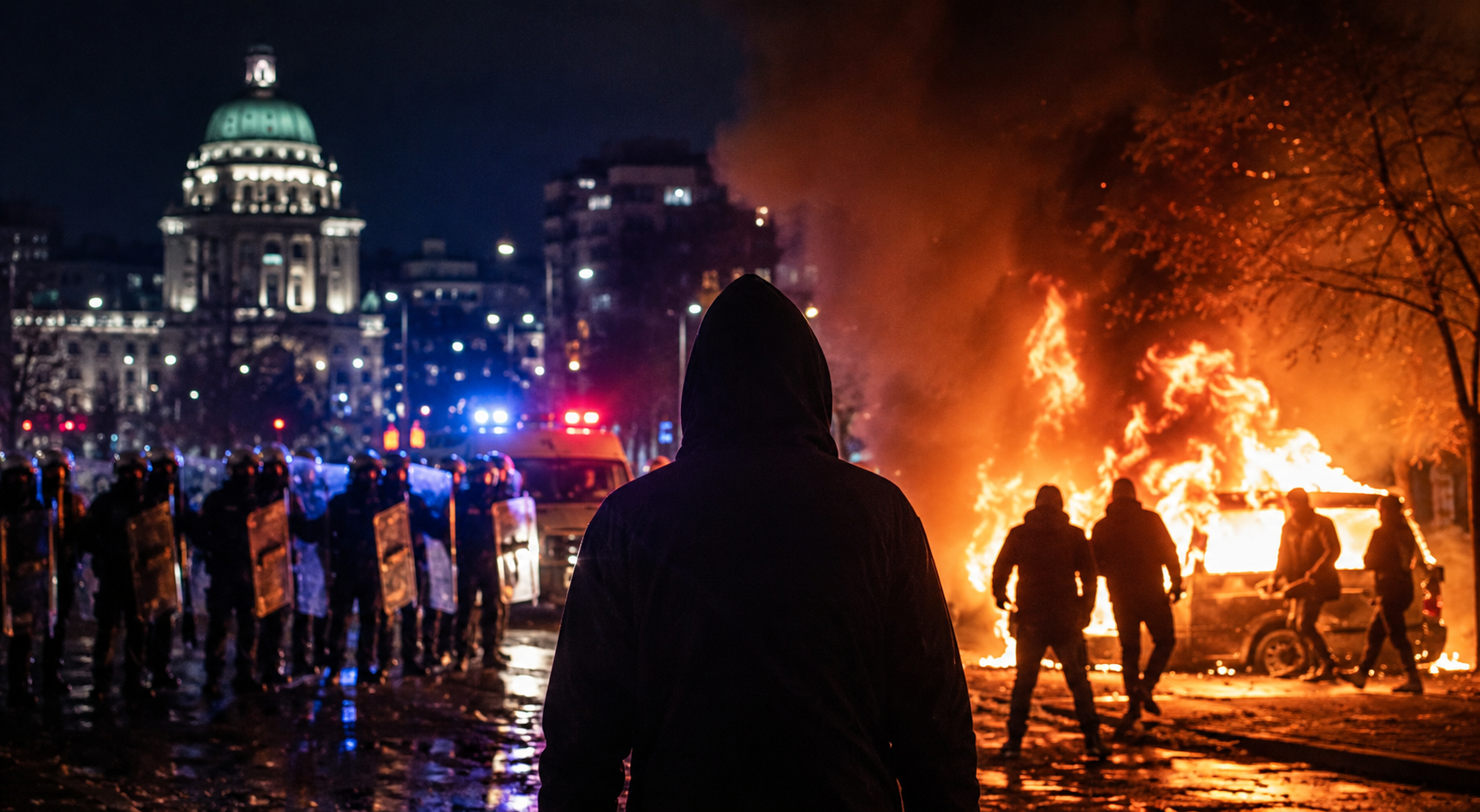
Following news of the suspect's identity and immigration status, protests quickly emerged across Belfast. Some gatherings remained peaceful, but others descended into serious disorder.
Vehicles were set alight, homes were attacked, businesses were targeted and police officers came under assault. Families were evacuated from affected areas while emergency services responded to multiple incidents across the city. Political leaders from across Northern Ireland condemned the violence and urged calm.
The unrest rapidly became one of the most significant episodes of public disorder Northern Ireland has experienced in recent years.
For supporters of tighter immigration controls, the Belfast attack became evidence that existing policies are failing. For opponents, the riots became evidence that extremists were exploiting a tragedy to inflame racial tensions.
That division explains why the story exploded nationally.
The Immigration Debate Returns To Centre Stage
The most important political consequence is that immigration has once again become the dominant issue in the national conversation.
For months, debates over asylum accommodation, illegal migration, border controls and public services have remained close to the top of British politics. Belfast has now provided a highly emotional focal point through which those wider frustrations are being expressed.
Many voters see the attack and ask a simple question: how did the suspect arrive in the UK and remain here?
Others argue that an individual criminal case should not be used to judge entire communities or immigration systems.
Those two positions are fundamentally different ways of viewing the same event. The result is a political argument that is proving almost impossible to contain.
The debate is no longer limited to Northern Ireland. It is now being discussed across Westminster, social media platforms and national political movements.
Why Politicians Are Nervous
Events like this create unique political pressure because they force leaders into uncomfortable territory.
Ignoring public concern risks appearing detached. Overreacting risks inflaming tensions further. Attempting to occupy the middle ground often satisfies nobody.
The response from senior political figures has therefore focused heavily on condemning both the original attack and the subsequent violence. Calls for calm have been repeated across the political spectrum as authorities attempt to prevent further unrest.
Yet the underlying political problem remains unresolved.
Large sections of the electorate believe immigration policy has become disconnected from public opinion. Meanwhile, many others fear that legitimate debate is increasingly being hijacked by hostility towards migrants and ethnic minorities.
The Belfast crisis sits directly at the intersection of those competing fears.
The Shadow Of Previous Unrest
Part of the reason this story has attracted such intense attention is that Britain has seen similar patterns before.
Major violent incidents involving questions of immigration, identity or public safety have repeatedly generated wider social unrest across the UK and Ireland. Previous disturbances demonstrated how quickly local incidents can become national movements once social media accelerates public reaction.
That history is precisely why authorities are treating the current situation with such seriousness.
The concern is not merely what happened in Belfast this week. The concern is whether Belfast becomes the starting point for a much wider cycle of demonstrations, counter-protests and political polarisation.
That possibility is what elevates the story from a criminal case into a national political event.
What Happens Next
The criminal proceedings will continue through the courts, where evidence rather than emotion will determine the outcome.
The political consequences, however, are likely to last far longer.
Immigration was already one of Britain's most divisive issues before the Belfast attack. The events of the past few days have pushed it back to the centre of national attention in dramatic fashion.
Whether the story ultimately becomes a turning point in immigration policy, a temporary surge of public anger or the beginning of a broader political realignment remains unclear.
What is clear is that Belfast is no longer just the location of a violent crime.
It has become the focal point for one of the most important arguments taking place in Britain today.
