India Tunnel Disaster Leaves 10 Dead as Toxic Gas Blocks Desperate Rescue
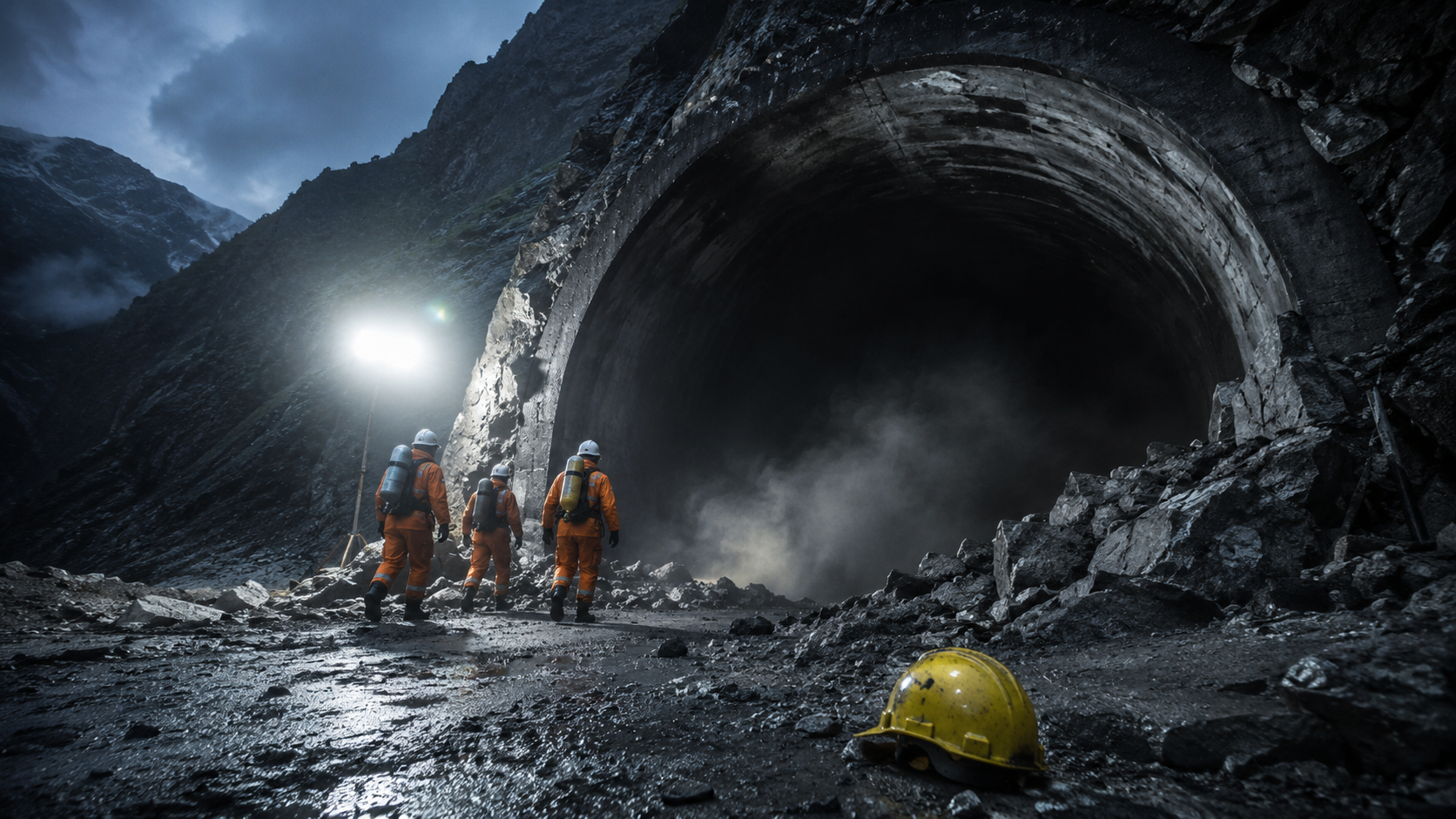
India Hydroelectric Tunnel Explosion Traps Workers Three Kilometres Underground
17 Missing After Suspected Methane Blast Collapses Sikkim Tunnel
A suspected gas explosion inside a hydroelectric tunnel in northeastern India has killed at least 10 people and left 17 others missing, turning a major renewable-energy construction site into a toxic underground disaster zone. Rescue teams are attempting to penetrate the damaged tunnel in Sikkim, but poisonous gases, unstable debris and poor visibility are severely restricting their progress.
The explosion struck on Monday, 20 July, inside an under-construction tunnel at the 500-megawatt Teesta Stage VI Hydroelectric Project near Samardung village. Officials initially reported nine deaths and more than 15 people trapped, but the confirmed toll rose to 10 on Tuesday as emergency teams recovered further bodies.
An Explosion Deep Inside the Mountain
The disaster appears to have begun with a sudden release of gas inside the tunnel. NHPC, the state-controlled company overseeing the project, said a burst of what was suspected to be methane triggered an explosion and subsequent collapse, although the complete chain of events has not yet been established.
Survivors described hearing a powerful blast before rock and debris crashed through the tunnel. At least 25 workers and officials were caught inside according to NHPC’s initial count, although other early local reports placed the number higher as authorities attempted to reconcile who had entered, escaped or joined the rescue effort.
Six NHPC officials reportedly entered the tunnel after the initial incident to assist with the emergency response but then became trapped themselves. That detail captures the speed with which a construction accident developed into a far more dangerous rescue crisis.
The missing workers are believed to be several kilometres inside the tunnel system. Reaching them requires rescuers to move through an enclosed environment contaminated by dangerous gases while remaining alert to further structural movement.
Poisonous Air Is Blocking the Rescue
The greatest immediate threat is not only the collapsed rock. Emergency personnel have detected methane, carbon monoxide and hydrogen sulphide inside the tunnel, forcing teams to use specialist breathing equipment and oxygen cylinders.
Methane can ignite when it accumulates in a confined space and encounters an ignition source. Carbon monoxide can deprive the body of oxygen without producing an obvious warning, while hydrogen sulphide becomes rapidly dangerous at high concentrations.
Rescuers must therefore balance urgency against the risk of adding more casualties. Entering too quickly without adequate ventilation, gas monitoring and respiratory protection could expose the rescue teams to the same invisible threat believed to have overwhelmed those already inside.
Images released by local authorities showed emergency personnel unloading oxygen cylinders, ropes and other specialist equipment near the tunnel entrance. The operation involves national disaster-response teams alongside police, state officials and project personnel.
A state disaster-management official warned that the prospects for those still missing were deteriorating because of the conditions underground. The presence of combustion, toxic fumes and potentially oxygen-poor sections means survival depends not only on whether workers avoided the collapse but also on whether they reached an air pocket protected from the gas.
What May Have Caused the Blast
Authorities have not issued a definitive technical finding. The leading preliminary explanation is that naturally occurring methane accumulated within or behind the rock surrounding the tunnel before being suddenly released.
The Himalayan geology surrounding the Teesta basin is young, fractured and seismically active. Such formations can contain underground pockets and pathways through which trapped gases migrate, although investigators will still need to determine why the gas accumulated, how it was monitored and what provided the apparent ignition source.
Some initial accounts suggested workers may have been attempting to vent accumulated methane when the explosion occurred. That detail remains preliminary and should not be treated as a confirmed conclusion until investigators reconstruct the work being performed, the equipment in use and the tunnel’s ventilation conditions.
The crucial questions will include whether gas detectors identified an escalating concentration, whether work should have been suspended earlier and whether ventilation systems were capable of clearing a sudden underground release. Investigators will also examine ignition controls, evacuation routes, worker training and the availability of emergency breathing equipment.
A Flagship Project Under Pressure
Teesta Stage VI is not a minor construction scheme. It is a 500-megawatt run-of-river hydroelectric project designed around two head-race tunnels measuring approximately 13.8 kilometres and 13.7 kilometres, an underground powerhouse and four 125-megawatt generating units.
The Indian government approved NHPC’s acquisition and completion of the stalled project in 2019 after its previous developer encountered financial difficulties. The original approved investment was ₹57.48 billion, but NHPC now lists an anticipated cost of approximately ₹84.49 billion, with commissioning expected in September 2029.
Once operational, the scheme is intended to generate about 2,400 million units of electricity in a dependable year and contribute to peak-demand management. It forms part of a wider attempt to exploit the energy potential of the Teesta River through a succession of hydroelectric developments.
Those ambitions now sit beside a catastrophe that will test whether project schedules and construction pressure were matched by sufficient underground safety controls. The disaster does not by itself prove negligence, but its scale demands an independent explanation that goes beyond describing the explosion as an unpredictable natural event.
The Wider Himalayan Warning
Building tunnels through the Himalayas carries risks that cannot be designed away entirely. Unstable rock, groundwater, seismic activity, landslides, extreme rainfall and unexpected gas pockets can all turn routine excavation into an emergency.
India has already experienced the extraordinary difficulty of reaching workers trapped beneath Himalayan terrain. In November 2023, 41 workers survived for 17 days inside the collapsed Silkyara tunnel in Uttarakhand before rescuers finally created an escape route. The successful outcome depended on sustained access to air, food and communication — advantages that may not exist in the contaminated Teesta tunnel.
The comparison also highlights the decisive difference between a blockage and a toxic explosion. Workers who survive the initial collapse may still have no safe atmosphere in which to wait, while rescuers cannot simply drill forward without understanding the risk of further ignition or gas release.
This makes the first hours critical. Ventilation must improve, structural access must remain viable and rescue teams must establish whether anyone inside can still communicate.
What Happens Next
The immediate priority remains reaching the missing workers without losing additional rescuers. NHPC said senior management had reached the location and that every effort was being made to evacuate those inside.
Once the rescue phase ends, attention will shift to accountability. Authorities will need to establish what work was underway, when methane was first detected, whether alarms were triggered, who authorised continued entry and whether emergency procedures were followed.
Construction may also face a prolonged suspension while the damaged tunnel is stabilised and inspected. Any evidence of inadequate ventilation, monitoring or evacuation planning could have implications far beyond this project because India’s Himalayan hydropower expansion depends heavily on long tunnels and underground power infrastructure.
For now, the mountain remains sealed around 17 missing people while emergency teams confront an atmosphere capable of killing rescuers as well as workers. The final death toll will determine the human scale of the disaster, but the investigation will determine whether this was an unavoidable geological shock or a warning that should have been detected before the tunnel exploded.
