Russia May Have Helped Iran Target CIA Sites in Dangerous New Escalation
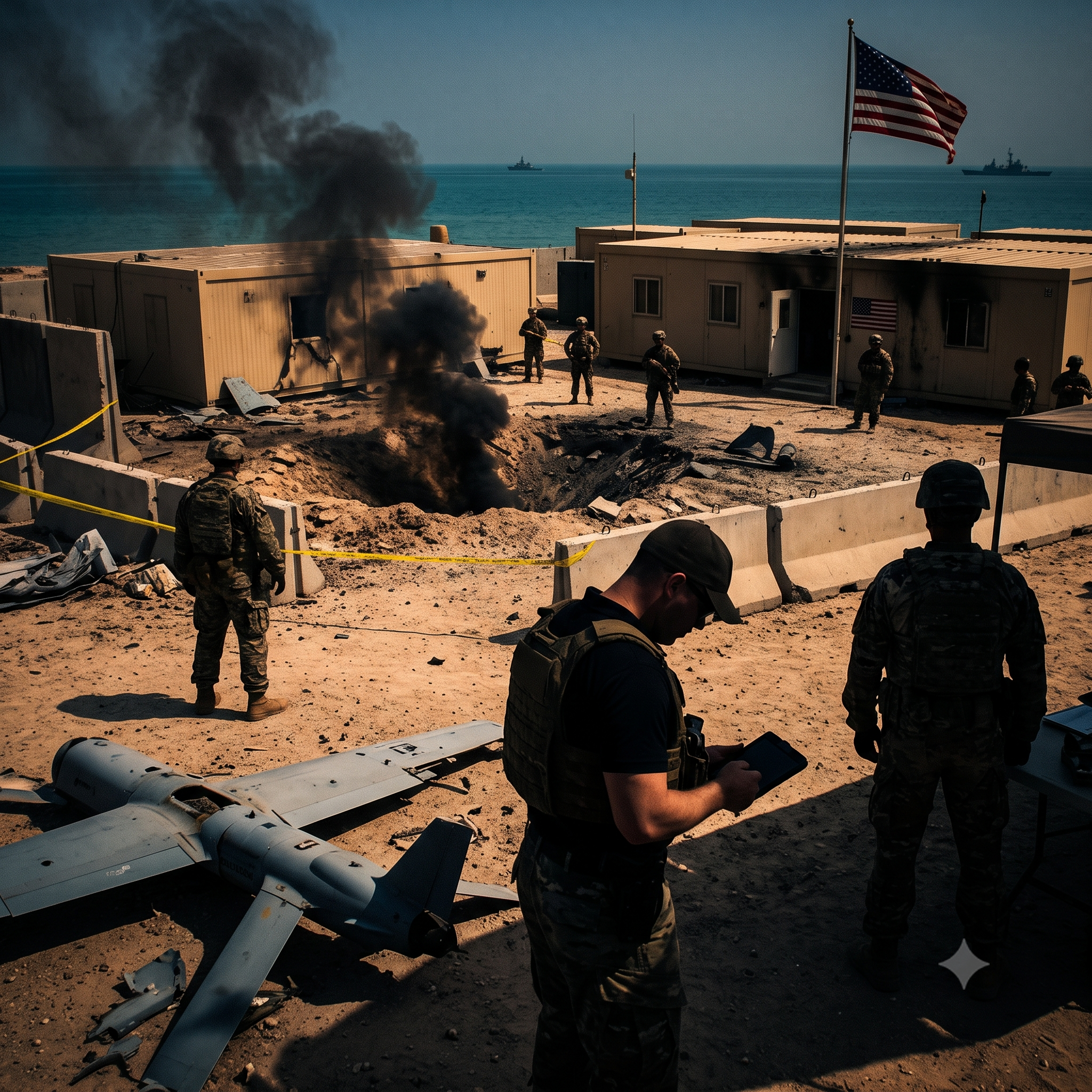
How Iranian Drones Reached Secret CIA Facilities — And What America Does Next
Iran Hit Secret CIA Sites in the Gulf — Now America Is Investigating a Russian Link
Iranian drones penetrated some of the most sensitive American facilities in the Gulf, striking sites connected to the CIA and triggering an investigation into whether Russia helped Tehran find or accurately reach its targets. The strikes did not cause reported deaths, but their precision has created a problem far larger than the physical damage: America must now determine whether Moscow assisted an attack on the hidden infrastructure of US intelligence.
At least two CIA-linked locations were reportedly struck during attacks in March, including the agency’s station inside the US embassy complex in Riyadh and another facility in eastern Iraq. The precise number and locations remain classified, although people familiar with the intelligence have suggested that several facilities may have been affected.
How the CIA Facilities Were Reached
CIA stations overseas are often located within American embassies, but the rooms, communication systems and operational areas used by intelligence personnel are protected by strict secrecy. Other facilities can include safe houses, surveillance locations, logistics hubs and offices supporting covert activity across a region.
That secrecy makes the reported accuracy of the Iranian strikes particularly serious. It raises the possibility that Iran possessed more than a general understanding of where American diplomatic and military facilities were located. Investigators are examining whether Tehran received information capable of identifying vulnerable sections of buildings or locations associated specifically with US intelligence operations.
The attack in Riyadh is reported to have involved two Shahed-type drones operating in sequence. One reportedly damaged a vulnerable section of the embassy exterior before another entered through the opening and detonated inside. No deaths or injuries were reported, but the method suggested planning, accuracy and an ability to exploit the physical layout of a heavily protected compound.
It remains possible that Iran targeted the embassy generally and struck the CIA station by chance. That possibility has not been excluded, and American investigators have not reached a final conclusion about Russian involvement. Yet the effectiveness of the attack has made coincidence increasingly difficult for intelligence officials simply to assume.
Why Russia Is Under Investigation
Russia already has an extensive defence and intelligence relationship with Iran. That partnership has deepened as both countries have faced confrontation with the United States and its allies, while exchanging military equipment, technical knowledge and operational assistance.
Investigators are examining two potential forms of Russian support. The first is whether Moscow provided targeting intelligence precise enough to reveal where CIA personnel or facilities were situated. The second is whether Russian technology improved the ability of Iranian drones to resist electronic jamming and navigate accurately towards protected targets.
One focus is the Kometa-M satellite navigation system, which can improve the accuracy and electronic-warfare resistance of Shahed-136 drones. A system capable of maintaining its course despite attempts to disrupt its navigation would be especially valuable against embassies, military bases and intelligence facilities surrounded by advanced defensive systems.
The Kremlin has declined to comment on the investigation, while previously rejecting allegations that it supplied this particular technology to Iran. No publicly available evidence has yet proved that Russian officers selected the CIA sites, transmitted their coordinates or directly controlled the drones.
That distinction is critical. Russian technology appearing inside an Iranian weapon would not automatically prove that Moscow approved the specific target. Confirmed provision of real-time targeting data, however, would represent something far more serious: deliberate Russian assistance in an attack on American intelligence infrastructure.
Why These Strikes Matter More Than Their Physical Damage
The immediate damage appears to have been limited, and no casualties were reported at the Riyadh site. The strategic impact could nevertheless be substantial because intelligence facilities depend on secrecy, secure communications and confidence among local partners.
Once a location is successfully identified and attacked, the CIA must assume that its security may have been compromised more broadly. Personnel may need to be relocated, communications systems replaced, sources protected and operational networks reviewed. Even a site that remains physically usable can become dangerous if an adversary understands its purpose, access arrangements or internal layout.
The attacks could also weaken trust between Washington and governments hosting American intelligence operations. Saudi Arabia, Iraq and other regional partners must weigh the protection offered by the United States against the risk that hidden American activity could turn diplomatic compounds or local facilities into Iranian targets.
Iran gains psychological value even without causing mass casualties. Demonstrating that drones can reach locations connected to the CIA allows Tehran to claim that America’s intelligence presence is neither invisible nor untouchable. It also forces the United States to spend more money protecting dozens of diplomatic, military and intelligence sites across a vast region.
What Happens Next
The first response is likely to be a sweeping counterintelligence and security review. American agencies will examine how the locations were identified, whether communications were intercepted, whether local surveillance exposed patterns of movement and whether classified information was obtained through Russian intelligence capabilities.
US officials will also study debris, navigation components, flight paths and electronic signatures from the drones. Evidence showing Russian-made guidance equipment may establish technical assistance, but proving direct targeting support will require communications intercepts, satellite evidence, human intelligence or access to Iranian and Russian operational planning.
Defences around American facilities are likely to change rapidly. Washington could add electronic-warfare systems, short-range air defences, physical barriers and protective structures around vulnerable embassy sections. It may also disperse personnel and operations so that a successful strike on one building cannot disrupt an entire intelligence network.
Some CIA activity may be moved away from prominent diplomatic compounds into smaller, less predictable locations. That would make operations harder to target but could increase expense, complicate coordination and create new security risks for officers and local partners.
The United States may also retaliate covertly. Cyber operations could target Iranian drone production, navigation networks, command systems or military communications. Intelligence agencies could disrupt supply routes, expose Russian-Iranian cooperation or support operations designed to make future attacks less accurate and more costly.
A direct American military response against Russia remains unlikely unless Washington obtains compelling proof that Moscow deliberately supplied targeting information for the CIA facilities. Even then, retaliation would probably begin with sanctions, diplomatic expulsions, intelligence exposure and covert action rather than an open strike on Russian forces.
Iranian launch sites, drone storage facilities and command networks face a more immediate risk. If further attacks threaten American personnel, the Pentagon could strike the infrastructure used to prepare or guide them, while presenting the action as self-defence rather than a wider campaign against Russia.
The Evidence Could Decide the Scale of the Crisis
Washington now faces three possible findings. Investigators may conclude that the CIA facilities were struck by chance during wider attacks. They may find that Russian technology improved the drones without proving Moscow knew the intended target. Or they may uncover evidence that Russia supplied intelligence specifically designed to help Iran attack CIA operations.
Each finding would produce a different response. An accidental strike would lead mainly to improved defences. Technical support would strengthen sanctions and export controls. Deliberate targeting assistance could trigger a much wider confrontation involving covert retaliation, diplomatic expulsions and pressure on every government facilitating Russian-Iranian military cooperation.
The most important development will therefore not be another public accusation but the intelligence assessment forming behind closed doors. If America concludes that Russia knowingly helped Iran locate and attack CIA facilities, the Gulf conflict will no longer be treated solely as a confrontation between Washington and Tehran. It will become part of a broader intelligence war in which Moscow is accused of helping an American adversary reach the hidden machinery of US power.
