

Iran Installs Mojtaba Khamenei as Supreme Leader After Father Killed in War Strikes—and Faces Immediate U.S. Threats
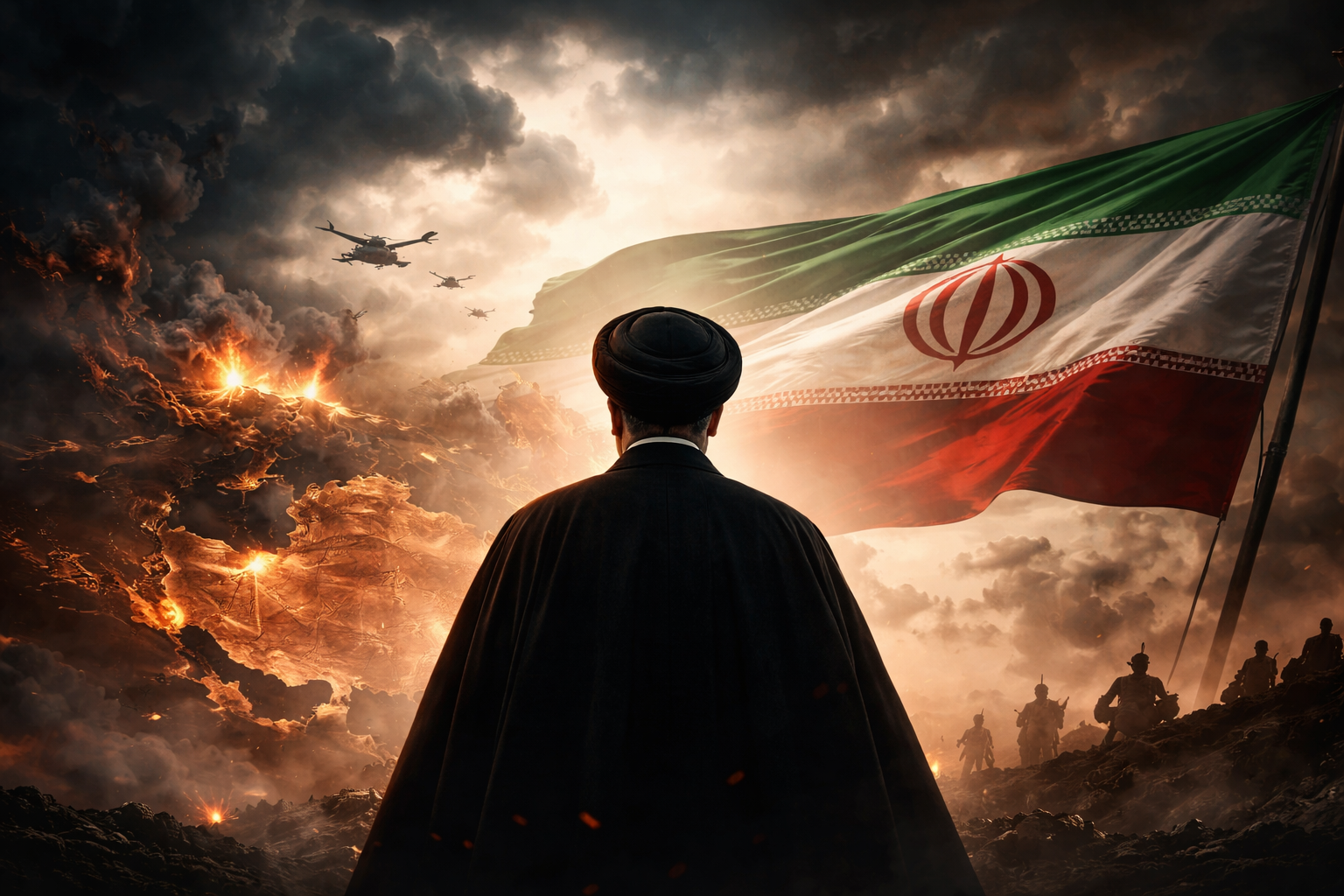
Khamenei Dead, Son Takes Power in Wartime Iran
Iran has moved rapidly to install Mojtaba Khamenei as the country’s new Supreme Leader following the death of his father, Ayatollah Ali Khamenei, in wartime strikes that shook the Islamic Republic’s leadership structure.
The transition comes during active conflict, making it one of the most consequential leadership shifts in Iran since the 1989 succession that elevated Ali Khamenei after the death of Ayatollah Ruhollah Khomeini. Institutions have quickly rallied around Mojtaba to maintain continuity at a moment of extreme geopolitical pressure.
But the change at the top has immediately collided with external threats. U.S. President Donald Trump has publicly warned that Iran’s new leader could face severe consequences if Tehran continues its current military posture, adding a layer of personal risk to the transition.
For years, Mojtaba Khamenei was viewed as a powerful but unofficial figure within Iran’s system. His sudden elevation during wartime transforms that behind-the-scenes influence into formal authority at a moment when Iran’s leadership has already proven vulnerable to targeted strikes.
The story turns on whether Iran’s leadership transition strengthens regime stability—or exposes fractures inside the Islamic Republic at its most dangerous moment.
Key Points
Mojtaba Khamenei has been named Iran’s Supreme Leader following the death of Ayatollah Ali Khamenei in wartime strikes.
The succession occurs during an active regional conflict, raising the geopolitical stakes of Iran’s leadership transition.
Mojtaba Khamenei has long been considered influential within Iran’s conservative political and security networks.
U.S. President Donald Trump has issued warnings directed at Iran’s new leadership, highlighting the risk of further escalation.
The transition challenges Iran’s traditional clerical succession norms and raises questions about legitimacy, particularly regarding how the new leadership will maintain authority and public support in the face of internal and external pressures.
Regional governments and global powers are closely watching whether Iran’s military strategy or negotiating posture shifts under the new leader.
The Wartime Shock That Forced a Leadership Transition
The ongoing wartime strikes have caused the most dramatic disruption to Iran's leadership since the founding of the Islamic Republic, following the death of Ayatollah Ali Khamenei.
For more than three decades, Khamenei served as Iran’s ultimate authority. The Supreme Leader controls the armed forces, oversees the judiciary, appoints key state officials, and sets the strategic direction for foreign and nuclear policy.
His death removes the central figure who balanced several powerful institutions within Iran’s system:
the Islamic Revolutionary Guard Corps (IRGC)
the clerical establishment in Qom
elected bodies such as the presidency and parliament
Under Iran’s constitution, the Assembly of Experts is responsible for choosing a new Supreme Leader. But wartime conditions compress the timeline for such decisions. A prolonged power vacuum could create internal instability and invite foreign pressure.
The swift installation of Mojtaba Khamenei appears designed to prevent that outcome and project continuity in the middle of conflict, especially given his influential role in Iranian politics and the potential for his leadership to stabilize the situation during such tumultuous times.
Who Is Mojtaba Khamenei?
Mojtaba Khamenei has long been one of the most enigmatic figures in Iranian politics.
Unlike previous Supreme Leaders, he has not held major public political office. His influence has largely operated behind the scenes, affecting key decisions and shaping policies without being in the public eye.
Over the past two decades, however, he has reportedly built close relationships with several key pillars of the Iranian system, particularly the Islamic Revolutionary Guard Corps.
Political observers have often linked him to:
conservative faction coordination
security policy discussions
mediation between clerical authorities and security institutions
Those networks may now prove decisive. If Mojtaba Khamenei can maintain alignment between the clerical establishment and the security elite, the transition could stabilize quickly.
If not, questions about his authority could complicate the consolidation of power, potentially leading to internal conflicts and challenges from rival factions within the government.
Why This Succession Breaks Iran’s Political Norms
Iran’s constitution does not explicitly prohibit a relative of a Supreme Leader from succeeding him. Yet the system has historically avoided anything resembling dynastic succession.
Supreme Leaders have typically been selected from among senior religious scholars with significant theological credentials.
Mojtaba Khamenei’s elevation, therefore, breaks an important informal norm.
Legitimacy within Iran’s clerical system depends heavily on religious authority. Senior clerics achieve influence through recognition as leading interpreters of Islamic law.
Many view Mojtaba's religious credentials as less prominent than those of earlier leaders, such as his father, Ali Khamenei, and other influential clerics, which raises concerns about his ability to maintain power and influence within the clerical system.
That shift raises a deeper question about the direction of Iran’s political system: whether authority is gradually moving away from clerical scholarship and toward security institutions.
How Safe Is Mojtaba Khamenei After Trump’s Threats?
The new Iranian leader begins his tenure under unusually direct external threats.
During the unfolding crisis, U.S. President Donald Trump issued warnings about Iran’s leadership, signaling that Washington could respond forcefully if Tehran escalates the conflict further. The comments place additional pressure on Iran’s newly installed leader at the exact moment he is consolidating authority.
At the same time, Iran’s rivals have demonstrated a willingness to target senior Iranian figures. The strikes that killed Ali Khamenei showed that even the country’s most protected leadership positions may no longer be beyond reach during wartime.
This reality means Mojtaba Khamenei assumes office as one of the most heavily guarded—and potentially exposed—leaders in the world.
Iran’s leadership security relies on several layers.
The first is physical protection provided by elite units of the Islamic Revolutionary Guard Corps.
The second is operational secrecy. Iran’s senior leadership traditionally limits public exposure, relies on hardened facilities, and tightly controls communications to reduce vulnerability.
The third layer is deterrence. Tehran has signaled that attacks on senior leadership would trigger major retaliation across the region.
Yet wartime leadership carries unavoidable risks. Intelligence-driven strikes have already killed multiple senior Iranian commanders and security officials recently.
For Mojtaba Khamenei, visibility itself becomes a strategic dilemma. The more visible his leadership during the conflict, the more he may become a target, especially given the recent intelligence-driven strikes that have already killed multiple senior Iranian commanders and security officials.
Regional Shockwaves
The leadership transition arrives in the middle of escalating regional tensions.
Iran plays a central role in several Middle Eastern security dynamics, including the Persian Gulf balance of power, proxy networks across the region, and the development of missile and drone capabilities.
Foreign governments are likely watching three key questions.
First, it is unclear whether Mojtaba Khamenei will maintain the strategic doctrine established by his father.
Second, it is important to consider whether Iran’s rivals view the leadership transition as a moment of vulnerability is unclear.
Third, does the shift complicate diplomatic efforts related to sanctions or nuclear negotiations?
Leadership transitions during active conflict often produce either rapid consolidation or miscalculation.
Which path Iran follows will influence the trajectory of the current crisis.
What Most Coverage Misses
The most overlooked factor in this story is not simply who holds the title of Supreme Leader.
It is the institutions that actually enforce power inside Iran’s system.
Formally, the Supreme Leader stands above all branches of government. In practice, however, the Islamic Revolutionary Guard Corps has grown into the most powerful operational force in the country.
The IRGC commands significant military capabilities, oversees strategic industries, and maintains extensive intelligence networks.
That means Mojtaba Khamenei’s success depends less on clerical rank and more on institutional alliances.
If the Revolutionary Guard leadership strongly supports him, the transition could stabilize rapidly despite the shock of wartime leadership loss.
If those relationships become contested, Iran could face internal power struggles behind the scenes, potentially leading to a fragmentation of authority and challenges to Mojtaba Khamenei’s leadership.
Understanding that balance between clerical authority and security power is essential to understanding the real stakes of the succession.
What the Leadership Change Means for Iran’s Power Structure
If Mojtaba Khamenei consolidates power successfully, the transition may accelerate a structural shift already underway in Iran.
Over the past two decades, the Revolutionary Guard has expanded influence across multiple sectors, including infrastructure development, intelligence operations, and strategic weapons programs.
A leader closely aligned with those networks could reinforce that trajectory.
Such a development would push Iran further toward a hybrid political system—one that remains clerical in symbolism but increasingly shaped by security elites.
That shift could influence how Iran approaches diplomacy, sanctions pressure, and regional conflict.
Security-driven leadership structures often emphasize deterrence, resilience under economic pressure, and asymmetric military capabilities, which may lead to a more aggressive foreign policy and a prioritization of military solutions over diplomatic engagement.
The Fork in the Road Ahead
Iran now faces a rare moment of uncertainty at the top of its political system.
One path leads to rapid consolidation. Mojtaba Khamenei secures the support of the Revolutionary Guard, the clerical establishment accepts the transition, and the regime presents a unified front during wartime.
The other path is slower and more fragile. Questions about legitimacy create quiet rivalries within the elite while the country confronts external pressure, which may lead to instability and challenges in governance as factions vie for power and influence.
Early signals that analysts will watch include endorsements from senior clerics, statements from Revolutionary Guard commanders, and any reshuffling of key security posts.
The stakes are unusually high.
Iran has replaced its most powerful leader during active conflict while facing direct threats from foreign adversaries.
How quickly Mojtaba Khamenei consolidates authority—and how his rivals respond—may shape the balance of power in the Middle East for years to come.
