Iran Poised to Install Mojtaba Khamenei as Supreme Leader
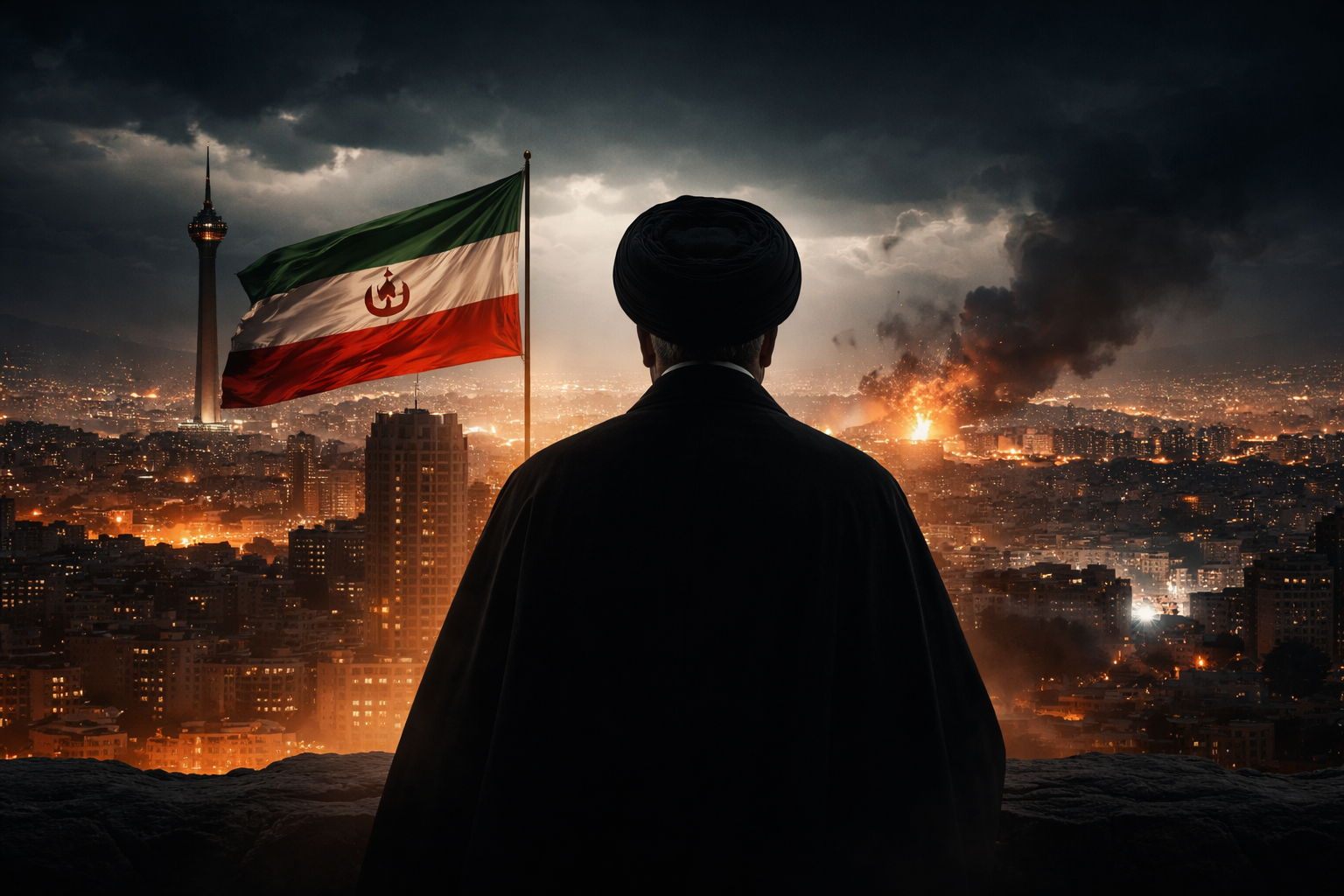
Iran’s Next Leader Could Be the Son of Its Slain Supreme Leader
The Son of Its Slain Supreme Leader
Iran appears close to naming Mojtaba Khamenei, the son of the late Supreme Leader Ayatollah Ali Khamenei, as the next leader of the Islamic Republic—a decision that could redefine the country’s power structure while it is already at war and under intense international pressure.
Members of Iran’s powerful Assembly of Experts say a successor has effectively been chosen, though a formal announcement has not yet been made.
Multiple reports indicate Mojtaba Khamenei has emerged as the leading candidate, backed by influential factions inside Iran’s security establishment, particularly the Islamic Revolutionary Guard Corps (IRGC).
If confirmed, the appointment would be one of the most consequential leadership transitions in modern Iranian history—and the first time the Islamic Republic’s supreme leadership effectively passed from father to son.
The story turns on whether Iran’s clerical system is quietly transforming into something closer to dynastic rule.
Key Points
Iran’s Assembly of Experts has reportedly reached consensus on a new Supreme Leader after the death of Ayatollah Ali Khamenei.
The late leader's son, Mojtaba Khamenei, has emerged as the leading candidate and may soon receive formal announcement.
The succession comes during an ongoing regional war and intense geopolitical tensions involving the United States and Israel.
Mojtaba has long wielded influence behind the scenes despite never holding elected office, and his connections to key military and political figures may further solidify his power in the upcoming leadership transition.
His rise could deepen the political power of Iran’s Revolutionary Guard and hardline factions, potentially leading to increased military influence in domestic and foreign policy decisions.
A hereditary succession could fundamentally reshape the legitimacy and structure of Iran’s Islamic Republic, potentially leading to increased consolidation of power among hardline factions and a shift away from more moderate governance.
The Sudden Power Vacuum in Tehran
Iran’s leadership crisis began when Ayatollah Ali Khamenei was killed in a major strike in late February 2026, triggering the most significant political transition in the Islamic Republic since 1989.
Under Iran’s constitution, the Assembly of Experts, an 88-member clerical body, is responsible for selecting the Supreme Leader.
Immediately after the assassination, an interim leadership council took over the duties of the office while the selection process began.
But behind the scenes, the real contest has not been procedural—it has been political.
Iran’s elite factions have been racing to consolidate power while the country faces military conflict, economic strain, and internal instability.
Amidst this struggle, Mojtaba Khamenei quickly emerged as the central figure.
The Secretive Son With Enormous Influence
Mojtaba Khamenei has spent decades operating largely out of public view.
Despite holding only the clerical rank of Hojjatoleslam, a level below the senior rank typically expected for a supreme leader, he has been widely described as one of the most influential figures in the regime’s inner circle.
For years he functioned as a powerful gatekeeper to his father—managing access, coordinating political alliances, and cultivating ties with Iran’s security apparatus.
Those ties may now be decisive.
He is believed to have strong relationships with senior figures in the Revolutionary Guard, the powerful military-economic network that has become one of the most dominant forces inside the Iranian state.
In a moment of war and uncertainty, those relationships matter more than formal titles, as they can influence decision-making and resource allocation in critical situations.
A Leadership Choice Made During War
The timing of the succession is extraordinary.
Iran is not merely managing a leadership transition—it is doing so in the middle of a regional conflict and amid direct confrontation with the United States and Israel.
The next supreme leader will inherit:
control over Iran’s armed forces
authority over the nuclear program
oversight of the intelligence and security services
ultimate influence over foreign policy and war strategy
The Supreme Leader is not a ceremonial position. It is the most powerful office in the country.
Whoever occupies it effectively determines Iran’s strategic direction, influencing key policies such as foreign relations, military strategy, and domestic governance.
The Dynastic Question Hanging Over the Regime
Iran’s political system was designed after the 1979 revolution explicitly to avoid monarchy.
Replacing a supreme leader with his son therefore carries profound symbolism.
Critics inside and outside Iran have long warned that elevating Mojtaba would resemble the hereditary rule of the Shah, the monarchy the Islamic Revolution overthrew.
That makes this succession uniquely controversial.
Yet the logic of power may override ideological purity.
Many within the security establishment view Mojtaba as the safest option for continuity during crisis, particularly because they believe his leadership will maintain stability and prevent potential upheaval in the current political landscape.
What Most Coverage Misses
Most reporting frames this story as a simple succession decision.
In reality, it may represent something deeper: the consolidation of the Revolutionary Guard as the dominant force in Iran’s political system.
For decades, Iran has been described as a clerical state.
But the balance of power has gradually shifted toward the IRGC (Islamic Revolutionary Guard Corps) security-military network, which controls vast economic assets, intelligence structures, and regional proxy forces.
A Mojtaba Khamenei leadership could formalize that shift.
Unlike many senior clerics, his authority comes less from religious prestige and more from political and security alliances, which may enable him to exert significant influence over the IRGC and other key institutions in Iran.
In other words, the real question may not be who leads Iran but which institution truly governs it.
The Geopolitical Stakes
A Mojtaba Khamenei leadership could have major consequences for global politics.
Some analysts expect a harder line toward Western powers and little appetite for compromise with Washington.
Mojtaba has long been associated with conservative factions skeptical of diplomacy with the United States.
At the same time, Iran faces enormous pressure:
economic sanctions
domestic unrest
military confrontation abroad
a nuclear program under global scrutiny
The next supreme leader must navigate all of them simultaneously.
The Signals to Watch Next
The next few days could determine the trajectory of Iran’s political future.
Three developments will reveal whether Mojtaba Khamenei truly becomes the country’s next supreme leader:
Formal confirmation from the Assembly of Experts
Public support from the Revolutionary Guard leadership
Religious endorsement from senior clerics in Qom
If those signals align, the transition could happen quickly.
If they fracture, Iran could face a prolonged power struggle inside its ruling elite, potentially leading to instability and challenges to governance that could affect both domestic policies and international relations.
Either way, the decision will shape not only Iran’s future but also the balance of power across the Middle East for years to come.
