Trump Warns Iran’s Next Supreme Leader “Won’t Last Long” Without U.S. Approval
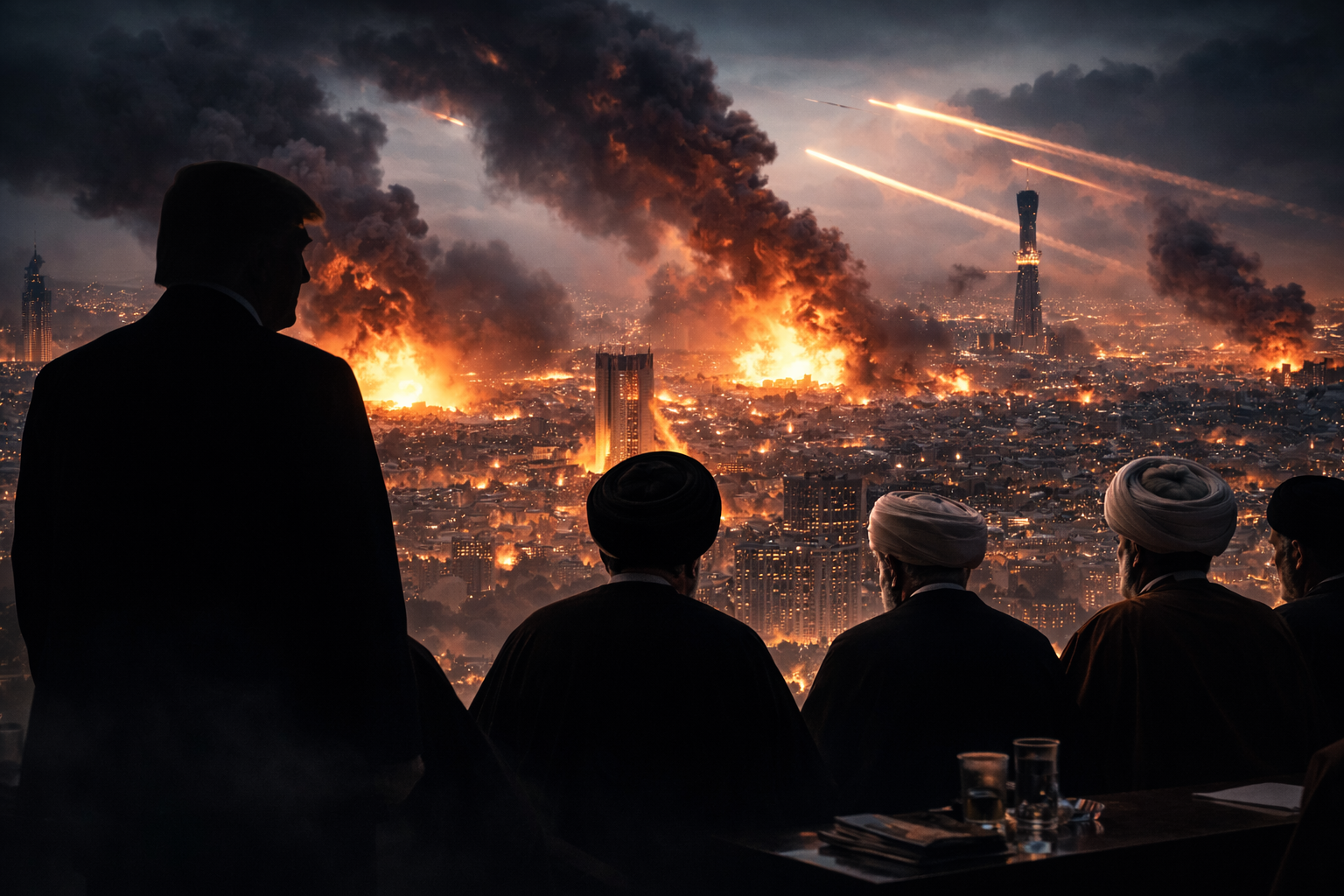
Trump Signals U.S. Will Shape Iran’s Next Leader as War Escalates
Iran’s Leadership Crisis Explodes After Trump’s Warning
The war between Iran, Israel, and the United States has entered a volatile new phase. On March 8, 2026, U.S. President Donald Trump declared that whoever becomes Iran’s next supreme leader “is not going to last long” without approval from Washington.
The statement came as Iran prepares to announce a successor to Ayatollah Ali Khamenei, who was killed in late February during a series of Israeli-led airstrikes targeting senior Iranian leadership in Tehran.
Trump’s remarks are extraordinary not simply for their tone but for what they imply: the United States openly asserting influence over the internal selection of the Islamic Republic’s most powerful office.
At the same time, the broader regional war continues to escalate. Israeli strikes have hit Iranian infrastructure around Tehran, while Iranian drones and missiles have struck several Gulf states, raising fears that the conflict could spread across the Middle East.
The story turns on whether the leadership transition inside Iran becomes a stabilizing reset—or the trigger for a deeper regional confrontation.
Key Points
President Donald Trump warned that Iran’s next supreme leader “won’t last long” without U.S. approval, signaling a willingness to shape Tehran’s leadership outcome.
The remark comes after the death of long-time Iranian leader Ayatollah Ali Khamenei during Israeli airstrikes tied to the current conflict.
Iran’s Assembly of Experts is believed to have already selected a successor, though the name has not yet been publicly confirmed.
Iranian officials have rejected the idea of U.S. involvement, framing Trump’s comments as foreign interference.
The leadership crisis unfolds amid a widening regional war involving Israel, Iran, Gulf states, and potentially U.S. forces.
Control of Iran’s nuclear program and the legitimacy of the next regime remain central stakes.
The Power Vacuum After Khamenei
Iran’s political system centers on the Supreme Leader, a position that combines religious authority with ultimate control over the military, judiciary, and security services.
Ayatollah Ali Khamenei held that role for more than three decades. His death during airstrikes on February 28 triggered the most serious leadership crisis in the Islamic Republic since the 1989 succession after Ayatollah Ruhollah Khomeini.
Following the strike, Iran’s constitution triggered an emergency mechanism. A temporary leadership council assumed authority while the Assembly of Experts, the clerical body responsible for choosing the supreme leader, began selecting a permanent successor.
Reports indicate the assembly has already voted and may soon announce the new leader publicly.
But the decision comes at a moment when the state itself is under military pressure, its leadership partially decapitated, and its strategic alliances under strain, which raises concerns about the stability and effectiveness of the new leader in addressing these critical challenges.
Trump’s Message to Tehran
During an interview, Trump delivered his statement as the war entered its second week.
He argued that the next Iranian leader would need Washington’s approval to remain in power and suggested that the United States wants a figure who would prevent Iran from rebuilding its nuclear weapons capability.
The comment aligns with a broader message the administration has pushed since the strikes began: that the military campaign is intended not only to degrade Iran’s nuclear infrastructure but also to reshape the country’s leadership trajectory.
In earlier statements, Trump suggested the strikes had eliminated many of the regime’s potential successors, leaving Iran with a smaller pool of candidates.
Iranian officials quickly rejected the idea that Washington could influence the succession process, insisting that leadership decisions belong solely to Iran’s clerical institutions and political system.
The clash illustrates the deeper contest now underway: not just over territory or weapons, but over the legitimacy of the Iranian state itself.
A War Expanding Across the Region
The leadership crisis comes as the broader conflict spreads beyond Iran’s borders.
Israeli strikes have targeted military installations and energy infrastructure near Tehran, producing large fires and environmental warnings across the capital.
Iran has retaliated with missile and drone attacks across the Persian Gulf, striking infrastructure in Kuwait, Bahrain, and other regional states hosting U.S. military bases.
Hezbollah has also been drawn into the confrontation, with Israeli strikes reported in Lebanon.
The widening geography of the conflict has alarmed global powers and markets alike. Oil prices have surged amid fears that shipping routes or production facilities in the Gulf could be disrupted.
At the center of it all is a fundamental question: whether the removal of Iran’s longtime leader will weaken the regime—or radicalize it.
What Most Coverage Misses
Much of the coverage frames the crisis as a simple leadership replacement. In reality, the selection of Iran’s next supreme leader is only the visible part of the struggle.
The real contest lies within Iran’s power network: the Revolutionary Guard, senior clerics, intelligence agencies, and political elites who control the state’s security apparatus.
In a normal succession, these factions negotiate behind closed doors over months or years. The current situation is different. Many senior figures have reportedly been killed or targeted during the strikes, compressing the timeline and reducing the number of viable candidates.
That means the next leader may emerge not as a consensus figure but as a survival candidate—someone acceptable to the remaining power centers during wartime.
If that happens, Iran’s leadership could become more militarized and more dependent on the Revolutionary Guard, potentially hardening the regime rather than weakening it.
The Stakes for Nuclear Power and Regional Order
One of Washington’s stated goals in the conflict is preventing Iran from developing nuclear weapons.
Trump has argued that a cooperative leader in Tehran could end the cycle of confrontation and prevent future wars over Iran’s nuclear program.
But the opposite scenario is also possible.
A leadership transition under foreign pressure could reinforce Iran’s narrative of resistance, strengthening hard-liners who argue that nuclear deterrence is the only protection against regime-change efforts.
That dynamic has appeared in other nuclear crises, where external threats accelerated domestic support for weapons development rather than slowing it.
In other words, the succession could either open the door to negotiations or push Iran further down the path toward confrontation.
The Fork in the Road for Iran and the Region
Iran’s leadership announcement will likely come within days.
If the next supreme leader signals openness to negotiations or a ceasefire, the current war could evolve into a new diplomatic phase centered on nuclear limits and regional security.
But if the successor emerges closely aligned with the Revolutionary Guard and adopts a hard-line stance, the conflict could escalate further, drawing in additional regional actors and potentially the United States more directly.
Three signals will matter most in the coming weeks:
whether Iran’s new leader is linked to the clerical establishment or the military elite
whether Tehran signals openness to talks over its nuclear program
whether attacks across the Gulf and Lebanon intensify or begin to taper off
The outcome will shape not just Iran’s future leadership but the balance of power across the Middle East for years to come.
