Iran Puts Revolutionary Guard Veteran At Heart Of Power As Trump Turns Up The Pressure
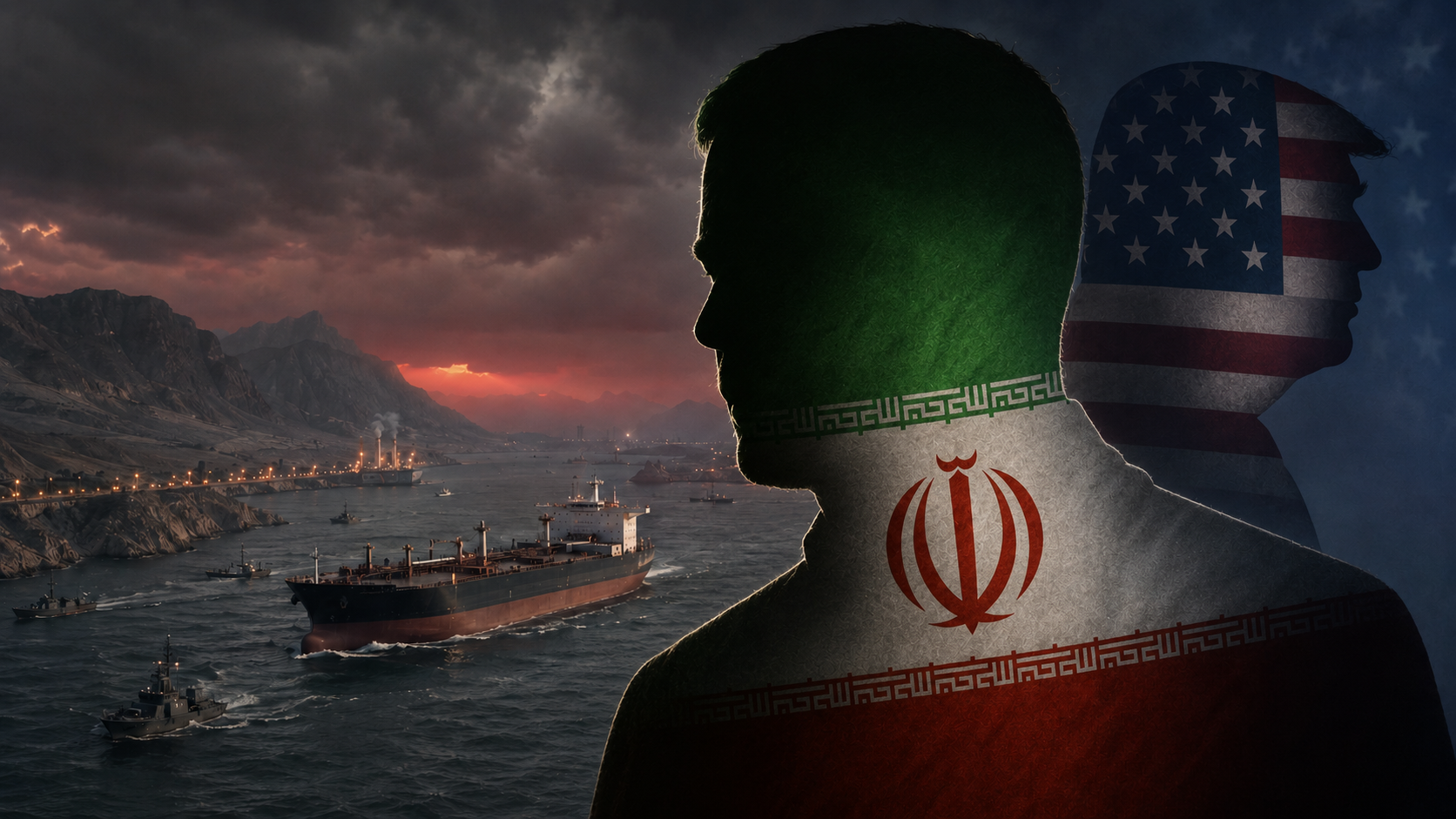
Iran’s Supreme Leader Promotes Anti-American Hardliner As Trump Closes In
Mohsen Rezaei’s appointment gives one of Tehran’s most uncompromising military figures a central role in deciding whether Iran compromises over the Strait of Hormuz—or risks an even greater confrontation with President Donald Trump.
Iran has placed a veteran Revolutionary Guard commander at the centre of its national-security machinery at one of the most dangerous moments in the country’s recent history.
Mohsen Rezaei, 71, has been appointed secretary of Iran’s Supreme National Security Council, replacing Mohammad Bagher Zolghadr after only a few months in the position.
The council helps coordinate Iran’s defence, intelligence, nuclear and foreign policies. Although President Masoud Pezeshkian formally chairs it, Rezaei will oversee much of its daily operation and become one of its most influential members.
He has also been appointed as Supreme Leader Ayatollah Mojtaba Khamenei’s representative on the council—giving him authority that extends beyond an ordinary government position.
The timing is critical.
Iran remains locked in confrontation with America and Israel, while negotiations continue over maritime access through the Strait of Hormuz. Tehran has been using the waterway—which previously carried roughly one-fifth of global oil and liquefied-natural-gas supplies—as leverage against Washington.
Rezaei’s promotion therefore looks less like bureaucratic reshuffling and more like Tehran preparing for a prolonged test of strength with Trump.
Who Is Mohsen Rezaei?
Rezaei is not a conventional diplomat.
He commanded the Islamic Revolutionary Guard Corps between 1981 and 1997, including through most of the Iran–Iraq War. He later became a permanent fixture within the Islamic Republic’s political establishment, serving on the Expediency Council and as vice-president for economic affairs.
His relationship with Iran’s new supreme leader is particularly important. Rezaei has acted as a senior military adviser to Mojtaba Khamenei and is regarded as a reliable defender of the revolutionary system.
Iran is therefore placing its security council in the hands of someone whose political authority comes principally from the military and the supreme leader—not from the country’s supposedly reformist president.
His record is also highly controversial.
Rezaei is subject to an Interpol Red Notice requested by Argentina over allegations connected to the 1994 bombing of the AMIA Jewish community centre in Buenos Aires, which killed 85 people. Iran denies involvement in the attack, while Rezaei has not been convicted of the allegations.
What Does Rezaei Believe?
America is an adversary—not a trusted negotiating partner
Rezaei belongs to the faction that sees American pressure as part of an existential campaign to weaken or overthrow the Islamic Republic.
He has argued that Iran stands between the US-led order and a wider attempt to dominate the region, portraying the conflict as part of a much greater struggle involving Israel, Russia and China.
During the present confrontation, he has publicly opposed negotiations conducted from a position of weakness and has even taunted Washington over the prospect of deploying ground forces.
That does not mean he is incapable of approving an agreement. Hardliners can sometimes provide the political cover required to sell a compromise inside Iran. But any settlement endorsed by Rezaei would probably need to be presented as an American concession rather than an Iranian retreat.
The Strait of Hormuz is a weapon
Rezaei views Hormuz as one of Iran’s most powerful strategic assets.
He has said the waterway gives Tehran leverage over its enemies and has opposed arrangements that would allow foreign forces to dictate how it is reopened.
Iran is currently demanding sanctions relief, the release of frozen assets, compensation for wartime damage, an end to military threats and the withdrawal of American forces from around the country before fully reopening the strait.
With Rezaei helping to control the security council, Tehran is less likely to relinquish that leverage merely in return for a temporary ceasefire.
He supports Iran’s regional proxy network
Rezaei is a defender of the so-called “axis of resistance”—the network of armed groups and political movements supported by Iran across Lebanon, Iraq, Yemen and the Palestinian territories.
He has described Iranian influence in Lebanon as a non-negotiable red line and sees pressure on groups such as Hezbollah and the Houthis as pressure on Iran itself.
This matters because Washington is seeking more than the reopening of Hormuz. Trump ultimately wants to restrict Iran’s nuclear programme, missile capabilities and ability to threaten American forces and allies through regional proxies.
Rezaei is unlikely to surrender those assets voluntarily.
He is intensely hostile towards Israel
Rezaei has repeatedly issued extreme threats against Israel.
In 2018, he warned that Iran would “raze Tel Aviv to the ground” if Israel attacked the Islamic Republic. More recently, he has portrayed Israel’s actions as part of an attempt to overthrow the Iranian state and redraw the regional order.
His appointment will deepen Israeli concerns that any agreement focused only on shipping could leave Iran’s missile forces and regional military network intact.
His nuclear position contains deliberate ambiguity
Rezaei has historically defended Iran’s claim that its nuclear programme is peaceful. However, he has also hinted that this restraint may not continue indefinitely, previously saying Iran had not pursued nuclear weapons “so far” while leaving its future intentions open.
That ambiguity is precisely why Trump’s insistence on verifiable denuclearisation matters.
Promises from Tehran are not enough when senior regime figures openly treat nuclear restraint as reversible.
Why Has Iran Appointed Him Now?
The most likely explanation is control.
Rezaei combines military experience, revolutionary credentials and direct access to the supreme leader. That makes him useful whether Iran chooses escalation or negotiation.
If Tehran rejects American terms, he can coordinate a harder military response.
If it accepts an agreement, he can help force the Revolutionary Guard and other hardline institutions to implement it.
His appointment may therefore indicate that Iran is approaching a genuine decision point. It does not necessarily prove that war is imminent, but it suggests that the supreme leader wants tighter personal control over whatever happens next.
The change also reduces President Pezeshkian’s room to pursue an independent diplomatic approach. Rezaei now sits between the reformist president and the security establishment on the most important questions facing the country.
The Geopolitical Consequences
Hormuz negotiations could become harder
Rezaei is unlikely to support an unconditional reopening of the strait. He will want guarantees that Iran receives material benefits and retains influence over the new shipping arrangements.
This raises the possibility of longer negotiations, continuing disruption and renewed pressure on global energy prices.
Israel may become even more sceptical
Israel will view the elevation of a former IRGC commander as evidence that Iran is consolidating hardline control.
Any American-Iranian agreement that does not address missiles, nuclear infrastructure and Tehran’s regional proxies could face determined Israeli opposition.
Gulf states will fear both Iranian control and another war
Saudi Arabia, the United Arab Emirates and other Gulf governments need commercial shipping to resume—but they do not want Iran to establish permanent political control over Hormuz.
They are therefore caught between supporting Trump’s pressure campaign and fearing that renewed American strikes could provoke attacks on their ports, energy facilities or desalination infrastructure.
Russia and China could benefit from prolonged disruption
An extended crisis could strengthen Tehran’s dependence on Moscow and Beijing while increasing energy prices and forcing Washington to devote more military resources to the Middle East.
However, neither Russia nor China wants uncontrolled escalation that threatens its own shipping or regional investments.
What This Means For Trump
Rezaei’s appointment strengthens the case for Trump’s policy of negotiating from a position of force.
Iran has not promoted a conciliatory technocrat. It has elevated a revolutionary commander who regards Hormuz, proxy warfare and military pressure as legitimate instruments of state policy.
Trump should remain open to an agreement—but only one backed by verification and enforceable consequences.
The danger would be accepting a cosmetic deal that temporarily reopens shipping while leaving Iran free to rebuild its nuclear programme, replenish its missile arsenal and reactivate its regional proxies.
At the same time, Washington must avoid allowing Tehran to dictate terms simply by threatening the global energy supply. Rewarding that strategy would teach Iran—and every other hostile power—that blockading international trade is an effective route to sanctions relief and compensation.
Trump’s strongest position is disciplined pressure: maintain military deterrence, enforce sanctions, protect international shipping and leave Iran a credible route towards a negotiated settlement.
Verdict
Mohsen Rezaei’s promotion is a warning, but it is not necessarily a declaration of inevitable war.
Iran has selected a man trusted by the supreme leader to manage either confrontation or compromise. His presence could make negotiations tougher, but his authority may also allow him to enforce an agreement if Tehran finally decides the cost of resistance has become too high.
President Trump should not walk away from diplomacy. Nor should he mistake diplomatic language for genuine moderation.
Rezaei has spent his career defending the Islamic Republic through military power, strategic threats and regional influence. Any agreement bearing his approval must be judged by what Iran verifiably gives up—not by what its officials promise.
The appointment confirms one central reality: Trump is not negotiating with Iranian reformers.
He is negotiating with the Revolutionary Guard establishment.
